

Research guide
SLU-PP-332 UK: ERR Agonist Research, Mechanism and Study Data
SLU-PP-332 is the first pan-ERR agonist with strong ERRα activity to work in living animals. Here is how this exercise mimetic was designed and what cell and mouse studies have found so far.
Every time a muscle works hard, it flips on a set of genes that tell it to build more mitochondria, burn more fat and get better at endurance. What if a single small molecule could flip some of those same genes while the muscle sat still? In mice, SLU-PP-332 has come surprisingly close. Animals given the compound ran 70% longer and 45% further than untreated mice, and obese mice lost weight without eating less or moving more.
SLU-PP-332 is a synthetic research compound, not a peptide, built to switch on a family of gene-control proteins called the estrogen-related receptors, or ERRs. It is one of the most talked-about “exercise mimetics” in metabolic research. This guide explains what SLU-PP-332 is, how chemists finally managed to make an ERR agonist that works in living animals, what each study has found in muscle, fat, heart and kidney, and where the research goes next. One point is worth stating clearly at the start: every result so far comes from cells and animals, and SLU-PP-332 has never been tested in people. SLU-PP-332 is sold by Crown Peptides strictly for laboratory research use only, and everything below is written for readers interested in the science.
What Is SLU-PP-332, and Why Is It Called an Exercise Mimetic?
SLU-PP-332 is a small synthetic molecule designed to activate all three estrogen-related receptors: ERRα, ERRβ and ERRγ. Those receptors sit inside the cell nucleus and act as master switches for the genes that build and run mitochondria, the structures that turn fuel into usable energy. Muscles rely heavily on these switches when they adapt to aerobic training. Crown Peptides supplies the SLU-PP-332 Research Compound in 5mg and 10mg vials.
A small molecule, not a peptide
Although SLU-PP-332 is often discussed alongside metabolic peptides, it is not made of amino acids. It is a compact organic molecule with a molecular weight of about 290, roughly the size of a typical tablet drug. That matters for research design: it gets into cells easily and can reach receptors inside the nucleus, something most peptides cannot do.
SLU-PP-332, SLU PP 332, SLUPP332: the names
SLU-PP-332 is a laboratory code rather than a brand name, and you will see it written several ways: SLU-PP-332, SLU PP 332, SLUPP332 and sometimes simply “332” in the scientific papers. Chemical suppliers also list it as “ERR pan-agonist 332”. Its code matches Saint Louis University, where chemists on the project are based. The team that developed and tested it was led by pharmacologist Thomas Burris, working with colleagues at Washington University in St. Louis, Saint Louis University and the University of Florida (PMID: 36988910).
What “exercise mimetic” actually means
An exercise mimetic is a compound that reproduces part of the biological response to exercise without the exercise itself. Nobody claims a molecule can copy everything training does. The idea is narrower and more interesting: if you can switch on the specific gene programme that drives endurance adaptation, you can study that programme on its own, in animals that cannot or do not exercise. The phrase was popularised in 2008 by a mouse study of the AMPK activator AICAR, which we cover in our AICAR guide. SLU-PP-332 takes a different route to the same goal, as you will see.
The Receptors Nobody Could Switch On
To appreciate why SLU-PP-332 attracted so much attention, it helps to know how stubborn its targets had been.
Orphan receptors with a big job
The ERRs were discovered because their genes look like the gene for the estrogen receptor. But despite the name, they do not respond to estrogen, and no natural hormone that switches them on has ever been confirmed. Scientists call receptors like this “orphans”. What researchers did find is that ERRα and ERRγ work hand in hand with PGC-1α, the famous co-regulator of mitochondrial growth, which effectively acts as their partner protein. Together they control vast networks of genes for burning fat and glucose and for building and running mitochondria, and mice lacking ERRs struggle when their bodies are put under physiological stress (PMID: 18664618).
The evidence for how important these switches are is striking. Mice lacking ERRα cannot keep themselves warm in the cold because their brown fat cannot build enough mitochondria (PMID: 17229846). Mice lacking both ERRα and heart ERRγ develop severe heart failure (PMID: 25624346). And in the other direction, mice engineered to carry extra ERRγ in their fast-twitch muscles developed more blood vessels, more fat-burning capacity and a 100% increase in running endurance, without any training (PMID: 21356518).
That last result was the tantalising one. If extra ERR activity could double endurance in genetically altered mice, could a drug do something similar in ordinary ones?
The first ERR agonists
The first small molecules shown to switch on ERRs were reported in 2005. Compounds named GSK4716 and GSK9089 bound ERRγ with remarkable selectivity over the classical estrogen receptors, and GSK4716 activated ERRβ and ERRγ in cell assays in a way that mimicked PGC-1α (PMID: 15857113). It was a breakthrough, but it left a gap. GSK4716 did not activate ERRα, the subtype most strongly tied to exercise adaptation, and compounds suitable for use in living animals were scarce.
Cracking ERRα
ERRα proved the hard one. Its binding pocket is unusually small and partly filled by the receptor’s own amino acids. In 2020, members of the St. Louis team reported that they had engineered ERRα activity into the GSK4716 scaffold, creating compounds that activate all three ERRs. Computer modelling suggested the new molecules could push aside a phenylalanine (Phe328) that normally occupies ERRα’s pocket, and the best compounds switched on the mitochondrial-growth genes PGC-1α and PGC-1β in cells (PMID: 32683181).
In 2023, the team published SLU-PP-332 itself: a pan-ERR agonist with the highest potency at ERRα and, crucially, pharmacokinetic properties good enough for use in live animals (PMID: 36988910). After nearly two decades of ERR research, there was finally a chemical tool to test the exercise idea directly.
- Classification
- Synthetic small-molecule pan-ERR agonist research compound
- Available strengths
- 5mg and 10mg (coming soon)
- CAS Number
- 303760-60-3
- Molecular Weight
- approximately 290.3 g/mol
- Molecular Formula
- C18H14N2O2
How SLU-PP-332 Works: Switching On the Endurance Genes
Here is the plain-English version of what happens when SLU-PP-332 reaches a muscle cell.
Step one: it finds the switch
SLU-PP-332 passes into the cell and binds the ERRs in the nucleus. ERRs already sit on the DNA near their target genes. Binding SLU-PP-332 boosts their activity, turning a quiet switch into a loud one.
Step two: the mitochondrial genes turn on
Activated ERRs drive the genes for fatty acid oxidation, for the citric acid pathway that feeds mitochondria, and for oxidative phosphorylation, the final step where most ATP is made. In muscle cells, SLU-PP-332 increased mitochondrial function and cellular respiration (PMID: 36988910).
Step three: an exercise-like signature appears
This is the part that gave SLU-PP-332 its reputation. In mice, the compound triggered a gene programme that closely resembles the response to a single bout of aerobic exercise, and that response depended specifically on ERRα (PMID: 36988910). One marker gene, Ddit4, is strongly induced by treadmill running, and ERR agonists induced it to levels matching or exceeding those produced by running, depending on the muscle examined (PMID: 41421047).
Step four: the muscle changes its make-up
Over time, the muscle shifts towards fibres built for endurance. SLU-PP-332 increased type IIa fibres, a fibre type that is both fast and oxidative, using fat as well as glucose for fuel (PMID: 36988910).
- Also known as
- SLU PP 332, SLUPP332, ERR pan-agonist 332; 4-hydroxy-N’-[(E)-naphthalen-2-ylmethylidene]benzohydrazide
- Classification
- Synthetic small-molecule pan-ERR agonist (ERRα, ERRβ, ERRγ); acyl hydrazone; research compound, not a peptide
- Sequence
- Not applicable (small molecule, not an amino acid chain)
- Molecular formula
- C18H14N2O2
- Molecular weight
- 290.3 g/mol
- CAS number
- 303760-60-3
- Research status
- Preclinical: studied in cells and animals only; no human trials registered
What the Research Has Actually Found
SLU-PP-332’s published record is young, but it covers a remarkable range of tissues in only a few years. Every study below was carried out in cells or mice.
Endurance in mice
The founding 2023 study combined cell work with mouse experiments. In a skeletal muscle cell line, SLU-PP-332 raised mitochondrial function and respiration. In mice, it increased oxidative type IIa muscle fibres, switched on an ERRα-dependent acute exercise gene programme and enhanced exercise endurance, and ERRα activation proved critical for the endurance effect (PMID: 36988910). In the University of Florida’s announcement of the team’s work, normal-weight mice given the compound were reported to run 70% longer and 45% further than untreated mice (University of Florida).
Obesity and metabolic syndrome in mice
The next question was what an exercise-like signal would do in obese animals. In a 2024 study, diet-induced obese mice and ob/ob mice (a genetic obesity model) were given SLU-PP-332. It increased energy expenditure and fat burning, reduced fat mass accumulation, reduced obesity and improved insulin sensitivity (PMID: 37739806). According to the University of Florida’s report of the study, obese mice given the compound twice a day for a month lost 12% of their body weight and gained about ten times less fat than untreated mice, while eating the same amount of food and without exercising more (University of Florida). That last detail is the intriguing one: the effect appears to come from raising energy expenditure rather than cutting appetite, which sets it apart from most weight research compounds.
The failing heart
The heart is the most energy-hungry muscle in the body, and it depends heavily on ERRα and ERRγ. In a 2024 study, mice with heart failure caused by pressure overload (a model in which the heart is forced to pump against raised pressure) were given SLU-PP-332 or a second, structurally different pan-ERR agonist, SLU-PP-915. Both compounds significantly improved ejection fraction, a key measure of pumping strength, reduced scarring (fibrosis) and increased survival, without changing heart muscle thickening. They switched on a broad set of fatty acid and mitochondrial genes, and metabolic profiling showed a substantial normalisation of energy metabolites after six weeks of pressure overload. Genetic experiments showed that ERRγ was the main driver of the effect in the heart (PMID: 37961903).
The ageing kidney
One of the most surprising results came from kidney research. Kidney function declines with age, partly because of mitochondrial decline and inflammation. Researchers found that ERR levels fall in ageing human and mouse kidneys but are preserved in mice on lifelong calorie restriction. When 21-month-old mice were given SLU-PP-332 for eight weeks, the compound reversed age-related increases in protein leakage into the urine, loss of podocytes (the kidney’s filter cells), mitochondrial dysfunction and inflammatory signals, acting through the cGAS-STING and STAT3 pathways. The authors described ERRs as calorie restriction mimetics (PMID: 37717940).
Human muscle cells in a dish
The closest SLU-PP-332 has come to human biology is a 2025 pilot study using muscle cells taken from people, not a study in people themselves. Researchers took muscle biopsies from 20 women having hip replacement surgery. Inactive women had higher levels of the stress enzyme NOX4 and lower levels of SIRT1, PGC-1α, ERRα and FNDC5 (the precursor of the exercise signal irisin) than active women. When muscle precursor cells from the inactive women were grown in the lab and exposed to SLU-PP-332, NOX4 fell, while SIRT1, PGC-1α, ERRα, FNDC5 and the survival proteins Akt and Bcl-2 rose. Oxidative stress and markers of cell ageing fell, reduced glutathione increased, and the cells formed muscle fibres more readily (PMID: 40692696). It is early, cell-level work, but it shows that human muscle cells respond to the compound in the expected direction.
The next generation: SLU-PP-915 and beyond
SLU-PP-332 has one well-known practical limit: it lacks oral bioavailability, so the published animal studies gave it by injection (PMID: 41421047). The team has already moved to solve this. A new series of thiophene-based pan-ERR agonists led to SLU-PP-915, in which a boronic acid group improved metabolic stability in liver enzyme assays (PMID: 37421886). In 2026 the team reported that SLU-PP-915 is orally active, improves running distance and duration to a similar extent as SLU-PP-332, and works together with exercise training to further raise mitochondrial gene expression (PMID: 41421047).
Chemists have also gone back to SLU-PP-332 itself. The first comprehensive structure-activity study of its scaffold, published in 2026, mapped which parts of the molecule control ERRα and ERRγ activity and found analogues with comparable activity but improved solubility or metabolic stability, while describing SLU-PP-332 as the benchmark for ERR activation (PMID: 41850449).
Where the evidence stands
A 2026 systematic review of pan-ERR agonists, covering studies in animals and cell models, concluded that they reproduce an acute aerobic exercise gene programme, enhance fat oxidation, increase type IIa fibres, improve endurance, reduce fat and improve glucose control in obesity models, and restore mitochondrial function in ageing kidneys, without evident toxicity in those models. It also noted that clinical trials would be needed to establish effects and safety in people (PMID: 42024694). Anti-doping laboratories have also begun mapping how human liver enzymes break SLU-PP-332 down, identifying its metabolites for sports drug testing (PMID: 41688415; PMID: 41588687).
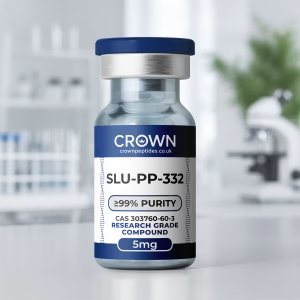
SLU-PP-332 Research Compound
HPLC and MS verified · certificate with every batch · pricing announced when stock arrives
SLU-PP-332 vs AICAR: Two Exercise Mimetics, Two Different Switches
SLU-PP-332 is often compared with AICAR, the compound behind the original “exercise in a pill” headlines. They are both studied as exercise mimetics, but they could hardly work more differently.
AICAR targets an enzyme. Inside cells it becomes a mimic of AMP, the molecule that signals low energy, and switches on the energy sensor AMPK. The cell responds as if it is short of fuel. In a 2008 mouse study, four weeks of AICAR improved running endurance in sedentary mice by 44% (PMID: 18674809).
SLU-PP-332 targets gene switches. It does not tell the cell it is low on energy. It goes straight to the nuclear receptors that control the mitochondrial gene programme. It is a more targeted lever, aimed at the transcription step that training itself relies on.
The two share some history. In the genetically engineered ERRγ mice described earlier, the muscle changes did not involve PGC-1α; instead, ERRγ activated AMPK, the very enzyme AICAR targets (PMID: 21356518), and some of the same researchers at the Salk Institute contributed to both lines of work. A 2017 review from that group described muscle-targeted exercise mimetics as a possible future pharmaceutical option for an increasingly sedentary world (PMID: 27889389).
The practical differences are just as clear. AICAR has decades of research and was given to thousands of people in heart surgery trials as acadesine. SLU-PP-332 is only a few years old and has been studied in cells and animals only. For researchers, the two are complementary: comparing an AMPK activator with an ERR agonist is one of the cleanest ways to separate energy-sensor effects from gene-programme effects.
Where ERR Research Is Heading
SLU-PP-332 opened a door that had been closed for twenty years. Here are the questions now on the table.
Long-term effects. Most studies have run for weeks. Researchers will want to know whether the endurance, fat and kidney findings hold up over much longer periods, and how tissues adapt to sustained ERR activation.
Which ERR does what? The muscle endurance effect depends on ERRα, while the heart effect runs mainly through ERRγ. Untangling the roles of each subtype in each tissue may lead to more selective compounds.
Ageing muscle. The human muscle cell study and the ageing kidney study both point towards ageing biology. Whether ERR agonists can support muscle in older or inactive animals is one of the most anticipated directions.
Oral compounds and the first human studies. With orally active SLU-PP-915 now described, the path towards formal development is clearer. No human trial of SLU-PP-332 is registered on ClinicalTrials.gov as of October 2026, so the first human data, whenever they come, will be a landmark.
The Technical Breakdown: Structure, Binding and Selectivity
This section is for readers who want the chemistry. Everything above makes sense without it.
Structure
SLU-PP-332 is (E)-4-hydroxy-N’-(naphthalen-2-ylmethylene)benzohydrazide, molecular formula C18H14N2O2, molecular weight 290.3 g/mol, CAS 303760-60-3 (PubChem CID 5338394). It consists of three parts: a 4-hydroxyphenyl (phenol) ring, an acyl hydrazone linker (C(=O)-NH-N=CH), and a naphthalene ring system. The “E” describes the geometry around the carbon-nitrogen double bond.
From GSK4716 to SLU-PP-332
GSK4716, the 2005 ERRβ/γ agonist, is also a 4-hydroxybenzohydrazide, but carries a 4-isopropylphenyl group where SLU-PP-332 carries a naphthalene (PubChem CID 5331325). The phenolic acyl hydrazone core is shared (PMID: 15857113). Changes to this region of the scaffold are what converted ERRβ/γ selectivity into pan-ERR activity with strong ERRα agonism (PMID: 32683181).
Inside the binding pocket
ERRs are constitutively active nuclear receptors: they can recruit co-activators such as PGC-1α without any ligand (PMID: 18664618). An agonist therefore works by stabilising and enhancing the active conformation rather than switching on a silent receptor. ERRα’s ligand-binding pocket is particularly small, partly occupied by Phe328. Modelling of the pan-agonist series showed ligands displacing this residue to fit the cavity (PMID: 32683181).
Target genes and isoform dependence
ERR agonists of this class up-regulate PGC-1α, PGC-1β, PDK4, lactate dehydrogenase A and Ddit4 (PMID: 32683181; PMID: 37421886). Isoform dependence differs by tissue: ERRα in skeletal muscle endurance (PMID: 36988910) and ERRγ in the heart, where ERR agonism also down-regulated cell-division pathways, partly through the transcription factor E2F1 (PMID: 37961903).
Metabolism
In human liver S9 fractions, one study identified 22 in vitro metabolites, including hydroxylated, glucuronidated and sulfated forms (PMID: 41688415). A second study, using liver S9 fractions and microsomes, identified nine metabolites (six phase I and three phase II) (PMID: 41588687). The phenol group is a natural site for the glucuronide and sulfate conjugates seen in these studies.
Why Verified Testing Matters for SLU-PP-332
SLU-PP-332’s chemistry creates specific quality questions. The acyl hydrazone link at its centre is formed from two building blocks, a 4-hydroxybenzohydrazide and naphthalene-2-carbaldehyde, and hydrazones can break back down into those parts, particularly under acidic or damp conditions. A poorly made or poorly stored batch could contain leftover starting materials or breakdown products that look similar on a label but behave very differently in an ERR assay. Mass spectrometry confirms the correct 290 g/mol molecule, and HPLC shows whether anything else is there.
What every Crown Peptides batch comes with
Each batch is tested before it goes on sale. HPLC (high-performance liquid chromatography) separates SLU-PP-332 from any impurities and gives a purity figure. Mass spectrometry measures molecular mass to confirm identity. The batch-specific certificate of analysis is published on our Lab Reports page, and the batch number printed on the vial links the two. Our guides on how to read a certificate of analysis and how HPLC and mass spectrometry work explain what to look for.
Stored, packed and dispatched with care
SLU-PP-332 is supplied as a dry powder in sealed 5mg and 10mg vials, the most stable form for transport and storage. Stock is kept cold, sealed and away from light and moisture, as set out on our storage information page. Orders placed before 2pm on a weekday leave the same day from the UK, and UK delivery is free on orders over £100.
A UK team you can actually reach
Crown Peptides is a UK company. We reply to enquiries within 24 hours on business days, with WhatsApp for quicker answers. For questions about a certificate, a batch or a compound, get in touch.
Related Compounds Worth Knowing About
SLU-PP-332 is studied for how cells build and run their mitochondria. These compounds explore the same machinery from other directions.
MOTS-c
MOTS-c Research Peptide is a 16-amino-acid peptide encoded in mitochondrial DNA and studied for muscle glucose handling and energy balance. Where SLU-PP-332 is a synthetic switch for nuclear genes, MOTS-c is a natural signal sent out by mitochondria. Our article mitochondrial peptides explained covers it in context.
SS-31
SS-31 Research Peptide binds cardiolipin in the inner mitochondrial membrane and is studied for mitochondrial efficiency, including in heart research. SLU-PP-332 makes cells build more mitochondrial machinery; SS-31 is studied for keeping that machinery working well.
NAD+
NAD+ Research Compound is the electron-carrying coenzyme at the heart of oxidative metabolism. More mitochondrial activity means more demand for NAD+, which makes the two natural partners in energy research. See NAD+ vs MOTS-c for how NAD+ compares with a mitochondrial peptide.
L-Carnitine
L-Carnitine (LC216) Research Compound carries fatty acids into mitochondria. SLU-PP-332 raises fat oxidation, so carnitine transport is a natural step to measure alongside it.
5-Amino-1MQ
5-Amino-1MQ Research Compound is another small-molecule research compound in metabolic research. It blocks the enzyme NNMT in fat cells, a very different route into fat metabolism from ERR activation.
Methylene Blue
Methylene Blue 1% Solution (USP Grade) can shuttle electrons in the mitochondrial respiratory chain, the same oxidative phosphorylation machinery whose genes SLU-PP-332 switches on.
For a wider look at compounds studied for fat and energy metabolism, see our guide to the best peptides for weight loss research or browse our metabolic research peptides. You can find the compound itself on the SLU-PP-332 Research Compound page.
Common Questions About SLU-PP-332
What is SLU-PP-332?
SLU-PP-332 is a synthetic small molecule that activates all three estrogen-related receptors (ERRα, ERRβ and ERRγ), with the highest potency at ERRα. These receptors control the genes for building and running mitochondria, which is why the compound is studied as an exercise mimetic.
Is SLU-PP-332 a peptide?
No. It is a small organic molecule with a molecular weight of about 290, not a chain of amino acids. It is grouped with metabolic research peptides because of the energy pathways it acts on.
Has SLU-PP-332 been tested in humans?
No. All published research on SLU-PP-332 has been carried out in cells and animals, mostly mice. The closest work to human biology is a 2025 study that exposed muscle cells taken from people to the compound in the lab. No human trial is registered on ClinicalTrials.gov.
What has research on SLU-PP-332 found?
In mice, it increased endurance-type muscle fibres and running endurance, raised energy expenditure and fat burning, reduced fat mass and improved insulin sensitivity in obesity models, improved heart pumping and survival in a heart failure model, and reversed several signs of kidney ageing in old mice.
How is SLU-PP-332 different from AICAR?
AICAR switches on the energy sensor AMPK by mimicking a low-energy signal. SLU-PP-332 switches on the ERR receptors that control mitochondrial genes directly. AICAR has a long research history including human trials; SLU-PP-332 is newer and preclinical.
What is the difference between SLU-PP-332 and SLU-PP-915?
Both are pan-ERR agonists from the same research team, but they have different chemical structures. SLU-PP-915 was designed to be orally active, which SLU-PP-332 is not, and it produced similar endurance improvements in mice.
Is SLU-PP-332 legal in the UK?
SLU-PP-332 is not listed as a controlled drug under the Misuse of Drugs Act 1971. Research compounds that are not licensed medicines can be legally sold in the UK, provided they are not sold or presented as medicines. Our article are peptides legal in the UK explains the wider legal picture.
How should SLU-PP-332 be stored?
Keep the dry powder sealed, cold and away from light and moisture, because the hydrazone link at the centre of the molecule is sensitive to breakdown. Our storage information page has full guidance.
Read the certificate before you order
Every batch is published openly — identity by mass spectrometry, purity by HPLC, and the batch number printed on the vial you receive.
Open the COA libraryA Switch Twenty Years in the Making
For two decades, scientists knew the ERRs were master switches for the mitochondrial programme, and they knew that turning those switches up in genetically altered mice could transform endurance. What they lacked was a key. SLU-PP-332 was that key: the first pan-ERR agonist with strong ERRα activity that worked in living animals. Within a few years it had been tested in muscle, fat, heart and kidney, inspired an orally active successor and given researchers a way to study the exercise gene programme on its own.
The next chapter will come from longer studies, more selective compounds and, eventually, the first data in people. For anyone working on mitochondrial biology, metabolic signalling or the molecular basis of endurance, this is one of the most interesting research tools to arrive in years. Find full batch details and the certificate of analysis on our SLU-PP-332 Research Compound page.
References
- Billon C, Sitaula S, Banerjee S, et al. Synthetic ERRα/β/γ Agonist Induces an ERRα-Dependent Acute Aerobic Exercise Response and Enhances Exercise Capacity. ACS Chem Biol. 2023;18:756-771. PMID: 36988910
- Billon C, Schoepke E, Avdagic A, et al. A Synthetic ERR Agonist Alleviates Metabolic Syndrome. J Pharmacol Exp Ther. 2024;388:232-240. PMID: 37739806
- Xu W, Billon C, Li H, et al. Novel Pan-ERR Agonists Ameliorate Heart Failure Through Enhancing Cardiac Fatty Acid Metabolism and Mitochondrial Function. Circulation. 2024;149:227-250. PMID: 37961903
- Wang XX, Myakala K, Libby AE, et al. Estrogen-Related Receptor Agonism Reverses Mitochondrial Dysfunction and Inflammation in the Aging Kidney. Am J Pathol. 2023;193:1969-1987. PMID: 37717940
- Bonanni R, Falvino A, Matticari A, et al. Targeting ERRs to counteract age-related muscle atrophy associated with physical inactivity: a pilot study. Front Physiol. 2025;16:1616693. PMID: 40692696
- Hampton CS, Sitaula S, Billon C, et al. Development and pharmacological evaluation of a new chemical series of potent pan-ERR agonists, identification of SLU-PP-915. Eur J Med Chem. 2023;258:115582. PMID: 37421886
- Billon C, Appourchaux K, Côté I, et al. An orally active estrogen receptor-related receptor agonist, SLU-PP-915, enhances aerobic exercise capacity. J Pharmacol Exp Ther. 2026;393:103787. PMID: 41421047
- Okda HE, Zhao P, Hayes M, et al. Chemical optimization of the exercise mimetic SLU-PP-332 enables insight into estrogen-related receptor signaling. Int J Biol Macromol. 2026;355:151450. PMID: 41850449
- de Souza-Lima J, Astrosa-Martin BD, Galaz-Rodríguez CA, et al. [Pharmacological Activation of ERRα/β/γ as an Exercise Mimetic: Potential Therapeutic Applications]. Rev Med Chil. 2026;154:237-245. PMID: 42024694
- Shahien M, Elagawany M, Sitaula S, et al. Modulation of estrogen-related receptors subtype selectivity: Conversion of an ERRβ/γ selective agonist to ERRα/β/γ pan agonists. Bioorg Chem. 2020;102:104079. PMID: 32683181
- Zuercher WJ, Gaillard S, Orband-Miller LA, et al. Identification and structure-activity relationship of phenolic acyl hydrazones as selective agonists for the estrogen-related orphan nuclear receptors ERRbeta and ERRgamma. J Med Chem. 2005;48:3107-9. PMID: 15857113
- Giguère V. Transcriptional control of energy homeostasis by the estrogen-related receptors. Endocr Rev. 2008;29:677-96. PMID: 18664618
- Villena JA, Hock MB, Chang WY, et al. Orphan nuclear receptor estrogen-related receptor alpha is essential for adaptive thermogenesis. Proc Natl Acad Sci U S A. 2007;104:1418-23. PMID: 17229846
- Wang T, McDonald C, Petrenko NB, et al. Estrogen-related receptor α (ERRα) and ERRγ are essential coordinators of cardiac metabolism and function. Mol Cell Biol. 2015;35:1281-98. PMID: 25624346
- Narkar VA, Fan W, Downes M, et al. Exercise and PGC-1α-independent synchronization of type I muscle metabolism and vasculature by ERRγ. Cell Metab. 2011;13:283-93. PMID: 21356518
- Narkar VA, Downes M, Yu RT, et al. AMPK and PPARdelta agonists are exercise mimetics. Cell. 2008;134:405-15. PMID: 18674809
- Fan W, Evans RM. Exercise Mimetics: Impact on Health and Performance. Cell Metab. 2017;25:242-247. PMID: 27889389
- Avliyakulov NK, Sobolevsky T, Ahrens E. Analysis and Identification of In Vitro Metabolites of Exercise Mimetic SLU-PP-332 ERRα/β/γ Agonist for Doping-Control Purposes. Drug Test Anal. 2026;18:439-450. PMID: 41688415
- Möller T, Krug O, Thevis M. In Vitro Metabolism and Analytical Characterization of SLU-PP-332 and SLU-PP-915: Novel Pan-ERR Agonists With Doping Potential. Rapid Commun Mass Spectrom. 2026;40:e70039. PMID: 41588687
- University of Florida News. Exercise-mimicking drug sheds weight, boosts muscle activity in mice. September 2023. Article
- PubChem. SLU-PP-332 (CID 5338394) and GSK4716 (CID 5331325). National Center for Biotechnology Information. PubChem CID 5338394
Working with SLU-PP-332 Research Compound
Coming soon to Crown Peptides. Every batch will be HPLC and MS tested, with its certificate published before it goes on sale.
See SLU-PP-332 Research Compound