

Research guide
AICAR (Acadesine) UK: AMPK Activator Research, Mechanism and Study Data
AICAR began life as acadesine, a heart-surgery drug, then became the key tool of AMPK research and the original exercise mimetic. Here is what thirty years of cell, animal and human studies have found.
In 2008, scientists at the Salk Institute in California gave a compound to mice that did no training at all. Four weeks later, those sedentary mice had improved their running endurance by 44%. Newspapers had a phrase ready within days: “exercise in a pill”. The compound was AICAR, and the strangest part of the story is that it was not new. Under the name acadesine, it had already been given to thousands of heart surgery patients in clinical trials.
AICAR sits at a crossroads of some of the most interesting ideas in metabolic research: the cell’s own fuel gauge, the enzyme that reads it, and the question of how much of exercise can be reproduced with chemistry. This guide covers what AICAR is (a nucleoside, not a peptide), where it came from, how it switches on the energy sensor AMPK, what the cell, animal and human studies actually found, and how it compares with newer compounds. AICAR is sold by Crown Peptides strictly for laboratory research use only, and everything below is written for readers interested in the science. You can find it on our AICAR Research Compound page.
What Is AICAR, and Why Does a Nucleoside Sit Among Research Peptides?
Most metabolic research compounds people read about are peptides, short chains of amino acids such as MOTS-c or AOD-9604. AICAR is different. It is a nucleoside: a ring-shaped base attached to a sugar, the same basic design as the building blocks of DNA and RNA. It belongs in the same conversation because of what it does. Inside a cell, AICAR switches on AMPK, the energy sensor that peptides like MOTS-c also influence.
What AICAR actually is
AICAR is short for 5-aminoimidazole-4-carboxamide ribonucleoside. Strip away the chemistry and it is an imidazole ring (a small five-membered ring containing two nitrogen atoms) joined to ribose, the same sugar found in RNA. It is a close relative of the purines, the family of molecules that includes adenine and guanine. That family resemblance is the whole secret of how it works, as you will see below.
AICAR, AICAr, acadesine, AICA riboside: one compound, many names
AICAR has collected an unusual number of names over the decades, and they cause real confusion. When it was developed as a heart drug, it was called acadesine, and it also appears in older papers as AICA riboside, AICA-riboside, Arasine and the development code GP-1-110. In AMPK research it is almost always called AICAR.
Here is the part that trips people up. Biochemists sometimes use “AICAR” for a slightly different molecule: the phosphorylated version, AICA ribonucleotide, also called ZMP. Some researchers now write “AICAr”, with a lower-case r, to make clear they mean the riboside rather than the ribotide (PMID: 34064363). When people search for “AICAR” as a research compound, they mean the riboside, acadesine. That is the compound this guide is about, and the molecule it turns into inside cells is ZMP.
A molecule your cells already make
ZMP is a natural intermediate in the pathway cells use to build purines from scratch, and the body releases AICAR into the urine every day. A 2010 analysis of urine samples from 499 athletes measured an average AICAR concentration of 2,186 ng/mL, with wide variation between individuals and sports (PMID: 20225061). So AICAR is not a foreign invention in the way most synthetic compounds are. It is a normal part of human metabolism, which researchers have learned to supply in much larger amounts.
From Heart Surgery to Treadmills: The Unusual Life of Acadesine
AICAR’s history runs in two separate tracks, one in the operating theatre and one in the biochemistry lab, which only met later.
An adenosine idea in the operating theatre
Acadesine was first developed by the American company Gensia (PMID: 18457469) and was later described as a first-in-class “adenosine-regulating agent” (PMID: 22782417). The idea was elegant. When heart muscle is starved of blood, as it is during bypass surgery, cells release adenosine, a natural protective signal. Acadesine was designed to boost adenosine levels in exactly the tissue under stress, without flooding the whole body (PMID: 16814669).
Through the 1990s, it was tested in a series of randomised, placebo-controlled trials in people undergoing coronary artery bypass graft (CABG) surgery across the United States, Canada and Europe. We look at what those trials found in the research section below, because the results are one of the most interesting chapters in AICAR’s story.
The Dundee discovery that changed everything
Meanwhile, at the University of Dundee, D. Grahame Hardie’s group was studying an enzyme called AMP-activated protein kinase, or AMPK. Researchers wanted a clean way to switch AMPK on inside living cells, without starving or stressing them. In 1994, a team showed that AICAR “markedly activates” AMPK in rat fat cells in a time- and dose-dependent way, and that it shut down fat synthesis (PMID: 7926017). A year later, the Dundee group described AICAR in liver cells as a potentially specific way of activating AMPK, noting that, unlike older methods, it did not disturb the cell’s ATP, ADP or AMP levels (PMID: 7744080).
That was a turning point. For the next two decades, AICAR became the standard tool for asking “what happens when AMPK is switched on?” in almost every tissue imaginable.
The mouse study that made headlines
The two tracks finally converged in 2008. Ronald Evans’ laboratory at the Salk Institute was studying how muscles adapt to endurance training. They knew that training activates AMPK and the energy co-regulator PGC-1α, and they asked a bold question: could a drug that activates AMPK be enough on its own, without any training?
The answer surprised even them. In sedentary mice, four weeks of AICAR switched on metabolic genes in muscle and improved running endurance by 44% (PMID: 18674809). The paper’s title gave the field its name: “AMPK and PPARδ agonists are exercise mimetics”. It launched an entire research area devoted to compounds that reproduce parts of the exercise signal, a field that now includes newer molecules such as SLU-PP-332.
- Classification
- Synthetic nucleoside AMPK activator research compound
- Available strength
- 50mg (coming soon)
- CAS Number
- 2627-69-2
- Molecular Weight
- approximately 258.2 g/mol
- Molecular Formula
- C9H14N4O5
How AICAR Works: Fooling the Cell’s Fuel Gauge
To understand AICAR, you need to understand the gauge it fools. Here is the plain-English version.
AMPK, the cell’s fuel gauge
Every cell runs on ATP, its energy currency. When ATP is spent, it is broken down to ADP and then AMP. So when a cell is running low on energy, as in a muscle during exercise, the amount of AMP rises compared with ATP. AMPK is the enzyme that watches that ratio. When it senses the rise, it switches the cell into energy-saving mode: it turns up the processes that produce ATP, such as burning fat and taking in glucose, and turns down processes that spend it, such as building fat and cholesterol (PMID: 36316383).
The trick: AICAR becomes ZMP
AICAR enters cells and is converted into ZMP, which looks enough like AMP to fool AMPK. In the 1995 Dundee study, ZMP reproduced both of AMP’s activating effects on AMPK: it switched the enzyme on directly and made it easier for the upstream kinase to activate it (PMID: 7744080). The result is a cell that behaves as if it is low on fuel, even when its energy stores are full. That is why researchers value AICAR: it separates the AMPK signal from genuine energy stress.
What happens when the gauge reads “empty”
Once AMPK is on, the effects ripple outward. In rat liver cells, AICAR almost completely stopped fat and sterol production (PMID: 7744080). In perfused rat leg muscle, it lowered malonyl-CoA, a molecule that normally blocks fat from entering mitochondria, producing a 2.8-fold increase in fat burning and a significant increase in glucose uptake (PMID: 9435525). In other words, AICAR makes muscle open its doors to glucose and burn more fat, two of the classic signatures of exercise.
Not only AMPK
Here is where it gets more subtle. Because ZMP is a natural purine intermediate, raising its levels can affect other processes too, including purine building and other AMP-sensitive enzymes. A 2021 systematic review concluded that a growing number of AICAR effects once credited to AMPK are in fact AMPK-independent, and called for careful interpretation of AICAR-based studies (PMID: 34064363). Far from being a weakness, this has made AICAR a fascinating compound in its own right, and it is why modern studies often pair it with genetic tools that remove AMPK to see which effects remain.
- Also known as
- Acadesine, AICA riboside, AICAr, 5-aminoimidazole-4-carboxamide ribonucleoside, GP-1-110, Arasine
- Classification
- Nucleoside (imidazole riboside); research compound, not a peptide; AMPK activator via its metabolite ZMP
- Sequence
- Not applicable (small molecule, not an amino acid chain)
- Molecular formula
- C9H14N4O5
- Molecular weight
- 258.23 g/mol
- CAS number
- 2627-69-2
- Research status
- Widely used laboratory AMPK tool; studied in human trials as acadesine but never brought to market
What the Research Has Actually Found
AICAR has one of the deepest research records of any metabolic research compound: thirty years of cell work, a long list of rodent studies, and, unusually, several thousand people in clinical trials. Here is what each layer of evidence shows.
Muscle that behaves as if it has trained
One of the earliest questions was whether repeated AMPK activation could reproduce the long-term changes that endurance training produces in muscle. In a 2000 rat study, daily AICAR for four weeks increased the activity of mitochondrial enzymes such as citrate synthase, succinate dehydrogenase and malate dehydrogenase in fast-twitch white muscle and in the soleus, raised hexokinase markedly in all three muscles tested, and increased the glucose transporter GLUT4 (PMID: 10846039). Not every training adaptation appeared, and the authors concluded that AMPK may drive “some, but not all” of them.
The 2008 Salk study added the performance measure: the 44% endurance improvement in sedentary mice described above, alongside the finding that a PPARδ agonist combined with training increased oxidative muscle fibres (PMID: 18674809). A 2017 review from the same laboratory described muscle-targeted exercise mimetics as a possible future pharmaceutical option for an increasingly sedentary world, while stressing that physical exercise remains the best solution (PMID: 27889389).
Metabolic studies in rats
Some of the most striking rodent data come from models of insulin resistance. In obese Zucker rats, a strain with high blood fats, high blood pressure and poor insulin response, seven weeks of daily AICAR lowered plasma triglycerides and free fatty acids, raised HDL cholesterol, lowered systolic blood pressure by 14.6 mmHg and normalised the oral glucose tolerance test (PMID: 12086950).
A 2005 study went a step further. Young Zucker diabetic fatty rats, which normally develop high blood sugar as they grow, were given either daily treadmill running or AICAR for eight weeks. Neither group developed high blood sugar during the study, unlike untreated rats, and both had markedly better insulin sensitivity and near-normal insulin-producing cells in the pancreas (PMID: 15793229). The fact that AICAR and running produced such similar results is exactly why the “exercise mimetic” idea took hold.
Brain and ageing in mice
One of the more surprising directions has been the brain. Exercise is known to support memory and the birth of new neurons in the hippocampus, so researchers asked whether compounds that act on muscle could do the same. In a 2011 mouse study, seven days of AICAR improved spatial memory in a water maze test and significantly increased new neuron formation in the hippocampus (PMID: 21245211).
A follow-up in 2014 compared young mice with aged mice (23 months old). AICAR improved water maze performance and motor coordination in both groups, though aged mice needed a longer course. Crucially, mice with a muscle-specific defect in AMPK did not improve, which points to a muscle-driven mechanism: activate the muscle, and the brain appears to follow (PMID: 24443745).
What happened in people: the acadesine heart trials
This is where AICAR differs from most research compounds: long before it was an AMPK tool, it was tested in large numbers of people.
The five early trials
In 1997, the Multicenter Study of Perioperative Ischemia group pooled individual patient data from five randomised, placebo-controlled, double-blind trials involving 4,043 bypass surgery patients at 81 centres. Acadesine was given as a 7-hour infusion and in the solution used to protect the heart during surgery. In that analysis, acadesine was associated with a 27% reduction in heart attacks around the time of surgery, a 50% reduction in cardiac death through the fourth day after surgery, and a 26% reduction in the combined outcome of heart attack, stroke or cardiac death. Stroke on its own was not significantly reduced, and adverse events were similar to placebo apart from a temporary rise in uric acid (PMID: 9002496).
The two-year follow-up
One of the acadesine trials, in 2,698 bypass patients at 54 hospitals, followed survival for two years. Among the 100 patients who had a heart attack around the time of surgery, two-year mortality was 27.8% (15 of 54) in the placebo group and 6.5% (3 of 46) in the acadesine group (PMID: 16814669). That was a subgroup of fewer than 100 people, but it was a striking result. One final, much larger trial followed.
RED-CABG: the definitive trial
The RED-CABG trial was designed to settle the question. It enrolled intermediate- to high-risk bypass patients at 300 sites in seven countries, with a planned 7,500 participants. It was stopped early, after 3,080 had been randomised, when a planned futility analysis showed it was very unlikely to succeed. The main outcome (death from any cause, non-fatal stroke or the need for mechanical support for severe heart pumping failure within 28 days) occurred in 5.0% of the placebo group and 5.1% of the acadesine group, with no differences in key secondary outcomes (PMID: 22782417). Acadesine never went on to become a licensed heart medicine, but the trials remain a large, well-documented record of how people tolerated the compound under controlled conditions.
Human metabolic studies
Smaller human studies have looked directly at AICAR and metabolism, and they add an interesting twist. In 29 healthy men, an AICAR infusion roughly doubled glucose uptake into muscle after three hours (a 2.1-fold increase), compared with a 4.7-fold increase from cycling exercise. Whole-body glucose disposal rose by a more modest 7%. Surprisingly, AMPK activity in the muscle samples did not measurably change, even though glucose uptake did (PMID: 17513706).
In ten men with type 2 diabetes, an AICAR infusion reduced the amount of glucose released by the liver and lowered blood glucose, while also reducing the release of fatty acids into the blood. Again, AMPK phosphorylation in muscle did not rise, although its downstream target, acetyl-CoA carboxylase, was significantly phosphorylated (PMID: 18709353). Both were small, single-session studies, but they show AICAR’s metabolic effects carrying over to people, and they raise the question of how much of its action in humans runs through AMPK at all.
Blood cancer research
A third human chapter came from leukaemia research. Laboratory work showed that acadesine could trigger cell death in B cells from people with chronic lymphocytic leukaemia (CLL), including in models resistant to standard drugs, and the compound received orphan designation in the EU for B-cell CLL (PMID: 20367195; PMID: 18457469). An open-label phase I/II study in 24 people with relapsed or treatment-resistant CLL established a maximum tolerated single dose. Rises in uric acid were common and managed with allopurinol, and other side effects included temporary drops in blood counts, effects on kidney function and infusion-related low blood pressure. Some participants showed falls in leukaemia cell counts and lymph node size, but results varied widely in such a small group (PMID: 23228986). Like the heart programme, it did not progress to a medicine.
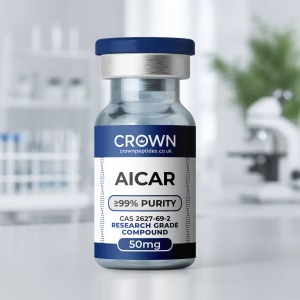
AICAR Research Compound
HPLC and MS verified · certificate with every batch · pricing announced when stock arrives
AICAR vs SLU-PP-332 and MOTS-c: Three Routes to an Exercise-Like Signal
AICAR started the exercise mimetic field, but it is no longer the only compound in it. Two others studied for overlapping effects show how differently the same goal can be approached.
AICAR works on an enzyme. It produces a molecule (ZMP) that mimics a low-energy signal, so the cell’s fuel gauge, AMPK, flips into energy-saving mode. The effects are fast and broad, because AMPK acts on many targets across the cell.
SLU-PP-332 works on gene switches. It is a synthetic small molecule that activates the estrogen-related receptors (ERRs), proteins in the nucleus that control the genes for building mitochondria and burning fat. Rather than mimicking a low-energy signal, it switches on a gene programme resembling the response to aerobic exercise. It has so far been studied in cells and animals only. Crown Peptides supplies the SLU-PP-332 Research Compound, and our SLU-PP-332 guide covers the ERR story in full.
MOTS-c works from inside the mitochondria. It is a 16-amino-acid peptide encoded in mitochondrial DNA. The 2015 study that identified it found that it acts on the folate pathway and the purine-building pathway tied to it, leading to AMPK activation, and that in mice it countered age-related and diet-induced insulin resistance (PMID: 25738459). That is the same purine pathway in which AICAR’s metabolite ZMP sits, which makes MOTS-c the natural peptide cousin of AICAR. Our MOTS-c guide and mitochondrial peptides explained go into more detail.
Put simply: AICAR flips the fuel gauge, SLU-PP-332 rewrites the engine’s specification, and MOTS-c sends a signal from the engine room itself. Comparing them is one of the more productive ways to separate the strands of the exercise response.
The Questions AICAR Still Poses
Thirty years on, AICAR keeps generating new questions. These are the ones researchers find most interesting.
How much is really AMPK? The human studies found glucose and fat effects without a measurable rise in muscle AMPK activity, and the 2021 review lists many AMPK-independent actions. Mapping exactly which effects go through AMPK, and which through ZMP’s other roles, is still an active project, and it has been helped greatly by more selective AMPK activators developed since.
Muscle and brain. The mouse studies suggest signals from active muscle reach the brain. Identifying those messengers is one of the most intriguing open threads.
Ageing muscle. AICAR’s effects in aged mice raise the question of how AMPK signalling changes across the lifespan. Our overview of longevity research compounds covers the wider field.
The Technical Breakdown: ZMP, Purine Chemistry and AMPK Subunits
This section is for readers who want the molecular detail. Everything above makes sense without it.
Structure
AICAR (acadesine) is 5-amino-1-β-D-ribofuranosylimidazole-4-carboxamide, molecular formula C9H14N4O5 and molecular weight 258.23 g/mol (PubChem CID 17513). It consists of an imidazole ring carrying an amino group and a carboxamide group, joined through a nitrogen to a ribose sugar. Its phosphorylated form, ZMP (AICA ribonucleotide), adds a phosphate group at the 5′ position of the sugar and has a molecular weight of 338.21 g/mol (PubChem CID 65110). The difference of about 80 mass units is exactly what mass spectrometry can distinguish.
From riboside to ZMP
AICAR is taken up through the cell’s nucleoside transporters and phosphorylated by adenosine kinase to ZMP, which then builds up inside the cell (PMID: 7744080). Normally, ZMP is a short-lived intermediate in de novo purine synthesis, converted on to inosine monophosphate (IMP) by the two-function enzyme ATIC. Adding AICAR from outside overwhelms that step, so ZMP accumulates to levels high enough to act as an AMP mimic.
How ZMP talks to AMPK
AMPK is a three-part enzyme made of a catalytic α subunit, a scaffolding β subunit and a regulatory γ subunit. Adenine nucleotides (AMP, ADP and ATP) bind to sites on the γ subunit. ZMP binds to the same sites as AMP, causing direct allosteric activation and making the critical threonine on the α subunit easier to phosphorylate by upstream kinases (PMID: 7744080; PMID: 36316383). ZMP is a much weaker AMP mimic than AMP itself, which is why relatively high concentrations are used in cell work, and why its effects on other AMP-sensitive enzymes have to be considered.
Why exposure matters in AICAR research
One detail runs through the whole AICAR literature: the amounts used in animal studies were far higher, relative to body size, than anything given in the human acadesine trials. That gap is one reason results in mice and results in people do not always line up, and it is worth keeping in mind when comparing studies. In the laboratory, working concentrations depend entirely on the experiment, and our understanding quantities page explains how milligram figures relate to research solutions.
Why Identity Testing Matters So Much for AICAR
AICAR has a purity problem that comes straight from its chemistry. The riboside (AICAR), the ribotide (ZMP) and the free base (AICA, without the sugar) are close relatives that behave differently in cells; the ribotide’s charged phosphate means it does not cross cell membranes in the same way. A vial containing the wrong form, or a mixture, would distort exactly the uptake and AMPK experiments AICAR is used for. Mass spectrometry tells these forms apart, and HPLC shows whether anything else is present.
What every Crown Peptides batch comes with
Every batch we sell is tested before release. HPLC (high-performance liquid chromatography) measures purity by separating the target compound from anything else in the vial. Mass spectrometry confirms identity by measuring the molecule’s mass, which for AICAR means confirming the 258 g/mol riboside rather than its phosphate. Results are published as a batch-specific certificate of analysis on our Lab Reports page, and the batch number on the vial lets you match the two. Our guide on how to read a peptide certificate of analysis explains every section, and the same principles apply to non-peptide research compounds.
Stored, packed and dispatched with care
Research compounds are supplied as dry powder in sealed vials, the most stable form for transport and storage. We keep stock cold, sealed and protected from light and moisture, as set out on our storage information page. Weekday orders placed before 2pm are dispatched the same day from the UK, and UK delivery is free on orders over £100.
A UK team you can actually reach
Crown Peptides is a UK company. We reply to enquiries within 24 hours on business days, and WhatsApp is there for quicker questions. If you want to ask about a certificate, a batch or a compound, contact us.
Related Compounds Worth Knowing About
AICAR is studied for what happens when cells sense low energy. These compounds explore other parts of the same energy system. Most sit in our metabolic research peptides category.
MOTS-c
MOTS-c Research Peptide is the closest relative to AICAR in this list. It is a mitochondrial-encoded peptide that acts on the folate and purine-building pathways and leads to AMPK activation, so it reaches the same fuel gauge from a natural signalling starting point. Our article NAD+ vs MOTS-c compares it with another energy molecule.
NAD+
NAD+ Research Compound is the coenzyme that carries electrons in energy metabolism and fuels the sirtuin enzymes. AMPK and NAD+ signalling are closely linked in energy-stress research.
SS-31
SS-31 Research Peptide targets cardiolipin in the inner mitochondrial membrane and is studied for mitochondrial efficiency. Where AICAR changes the signal that tells cells to make more energy, SS-31 is studied for how well the energy-making machinery itself runs.
5-Amino-1MQ
5-Amino-1MQ Research Compound is another small-molecule research compound, which blocks the fat-cell enzyme NNMT. Like AICAR, it is studied for how fat cells handle energy, but through a completely different enzyme.
L-Carnitine
L-Carnitine (LC216) Research Compound is the shuttle that carries fatty acids into mitochondria to be burned. AICAR’s effect on malonyl-CoA opens exactly this gate, so carnitine is the natural partner molecule for studies of AMPK-driven fat oxidation.
Methylene Blue
Methylene Blue 1% Solution (USP Grade) is a century-old dye that can shuttle electrons in the mitochondrial respiratory chain. It works at the very end of the energy pathway that AICAR’s signal ultimately turns up.
For a broader view of compounds studied for fat and energy metabolism, see our guide to the best peptides for weight loss research, or browse the full range of metabolic research peptides.
Common Questions About AICAR
What is AICAR?
AICAR (5-aminoimidazole-4-carboxamide ribonucleoside) is a nucleoside research compound that activates AMPK, the cell’s energy sensor. Inside cells it is converted into ZMP, which mimics AMP and tells the cell it is low on fuel. It is one of the most widely used tools in metabolic research.
Is AICAR the same as acadesine?
Yes. Acadesine is the drug name given to AICAR when it was developed as a heart-protection agent. AICA riboside, AICAr and GP-1-110 are other names for the same molecule. Be aware that some biochemistry papers use “AICAR” for the phosphorylated form, ZMP, which is a different compound.
Why is AICAR called “exercise in a pill”?
The nickname comes from a 2008 study in which four weeks of AICAR improved running endurance by 44% in sedentary mice. It was a mouse study, not a human one, but the name stuck and helped launch the exercise mimetic research field.
Has AICAR been tested in humans?
Yes, as acadesine. Several thousand people received it in heart surgery trials, where early pooled results were positive but the large RED-CABG trial found no difference from placebo and was stopped early. It was also tested in a small leukaemia study and in short metabolic studies in healthy men and men with type 2 diabetes.
How is AICAR different from SLU-PP-332?
AICAR activates an enzyme, AMPK, by mimicking a low-energy signal. SLU-PP-332 activates gene-switching receptors called ERRs that control mitochondrial genes. AICAR has decades of research including human trials; SLU-PP-332 is newer and has only been studied in cells and animals.
Is AICAR legal in the UK?
AICAR is not listed as a controlled drug under the Misuse of Drugs Act 1971. Research compounds that are not licensed medicines can be legally sold in the UK, provided they are not sold or presented as medicines. For sport, AICAR is named on the World Anti-Doping Agency’s Prohibited List as an example of an AMPK activator within the metabolic modulators class. Our article are peptides legal in the UK explains how UK law handles research compounds.
How should AICAR be stored?
As a dry powder, AICAR is best kept sealed, cool and away from light and moisture. Our storage information page covers how to handle research compounds once they arrive.
Can I buy AICAR in the UK?
Yes. Crown Peptides supplies AICAR in 50mg vials, within our metabolic research peptides category. Wherever you look, check for a batch-specific certificate that confirms identity by mass spectrometry, so you know you have the riboside and not ZMP.
Read the certificate before you order
Every batch is published openly — identity by mass spectrometry, purity by HPLC, and the batch number printed on the vial you receive.
Open the COA libraryThe Fuel Gauge Still Has Secrets to Give Up
Few research compounds have lived as many lives as AICAR. It began as a heart drug designed around adenosine, became the key that opened up AMPK biology, and then gave the world the idea of an exercise mimetic.
The story is still moving. Every new finding about AICAR’s AMPK-independent actions opens a fresh question about how cells sense and manage energy, and every newer compound, from mitochondrial peptides to ERR agonists, is measured against the benchmark AICAR set. If your research touches energy sensing, fat oxidation or the biology of exercise, AICAR remains one of the most informative places to start. Find batch details and the certificate of analysis on our AICAR Research Compound page, or explore our metabolic research peptides, each batch verified by HPLC and mass spectrometry with its certificate published in full and dispatched from the UK.
References
- Narkar VA, Downes M, Yu RT, et al. AMPK and PPARdelta agonists are exercise mimetics. Cell. 2008;134:405-15. PMID: 18674809
- Sullivan JE, Brocklehurst KJ, Marley AE, et al. Inhibition of lipolysis and lipogenesis in isolated rat adipocytes with AICAR, a cell-permeable activator of AMP-activated protein kinase. FEBS Lett. 1994;353:33-6. PMID: 7926017
- Corton JM, Gillespie JG, Hawley SA, et al. 5-aminoimidazole-4-carboxamide ribonucleoside. A specific method for activating AMP-activated protein kinase in intact cells?. Eur J Biochem. 1995;229:558-65. PMID: 7744080
- Merrill GF, Kurth EJ, Hardie DG, et al. AICA riboside increases AMP-activated protein kinase, fatty acid oxidation, and glucose uptake in rat muscle. Am J Physiol. 1997;273:E1107-12. PMID: 9435525
- Winder WW, Holmes BF, Rubink DS, et al. Activation of AMP-activated protein kinase increases mitochondrial enzymes in skeletal muscle. J Appl Physiol (1985). 2000;88:2219-26. PMID: 10846039
- Buhl ES, Jessen N, Pold R, et al. Long-term AICAR administration reduces metabolic disturbances and lowers blood pressure in rats displaying features of the insulin resistance syndrome. Diabetes. 2002;51:2199-206. PMID: 12086950
- Pold R, Jensen LS, Jessen N, et al. Long-term AICAR administration and exercise prevents diabetes in ZDF rats. Diabetes. 2005;54:928-34. PMID: 15793229
- Kobilo T, Yuan C, van Praag H. Endurance factors improve hippocampal neurogenesis and spatial memory in mice. Learn Mem. 2011;18:103-7. PMID: 21245211
- Kobilo T, Guerrieri D, Zhang Y, et al. AMPK agonist AICAR improves cognition and motor coordination in young and aged mice. Learn Mem. 2014;21:119-26. PMID: 24443745
- Mangano DT. Effects of acadesine on myocardial infarction, stroke, and death following surgery. A meta-analysis of the 5 international randomized trials. The Multicenter Study of Perioperative Ischemia (McSPI) Research Group. JAMA. 1997;277:325-32. PMID: 9002496
- Mangano DT, Miao Y, Tudor IC, et al. Post-reperfusion myocardial infarction: long-term survival improvement using adenosine regulation with acadesine. J Am Coll Cardiol. 2006;48:206-14. PMID: 16814669
- Newman MF, Ferguson TB, White JA, et al. Effect of adenosine-regulating agent acadesine on morbidity and mortality associated with coronary artery bypass grafting: the RED-CABG randomized controlled trial. JAMA. 2012;308:157-64. PMID: 22782417
- Cuthbertson DJ, Babraj JA, Mustard KJ, et al. 5-aminoimidazole-4-carboxamide 1-beta-D-ribofuranoside acutely stimulates skeletal muscle 2-deoxyglucose uptake in healthy men. Diabetes. 2007;56:2078-84. PMID: 17513706
- Boon H, Bosselaar M, Praet SF, et al. Intravenous AICAR administration reduces hepatic glucose output and inhibits whole body lipolysis in type 2 diabetic patients. Diabetologia. 2008;51:1893-900. PMID: 18709353
- Van Den Neste E, Van den Berghe G, Bontemps F. AICA-riboside (acadesine), an activator of AMP-activated protein kinase with potential for application in hematologic malignancies. Expert Opin Investig Drugs. 2010;19:571-8. PMID: 20367195
- Van Den Neste E, Cazin B, Janssens A, et al. Acadesine for patients with relapsed/refractory chronic lymphocytic leukemia (CLL): a multicenter phase I/II study. Cancer Chemother Pharmacol. 2013;71:581-91. PMID: 23228986
- Anonymous. Acadesine: AICA riboside, ARA 100, arasine, GP 1 110. Drugs R D. 2008;9:169-75. PMID: 18457469
- Višnjić D, Lalić H, Dembitz V, et al. AICAr, a Widely Used AMPK Activator with Important AMPK-Independent Effects: A Systematic Review. Cells. 2021;10. PMID: 34064363
- Steinberg GR, Hardie DG. New insights into activation and function of the AMPK. Nat Rev Mol Cell Biol. 2023;24:255-272. PMID: 36316383
- Thomas A, Beuck S, Eickhoff JC, et al. Quantification of urinary AICAR concentrations as a matter of doping controls. Anal Bioanal Chem. 2010;396:2899-908. PMID: 20225061
- Lee C, Zeng J, Drew BG, et al. The mitochondrial-derived peptide MOTS-c promotes metabolic homeostasis and reduces obesity and insulin resistance. Cell Metab. 2015;21:443-54. PMID: 25738459
- Fan W, Evans RM. Exercise Mimetics: Impact on Health and Performance. Cell Metab. 2017;25:242-247. PMID: 27889389
- PubChem. Acadesine (CID 17513) and AICA ribonucleotide (CID 65110). National Center for Biotechnology Information. PubChem CID 17513
Working with AICAR Research Compound
Coming soon to Crown Peptides. Every batch will be HPLC and MS tested, with its certificate published before it goes on sale.
See AICAR Research Compound