Register today and get 10% off your first orderRegister for 10% off your first orderRegister now
Crown Peptides
SAVE15%

Research Peptides

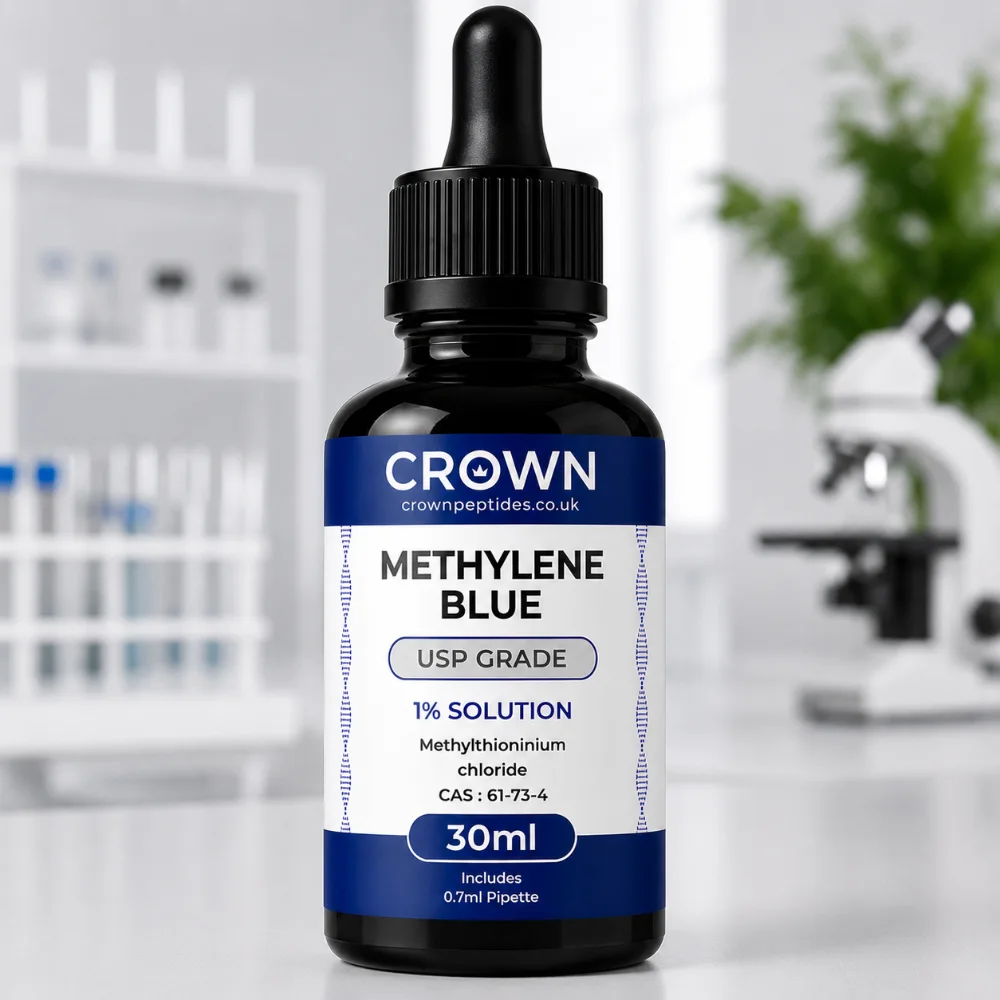
Methylene Blue 1% Solution (USP Grade)

A high-purity research solution studied in mitochondrial and redox research. Available in 30ml, with every batch independently tested and dispatched from the UK.

£34.99or from £29.74 per vial in packs of 5
Save up to 15%
From: £34.99
Your selection:
Batch level verified
All Batches TestedEvery batch, no exceptions
HPLC & MS VerifiedFull certificate published
Same Day PostageOrder before 2pm
UK Based CompanyDispatched from the UK
Product Overview

A high-purity research solution studied in mitochondrial and redox research. Available in 30ml, with every batch independently tested and dispatched from the UK.

Full Product Specification
Overview

Product Overview

Crown Peptides' Methylene Blue 1% Solution is a phenothiazine dye and redox-active research compound, supplied as a 1% USP-grade solution in a 30ml bottle (including a 0.7ml pipette) for laboratory research.

1%Solution strengthUSP gradePharmacopoeia standard30ml bottleIncludes 0.7ml pipetteBatch CoADocumentation supplied

Supplied for laboratory research purposes only — not for human consumption or for medical, veterinary or diagnostic use.

Key features

Key Features

  • Studied in research involving oxidation-reduction chemistry
  • Studied in research involving mitochondrial electron-transfer research
  • Studied in research involving cellular bioenergetics
  • Studied in research involving histological and biochemical staining
  • Batch-specific quality documentation available
Background

About Methylene Blue 1% Solution

Methylene Blue is a phenothiazine dye with well-characterised redox chemistry. In laboratory research it is used both as a staining reagent and as a redox-active compound for studying electron transfer, mitochondrial biology and oxidation-reduction reactions.

Also known as: methylthioninium chloride, MB, CI 52015, Basic Blue 9.

Research

Methylene Blue Research

Methylene Blue can cycle between oxidised and reduced states, which explains much of its experimental value in redox chemistry, including its documented bioenergetic effects in isolated brain mitochondria (Learn more). Research applications include mitochondrial electron-transfer models, cellular energetics, enzyme assays, histology and biochemical staining, alongside related mitochondrial-research compounds such as MOTS-c and SS-31. Because commercial forms can differ in hydration state and grade, the batch documentation should define the exact material supplied.

  • Oxidation-reduction chemistry
  • Mitochondrial electron-transfer research
  • Cellular bioenergetics
  • Histological and biochemical staining
Caro’s cotton dye and Ehrlich’s living stain

Methylene Blue started out as a textile colour. Heinrich Caro, head of research at BASF in Ludwigshafen, synthesised it in 1876 while searching for a pure blue that would take to cotton, and in 1877 BASF received Germany’s first patent for a coal-tar dye. It soon crossed into the laboratory. Robert Koch used it in the staining work behind his 1882 description of the tuberculosis bacillus, and in 1886 Paul Ehrlich found that it picked out living nerve fibres while leaving the surrounding tissue pale.

That selectivity planted an idea that shaped modern pharmacology: if a dye can seek out one kind of cell, perhaps a chemical can be made to strike one kind of target. Malaria parasites took up the stain as well, and in 1891 Ehrlich and Paul Guttmann gave methylene blue to two malaria patients in Berlin, a step often described as the first use of a fully synthetic compound as a medicine. Its three-ring phenothiazine skeleton later reappeared across whole twentieth-century drug classes, from early antihistamines to chlorpromazine.

Blue and colourless: the two-state redox cycle

Almost everything useful about Methylene Blue traces back to one reversible reaction. The oxidised, positively charged form is intensely blue, absorbing most strongly in the red near 664 nm. Give it two electrons and a proton and it becomes leucomethylene blue, which is colourless. Oxygen readily pulls those electrons back, restoring the colour and generating superoxide and hydrogen peroxide along the way. Chemistry teachers know this as the “blue bottle” demonstration: glucose in alkaline solution bleaches the dye, and shaking the flask brings the blue straight back as air dissolves in.

Biology exploits the same switch. Living cells and bacteria reduce the dye with their own enzymes, the basis of dye-reduction tests such as the long-established check on raw milk, where faster loss of colour points to a larger microbial load. Concentration matters too. Dilute solutions hold mostly single molecules, but as concentration rises the flat rings stack into dimers that absorb at shorter wavelengths, around 610 nm, so quantitative spectroscopy relies on dilute samples and fixed conditions.

A detour around blocked mitochondrial complexes

Inside mitochondria, Methylene Blue can stand in as an electron carrier. It collects electrons from NADH and hands them straight to cytochrome c, letting electron flow continue on to complex IV and oxygen even when complex I or complex III has been chemically shut down. A 2011 paper in the Journal of Biological Chemistry framed this as alternative mitochondrial electron transfer: in cultured neuronal cells the dye raised oxygen consumption and cut anaerobic glycolysis, while a derivative whose redox centre had been disabled by N-acetylation left complex activities unchanged, tying the effect to the redox cycle itself.

Later work tested the idea more strictly. Experiments on isolated mitochondria from rats, mice and guinea pigs, published in 2021, found Methylene Blue could reduce cytochrome c and improve respiration and membrane potential after complex III was blocked with antimycin or myxothiazol, alongside some unusual respiratory changes. It is far from a single-target probe, though. The dye also inhibits nitric oxide synthase and soluble guanylate cyclase, and its behaviour can reverse at higher concentrations, so concentration-response curves and redox-inactive controls are standard parts of experimental design.

Red light and singlet oxygen in photodynamic research

Strong absorption of red light makes Methylene Blue an effective photosensitiser. After absorbing a photon, the molecule can cross into a long-lived excited triplet state and pass that energy to dissolved oxygen, producing singlet oxygen, a highly reactive species that damages nearby lipids, proteins and nucleic acids. Because the dye binds to and slots between the bases of DNA and RNA, that damage lands exactly where it disrupts viruses and microbes most.

Blood services put this to practical use. Methylene Blue plus visible light is an established pathogen-reduction method for plasma, and commercial systems such as THERAFLEX MB-Plasma illuminate each unit after the dye is added; published laboratory work has shown it reducing Ebola virus and MERS coronavirus in spiked plasma to undetectable levels. Researchers have also explored photodynamic approaches against bacteria, fungi and biofilms in culture and in cancer cell lines, helped by the fact that red light travels further through biological material than blue or green.

Specifications

Specifications

Product
Methylene Blue
Classification
Phenothiazine dye and redox-active research compound
Available strength
30ml
CAS number
61-73-4
Molecular weight
319.85 g/mol (anhydrous)
Molecular formula
C16H18ClN3S for the anhydrous chloride representation

Compound-level reference data. Batch-specific results appear on the Certificate of Analysis.

Work out concentration with the peptide calculator
Testing

Purity and Testing

Crown Peptides Methylene Blue is supplied with batch-specific quality documentation appropriate to the material. Analytical methods vary by compound and formulation, so the Certificate of Analysis should be used as the definitive source for identity, assay, purity and relevant impurity information.

Storage

Storage Conditions

  • Store according to the product label and batch-specific documentation
  • Protect from excessive heat and direct light where applicable
  • Maintain appropriate laboratory contamination controls
Full storage guide
Related

Related Compounds

Researchers working with Methylene Blue may also be interested in MOTS-c, SS-31, NAD+, Glutathione and L-Carnitine (LC216) — other compounds studied in mitochondrial and cellular-energy research.

Compliance

Research Use Only

  • Laboratory research only
  • Not for human or clinical use
  • Not for human or veterinary consumption
  • Qualified personnel only
Questions

Methylene Blue Frequently Asked Questions

About Methylene Blue6 questions
What is Methylene Blue?

A small synthetic dye from the phenothiazine family: three fused rings with sulphur and nitrogen in the middle ring and a positive charge spread across the whole system. Its international non-proprietary name is methylthioninium chloride, the name used for European medicines, and colour chemists list it as Basic Blue 9 or CI 52015. There are no amino acids in it, so it is not a peptide. Our version is a 1% USP-grade solution in a 30ml bottle with a 0.7ml pipette.

Why is Methylene Blue blue?

Its positive charge is shared along a chain of alternating single and double bonds running through all three rings. That arrangement absorbs orange-red light very efficiently, peaking close to 664 nm, so the light reaching the eye is the blue left over. Reduce the dye, adding electrons that break up that charged system, and the colour vanishes.

Why do molecular-weight listings for Methylene Blue vary?

Water. Anhydrous methylthioninium chloride, C16H18ClN3S, weighs 319.85 g/mol (CAS 61-73-4), while the trihydrate commonly sold as the solid comes to 373.90 g/mol (CAS 7220-79-3). Commercial powder can fall between the two, which is why the USP monograph allows 8.0% to 18.0% loss on drying and calculates its assay on the dried basis. Batch documentation states the form supplied.

What does USP grade mean for this solution?

It means the methylene blue meets the monograph in the United States Pharmacopeia, the published standard for its identity and purity. Among other tests, that monograph requires an infrared identity match, an assay of 98.0% to 103.0% on the dried basis measured by spectrophotometry near 663 nm, and a chromatographic check for related dyes. USP grade is a quality standard for the material; it is not a medicines approval or an approval for personal use.

Why does the USP monograph check Methylene Blue for zinc and copper?

Because of how the dye has been made and traded. Industrial methylene blue has long been produced as a zinc chloride double salt, still sold for technical uses, and trace metals can carry over from manufacture. The monograph caps copper at 0.02%, requires that no zinc precipitate forms in a hydrogen sulphide test, and limits arsenic to 8 ppm, separating pharmacopoeial material from dye-house stock.

How does this solution relate to the licensed methaemoglobinaemia medicine?

They share an active substance but are different products. In the UK, Methylthioninium chloride Proveblue 5 mg/ml solution for injection, from Provepharm, holds a Great Britain marketing authorisation for acute symptomatic treatment of methaemoglobinaemia caused by medicines or chemicals, having first been authorised across the EU in 2011. In the US the licensed product is ProvayBlue, approved by the FDA in 2016. Both are sterile medicines made under medicines regulation. Their mechanism is well understood: an NADPH-dependent reductase converts the dye to leucomethylene blue, which returns the ferric iron of methaemoglobin to the ferrous state. Crown Peptides’ 1% solution is laboratory material.

Methylene Blue at the bench4 questions
Why does Methylene Blue stain cells so readily?

Opposite charges attract. As a cation, the dye binds tightly to negatively charged DNA, RNA and acidic granules, so nuclei and bacteria stand out. Loeffler’s alkaline methylene blue shows up the metachromatic granules of Corynebacterium diphtheriae in reddish-purple, and the dye is the usual blue counterstain in the Ziehl–Neelsen method, where acid-fast mycobacteria stay red.

How does Methylene Blue tell live yeast from dead?

Living yeast keeps its reducing enzymes running, converting the dye to its colourless leuco form and staying clear under the microscope. Dead or badly damaged cells cannot, and turn deep blue. Brewing labs have long counted viable cells this way, holding the staining time constant because readings drift if cells sit in the dye too long.

How is Methylene Blue related to the azure dyes in Giemsa stain?

They are its offspring. Gentle oxidation, historically called polychroming, strips methyl groups from methylene blue to give azure A, B and C and methylene violet. Azure B with eosin produces the Romanowsky effect, the purple chromatin colour in Giemsa, Wright and Leishman stains, which remain standard for blood films and for spotting malaria parasites.

How strongly does Methylene Blue inhibit monoamine oxidase?

Strongly enough to shape experimental design. Work on purified human enzyme published in the British Journal of Pharmacology found it a potent, tight-binding reversible inhibitor of MAO-A, with MAO-B affected only at much higher concentrations. That is why the UK and US medicine labels warn against combining it with serotonergic drugs, and why neuroscience experiments with the dye include controls that separate MAO effects from redox effects.

Light, format and identity3 questions
Why must Methylene Blue be kept away from light?

The photosensitising chemistry that makes it valuable in photodynamic research works against it in storage. Under strong light the dye reacts with oxygen and gradually loses methyl groups, drifting towards violet azure-type products. Even the licensed injections are kept in their outer carton for this reason. A tightly closed bottle kept away from direct light, as the label directs, stays consistent from first use to last.

What does the 1% figure mean, and why buy the dye ready-dissolved?

1% here is weight per volume: one gram of dye in every 100 ml, a common stock strength that staining recipes then dilute. Buying it ready-made avoids weighing a fine powder that marks balances, benches and gloves on contact, and gives the same starting concentration every time. The 0.7ml pipette supplied with the 30ml bottle transfers measured volumes into dilutions.

Why does a Methylene Blue mass spectrum show m/z 284 rather than 320?

Because the chloride is only a counter-ion. In positive-mode mass spectrometry the coloured cation, C16H18N3S+, is detected on its own at about m/z 284.1, and the chloride that brings the salt to 319.85 never appears. The sulphur atom adds a fingerprint: its heavier sulphur-34 isotope contributes to a small companion peak two mass units above the main signal.

Read the batch certificate before you order

Every batch is published openly — identity, purity and batch number, with no account needed.

View lab reports

Supplied for laboratory research purposes only — not for human consumption or for medical, veterinary or diagnostic use.

All Batches Purity Tested

Each batch undergoes internal analytical verification using chromatographic and spectrometric methods prior to lyophilisation.

• HPLC Analysis
• Mass Spectrometry Confirmation
• Batch Traceability

For Research Use Only

By purchasing this product you confirm that you are a qualified researcher and that this compound will be used exclusively for laboratory research purposes.

Not for Human Consumption

This product is not intended for diagnostic or therapeutic use.

Any human or medical use is strictly prohibited.

Store Safely at All Times

Store in a cool, dry, secure and sterile environment away from any unauthorised persons or children.

Other Research Peptides

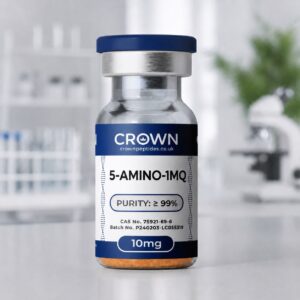
5-Amino-1MQ research compound UK 10mg and 50mg vial - Crown Peptides
≥99% PURITY
HPLC & MS TESTED
5-Amino-1MQ Research Compound
From: £24.99

Buy Now

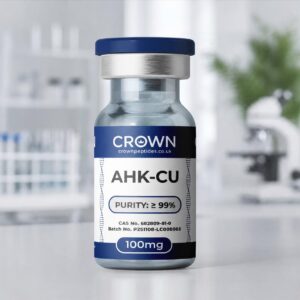
AHK-Cu 100mg research peptide vial – Crown Peptides UK
≥99% PURITY
HPLC & MS TESTED
AHK-Cu Research Peptide
From: £29.99

Buy Now

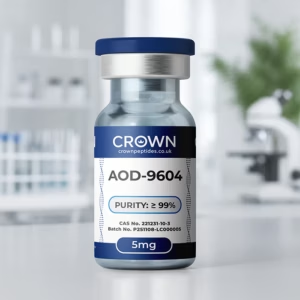
AOD-9604 5mg research peptide vial - Crown Peptides
≥99% PURITY
HPLC & MS TESTED
AOD-9604 Research Peptide
From: £34.99

Buy Now

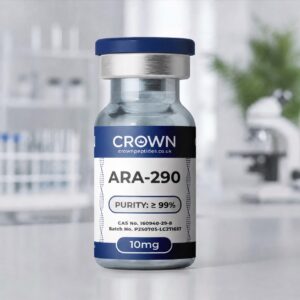
ARA-290 research peptide UK 10mg vial - Crown Peptides
≥99% PURITY
HPLC & MS TESTED
ARA-290 Research Peptide
From: £39.99

Buy Now

Further reading

SUPPORT Mon to Fri, 9am to 5pmDISPATCH Cut-off 2pmEMAIL info@crownpeptides.co.ukWHATSAPP +44 7301 802654

Disclaimer: All products are sold strictly for laboratory research purposes only. Not for human or veterinary use, consumption, therapeutic, or diagnostic application. None of our products are medicines, and none are presented as such. By purchasing, you confirm you are a qualified professional and legally permitted to handle these materials in compliance with all applicable laws and regulations. Misuse, resale for unauthorised purposes, or unlawful application is strictly prohibited. Crown Peptides UK disclaims all liability for improper use, handling, or regulatory non-compliance.

© 2026 Crown Peptides UK, a trading name of Crown Peptides Ltd (company no. 17068950), Suite Ra01, 195-197 Wood Street, London E17 3NU . All Rights Reserved.