

Research guide
Methylene Blue: The 19th-Century Dye That Became a Mitochondrial Research Tool
A 19th-century textile dye became one of the most-studied mitochondrial research tools in the laboratory. How methylene blue moves electrons, and why that still matters.
RESEARCH USE DISCLAIMER
Crown Peptides supplies methylene blue as a laboratory research compound only. It is a synthetic phenothiazine dye, not a peptide, and holds FDA approval only for the specific treatment of acquired methemoglobinemia; it is not approved for any other use. Our products are not intended for human consumption and are not sold, marketed, or labelled for the diagnosis, treatment, cure or prevention of any disease. Nothing in this document should be read as medical advice or as an endorsement of human use. Given documented serious drug interactions, this discussion summarises published scientific and regulatory literature only, and is intended for researchers and students of pharmacology.
Introduction
Methylene blue is one of the most genuinely interesting compounds in Crown Peptides’ research range, with a history stretching back further than almost anything else we supply and a rapidly growing body of modern mitochondrial and cognitive research behind it. It’s worth noting upfront that methylene blue is not a peptide — it’s a synthetic phenothiazine dye — and it’s frequently discussed alongside peptides simply because researchers studying mitochondrial function, cellular energy, and longevity often work with both in the same programmes. First synthesised in 1876 and used to treat malaria as early as the 1890s, methylene blue today holds an active FDA-approved indication for methemoglobinemia, giving it a genuinely well-characterised pharmacological history that few research compounds can match. Because it’s an active pharmaceutical ingredient with real medical history behind it, sourcing grade matters more here than for almost any other compound in this range — which is why Crown Peptides sources our methylene blue specifically at USP (United States Pharmacopeia) pharmaceutical grade from a trusted, established UK supplier, rather than the industrial or aquarium-grade material sometimes found elsewhere in this market.
This article covers methylene blue’s genuinely unusual dose-dependent pharmacology, its established medical uses, its more exploratory research applications in neurodegeneration and cognitive research, and — given real, well-documented risk — gives particular prominence to its interaction profile with serotonergic medications. This is one area in this article series where the safety information is not a hedge or a formality; it reflects a genuine, described-in-the-prescribing-information risk.
Crown Peptides supplies Methylene Blue 1% Solution (USP Grade) in 30ml bottles for laboratory research, with batch certificates published on our Lab Reports page. For a side-by-side look at how it differs from NAD+, see our Methylene Blue vs NAD+ comparison.
What Is Methylene Blue?
Methylene blue (methylthioninium chloride) is a synthetic tricyclic phenothiazine compound, structurally related to tricyclic antidepressants, that functions as both a dye and a redox-active (oxidation-reduction) agent. It holds FDA approval, including orphan drug designation, for the treatment of acquired methemoglobinemia, a condition in which haemoglobin is oxidised into a form unable to carry oxygen effectively; methylene blue works by accelerating the conversion of methemoglobin back to functional haemoglobin. It has also historically been used as a urinary tract antiseptic, an intraoperative tissue marker dye, and a treatment for vasoplegic shock and ifosfamide-induced encephalopathy, and it predates modern pharmacology as an antimalarial agent from the 1890s.
More recently, methylene blue and its purified derivatives have attracted research interest in neurodegeneration, cognitive function, and mitochondrial support — areas considerably more exploratory than its established, FDA-approved uses, and where the evidence, discussed in detail below, has been genuinely mixed rather than uniformly promising.
A Genuinely Unusual Pedigree Among Research Compounds
It’s worth dwelling briefly on just how unusual methylene blue’s history is within this article series, because it directly shapes how much confidence researchers can reasonably place in its basic pharmacology. Methylene blue was one of the very first synthetic drugs ever developed, predating the modern pharmaceutical industry entirely — it was originally developed as a textile dye by Heinrich Caro in 1876, and its antimalarial properties were identified by Paul Ehrlich in the 1890s, making it one of the foundational compounds in the history of chemotherapy as a scientific concept. This is a genuinely different starting point from most compounds discussed in this article series, many of which are recently characterised synthetic peptides with research histories measured in years rather than well over a century.
This long history matters practically: methylene blue’s absorption, distribution, metabolism, and excretion in humans are unusually well characterised compared to newer research compounds, precisely because it has been studied and used clinically for so long across so many different applications (antimalarial, urinary antiseptic, surgical marking dye, methemoglobinemia treatment, and more recently mitochondrial and cognitive research). Researchers working with methylene blue benefit from this depth of prior characterisation in a way that isn’t available for genuinely novel compounds.
- Classification
- Phenothiazine dye and redox-active research compound
- CAS Number
- 61-73-4
- Molecular Weight
- 319.85 g/mol (anhydrous)
- Molecular Formula
- C16H18ClN3S for the anhydrous chloride representation
Methylene Blue Mechanism: How It Works
Methylene blue’s pharmacology is unusually and importantly dose-dependent — to the point that its mechanism of action essentially changes character depending on concentration, which is a critical piece of context for interpreting any claim made about this compound. At low concentrations (commonly cited as roughly 0.5–2 micromolar), methylene blue functions as an alternative mitochondrial electron carrier: it can accept electrons from NADH and donate them directly to cytochrome c, effectively bypassing complexes I and III of the mitochondrial electron transport chain. This alternative electron transfer pathway has been shown to enhance mitochondrial respiration, increase cytochrome oxidase activity, and reduce mitochondrial superoxide production — the proposed basis for its antioxidant and neuroprotective research interest.
At higher concentrations, however, methylene blue’s character shifts substantially: it becomes a potent, reversible inhibitor of monoamine oxidase A (MAO-A), and can act as a pro-oxidant rather than an antioxidant. This isn’t a subtle pharmacological footnote — it is the direct mechanistic basis for one of methylene blue’s most serious documented drug interactions, discussed in detail in the side-effects section below. Separately, methylene blue inhibits nitric oxide synthase and guanylate cyclase, which underlies its vasoconstrictive use in vasoplegic shock, and has documented effects on tau protein aggregation that motivated its investigation in Alzheimer’s disease research.
Methylene blue’s mitochondrial, antioxidant research interest centres specifically on the low-dose range — the same molecule behaves differently at higher doses, which is why low-dose oral research protocols are the primary focus of this article.
Why USP Grade Matters for Methylene Blue Specifically
Methylene blue is one of the clearest examples in this entire article series of a compound where sourcing grade isn’t a generic reassurance — it’s a specific, well-documented safety consideration. Because methylene blue is manufactured across a very wide range of industrial applications (textile dyeing, aquarium treatments, laboratory staining, and pharmaceutical use all use methylene blue, but to entirely different purity standards), non-pharmaceutical-grade material has been specifically flagged in the literature as carrying a heavy-metal contamination risk that pharmaceutical-grade material is manufactured and tested to exclude.
This is why Crown Peptides sources methylene blue specifically at USP (United States Pharmacopeia) grade — the same purity standard applied to pharmaceutical-grade active ingredients — from an established, trusted UK-based supplier with a verifiable manufacturing and quality-control history, rather than the lower-cost industrial or aquarium-grade material that some suppliers in this market use interchangeably without distinguishing the difference to customers. For researchers, this distinction directly affects experimental validity: a batch carrying heavy-metal contaminants doesn’t just represent an ethical sourcing shortfall, it can introduce a confounding variable into any mitochondrial, oxidative-stress, or cell-viability research the compound is used in.
Why the dose-dependent mechanism matters more here than almost anywhere else in this series
Most compounds in this article series have a single, relatively consistent proposed mechanism across the dose ranges studied. Methylene blue is a genuine exception: the same molecule that functions as a mitochondrial antioxidant at very low concentrations functions differently at higher ones. This dose-dependent duality is a big part of what makes low-dose methylene blue research so mechanistically interesting, and is covered in more detail (including relevant safety context) in the side-effects section below.
Methylene Blue Benefits: Why Researchers Are Interested
Methylene blue’s research interest spans its established, approved medical uses (methemoglobinemia, vasoplegic shock) and a considerably more exploratory research programme in neurodegeneration and cognitive function, built around its mitochondrial and anti-tau-aggregation mechanisms. The gap between these two categories of use is genuinely important to keep in view: one is backed by regulatory approval and decades of clinical use, the other has produced a large and instructive clinical trial programme that has, on balance, not succeeded in its primary aims.
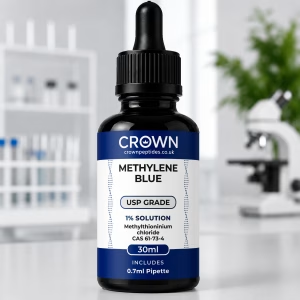
Methylene Blue 1% Solution (USP Grade)
HPLC and MS verified · batch certificate published · dispatched from the UK before 2pm
Key Areas of Methylene Blue Research
Methemoglobinemia (established, FDA-approved use). Methylene blue’s best-established clinical application, based on accelerated conversion of methemoglobin back to functional haemoglobin, with accelerated FDA approval based on demonstrated reduction in methemoglobin levels within one hour of intravenous administration.
Alzheimer’s disease and tau aggregation — a large trial programme with disappointing results. Methylene blue and its purified derivative LMTM (TRx0237) were investigated as tau aggregation inhibitors across a substantial clinical trial programme by TauRx Therapeutics. The first Phase III trial did not slow cognitive or functional decline compared to placebo in the overall study population; a subsequent Phase III trial in mild Alzheimer’s disease found some reduction in brain atrophy on imaging but no significant benefit on the primary cognitive endpoints. A subgroup analysis from the first trial suggested possible benefit in patients taking LMTM as monotherapy, but this analysis was heavily criticised by independent researchers at the time for statistical and methodological reasons, and should not be read as established evidence of benefit.
Mitochondrial and neuroprotective mechanism research. Separate from the clinical Alzheimer’s programme, basic research has continued to characterise methylene blue’s low-dose mitochondrial electron-shuttling mechanism, including in models of complex I and complex III inhibition, and its effects on ferroptosis (iron-dependent cell death) via reduction of complex-I-driven lipid peroxidation.
Vasoplegic shock and perioperative uses. Intravenous methylene blue is used clinically for vasoplegic shock, based on its nitric oxide synthase and guanylate cyclase inhibition — a well-established, genuinely useful clinical application beyond its metabolic and cognitive research interest.
A genuinely conflicting finding worth flagging directly. Not all of the mechanistic research points in a uniformly positive direction: at least one study has reported that methylene blue can accelerate formation of neurotoxic tau oligomers under certain experimental conditions, a finding that sits in tension with its proposed anti-aggregation mechanism and hasn’t been fully reconciled in the literature — a genuine example of the kind of conflicting preclinical signal that a one-sided summary could easily omit.
Methodology: the critical importance of dose and route in this literature. Given the mechanism-switching, dose-dependent pharmacology described above, any research summary or claim about methylene blue needs to specify dose and route before it can be meaningfully evaluated — far more so than for most compounds in this series, where dose mainly affects magnitude rather than fundamentally changing which mechanism predominates.
Wound care and antiseptic research, historically and today. Beyond its better-known modern applications, methylene blue has a long-standing history as a topical antiseptic and urinary tract antiseptic, and this historical use has fed into contemporary research interest in its antimicrobial properties, including some research into methylene blue-based photodynamic therapy approaches for treating resistant bacterial and fungal infections.
Summary of Published Methylene Blue Studies
This table illustrates something genuinely distinctive about methylene blue within this series: it has actual completed human Phase III trial data (unlike most compounds discussed elsewhere), and that data was, on balance, disappointing for its most publicised exploratory application. Its established, approved use (methemoglobinemia) rests on solid ground; its more speculative cognitive and neuroprotective applications do not currently have comparable human trial support.
Potential Methylene Blue Benefits for Mitochondrial Research
Based on the published literature, researchers have investigated methylene blue as a tool for studying:
- Alternative mitochondrial electron transport mechanisms and their relevance to cellular bioenergetics
- Tau protein aggregation biology in neurodegenerative disease models
- Nitric oxide synthase and guanylate cyclase pathways relevant to vascular tone regulation
- Methaemoglobin reduction biochemistry
- Ferroptosis and iron-dependent lipid peroxidation mechanisms
As with the other compounds in this series, this is research investigating mechanisms — and in methylene blue’s specific case, a genuinely large completed clinical trial programme for one exploratory application that did not, on balance, succeed. None of the above constitutes a demonstrated therapeutic benefit for any use beyond methylene blue’s specific, narrow, already-approved indications.
Current Limitations of Methylene Blue Research
Several honest caveats apply, some specific to methylene blue’s unusual position as an approved drug being explored for new applications:
- The largest, most rigorous human trials for cognitive/neurodegenerative use did not succeed. The pivotal Phase III trials of LMTM in Alzheimer’s disease did not meet their primary cognitive and functional endpoints in the overall study population, despite a large, well-resourced trial programme specifically designed to test this question.
- The positive subgroup finding has been specifically and publicly disputed. Independent researchers at the original trial presentation raised specific statistical and methodological concerns about the monotherapy subgroup analysis, including imbalanced genetic risk factor distribution between groups, and cautioned against treating it as reliable evidence of benefit.
- At least one study reports a conflicting, concerning mechanistic finding. Research reporting that methylene blue can accelerate neurotoxic tau oligomer formation under some conditions sits in direct tension with its proposed therapeutic mechanism and has not been fully reconciled with the broader literature.
- Quality and grade of the compound itself is a genuine, documented safety variable. Non-pharmaceutical-grade methylene blue (such as industrial or aquarium-grade material) has been specifically flagged as carrying heavy-metal contamination risk, making sourcing grade a directly safety-relevant issue for this compound in a way that goes beyond routine purity assurance.
- The therapeutic window is genuinely narrow at the high end. Doses above approximately 7 mg/kg have been reported to paradoxically cause methemoglobinemia — the very condition methylene blue is used to treat at appropriate doses — illustrating that this is a compound where exceeding the intended dose range can reverse its intended effect rather than simply increasing it.
Methylene Blue Side Effects Reported in Research
This section carries more direct clinical weight than the equivalent section for most compounds in this series, because methylene blue’s interaction and contraindication profile is well established in formal prescribing information rather than being an area of uncertainty.
Serotonin syndrome (serotonin toxicity) is the most serious and best-documented risk. Methylene blue is a potent MAO-A inhibitor, and combining it with serotonergic medications — including SSRIs, SNRIs, other MAO inhibitors, bupropion, buspirone, and clomipramine, among others — has produced serious and fatal serotonin syndrome cases, and drug interaction guidance directs avoiding concomitant use with serotonergic drugs. A detailed review of 51 published serotonin toxicity cases found the overwhelming majority occurred with intravenous administration at substantially higher doses than typically used in low-dose oral research contexts, but this dose-response pattern should be understood as affecting probability and severity of risk, not as eliminating it — caution around concurrent serotonergic medication use remains warranted regardless of dose or route.
Glucose-6-phosphate dehydrogenase (G6PD) deficiency is a specific, documented contraindication, since methylene blue’s redox activity can trigger haemolysis in G6PD-deficient individuals. Doses above approximately 7 mg/kg have been reported to paradoxically induce methemoglobinemia rather than treat it. Blue discoloration of urine and mucous membranes is a harmless but characteristic and expected effect. Any research protocol involving human or animal subjects should be developed with appropriate ethical and institutional review, and given methylene blue’s well-characterised interaction profile, this should specifically include careful screening for concurrent serotonergic medication use and G6PD status.
Methylene Blue Dosage Used in Published Research
This section is included for methodological context only and should not be interpreted as guidance for use.
Published research spans a very wide range depending on context: FDA-approved methemoglobinemia treatment uses intravenous dosing calculated by body weight under direct medical supervision; the LMTM Alzheimer’s trials used oral doses in the range of 8–250 mg/day of the purified derivative under clinical trial conditions with structured safety monitoring; and low-dose oral mitochondrial-support research contexts described in the literature have used considerably lower oral doses, though this specific use case has not been evaluated in the same kind of large, controlled clinical trial as the approved and Alzheimer’s-trial uses. These figures illustrate how enormously context-dependent methylene blue dosing is — they are not interchangeable across use cases, routes, or patient populations, and are not a basis for self-directed use in any context.
Researchers designing their own experimental protocols should base dosing decisions on the primary literature relevant to their specific model, route, and objective, in consultation with institutional ethics review as applicable, and should specifically account for the drug interaction and contraindication profile described above regardless of the dose being studied.
Analogues and Future Research Directions
The most clinically advanced analogue is LMTM (TRx0237, also known as LMTX or hydromethylthionine), a purified, second-generation derivative developed specifically to improve absorption and tolerability compared to unpurified methylene blue. As the trial data above shows, purification and improved bioavailability did not, on their own, translate the underlying hypothesis into a successful clinical outcome for Alzheimer’s disease specifically.
- Reconciling the conflicting tau-aggregation findings. Given that some research has found methylene blue accelerates rather than prevents neurotoxic tau oligomer formation under certain conditions, resolving this discrepancy remains an important open mechanistic question for this entire research programme.
- Further characterising low-dose mitochondrial applications separately from the Alzheimer’s programme. Given that the failed Alzheimer’s trials primarily tested tau-aggregation-focused hypotheses at specific doses, dedicated research on the lower-dose mitochondrial-support mechanism as a distinct research question, rather than conflating it with the Alzheimer’s trial results, would help clarify what (if anything) remains promising in this space.
- Standardising quality and grade requirements for research use. Given the documented heavy-metal contamination risk specific to non-pharmaceutical-grade material, establishing and adhering to consistent pharmaceutical-grade sourcing standards is a directly actionable step for anyone conducting research with this compound.
- Photodynamic and antimicrobial applications. Building on methylene blue’s long history as an antiseptic, ongoing research into methylene blue-based photodynamic therapy — where the compound is activated by specific wavelengths of light to generate reactive oxygen species that damage microbial cells — represents a genuinely distinct research direction from its mitochondrial and cognitive research applications, worth tracking separately.
Researchers studying mitochondrial function alongside methylene blue often also work with NAD+, SS-31, MOTS-c, 5-Amino-1MQ, L-Carnitine and Glutathione. Our guides to mitochondrial peptides and longevity research compounds cover these in more detail, or you can browse the full Crown Peptides research range.
Frequently Asked Questions
Is methylene blue a peptide?
No. It’s a synthetic phenothiazine dye, chemically unrelated to peptides. It’s included in Crown Peptides’ research compound range because it’s frequently studied alongside peptides in mitochondrial and longevity-adjacent research, but it has an entirely different chemical structure and history.
Is methylene blue FDA-approved?
Yes, for a specific indication: treatment of acquired methemoglobinemia, where it holds orphan drug designation. It is not approved for cognitive enhancement, neurodegeneration, or general mitochondrial support.
Can methylene blue be safely combined with antidepressants?
This requires serious caution. Methylene blue is a potent MAO-A inhibitor, and combining it with serotonergic medications including SSRIs and SNRIs has caused serious and fatal serotonin syndrome. Drug interaction guidance directs avoiding this combination, and this is not a theoretical concern — it is documented in formal prescribing information.
Did methylene blue work for Alzheimer’s disease in clinical trials?
The pivotal Phase III trials of its purified derivative, LMTM, did not meet their primary cognitive and functional endpoints in the overall study population. A subgroup analysis suggesting possible benefit in monotherapy patients was heavily disputed by independent researchers on statistical and methodological grounds.
Does dose matter for methylene blue’s mechanism?
Very much so, more than for most compounds discussed in this series. Methylene blue’s mechanism itself shifts from a low-dose mitochondrial antioxidant effect to a different profile at higher doses — which is part of why low-dose oral research protocols are the primary focus of the mitochondrial and cognitive research interest in this compound.
Who should not use methylene blue in any research context?
Individuals with glucose-6-phosphate dehydrogenase (G6PD) deficiency are at specific risk of haemolysis, and anyone taking serotonergic medications faces a documented serotonin syndrome risk. These are established contraindications, not theoretical cautions.
Is methylene blue legal to purchase for research in the UK?
Methylene blue is not a controlled substance under UK law and is available from suppliers as a research and laboratory compound. Given its status as an active pharmaceutical ingredient with a well-documented interaction profile, researchers should be particularly diligent in following institutional ethics and safety procedures regardless of a supplier’s terms of sale.
Is methylene blue a nootropic?
It’s widely discussed as one in wellness and biohacking contexts, based on its genuinely interesting low-dose mitochondrial electron-shuttling mechanism — an active and legitimate area of ongoing mechanistic research, distinct from its approved medical use for methemoglobinemia. These informal reports are not research data, and Crown Peptides does not condone personal or human use of research compounds.
What does USP grade mean for methylene blue?
USP (United States Pharmacopeia) grade refers to the pharmaceutical purity standard applied to active pharmaceutical ingredients, involving specific testing for identity, purity, and contaminants including heavy metals. This is a meaningfully higher standard than industrial or aquarium-grade methylene blue, which is manufactured for entirely different applications with different purity requirements.
Why does Crown Peptides source methylene blue from a UK supplier specifically?
Sourcing from an established, trusted UK-based supplier gives us direct oversight of manufacturing standards and a verifiable quality-control history for every batch, rather than relying on overseas industrial suppliers whose grade and testing standards can be considerably harder to verify independently.
What is methylene blue’s history in medicine?
Methylene blue has one of the longer documented histories of any compound discussed in Crown Peptides’ research range: first synthesised in 1876, used as an antimalarial from the 1890s, and today holding active FDA orphan drug approval for methemoglobinemia — giving it a genuinely well-characterised pharmacological profile spanning well over a century of use.
Is methylene blue used in surgery?
Yes, historically and today. Methylene blue has been used as a surgical marking and tracer dye for decades, helping surgeons visualise specific tissues, ducts, or lymph nodes during procedures, alongside its more recently studied intravenous use in managing vasoplegic shock during and after surgery.
How does methylene blue compare to other mitochondrial-support research compounds like NAD+?
They work through different mechanisms entirely. NAD+ (covered in a separate Crown Peptides research review) is a coenzyme consumed and regenerated by specific cellular enzymes, while methylene blue’s proposed low-dose mechanism involves directly shuttling electrons within the mitochondrial electron transport chain. Both are studied in mitochondrial and cellular-energy research contexts, but they are chemically and mechanistically distinct compounds that shouldn’t be assumed to be interchangeable.
Why Sourcing Quality Matters for Research Validity
Methylene blue presents a sourcing consideration that is unusually direct and well-documented compared to most compounds in this series: non-pharmaceutical-grade material, such as industrial or aquarium-grade methylene blue, has been specifically flagged as carrying heavy-metal contamination risk. This isn’t a generic quality-assurance talking point — it’s a named, specific concern raised in safety literature about this exact compound.
Common failure modes relevant to methylene blue specifically include:
- Heavy metal contamination in non-pharmaceutical-grade material — industrial and aquarium-grade methylene blue is manufactured to a different, less rigorous standard than pharmaceutical-grade material and has been specifically identified as a contamination risk for exactly this reason.
- Inaccurate concentration labelling — given how dose-dependent methylene blue’s mechanism and safety profile are, verifying actual concentration against the label matters more for this compound than for most others in this series, where dosing errors could plausibly shift the compound from its low-dose antioxidant mechanism into its higher-dose MAO-inhibiting range.
- Degradation and oxidation state changes during storage — as a redox-active compound, methylene blue’s oxidised and reduced forms have different properties, and improper storage could plausibly alter the balance between these states.
- Inconsistent identity verification — without independent analytical confirmation, there’s no reliable way to verify that a research sample is genuinely pharmaceutical-grade methylene blue rather than a lower-grade, less rigorously manufactured equivalent.
Given that reviewers have specifically and explicitly identified pharmaceutical-grade sourcing as a non-negotiable safety requirement for this exact compound, independent verification is a direct response to a named, documented risk — not a generic reassurance copied across every product page.
Read the certificate before you order
Every batch is published openly — identity by mass spectrometry, purity by HPLC, and the batch number printed on the vial you receive.
Open the COA libraryWhy Choose Crown Peptides
Testing is only part of the picture. Crown Peptides was built around a simple idea: a UK researcher ordering a peptide should be able to trust everything about how it reached them — not just the number on a Certificate of Analysis, but who made it, how it was handled, how it travelled, and who they can speak to if they have a question. That’s the standard we hold ourselves to on every order, and it’s worth explaining properly rather than just listing it.
Sourcing You Can Trust
Quality starts long before a product reaches our warehouse. We work directly with one of the world’s largest and most established peptide synthesis manufacturers, chosen specifically for its production standards, consistency, and track record — rather than sourcing opportunistically from whichever manufacturer happens to offer the lowest price that month. That close, ongoing partnership is what allows us to stand behind every batch we sell, because we know exactly how it was made.
Verified Through Independent Testing
We don’t expect researchers to take a manufacturer’s word for it, so we verify every batch independently before it’s listed for sale:
Endotoxin Testing
Every batch is screened for bacterial endotoxin, which matters in particular for any research involving cell culture, immune signalling, or in vivo inflammatory endpoints.
HPLC Purity Analysis
High-performance liquid chromatography is used to assess purity and screen for truncated sequences, deletion products, and synthesis by-products.
Mass Spectrometry Identity Confirmation
MS analysis confirms both the identity and purity of the supplied methylene blue, providing an independent check against the heavy-metal contamination risk specifically documented for non-pharmaceutical-grade material.
Certificate of Analysis
Every batch is supplied with a Certificate of Analysis, and a QR code linking directly to the testing report on crownpeptides.co.uk, so researchers can document exactly what was used in their own experimental records.
Careful Storage and Handling
A product that’s been correctly synthesised and tested can still be let down by poor handling afterward. Once a batch clears testing, we store it under controlled conditions designed to preserve stability and prevent degradation before it ever reaches a researcher’s bench. This matters more for peptides and sensitive research compounds than for most laboratory reagents: temperature excursions, light exposure, and poor stock rotation can all silently reduce integrity long before a vial is opened, in ways that aren’t visible on inspection and can quietly undermine an experiment’s results. We treat that storage window as part of the product, not an afterthought once testing is done.
Packaging and Delivery
Every order is packed in premium, discreet packaging designed to protect the product in transit and arrive intact. Orders placed before 2pm are dispatched the same working day for next-day UK delivery, and we ship to Northern Ireland, the Republic of Ireland, Scotland, England, and across the EU, with international shipping available beyond that. For a researcher working to a study timeline, knowing an order will arrive quickly, safely, and exactly as ordered isn’t a convenience — it’s part of keeping a research schedule on track.
Support That Goes Beyond the Sale
Peptide and research-compound work raises genuine practical questions — around reconstitution, storage, handling, and interpreting a Certificate of Analysis — and we’d rather a researcher ask us directly than guess. Our team is on hand to provide clear, straightforward guidance from product selection through to delivery and beyond, without the evasiveness or upsell pressure that can come with some suppliers in this space. We see that ongoing relationship, not just the transaction, as the actual job.
Regulatory Compliance and Transparency
Crown Peptides is a UK-based company operating in line with MHRA guidance on research chemicals. Every product is clearly labelled for laboratory research use only, sold on the basis that the purchaser is a qualified professional legally able to handle these materials, and never marketed, described, or sold as suitable for human consumption, therapeutic use, or diagnostic application. We’d rather be transparent about what we sell and who it’s for than blur that line to chase a wider customer base — that’s a deliberate choice on our part, not a legal minimum we begrudgingly meet.
Our Commitment
Put simply, our mission is to supply the UK research community with peptides and research compounds of unmatched purity and consistency, backed by a level of service, transparency, and technical support that researchers can actually rely on — from the first email enquiry to the vial arriving on the bench. That standard applies whether an order is a single vial for an independent researcher or a bulk order for a laboratory, and it holds regardless of whether a customer ever finds out how much work sits behind it.
Crown Peptides’ products are supplied strictly for laboratory research and are not sold, labelled, or intended for human consumption, diagnosis, treatment, or prevention of disease. For researchers who want their results to be reproducible and their experimental record defensible, knowing precisely what’s in the vial — and trusting that everyone who handled it got it right — is a basic, non-negotiable starting point.
References
- “Methylene Blue.” StatPearls, NCBI Bookshelf. https://www.ncbi.nlm.nih.gov/books/NBK557593/
- “Methylene blue and serotonin toxicity: inhibition of monoamine oxidase A (MAO A) confirms a theoretical prediction.” PMC. https://pmc.ncbi.nlm.nih.gov/articles/PMC2078225/
- “Prevalence of Serotonergic Drug Use in Patients Exposed to Perioperative Methylene Blue: A Cross-Sectional Study.” PMC. https://www.ncbi.nlm.nih.gov/pmc/articles/PMC12017462/
- “Methylene Blue Monograph for Professionals.” Drugs.com. https://www.drugs.com/monograph/methylene-blue.html
- “In First Phase 3 Trial, the Tau Drug LMTM Did Not Work. Period.” ALZFORUM. https://www.alzforum.org/news/conference-coverage/first-phase-3-trial-tau-drug-lmtm-did-not-work-period
- “Therapeutics of Alzheimer’s Disease: Recent Developments.” PMC. https://pmc.ncbi.nlm.nih.gov/articles/PMC9774459/
- “Methylene Blue Inhibits Caspases by Oxidation of the Catalytic Cysteine.” PMC. https://www.ncbi.nlm.nih.gov/pmc/articles/PMC4585840/
- “Methylene Blue Bridges the Inhibition and Produces Unusual Respiratory Changes in Complex III-Inhibited Mitochondria.” PMC. https://www.ncbi.nlm.nih.gov/pmc/articles/PMC7920423/
Working with Methylene Blue 1% Solution (USP Grade)
Batch-tested material, published certificates, and same-day dispatch on orders placed before 2pm.
See Methylene Blue 1% Solution (USP Grade)