Register today and get 10% off your first orderRegister for 10% off your first orderRegister now
Crown Peptides

Research Peptides

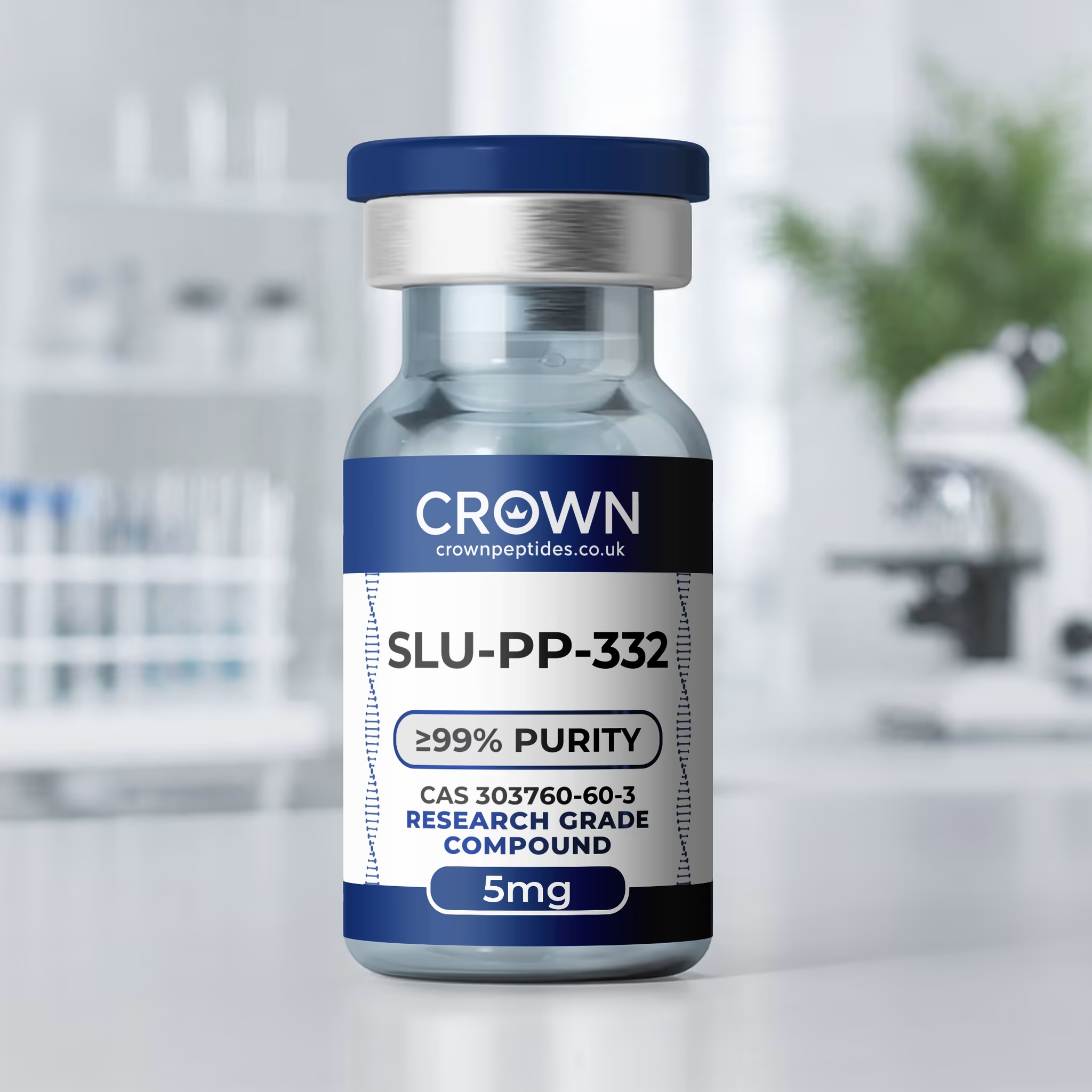
SLU-PP-332 Research Compound

A high-purity research compound studied in oestrogen-related receptor and mitochondrial metabolism research. Coming soon in 5mg and 10mg, with every batch independently tested and dispatched from the UK.

£39.99or from £31.99 per vial in packs of 10
Save up to 25%
From: £39.99
Your selection:
All Batches TestedEvery batch, no exceptions
HPLC & MS VerifiedFull certificate published
Same Day PostageOrder before 2pm
UK Based CompanyDispatched from the UK
Product Overview

A high-purity research compound studied in oestrogen-related receptor and mitochondrial metabolism research. Coming soon in 5mg and 10mg, with every batch independently tested and dispatched from the UK.

Full Product Specification
Overview

Product Overview

SLU-PP-332 UK is Crown Peptides’ synthetic small-molecule oestrogen-related receptor agonist research compound, coming soon in 5mg and 10mg for laboratory research.

5mg & 10mg (coming soon)Available strengthsHPLC testedChromatographic purityMS verifiedIdentity confirmedBatch CoADocumentation supplied

Supplied for laboratory research purposes only — not for human consumption or for medical, veterinary or diagnostic use.

Key features

Key Features

  • Studied in research involving oestrogen-related receptor (ERR) alpha, beta and gamma activation
  • Studied in research involving skeletal muscle mitochondrial function and fibre type
  • Studied in research involving rodent models of obesity and metabolic syndrome
  • Studied in research involving cardiac and kidney ageing models
  • Batch-specific quality documentation available
Background

About SLU-PP-332 UK

SLU-PP-332 is a small synthetic molecule, not a peptide, with the chemical name 4-hydroxy-N′-(naphthalen-2-ylmethylene)benzohydrazide. It switches on the three oestrogen-related receptors, ERR-alpha, ERR-beta and ERR-gamma, a family of nuclear receptors that control the genes cells use to build mitochondria and burn fat for energy. Earlier synthetic agonists activated only ERR-beta and ERR-gamma; SLU-PP-332 activates all three, with its strongest effect on ERR-alpha. It sits alongside MOTS-c and NAD+ in the metabolic and mitochondrial research area.

The compound was developed by Thomas Burris, Cyrielle Billon, John Walker and colleagues, with the chemistry carried out at Saint Louis University, reflected in its SLU prefix. It was described in full in 2023 as a redesign of an older GlaxoSmithKline compound that activated only two of the three receptors. Because it works on gene transcription rather than on an enzyme, it gives researchers a different angle on the “exercise mimetic” idea from AMPK-based tools such as AICAR. Most of the published evidence so far comes from mice and cultured cells, and it has not been tested in clinical trials.

Also known as: SLU PP 332, SLUPP332, SLU-PP332, ERR pan-agonist 332, (E)-4-hydroxy-N′-(naphthalen-2-ylmethylene)benzohydrazide

Research

SLU-PP-332 Research

SLU-PP-332 was first reported in 2023, in a study combining structure-based chemistry, muscle cell experiments and mouse studies, including mice lacking ERR-alpha in skeletal muscle. (Learn more) Since then the same research network has tested it in models of obesity, heart failure and kidney ageing, and it is studied alongside other mitochondrial research compounds such as SS-31 and 5-Amino-1MQ.

  • Oestrogen-related receptor (ERR) alpha, beta and gamma activation
  • Skeletal muscle mitochondrial function and fibre type
  • Rodent models of obesity and metabolic syndrome
  • Cardiac and kidney ageing models
Where the story starts: three orphan receptors

The ERRs were the first “orphan” nuclear receptors to be found: they resemble the oestrogen receptors but do not bind oestrogen, and no natural ligand has been identified for them. They are active on their own, and their activity is tuned by partner proteins, above all the PGC-1 coactivators. A 2008 review sets out how ERR-alpha and ERR-gamma act as the main route for PGC-1 activity, controlling large networks of genes for fat and glucose metabolism and for building and running mitochondria, and how mice lacking each receptor cope poorly with physiological stress. (Learn more)

From GSK4716 to SLU-PP-332

The first small-molecule ERR agonists were reported by GlaxoSmithKline in 2005. They belonged to a chemical family called phenolic acyl hydrazones, and the lead compound, GSK4716, activated ERR-beta and ERR-gamma but not ERR-alpha. (Learn more) Using the crystal structure of ERR-gamma bound to GSK4716, the Saint Louis group modelled the compound in ERR-alpha and redesigned it, gaining about 50-fold in ERR-alpha potency. In cell reporter assays SLU-PP-332 had half-maximal concentrations of 98 nanomolar at ERR-alpha, 230 at ERR-beta and 430 at ERR-gamma, and it did not alter the activity of the oestrogen receptors or other nuclear receptors tested. (Learn more)

Muscle cells and mouse muscle

In the C2C12 mouse muscle cell line, SLU-PP-332 raised the ERR target gene PDK4 and increased mitochondrial respiration. In mice it increased mitochondrial content and mitochondrial DNA in muscle and shifted fibres towards the oxidative type IIa. Treated sedentary mice ran about 70% longer and 45% further on a treadmill test than controls. RNA sequencing of muscle found a gene pattern that overlapped significantly with the pattern seen after a single bout of aerobic exercise. When the experiment was repeated in mice lacking ERR-alpha in skeletal muscle, the treadmill difference disappeared, showing that ERR-alpha was required for that effect. (Learn more)

Obesity and metabolic syndrome models

In a 2024 follow-up, the group gave SLU-PP-332 to diet-induced obese mice and to ob/ob mice, which lack the hormone leptin. They reported higher energy expenditure and fatty acid oxidation, less fat accumulation and improved insulin sensitivity in these models. (Learn more)

The heart: pressure-overload heart failure

A 2024 study tested SLU-PP-332 and a second, structurally different pan-ERR agonist, SLU-PP-915, in mice with heart failure caused by pressure overload. Both improved ejection fraction, reduced fibrosis and increased survival without changing heart enlargement, and they switched on genes for fatty acid metabolism and mitochondrial function. Genetic experiments showed that in the heart it was ERR-gamma, rather than ERR-alpha, that mainly carried the effect. (Learn more)

The ageing kidney

ERR levels fall in ageing human and mouse kidneys but were preserved in mice kept on lifelong caloric restriction. When 21-month-old mice were given SLU-PP-332 for eight weeks, the age-related rise in urine albumin, loss of podocytes, mitochondrial dysfunction and inflammatory signals through the cGAS-STING and STAT3 pathways were reversed, leading the authors to describe ERRs as caloric restriction mimetics in this model. (Learn more)

Human muscle cells

A 2025 pilot study took muscle biopsies from women having hip replacement surgery and grew myoblasts from the less active participants. In these cultured cells SLU-PP-332 raised SIRT1, PGC-1-alpha, ERR-alpha and FNDC5, lowered the oxidative enzyme NOX4, reduced markers of oxidative stress and senescence, and encouraged myotube formation. (Learn more)

Taken together, SLU-PP-332 is a well-defined chemical tool for studying ERR biology: a published structure with receptor-by-receptor potency data, genetic evidence of which receptor carries each effect, and a growing set of studies in muscle, metabolic, cardiac and kidney models. Nearly all of that work is in rodents and cultured cells, and much of it comes from a single research network.

Specifications

Specifications

Product
SLU-PP-332
Classification
Synthetic small-molecule pan-ERR agonist research compound
Available strengths
5mg and 10mg (coming soon)
CAS number
303760-60-3
Molecular weight
≈ 290.3 g/mol
Molecular formula
C18H14N2O2
Form
Research material supplied according to product label
Purity and assay
≥99% (HPLC), batch-specific — refer to Certificate of Analysis
Verification
HPLC and Mass Spectrometry where analytically appropriate

Compound-level reference data. Batch-specific results appear on the Certificate of Analysis.

Work out concentration with the peptide calculator
Testing

Purity and Testing

Crown Peptides SLU-PP-332 will be supplied with batch-specific quality documentation appropriate to the material. Because SLU-PP-332 is an acyl hydrazone, a structure that can split back into its two building blocks, 4-hydroxybenzohydrazide and 2-naphthaldehyde, purity matters as much as identity: HPLC shows whether any of those breakdown products are present, while mass spectrometry confirms the intact molecule at about 290 daltons. The Certificate of Analysis should be used as the definitive source for identity, assay, purity and relevant impurity information.

Storage

Storage Conditions

  • Store unreconstituted material at -20°C ± 5°C in a cool, dry environment
  • Prepared research solutions should use validated storage conditions appropriate to the compound and study design
  • Protect from unnecessary heat, direct light and repeated temperature fluctuations
Full storage guide
Related

Related Compounds

Researchers working with SLU-PP-332 may also be interested in MOTS-c, 5-Amino-1MQ, NAD+, SS-31, AOD-9604 and L-Carnitine — other compounds studied in mitochondrial, energy metabolism and metabolic research.

Compliance

Research Use Only

  • Laboratory research only
  • Not for human or clinical use
  • Not for human or veterinary consumption
  • Qualified personnel only
Questions

SLU-PP-332 Frequently Asked Questions

About SLU-PP-3327 questions
What is SLU-PP-332?

SLU-PP-332 is a synthetic small molecule that activates all three oestrogen-related receptors, ERR-alpha, ERR-beta and ERR-gamma, with its highest potency at ERR-alpha. It was described in 2023 by researchers working with Saint Louis University and is used in laboratory research on mitochondrial function, muscle fibre type and energy metabolism in cells and rodent models.

What are the oestrogen-related receptors?

They are three nuclear receptors, proteins that sit on DNA and switch sets of genes on or off. They were named for their resemblance to the oestrogen receptors, but they do not bind oestrogen. ERR-alpha and ERR-gamma are especially abundant in tissues with high energy demands, such as heart, skeletal muscle and kidney, where they control genes for mitochondria and fat burning.

Does SLU-PP-332 act on oestrogen receptors?

No. Despite the similar names, the oestrogen-related receptors are a separate family. In the 2023 study, SLU-PP-332 did not change the activity of oestrogen receptor alpha or beta, or of the other nuclear receptors tested, in cell-based assays. Its activity was confined to the three ERRs.

How can a receptor with no known ligand have an agonist?

The ERRs are switched on by default: they are active without any ligand, and partner proteins such as PGC-1-alpha turn their activity up further. An agonist like SLU-PP-332 binds a pocket in the receptor and increases that activity beyond its normal level. Designing such compounds for ERR-alpha proved especially difficult, which is why SLU-PP-332 attracted attention.

Where did SLU-PP-332 come from?

It grew out of GSK4716, a compound reported by GlaxoSmithKline in 2005 that activated ERR-beta and ERR-gamma but not ERR-alpha. The Saint Louis group used the crystal structure of GSK4716 bound to ERR-gamma to redesign it, gaining about 50-fold in ERR-alpha potency. Both share the same acyl hydrazone core linking a phenol to an aromatic ring.

How selective is SLU-PP-332 across the three ERRs?

In full-length receptor assays its half-maximal concentrations were 98 nanomolar at ERR-alpha, 230 at ERR-beta and 430 at ERR-gamma, so it is about 2.3 times more potent at ERR-alpha than ERR-beta and 4.4 times more than ERR-gamma. It is therefore described as a pan-ERR agonist with a preference for ERR-alpha, rather than a selective one.

How does SLU-PP-332 differ from AMPK-based exercise mimetic research?

Older exercise mimetic work, such as studies of AICAR, targets AMPK, an enzyme that senses the cell’s energy level and acts within minutes by adding phosphate groups to other proteins. SLU-PP-332 instead acts on transcription factors, changing which genes are switched on, so its effects are studied through gene expression, mitochondrial content and fibre type over days to weeks.

Findings in research models4 questions
What did the 2023 mouse muscle study find?

In treated mice, muscle contained more mitochondria and mitochondrial DNA and more oxidative type IIa fibres. Sedentary mice ran about 70% longer and 45% further on a treadmill test than controls, and muscle gene expression overlapped with the pattern seen after a single bout of aerobic exercise, which is why the authors called it an exercise mimetic.

What happened in mice lacking ERR-alpha in muscle?

The researchers used mice in which ERR-alpha had been removed from skeletal muscle only. In normal littermates, SLU-PP-332 increased treadmill endurance and switched on genes such as Ddit4, Per1 and Alas2. In the knockout mice neither change occurred, which showed that ERR-alpha in muscle was needed for those particular effects.

What has SLU-PP-332 been studied for beyond skeletal muscle?

Published mouse studies cover diet-induced and genetic obesity, where it raised energy expenditure and lowered fat mass; pressure-overload heart failure, where ERR-gamma was the main receptor involved; and the ageing kidney, where eight weeks in 21-month-old mice reversed several age-related changes. All of these are rodent findings from the same research network.

Has SLU-PP-332 been studied in human cells?

Yes, in culture. A 2025 pilot study grew muscle precursor cells from biopsies taken from less active women during hip surgery and treated them with SLU-PP-332, which raised PGC-1-alpha, ERR-alpha and SIRT1 and encouraged myotube formation. There are no published clinical trials of SLU-PP-332 in people.

Buying, testing & storage4 questions
Is SLU-PP-332 legal to buy in the UK?

SLU-PP-332 is not a controlled drug under the Misuse of Drugs Act 1971, including the Class C group covering anabolic steroids and growth hormones, and it is not a licensed medicine in the UK. It is sold in the UK as a research compound for laboratory use only, which is how Crown Peptides supplies it. This is general information, not legal advice.

Where can I buy SLU-PP-332 in the UK?

SLU-PP-332 is coming soon to Crown Peptides in 5mg and 10mg vials, available singly or in packs of 3, 5 or 10 with a saving on every vial. Orders ship from the UK, and every batch is independently tested, with its Certificate of Analysis published on this page once stock arrives.

How far does a 5mg or 10mg vial go?

SLU-PP-332 weighs about 290 daltons, so a 5mg vial is roughly 17 micromoles and a 10mg vial roughly 34. Published cell work used it at 10 micromolar, so 5mg makes about 1.7 litres of medium at that concentration and 10mg about 3.4 litres. Its potency at ERR-alpha is around 98 nanomolar, so reporter assays use far less.

How should SLU-PP-332 be stored once it arrives?

Keep the unreconstituted powder at -20°C ± 5°C, dry and away from light. The acyl hydrazone link at the centre of the molecule can slowly break down in water, so it is best kept dry, and published studies dissolved it in DMSO. Prepared solutions should follow storage conditions validated for your study design, and each batch’s Certificate of Analysis documents the material as dispatched.

Read the batch certificate before you order

Every batch is published openly — identity, purity and batch number, with no account needed.

View lab reports

Supplied for laboratory research purposes only — not for human consumption or for medical, veterinary or diagnostic use.

All Batches TestedEvery batch, no exceptions

Each batch undergoes internal analytical verification using chromatographic and spectrometric methods prior to lyophilisation.

• HPLC Analysis
• Mass Spectrometry Confirmation
• Batch Traceability

For Research Use Only

By purchasing this product you confirm that you are a qualified researcher and that this compound will be used exclusively for laboratory research purposes.

Not for Human Consumption

This product is not intended for diagnostic or therapeutic use.

Any human or medical use is strictly prohibited.

Store Safely at All Times

Store in a cool, dry, secure and sterile environment away from any unauthorised persons or children.

Other Research Peptides

2 strengths5-Amino-1MQ 10mg research compound vial, Crown Peptides UKAgeing research

5-Amino-1MQ Research Compound


From£24.99Strength10mg
Add to basket
Adamax 10mg research peptide vial, Crown Peptides UKNeurocognitive research

Adamax Research Peptide


From£44.99Strength10mg
Add to basket
AHK-Cu 100mg copper peptide vial, Crown Peptides UKAgeing research

AHK-Cu Research Peptide


From£29.99Strength100mg
Add to basket
AICAR 50mg research compound vial, Crown Peptides UKAgeing research

AICAR Research Compound


From£34.99Strength50mg
Add to basket

Further reading

UK research peptides. Every batch HPLC and MS verified, certificate published in full.
SUPPORT Mon to Fri, 9am to 5pmDISPATCH Cut-off 2pmEMAIL Email usWHATSAPP +44 7301 802654

Disclaimer: All products are sold strictly for laboratory research purposes only. Not for human or veterinary use, consumption, therapeutic, or diagnostic application. None of our products are medicines, and none are presented as such. By purchasing, you confirm you are a qualified professional and legally permitted to handle these materials in compliance with all applicable laws and regulations. Misuse, resale for unauthorised purposes, or unlawful application is strictly prohibited. Crown Peptides UK disclaims all liability for improper use, handling, or regulatory non-compliance.

© 2026 Crown Peptides UK, a trading name of Crown Peptides Ltd (company no. 17068950), Suite Ra01, 195-197 Wood Street, London E17 3NU . All Rights Reserved.