Register today and get 10% off your first orderRegister for 10% off your first orderRegister now
Crown Peptides
SAVE25%

Research Peptides

5-Amino-1MQ Research Compound

A high-purity research compound studied in metabolism and NAD+ research. Available in 10mg and 50mg, with every batch independently tested and dispatched from the UK.

£24.99or from £18.74 per vial in packs of 10
Save up to 25%
From: £24.99
Your selection:
Batch level verified
All Batches TestedEvery batch, no exceptions
HPLC & MS VerifiedFull certificate published
Same Day PostageOrder before 2pm
UK Based CompanyDispatched from the UK
Product Overview

A high-purity research compound studied in metabolism and NAD+ research. Available in 10mg and 50mg, with every batch independently tested and dispatched from the UK.

Full Product Specification
Overview

Product Overview

5-Amino-1MQ compound UK is Crown Peptides' small-molecule NNMT research compound, available in 10mg and 50mg strengths for laboratory research.

10mg & 50mgAvailable strengthsHPLC testedChromatographic purityMS verifiedIdentity confirmedBatch CoADocumentation supplied

Supplied for laboratory research purposes only — not for human consumption or for medical, veterinary or diagnostic use.

Key features

Key Features

  • Studied in research involving NNMT enzyme activity and nicotinamide methylation
  • Studied in research involving NAD-related metabolic pathways
  • Studied in research involving adipocyte and energy-balance models
  • Studied in research involving cellular methyl-donor metabolism
  • Batch-specific quality documentation available
Background

About 5-Amino-1MQ Compound UK

5-Amino-1MQ is a quinolinium-based small molecule studied primarily as an inhibitor of nicotinamide N-methyltransferase (NNMT). NNMT participates in nicotinamide metabolism and methyl-donor balance, which has made 5-Amino-1MQ useful in experimental work examining how altered NNMT activity can influence cellular metabolism. Unlike most of the Crown Peptides range, it's a small molecule rather than a peptide — but it's studied through the same rigorous laboratory research lens.

Also known as: 5-Amino 1MQ, 5 Amino 1MQ, 5A1MQ, 5-amino-1-methylquinolinium.

Research

5-Amino-1MQ Research

Laboratory research involving 5-Amino-1MQ has focused on selective NNMT inhibition and its effect on diet-induced obesity in mouse models (Learn more), and the downstream metabolic consequences of changing nicotinamide methylation, alongside related work on other ageing and metabolic compounds such as NAD+. Experimental models have explored adipocyte biology, cellular energy handling, NAD-related pathways and methyl-donor metabolism.

  • NNMT enzyme activity and nicotinamide methylation
  • NAD-related metabolic pathways
  • Adipocyte and energy-balance models
  • Cellular methyl-donor metabolism
NNMT: an enzyme that spends methyl groups

Nicotinamide N-methyltransferase was first described in 1951, when Giulio Cantoni showed that a soluble enzyme preparation from rat liver could attach a methyl group to nicotinamide, the amide form of vitamin B3. The reaction is simple on paper. NNMT lifts a methyl group from S-adenosylmethionine (SAM) and places it on the ring nitrogen of nicotinamide, leaving 1-methylnicotinamide (1-MNA) and S-adenosylhomocysteine (SAH) behind.

What makes the enzyme interesting is where those products go. 1-MNA cannot re-enter the NAD+ salvage route; it is oxidised to pyridone metabolites and excreted. Every turnover therefore removes one nicotinamide that could have been rebuilt into NAD+ and burns one SAM that could have methylated DNA, histones or other substrates. Liver carries the most NNMT, with white fat close behind. Benjamin Cravatt’s group at Scripps went further and described NNMT in cancer cells as a “methylation sink”: by locking methyl units into stable 1-MNA, high-NNMT cells ended up with hypomethylated histones and a shifted gene-expression pattern (Ulanovskaya et al.). One enzyme touching both NAD+ supply and methylation capacity is exactly why a selective inhibitor became such a useful probe.

Designing a quinolinium inhibitor from the product

5-Amino-1MQ came out of Stanley Watowich’s laboratory at the University of Texas Medical Branch in Galveston. Rather than screen at random, the team tested families of N-methylated aromatic cations (quinolinium, isoquinolinium, pyridinium, benzimidazolium and benzothiazolium compounds) that look rather like NNMT’s own product, 1-MNA. Across the set, activity spanned more than a thousand-fold, and the quinolinium scaffold stood out with IC50 values around 1 µM. Computer docking placed these inhibitors in the pocket that normally holds nicotinamide, not in the SAM site, and docking scores tracked the measured potencies closely (Neelakantan et al., J Med Chem).

A follow-up paper asked the practical questions. Methylquinolinium analogues carrying a primary amine, the group to which 5-Amino-1MQ belongs, crossed artificial membranes and Caco-2 cell layers well by both passive and active transport, which is notable for a molecule with a permanent positive charge. They also left structurally related SAM-dependent methyltransferases and the NAD+ salvage enzymes untouched, giving researchers an NNMT tool that does not muddy the pathways it is meant to reveal.

From cultured fat cells to diet-induced obese mice

The rodent groundwork was laid in 2014, when Barbara Kahn’s team used antisense knockdown of Nnmt in the fat and liver of mice on a high-fat diet. Those animals resisted diet-induced weight gain, burned more energy, and showed higher SAM and NAD+ in adipose tissue, along with faster polyamine turnover linked to changes in histone methylation (Kraus et al., Nature).

The Galveston group then tested small-molecule inhibition. In cultured adipocytes, their compounds lowered intracellular 1-MNA, raised NAD+ and SAM, and suppressed lipogenesis. In obese mice kept on a high-fat diet, systemic treatment with a potent member of the series reduced body weight, white adipose mass and adipocyte size and lowered plasma total cholesterol, without changing how much the animals ate. A later study paired 5-amino-1-methylquinolinium with a switch to low-fat chow and found the obese mice converged on age-matched lean controls faster than with the diet change alone, then profiled how their gut microbiome compared. All of this is rodent and cell data, which is precisely the stage the compound occupies.

Ageing muscle stem cells and NNMT inhibition

NNMT climbs with age in skeletal muscle, where it has been tied to a flagging NAD+ salvage pathway, altered sirtuin 1 activity and senescent muscle stem cells. To test whether blocking it could change that picture, the Watowich and Fry laboratories injured the tibialis anterior of 24-month-old mice with barium chloride and gave an NNMT inhibitor for one or three weeks. Stem-cell proliferation and fusion rose, regenerating fibres reached nearly twice the cross-sectional area of controls, and peak torque of the injured muscle was about 70% higher. C2C12 myoblasts in culture differentiated more readily, with matching shifts in their NAD+/NADH balance (Neelakantan et al., Biochem Pharmacol).

A 2024 study in Scientific Reports named 5A-1MQ as its inhibitor and treated mice from 22 to 24 months of age, with or without progressive weighted wheel running. Sedentary treated mice showed roughly 40% greater grip strength than sedentary controls, exercise alone about 20%, and the combination around 60%. Intramyocellular lipid fell, and proteome and metabolome analyses pointed to distinct molecular signatures for the drug, the exercise and the pairing (Dimet-Wiley et al.).

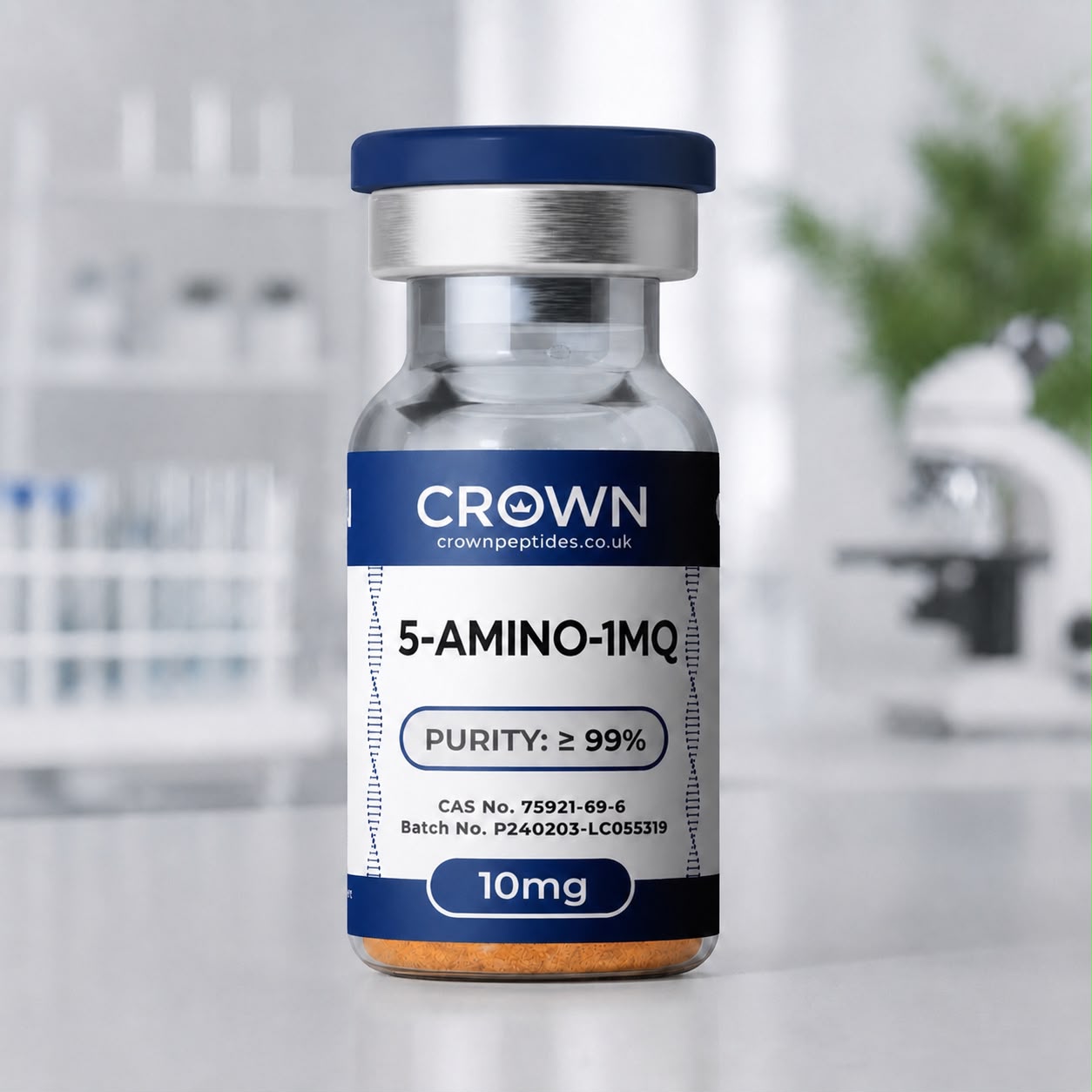
Specifications

Specifications

Product
5-Amino-1MQ
Classification
Small-molecule NNMT research compound
Available strengths
10mg and 50mg
CAS number
42464-96-0 (commonly referenced for the iodide form)
Molecular weight
286.11 g/mol (iodide salt); 159.21 g/mol for the cation
Molecular formula
C10H11IN2 (iodide salt)
Form
Research material supplied according to product label
Purity and assay
99% (HPLC), batch-specific — refer to Certificate of Analysis
Verification
HPLC and Mass Spectrometry where analytically appropriate

Compound-level reference data. Batch-specific results appear on the Certificate of Analysis.

Work out concentration with the peptide calculator
Testing

Purity and Testing

Crown Peptides 5-Amino-1MQ is supplied with batch-specific quality documentation appropriate to the material. Analytical methods vary by compound and formulation, so the Certificate of Analysis should be used as the definitive source for identity, assay, purity and relevant impurity information.

Storage

Storage Conditions

  • Store unreconstituted material at -20°C ± 5°C in a cool, dry environment
  • Prepared research solutions should use validated storage conditions appropriate to the compound and study design
  • Protect from unnecessary heat, direct light and repeated temperature fluctuations
Full storage guide
Related

Related Compounds

Researchers working with 5-Amino-1MQ may also be interested in NAD+, MOTS-c, SS-31, Epitalon and L-Carnitine — other compounds studied in cellular metabolism, energy balance and ageing-related research.

Compliance

Research Use Only

  • Laboratory research only
  • Not for human or clinical use
  • Not for human or veterinary consumption
  • Qualified personnel only
Questions

5-Amino-1MQ Frequently Asked Questions

About 5-Amino-1MQ7 questions
What is 5-Amino-1MQ?

5-Amino-1MQ is 5-amino-1-methylquinolinium, a small cation built on a quinoline ring, usually supplied as its iodide salt (CAS 42464-96-0). It blocks nicotinamide N-methyltransferase (NNMT) and is used to study how that enzyme shapes NAD+ supply and methyl-donor balance. You will also find it listed as 5A1MQ, 5-Amino 1MQ or simply NNMTi. Crown Peptides offers it in 10mg and 50mg strengths.

What does the “quinolinium” in its chemical name tell you?

Quinoline is a benzene ring fused to a pyridine ring. Adding a methyl group to the ring nitrogen (the “1-methyl”) gives that nitrogen a permanent positive charge, turning quinoline into a quinolinium ion; the “5-amino” is an NH2 group on the benzene half. There are no amino acids and no peptide bonds anywhere in the structure, so despite sitting in a peptide catalogue it is a classic small molecule of about 159 daltons as the free cation.

What reaction is NNMT responsible for?

NNMT moves a methyl group from S-adenosylmethionine onto nicotinamide, producing 1-methylnicotinamide and S-adenosylhomocysteine. Because the methylated nicotinamide is cleared rather than recycled, the enzyme acts as an exit door for both vitamin B3 and methyl groups. That is why NNMT activity is read alongside NAD+ levels, SAM:SAH ratios and histone methylation.

Which research group introduced 5-Amino-1MQ?

The compound was developed by Stanley Watowich, Harshini Neelakantan and colleagues at the University of Texas Medical Branch in Galveston, who built a structure–activity map of quinolinium NNMT inhibitors and published it in the Journal of Medicinal Chemistry. The same team ran most of the adipocyte, obese-mouse and aged-muscle studies that followed.

Why does blocking NNMT raise NAD+ in cells?

Cells rebuild NAD+ largely by recycling nicotinamide through the salvage pathway, starting with the enzyme NAMPT. Each nicotinamide that NNMT methylates is lost to that recycling loop. With NNMT inhibited, more nicotinamide stays available for salvage, and cultured adipocytes treated with the inhibitors showed higher intracellular NAD+ as well as higher SAM.

What is 1-MNA, and why do 5-Amino-1MQ papers keep measuring it?

1-MNA (1-methylnicotinamide) is the direct product of the NNMT reaction. A drop in its level inside treated cells is the clearest sign that the inhibitor has actually reached and engaged its target, so it works as a built-in readout before any downstream effect on lipids or NAD+ is interpreted. Further along, 1-MNA is oxidised to pyridone compounds that appear in urine.

Does 5-Amino-1MQ interfere with other methyltransferases?

Selectivity was one of the first things its developers checked. The methylquinolinium analogues did not inhibit related SAM-dependent methyltransferases or the enzymes of the NAD+ salvage pathway in their panel, and docking suggested they sit in NNMT’s nicotinamide pocket rather than competing for the shared SAM site.

Models and findings5 questions
What did genetic knockdown of NNMT show before inhibitors existed?

Kraus and colleagues, writing in Nature in 2014, silenced Nnmt in mouse fat and liver with antisense oligonucleotides. On a high-fat diet the mice gained less weight and expended more energy, adipose SAM and NAD+ rose, and polyamine flux increased. That genetic result gave the chemists a clear reason to chase a drug-like inhibitor.

Did food intake change in the obese-mouse study?

It did not. Diet-induced obese mice given a potent quinolinium NNMT inhibitor lost body weight and white fat mass and had smaller adipocytes and lower plasma cholesterol, yet total food intake matched the untreated group and no adverse effects were observed. The authors pointed instead to increased flux through NAD+ and SAM as the likely mechanism.

Why did NNMT research move into ageing muscle?

NNMT expression rises in skeletal muscle as mice age, and higher levels have been tied to weaker NAD+ salvage and more senescent muscle stem cells. That made aged muscle a natural test bed. In 24-month-old mice with an injured tibialis anterior, NNMT inhibition increased stem-cell activity, fibre size and the force the regenerating muscle could produce.

What did the exercise-combination study in old mice add?

It asked whether inhibitor and training overlap or stack. Over eight weeks, old mice given 5A-1MQ, weighted wheel running or both were compared with sedentary controls. Grip-strength gains were additive, reaching about 60% with the pairing, and proteomics showed that each intervention left its own molecular fingerprint rather than one simply copying the other.

Why do cancer biologists also study NNMT?

NNMT is overexpressed in many tumour types and in supporting stromal cells such as cancer-associated fibroblasts. Work from the Cravatt lab showed that high-NNMT cancer cells drain methyl units into 1-MNA, leaving histones under-methylated and gene expression altered. Inhibitors like 5-Amino-1MQ therefore interest epigenetics groups as well as metabolism labs.

Identity and lab planning3 questions
Where does the iodide go when 5-Amino-1MQ is run by mass spectrometry?

It separates from the molecule. In positive-ion electrospray, the quinolinium is already charged, so it appears directly as the cation at m/z of roughly 159.09 (C10H11N2+) with no added proton. The iodide counter-ion, 126.9 on its own, only shows up in negative-ion mode. A spectrum centred on 286 would actually be unexpected, since that figure is the mass of the whole salt, not an ion the instrument sees.

How much of each 10mg or 50mg vial is the active quinolinium ion?

Where the weight refers to the iodide salt, about 56% is the 5-amino-1-methylquinolinium cation and the rest is iodide (159.21 versus 286.11 g/mol). Even the 10mg vial holds roughly 35 micromoles of compound, generous for adipocyte or myoblast work run at low-micromolar concentrations. The 50mg size, or the five- and ten-vial packs, suit longer animal studies and series that need one batch throughout. Check the Certificate of Analysis for the exact form and assay.

How does blocking NNMT differ from adding NAD+ directly?

Supplying NAD+ gives cells the finished cofactor. Inhibiting NNMT works upstream: it spares nicotinamide for the cell’s own salvage machinery and, at the same time, conserves SAM for methylation reactions. Running both approaches in parallel helps separate effects driven by NAD+ from those driven by methyl-donor balance.

Read the batch certificate before you order

Every batch is published openly — identity, purity and batch number, with no account needed.

View lab reports

Supplied for laboratory research purposes only — not for human consumption or for medical, veterinary or diagnostic use.

All Batches Purity Tested

Each batch undergoes internal analytical verification using chromatographic and spectrometric methods prior to lyophilisation.

• HPLC Analysis
• Mass Spectrometry Confirmation
• Batch Traceability

For Research Use Only

By purchasing this product you confirm that you are a qualified researcher and that this compound will be used exclusively for laboratory research purposes.

Not for Human Consumption

This product is not intended for diagnostic or therapeutic use.

Any human or medical use is strictly prohibited.

Store Safely at All Times

Store in a cool, dry, secure and sterile environment away from any unauthorised persons or children.

Other Research Peptides

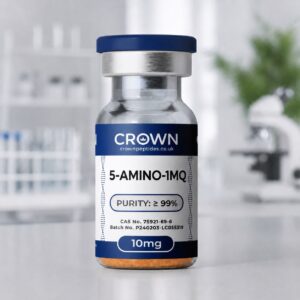
5-Amino-1MQ research compound UK 10mg and 50mg vial - Crown Peptides
≥99% PURITY
HPLC & MS TESTED
5-Amino-1MQ Research Compound
From: £24.99

Buy Now

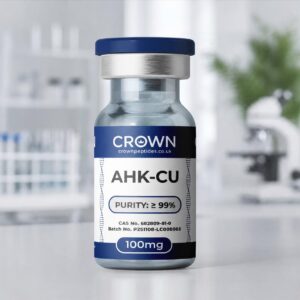
AHK-Cu 100mg research peptide vial – Crown Peptides UK
≥99% PURITY
HPLC & MS TESTED
AHK-Cu Research Peptide
From: £29.99

Buy Now

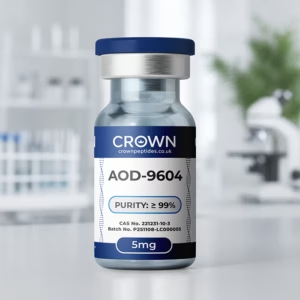
AOD-9604 5mg research peptide vial - Crown Peptides
≥99% PURITY
HPLC & MS TESTED
AOD-9604 Research Peptide
From: £34.99

Buy Now

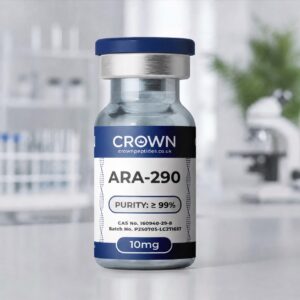
ARA-290 research peptide UK 10mg vial - Crown Peptides
≥99% PURITY
HPLC & MS TESTED
ARA-290 Research Peptide
From: £39.99

Buy Now

Further reading

SUPPORT Mon to Fri, 9am to 5pmDISPATCH Cut-off 2pmEMAIL info@crownpeptides.co.ukWHATSAPP +44 7301 802654

Disclaimer: All products are sold strictly for laboratory research purposes only. Not for human or veterinary use, consumption, therapeutic, or diagnostic application. None of our products are medicines, and none are presented as such. By purchasing, you confirm you are a qualified professional and legally permitted to handle these materials in compliance with all applicable laws and regulations. Misuse, resale for unauthorised purposes, or unlawful application is strictly prohibited. Crown Peptides UK disclaims all liability for improper use, handling, or regulatory non-compliance.

© 2026 Crown Peptides UK, a trading name of Crown Peptides Ltd (company no. 17068950), Suite Ra01, 195-197 Wood Street, London E17 3NU . All Rights Reserved.