Dihexa: The Angiotensin IV Fragment That Was Built to Reach the Brain
A full UK research guide to Dihexa, the angiotensin IV-derived molecule engineered to survive peptidases and cross the blood-brain barrier: where it came from, how the HGF/c-Met mechanism is meant to work, what the rodent and cell stud…
On this page
- From a Blood-Pressure Hormone to a Memory Molecule
- Why the Molecule Looks the Way It Does
- The Hepatocyte Growth Factor Pathway
- What the Animal Work Actually Measured
- The Part of the Record That Has Been Withdrawn
- Where the Evidence Stops
- Regulatory Standing and a Reputation the Science Did Not Ask For
- Technical Breakdown for the Detail-Minded
- Testing, and What a Batch Certificate Tells You
- Related Compounds Worth Knowing About
- Common Questions About Dihexa
- A Compound With an Open Question Attached
- References
In 2013, a laboratory at Washington State University published something that should not have worked. They took a hexapeptide fragment of a blood-pressure hormone, cut it to three residues, capped one end with a six-carbon fatty acid and the other with a six-carbon amide tail, and fed the result to rats by mouth. Aged animals that had been failing the Morris water maze found the hidden platform again, and so did rats whose memory had been chemically disrupted. The compound was reported as orally active and able to cross the blood-brain barrier, two things short peptides almost never manage (PMID: 23055539). Its name is N-hexanoic-Tyr-Ile-(6) aminohexanoic amide — dihexa, for short. Eight years later the journal attached a formal Notice of Concern to that paper, and it has never been lifted (PMID: 34551989).
That compound is what Crown Peptides supplies as Dihexa Research Peptide, in 10mg and 20mg vials, listed under both Neurocognitive Research Peptides and Ageing & Cellular research peptides. Dihexa, like everything else we sell, is laboratory material supplied for research use only; this guide reports what has been published and nothing beyond it. Go through that record slowly, because it is unusual. Four papers from the originating laboratory now carry a flag — three withdrawn outright, one carrying the notice above. Yet when other groups have tested the compound, two of the three found something. Both halves of that are true, and most of what is written about Dihexa gives you only one of them.
- Chemical name
- N-hexanoic-Tyr-Ile-(6)-aminohexanoic amide; US paperwork uses Dihexa acetate, and one paper calls it PNB-0408
- Origin
- Built from the C-terminal core of angiotensin IV in Joseph Harding's laboratory, Washington State University
- Proposed mechanism
- Positive modulation of the hepatocyte growth factor (HGF) / c-Met system; the primary papers for it have been withdrawn
- Record status
- Three originating papers retracted in 2025; the paper that introduced Dihexa carries an unresolved Notice of Concern
- Research areas
- Spatial learning, synaptogenesis, dendritic connectivity, nerve repair
- Evidence level
- Rodent, zebrafish and cell work; no human trials of Dihexa
- Supplied as
- Freeze-dried powder, 10mg and 20mg
From a Blood-Pressure Hormone to a Memory Molecule
Nothing about the renin-angiotensin system suggests memory. It is the pathway textbooks use for blood pressure: renin cleaves angiotensinogen, enzymes trim the product, and the peptides that result tighten vessels and tell the kidney to hold onto salt. But the brain runs a local version, and the ligands at the end of that chain behave nothing like the ones at the start (PMID: 24298267).
An accidental finding in a hexapeptide offcut
The thread begins in 1988, in Poland. Braszko and colleagues gave rats one nanomole of angiotensin II-(3-8) — the six-amino-acid tail left after angiotensin II has been clipped twice, later renamed angiotensin IV — directly into the cerebral ventricles. It improved recall in a passive avoidance task almost as well as the full peptide, despite binding the known angiotensin receptors around a thousand times more weakly (PMID: 3252173).
Over the next fifteen years the finding was reproduced using a deliberate trick: break memory with a drug, then see whether the peptide puts it back. In 2001, rats given intraventricular scopolamine lost the ability to learn a circular water maze, and Nle(1)-angiotensin IV restored acquisition, with a selective AT4 antagonist blocking the rescue entirely (PMID: 11730987). The effect held when memory was broken with the nicotinic blocker mecamylamine instead (PMID: 15063004). An independent Australian group then ran the cleaner experiment — healthy rats, no amnesia, a Barnes maze — where a single bolus cut errors and distance travelled from the first day of testing (PMID: 14980384). The binding site had meanwhile been mapped in post-mortem human brain, densest in the claustrum, hippocampus and pontine nucleus and across the entorhinal and prefrontal cortices (PMID: 11207430).
The site nobody could put a name to
For a decade the AT4 receptor was a pharmacological ghost — well characterised by what bound to it, molecularly anonymous. In 2001 a Melbourne group purified the protein and sequenced it. AT4 was insulin-regulated aminopeptidase, IRAP, an enzyme rather than a signalling receptor. Transfected HEK 293T cells showed the expected binding profile, and the AT4 ligands inhibited the enzyme's catalytic activity (PMID: 11707427). The hypothesis that followed was elegant: IRAP chews up neuropeptides including oxytocin and vasopressin, so blocking it should make them last longer, and longer-lasting neuropeptides should mean better memory (PMID: 18716029).
Where the enzyme story runs out of road
It also has holes, which is why Dihexa exists. Deleting IRAP does not produce the smarter animal the hypothesis predicts: a mouse line with the enzyme removed from forebrain neurons after birth showed deficits in spatial reference and object recognition memory at three months old (PMID: 27713012). Nor does potency at the enzyme translate into behaviour — HA08, among the most potent macrocyclic IRAP inhibitors available, changed nothing in cognitively normal male Sprague Dawley rats (PMID: 41280134).
What the site does do is becoming clearer: AT4R/IRAP sits in layer V pyramidal cells and GABAergic interneurons of rat prefrontal cortex but not in glia, and angiotensin IV inhibits NMDA-evoked currents in a subset of those neurons (PMID: 39857655). And a systematic review of 32 studies found that in models of cognitive deficit, eight of nine reported that angiotensin IV and its analogues — dihexa among them — improved spatial working memory or passive avoidance (PMID: 29733881). It also named the limitation: these peptides work best delivered centrally, close in time to learning — the problem Dihexa was designed to solve.
Why the Molecule Looks the Way It Does
A hexapeptide delivered into a rat's ventricles is a research tool: peptidases destroy it within minutes, and neither the gut wall nor the blood-brain barrier will let it through.
Finding the smallest piece that still works
The first step was subtraction. A 2011 study worked backwards from Nle(1)-angiotensin IV, truncating from the C-terminus to find the smallest core that kept its activity. Peptides as short as trimers still reversed scopolamine-induced water maze deficits, which put the essential information in the first three residues, Nle-Tyr-Ile. The same paper found that an analogue's procognitive activity tracked its capacity to increase dendritic spine number and enlarge spine heads (PMID: 21719467).
Capping both ends, then making it greasy
The 2013 paper is the one to read. Its logic runs in two stages. First, modify both termini of the tripeptide core so peptidases have nothing to grip; that worked, and the compounds still reversed scopolamine deficits. Second, push the physical chemistry — raise hydrophobicity, cut hydrogen bonding — so the molecule can cross membranes. The output was Dihexa (PMID: 23055539).
Be precise about what that leaves you holding. Dihexa is routinely called a peptide and handled like one, but only its central bond joins two alpha-amino acids; strictly it is a peptidomimetic. What Is a Peptide Bond? covers why terminal bonds are the weak points, and Peptide Half-Life Explained why minutes versus hours matters.
The Hepatocyte Growth Factor Pathway
A liver molecule with a second career
Hepatocyte growth factor was characterised as the most potent mitogen known for mature liver cells in culture. Its sequence was settled in 1989, when a Japanese group cloned the human cDNA and expressed active protein in COS-1 cells (PMID: 2531289); two years later its receptor was identified as the beta subunit of the c-Met proto-oncogene product (PMID: 1846706). The brain chapter opened in 1998: after five minutes of transient forebrain ischaemia in Mongolian gerbils, hippocampal neurons die on a delay of days, and intrastriatal recombinant human HGF prevented that death even when started six hours later (PMID: 9538898).
What the receptor does to a dendrite
If you want to know why anyone would connect this pathway to memory, the cell biology is the answer. In cultured rat hippocampal neurons, HGF phosphorylates c-Met and both multiplies and lengthens dendrites, through Akt, which inactivates GSK-3β and leaves microtubule-associated protein 2 free to polymerise microtubules (PMID: 18262389). In vivo, loss or gain of MET function in mouse hippocampus produces opposite changes in dendritic complexity and in the timing of glutamatergic synapse maturation, casting MET as a brake on when a synapse matures (PMID: 25471559). MET deregulation has also been connected to autism (PMID: 34179015).
Helping a growth factor rather than replacing it
Dihexa's proposed role within that system is specific, and not the obvious one. It is not described as a c-Met agonist but as a positive modulator: a molecule that does little alone and makes the natural ligand more effective, by promoting the dimerisation HGF needs to activate its receptor. Be clear where that account comes from. Every primary statement of it was published by the originating laboratory in papers since withdrawn (PMID: 21859930), (PMID: 22129598), (PMID: 25187433), and the only arms-length experiment supporting it is the 2025 rat study below (PMID: 42825082). The idea is attractive — a potentiator cannot push a pathway with no endogenous signal to potentiate, which matters for a receptor whose overactivity is implicated in cancer biology. Attractive is not established.
What the Animal Work Actually Measured
Scopolamine, aged rats and a water maze
The foundational behavioural claims sit in the 2013 paper: oral Dihexa reversed scopolamine-induced water maze deficits and improved performance in aged rats (PMID: 23055539) — the paper now under the Notice of Concern. The aged-rat arm is the more informative, because scopolamine amnesia resolves on its own while an old animal's hippocampus has genuinely changed. No independent study of oral availability or brain entry has been published, so that half of the claim rests on the flagged paper alone.
A mouse carrying Alzheimer's pathology
In 2021 a group at China Pharmaceutical University, with no connection to the originating laboratory, ran Dihexa in APP/PS1 transgenic mice, animals engineered to accumulate amyloid. Over three months at 1.44 and 2.88 mg/kg it restored spatial learning in the Morris water maze, raised neuronal counts and synaptophysin expression on Nissl-stained tissue, reduced astrocyte and microglial activation, lowered interleukin-1β and TNF-α while raising IL-10, and activated PI3K/AKT signalling. Crucially they tested the mechanism by blocking it: the PI3K inhibitor wortmannin significantly reversed the anti-inflammatory and anti-apoptotic effects (PMID: 34827486). The paper states its administration route inconsistently, a real flaw, but the authorship is arms-length and the pathway was interrogated rather than assumed.
Hair cells, severed nerves and concussion
Three other literatures have grown up alongside the memory work, and the first needs its authorship stated. In larval zebrafish, whose lateral-line hair cells behave much like mammalian inner-ear hair cells, Dihexa at 1 µM protected against both neomycin and gentamicin toxicity, and an HGF antagonist attenuated that protection — the result usually quoted as evidence for the mechanism. But two of its four authors are authors of the retracted papers, writing from Washington State University and from M3 Biotechnology, the company then commercialising the compound, and the antagonist came out of the withdrawn work (PMID: 25674052).
In peripheral nerve repair, male Lewis rats with a transected and surgically repaired sciatic nerve were followed for sixteen weeks across ten groups of six to eight animals. Sensory function returned to near normal everywhere by eight weeks, so motor function was the discriminating measure, and there mesenchymal stem cells combined with Dihexa significantly improved walking footprint grades (PMID: 34703584) — a paper that also lists Harding as an author. A systematic review screening 6,128 citations down to 164 publications reaches the conclusion the whole field reaches: promising, overwhelmingly animal, not human (PMID: 38074194).
The most recent addition came in 2025, from four authors at Rowan University with no stake in the original programme. Rats received repeated mild closed-head impacts, then central infusions of Dihexa before daily testing on a T-maze working-memory task. The highest amount lifted performance in injured animals from 67.1% correct on vehicle to 81.5% — above, not merely level with, their own pre-injury baseline of about 77%. Then came the experiment that makes a result mean something: pre-treatment with Hinge, a peptide antagonist of HGF/MET dimerisation, abolished the improvement, dropping performance to 68.6% (PMID: 42825082). One caveat the paper does not raise about itself: its mechanistic premise comes from the retracted 2014 study, and Hinge from that same withdrawn lineage.
The study that went the other way
One result points the opposite way, and leaving it out would make this guide worthless. In 2024 a group at Whitworth University randomised forty male Wistar rats into vehicle, 3-nitropropionic acid, and 3-NP plus Dihexa groups to model Huntington's disease over five weeks. The toxin did what it was supposed to do; Dihexa, called PNB-0408 in that paper, did not protect against any of it (PMID: 38489193). A compound that works against a cholinergic insult, an amyloid model and a head injury, and fails against a mitochondrial toxin, is behaving like a real agent with a defined range rather than a universal rescue.
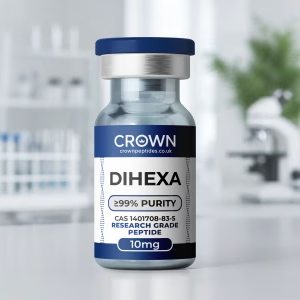
Dihexa Research Peptide
Out of stock · every batch HPLC and MS tested
View Dihexa Research Peptide ›The Part of the Record That Has Been Withdrawn
Reviews written from inside the originating programme set the ambition out plainly: an orally active, barrier-permeant small molecule that augments synaptic connectivity (PMID: 25455861, PMID: 25649658). Reading them today means knowing what became of the papers they rest on.
In September 2021 the Journal of Pharmacology and Experimental Therapeutics attached a Notice of Concern to four papers from the group behind Dihexa. In April 2025 it retracted three of them. The 2011 paper proposing that the analogue norleual acts as a mimic of the HGF dimerisation domain is gone (PMID: 21859930; notice at PMID: 40312094). So is the 2012 paper describing the 6-AH family of analogues as HGF/Met modifiers (PMID: 22129598; notice at PMID: 40312092). And so is the 2014 paper that was the most-cited source for Dihexa's mechanism — the one reporting that it binds HGF with high affinity, induces c-Met phosphorylation in the presence of subthreshold HGF, and loses its water maze effect when an HGF antagonist is delivered centrally (PMID: 25187433; notice at PMID: 40312093). No notice gives a public reason, and this guide will not guess at one.
The fourth paper was not retracted. It is the 2013 study that introduced Dihexa, and its Notice of Concern is still live (PMID: 34551989). So the honest word is not that it stands but that it stands flagged — and with it every claim about oral activity, barrier penetration, the scopolamine reversal and the aged-rat result. Two other papers from the programme carry no notice: the 2011 truncation and dendritic-spine work, which is genuinely clean (PMID: 21719467), and the 2010 norleual paper, which carries a 2015 erratum (PMID: 20086056). All of them share Harding and Wright as authors with all three retracted papers. That does not make them wrong. It does mean the surviving record and the withdrawn record come from the same hands.
Which leaves a short list of arms-length work. Two groups have no connection to the originating laboratory at all: the APP/PS1 mice from China Pharmaceutical University, and the Rowan head-injury study. The third is more interesting than a clean break would have been. The Huntington's experiment ran at Whitworth University, and its senior author had worked with the Washington State group a decade earlier, on the 2010 norleual paper — then published a null result anyway. Someone with a foot in the original programme reporting that the compound did nothing carries more weight than a stranger reporting it, not less. For the dimerisation mechanism there is still no surviving independent primary source — one blockade experiment inside the Rowan paper, and that is all.
So the correct statement about Dihexa's mechanism is not that it has been disproved, and not that it is established. The primary evidence base was withdrawn, the behavioural foundation is flagged, and the independent work that exists keeps finding something. The question is open and the assays are tractable.
Where the Evidence Stops
There are no human trials of Dihexa. Not completed, not published, not under way in any registry entry that has reached the literature. Everything above is rodent, zebrafish or cell work, and rodent cognition models have a poor record of carrying over to people.
Human data on the pathway exists, from two directions. The protein itself has been given to patients: a randomised, double-blind phase I/II trial delivered recombinant human HGF intrathecally to people with acute spinal cord injury within 72 hours. Forty-three subjects completed testing, no serious adverse events were attributed to the drug, and motor improvement reached p = 0.050 at day 140 — encouraging, underpowered, and described by its own authors as not addressing efficacy (PMID: 32323609).
The second direction matters more, because it tests the same idea with a different molecule. The case for HGF/MET positive modulators as a dementia strategy was argued in 2023 by two scientists at Athira Pharma, the company developing one (PMID: 36683507). Their compound is fosgonimeton. Its active metabolite, fosgo-AM, enhanced synaptogenesis and neurite outgrowth in primary rat hippocampal neurons and reversed scopolamine amnesia in rats, while fosgonimeton itself reversed deficits in a mouse neuroinflammation model (PMID: 36538176). Against amyloid, fosgo-AM improved survival of primary rat cortical neurons and reduced tau hyperphosphorylation; in the same paper, protection against glutamate excitotoxicity was abolished by AKT or MEK/ERK inhibitors, which is how you show a pathway is load-bearing (PMID: 38599894).
Then it went to people. LIFT-AD was a randomised, placebo-controlled phase 2/3 trial in mild-to-moderate Alzheimer's disease; the primary analysis covered 287 participants who were not taking cholinesterase inhibitors, with safety data from 549. It missed its primary and its secondary endpoints: the between-group difference in the combined global statistical test at week 26 was −0.08 (p = 0.70), with −0.70 on ADAS-Cog11 and +0.67 on ADCS-ADL23. Every difference pointed faintly in the drug's favour without reaching significance, and one exploratory plasma marker, p-tau217, moved nominally; the authors read that as possible biological activity. It is not a positive trial (PMID: 41393340).
That is the most useful single data point anyone studying Dihexa has. It does not say Dihexa fails in humans, because Dihexa was not the molecule tested. It says the broad hypothesis — positively modulate HGF/MET, improve cognition in established Alzheimer's disease — has had one properly powered human test and did not clear it.
Regulatory Standing and a Reputation the Science Did Not Ask For
No medicines regulator anywhere has licensed Dihexa for any use, in any country. It has never held a marketing authorisation and no clinical programme for it has been completed. In the UK it is supplied, as it is here, as a laboratory reagent — a classification about declared purpose rather than a verdict on quality, as Are Peptides Legal in the UK? and What Does "Research Use Only" Actually Mean? both explain.
One regulatory development is worth describing precisely, because it is routinely overstated. Dihexa acetate — the name the US paperwork uses — no longer appears on the FDA's Category 2 list of bulk drug substances raising significant safety concerns. The agency revised that interim list in April 2026, taking twelve peptides off it; compounding-law specialists date the notice to 15 April and the removal to 22 April, and report that the agency intends to consult its Pharmacy Compounding Advisory Committee about Dihexa acetate before the end of February 2027. Two things that does not mean. Coming off Category 2 does not make a substance eligible for compounding under section 503A, and the committee's recommendations do not bind the FDA. It is a list revision and a review on a calendar — not permission, not a licence, not a finding about safety or efficacy. Our article FDA Advisory Panel Backs Six Peptides is the fuller account of that process.
Dihexa also has a reputation in nootropic circles that runs well ahead of its evidence. Twelve official medicines control laboratories across Europe and Australia documented 159 samples of unauthorised smart-drug products between January 2020 and September 2024. Dihexa appeared once, in a product sold as a dietary supplement and classified by the laboratories as a research chemical (PMID: 40558871). Informal personal-use reports circulate. They are not research data, and Crown Peptides does not condone personal or human use of any compound we supply.
Technical Breakdown for the Detail-Minded
Structure and composition
Dihexa is N-hexanoic-Tyr-Ile-(6)-aminohexanoic amide. Reading left to right: a hexanoyl group, a straight six-carbon acyl chain, amide-bonded to the nitrogen of L-tyrosine; tyrosine joined to L-isoleucine by a standard peptide bond; and the isoleucine carboxyl extended into 6-aminohexanoic acid, ending in a primary amide rather than a free acid. Built from those parts the formula is C27H44N4O5 and the average mass 504.67 — arithmetic from the published name, not a figure lifted from a paper. Three of the four units are amino acids but only two are alpha-amino acids, which is why peptidomimetic fits better than tripeptide.
Why each modification is there
Every piece earns its place. The hexanoyl cap removes the free N-terminal amine that aminopeptidases recognise and adds lipophilicity. The C-terminal amide removes the free carboxylate that carboxypeptidases recognise, and with it a charge that would hinder membrane crossing. The spacer adds hydrophobic bulk (PMID: 23055539).
Physical handling in the laboratory
The practical consequence is that Dihexa does not behave like a typical research peptide in water: the 2025 rat study dissolved it in dimethyl sulfoxide before diluting into buffered saline (PMID: 42825082). Vials of Dihexa Research Peptide ship as a dry, sealed lyophilisate, which should be kept cold and dark and brought to room temperature before opening so moisture is not pulled onto cold powder. Our Storage information page covers the principles, Peptide Reconstitution the technique, and How Long Do Peptides Last? reconstituted material over time.
Testing, and What a Batch Certificate Tells You
Two questions decide whether a vial is worth working with: is the right molecule in it, and what else came along with it. The first is settled by weighing the molecule — a mass spectrometer reads Dihexa a shade over 504 — though it has to be read attentively, because the amide cap that makes this compound what it is differs from a free acid by about one mass unit. The second is settled by chromatography, which pulls the contents of the vial apart and reports the target as a percentage of everything that came off the column.
Every batch we sell goes through both. We file the resulting certificate on our Lab Reports page against the batch code stamped on your vial, so you can check the document against the material instead of trusting us about it. Peptide Testing UK explains the instruments; How to Read a Peptide Certificate of Analysis takes the numbers line by line, How to Tell If Peptides Are Real shows what a bad batch looks like, and How to Choose a UK Peptide Supplier is the one for weighing us against someone else.
Place an order before two on a weekday and it leaves us that afternoon. UK delivery costs nothing once the order passes £100, and our contact page is answered inside a working day, usually sooner on WhatsApp.
Related Compounds Worth Knowing About
Other molecules in the cognition literature
Adamax (1032 Da) Research Peptide is the closest neighbour conceptually — another synthetic analogue built to improve on an endogenous neuropeptide, with its record in our Adamax Peptide UK guide. Semax Research Peptide and Selank Research Peptide come from the Russian programme and work through different routes; Semax vs Selank sets them side by side, with individual accounts in Semax Peptide and Selank Peptide UK Guide, and the pair as Semax + Selank (Blend). Cerebrolysin Research Peptide is the outlier, a porcine-derived mixture rather than one molecule, covered in Cerebrolysin UK, and Best Peptides for Brain Research maps the neurocognitive shelf.
Growth-factor signalling elsewhere in the range
HGF is a growth factor, so the peptides borrowing from other growth-factor systems make a useful comparison. IGF-1 LR3 Research Peptide is a modified insulin-like growth factor, discussed in IGF-1 LR3 Peptide UK Guide, while MGF Research Peptide and its pegylated form PEG-MGF Research Peptide answer the same problem Dihexa answers — a molecule too short-lived to study — by a different route, as PEG-MGF UK explains.
Short peptides that talk to neurons
From the Khavinson bioregulator programme, Pinealon Research Peptide is a tripeptide with dendrite-branching work of its own, detailed in Pinealon Peptide UK, and Epitalon Research Peptide is the tetrapeptide that made the programme famous; Bioregulator Peptides Explained covers the family.
Other compounds in the same part of the range
None of these shares Dihexa's mechanism. They are here because they sit in the same part of our range: NAD+ Research Compound, Methylene Blue 1% Solution (USP Grade) and SS-31 Research Peptide, covered together in Mitochondrial Peptides Explained. New to the vocabulary altogether? Start with What Are Peptides?, then browse the full range.
Common Questions About Dihexa
What is Dihexa?
A small synthetic molecule, N-hexanoic-Tyr-Ile-(6)-aminohexanoic amide, built from the active C-terminal end of angiotensin IV to resist peptidases and cross membranes. It came out of Joseph Harding's laboratory at Washington State University and was reported in 2013 as orally active and brain-penetrant, with procognitive activity in rats (PMID: 23055539).
How is Dihexa thought to work?
As a positive modulator of the hepatocyte growth factor / c-Met system: a molecule that makes the body's own HGF better at activating its receptor rather than activating it alone. Every primary paper establishing that was withdrawn in 2025. One arms-length experiment supports it — a dimerisation antagonist abolished Dihexa's effect on working memory in injured rats (PMID: 42825082).
Is Dihexa approved?
No. No regulator in any country has granted Dihexa a licence as a medicine, and no clinical programme for it has been completed. A 2026 change to a US compounding list, and a committee review scheduled before February 2027, are procedural steps and nothing more.
Has Dihexa been studied in humans?
No. There are no published human trials of Dihexa. The nearest human evidence concerns the pathway rather than the compound: recombinant HGF has been given intrathecally in a randomised phase I/II spinal cord injury trial (PMID: 32323609), and a different small-molecule HGF/MET positive modulator was tested in 287 people with Alzheimer's disease and missed its primary and secondary endpoints (PMID: 41393340).
Which papers were withdrawn, and what does that change?
Three, all from the originating group and all about the HGF mechanism rather than the behavioural findings (PMID: 40312092), (PMID: 40312093), (PMID: 40312094). The notices give no stated reason, so this guide does not offer one. The 2013 paper that introduced Dihexa was not retracted, but it carries a Notice of Concern from 2021 that has never been lifted (PMID: 34551989).
What is the difference between Dihexa and angiotensin IV?
Angiotensin IV is a natural hexapeptide, Val-Tyr-Ile-His-Pro-Phe, that survives minutes in blood and has to be delivered into the brain to affect behaviour. Dihexa keeps only the tyrosine and isoleucine, swaps the first residue for a fatty acid and extends the far end into an amide tail — the same recognition surface on a chassis built to survive.
Does Dihexa work through IRAP?
That was the original assumption, because angiotensin IV's binding site was identified as insulin-regulated aminopeptidase (PMID: 11707427). Evidence against IRAP being the whole story came early: analogues produced strong responses in human embryonic kidney cells that do not express the enzyme (PMID: 20086056). Both systems look real, and the two literatures have never been reconciled.
Are peptides legal in the UK?
Yes, with the qualification that the law turns on declared purpose rather than on the molecule itself. Are Peptides Legal in the UK? sets out where licensed medicines, supplements and research compounds each sit.
A Compound With an Open Question Attached
Most research peptides arrive with a settled story and a shelf of confirmatory papers. Dihexa arrives with something rarer: a behavioural effect found on two continents and across four injury models, an originating laboratory whose record is under a cloud, and a mechanism with no surviving independent primary source. The questions that matter about this compound have not been answered.
The molecule itself is unusually tractable. It is small, stable as a dry powder, and the assays that would settle the open questions — spine counts, c-Met phosphorylation, a water maze, a T-maze — are all standard. Any serious attempt on it starts with material whose identity and purity you can check on paper first: Dihexa Research Peptide ships in 10mg and 20mg with its certificate filed under the batch number on the vial.
References
- Braszko JJ, Kupryszewski G, Witczuk B, Wiśniewski K. Angiotensin II-(3-8)-hexapeptide affects motor activity, performance of passive avoidance and a conditioned avoidance response in rats. Neuroscience. 1988;27:777-83. PMID: 3252173
- Chai SY, Bastias MA, Clune EF, et al. Distribution of angiotensin IV binding sites (AT4 receptor) in the human forebrain, midbrain and pons as visualised by in vitro receptor autoradiography. J Chem Neuroanat. 2000;20:339-48. [Erratum: J Chem Neuroanat. 2001;21:331] PMID: 11207430
- Pederson ES, Krishnan R, Harding JW, Wright JW. A role for the angiotensin AT4 receptor subtype in overcoming scopolamine-induced spatial memory deficits. Regul Pept. 2001;102:147-56. PMID: 11730987
- Albiston AL, McDowall SG, Matsacos D, et al. Evidence that the angiotensin IV (AT4) receptor is the enzyme insulin-regulated aminopeptidase. J Biol Chem. 2001;276:48623-6. PMID: 11707427
- Lee J, Albiston AL, Allen AM, et al. Effect of I.C.V. injection of AT4 receptor ligands, NLE1-angiotensin IV and LVV-hemorphin 7, on spatial learning in rats. Neuroscience. 2004;124:341-9. PMID: 14980384
- Olson ML, Olson EA, Qualls JH, et al. Norleucine1-Angiotensin IV alleviates mecamylamine-induced spatial memory deficits. Peptides. 2004;25:233-41. PMID: 15063004
- Albiston AL, Morton CJ, Ng HL, et al. Identification and characterization of a new cognitive enhancer based on inhibition of insulin-regulated aminopeptidase. FASEB J. 2008;22:4209-17. PMID: 18716029
- Yeatman HR, Albiston AL, Burns P, Chai SY. Forebrain neurone-specific deletion of insulin-regulated aminopeptidase causes age related deficits in memory. Neurobiol Learn Mem. 2016;136:174-82. PMID: 27713012
- Stam F, Bjurling S, Zelleroth S, et al. The effects of insulin-regulated aminopeptidase inhibition with HA08 on recognition memory acquisition and spatial working memory under reversed circadian conditions in male rats. IBRO Neurosci Rep. 2025;19:854-61. PMID: 41280134
- Papp ZT, Ribiczey P, Kató E, et al. Angiotensin IV receptors in the rat prefrontal cortex: neuronal expression and NMDA inhibition. Biomedicines. 2024;13:71. PMID: 39857655
- Ho JK, Nation DA. Cognitive benefits of angiotensin IV and angiotensin-(1-7): a systematic review of experimental studies. Neurosci Biobehav Rev. 2018;92:209-25. PMID: 29733881
- Wright JW, Kawas LH, Harding JW. A role for the brain RAS in Alzheimer's and Parkinson's diseases. Front Endocrinol (Lausanne). 2013;4:158. PMID: 24298267
- Benoist CC, Wright JW, Zhu M, et al. Facilitation of hippocampal synaptogenesis and spatial memory by C-terminal truncated Nle1-angiotensin IV analogs. J Pharmacol Exp Ther. 2011;339:35-44. PMID: 21719467
- McCoy AT, Benoist CC, Wright JW, et al. Evaluation of metabolically stabilized angiotensin IV analogs as procognitive/antidementia agents. J Pharmacol Exp Ther. 2013;344:141-54. [Notice of Concern 2021] PMID: 23055539
- Notice of Concern: McCoy AT, Benoist CC, Wright JW, et al. (2013) Evaluation of Metabolically Stabilized Angiotensin IV Analogs as Procognitive/Antidementia Agents. J Pharmacol Exp Ther. 2021;378:313. PMID: 34551989
- Yamamoto BJ, Elias PD, Masino JA, et al. The angiotensin IV analog Nle-Tyr-Leu-psi-(CH2-NH2)3-4-His-Pro-Phe (norleual) can act as a hepatocyte growth factor/c-Met inhibitor. J Pharmacol Exp Ther. 2010;333:161-73. [Erratum: J Pharmacol Exp Ther. 2015;352:379] PMID: 20086056
- Kawas LH, Yamamoto BJ, Wright JW, Harding JW. Mimics of the dimerization domain of hepatocyte growth factor exhibit anti-Met and anticancer activity. J Pharmacol Exp Ther. 2011;339:509-18. [Retracted] PMID: 21859930
- Retraction notice to "Mimics of the dimerization domain of hepatocyte growth factor exhibit anti-Met and anticancer activity". J Pharmacol Exp Ther. 2025;392:103568. PMID: 40312094
- Kawas LH, McCoy AT, Yamamoto BJ, et al. Development of angiotensin IV analogs as hepatocyte growth factor/Met modifiers. J Pharmacol Exp Ther. 2012;340:539-48. [Retracted] PMID: 22129598
- Retraction notice to "Development of angiotensin IV analogs as hepatocyte growth factor/Met modifiers". J Pharmacol Exp Ther. 2025;392:103566. PMID: 40312092
- Benoist CC, Kawas LH, Zhu M, et al. The procognitive and synaptogenic effects of angiotensin IV-derived peptides are dependent on activation of the hepatocyte growth factor/c-met system. J Pharmacol Exp Ther. 2014;351:390-402. [Retracted] PMID: 25187433
- Retraction notice to "The procognitive and synaptogenic effects of angiotensin IV-derived peptides are dependent on activation of the hepatocyte growth factor/c-Met system". J Pharmacol Exp Ther. 2025;392:103567. PMID: 40312093
- Wright JW, Kawas LH, Harding JW. The development of small molecule angiotensin IV analogs to treat Alzheimer's and Parkinson's diseases. Prog Neurobiol. 2015;125:26-46. PMID: 25455861
- Wright JW, Harding JW. The brain hepatocyte growth factor/c-Met receptor system: a new target for the treatment of Alzheimer's disease. J Alzheimers Dis. 2015;45:985-1000. PMID: 25649658
- Sun X, Deng Y, Fu X, et al. AngIV-analog dihexa rescues cognitive impairment and recovers memory in the APP/PS1 mouse via the PI3K/AKT signaling pathway. Brain Sci. 2021;11:1487. PMID: 34827486
- Uribe PM, Kawas LH, Harding JW, Coffin AB. Hepatocyte growth factor mimetic protects lateral line hair cells from aminoglycoside exposure. Front Cell Neurosci. 2015;9:3. PMID: 25674052
- Weiss JB, Phillips CJ, Malin EW, et al. Stem cell, granulocyte-colony stimulating factor and/or dihexa to promote limb function recovery in a rat sciatic nerve damage-repair model: experimental animal studies. Ann Med Surg (Lond). 2021;71:102917. PMID: 34703584
- Wells RG, Azzam AF, Hiller AL, Sardinia MF. Effects of an angiotensin IV analog on 3-nitropropionic acid-induced Huntington's disease-like symptoms in rats. J Huntingtons Dis. 2024;13:55-66. PMID: 38489193
- Martino KA, Nakhre A, Demarest RM, Devilbiss DM. Hepatocyte growth factor/MET activator rescues working memory deficits after repeated mild traumatic brain injury. Neurotrauma Rep. 2025;6:991-8. PMID: 42825082
- Choo S, Phillips R, White J, Nuelle JA. Neuromodulators can promote nerve regeneration and accelerate functional recovery after peripheral nerve injury: a systematic review. J Orthop. 2024;47:122-47. PMID: 38074194
- Nakamura T, Nishizawa T, Hagiya M, et al. Molecular cloning and expression of human hepatocyte growth factor. Nature. 1989;342:440-3. PMID: 2531289
- Bottaro DP, Rubin JS, Faletto DL, et al. Identification of the hepatocyte growth factor receptor as the c-met proto-oncogene product. Science. 1991;251:802-4. PMID: 1846706
- Miyazawa T, Matsumoto K, Ohmichi H, et al. Protection of hippocampal neurons from ischemia-induced delayed neuronal death by hepatocyte growth factor: a novel neurotrophic factor. J Cereb Blood Flow Metab. 1998;18:345-8. PMID: 9538898
- Lim CS, Walikonis RS. Hepatocyte growth factor and c-Met promote dendritic maturation during hippocampal neuron differentiation via the Akt pathway. Cell Signal. 2008;20:825-35. PMID: 18262389
- Qiu S, Lu Z, Levitt P. MET receptor tyrosine kinase controls dendritic complexity, spine morphogenesis, and glutamatergic synapse maturation in the hippocampus. J Neurosci. 2014;34:16166-79. PMID: 25471559
- Desole C, Gallo S, Vitacolonna A, et al. HGF and MET: from brain development to neurological disorders. Front Cell Dev Biol. 2021;9:683609. PMID: 34179015
- Nagoshi N, Tsuji O, Kitamura K, et al. Phase I/II study of intrathecal administration of recombinant human hepatocyte growth factor in patients with acute spinal cord injury: a double-blind, randomized clinical trial of safety and efficacy. J Neurotrauma. 2020;37:1752-8. PMID: 32323609
- Moebius HJ, Church KJ. The case for a novel therapeutic approach to dementia: small molecule hepatocyte growth factor (HGF/MET) positive modulators. J Alzheimers Dis. 2023;92:1-12. PMID: 36683507
- Johnston JL, Reda SM, Setti SE, et al. Fosgonimeton, a novel positive modulator of the HGF/MET system, promotes neurotrophic and procognitive effects in models of dementia. Neurotherapeutics. 2023;20:431-51. PMID: 36538176
- Reda SM, Setti SE, Berthiaume AA, et al. Fosgonimeton attenuates amyloid-beta toxicity in preclinical models of Alzheimer's disease. Neurotherapeutics. 2024;21:e00350. PMID: 38599894
- Porsteinsson AP, Sabbagh M, Tariot PN, et al. Fosgonimeton in mild-to-moderate Alzheimer's disease. J Alzheimers Dis Rep. 2025;9:25424823251405817. PMID: 41393340
- Vanhee C, Deconinck E, George M, et al. The occurrence of illicit smart drugs or nootropics in Europe and Australia and their associated dangers: results from a market surveillance study by 12 official medicines control laboratories. J Xenobiot. 2025;15:88. PMID: 40558871