Register today and get 10% off your first orderRegister for 10% off your first orderRegister now
Crown Peptides

Research Peptides

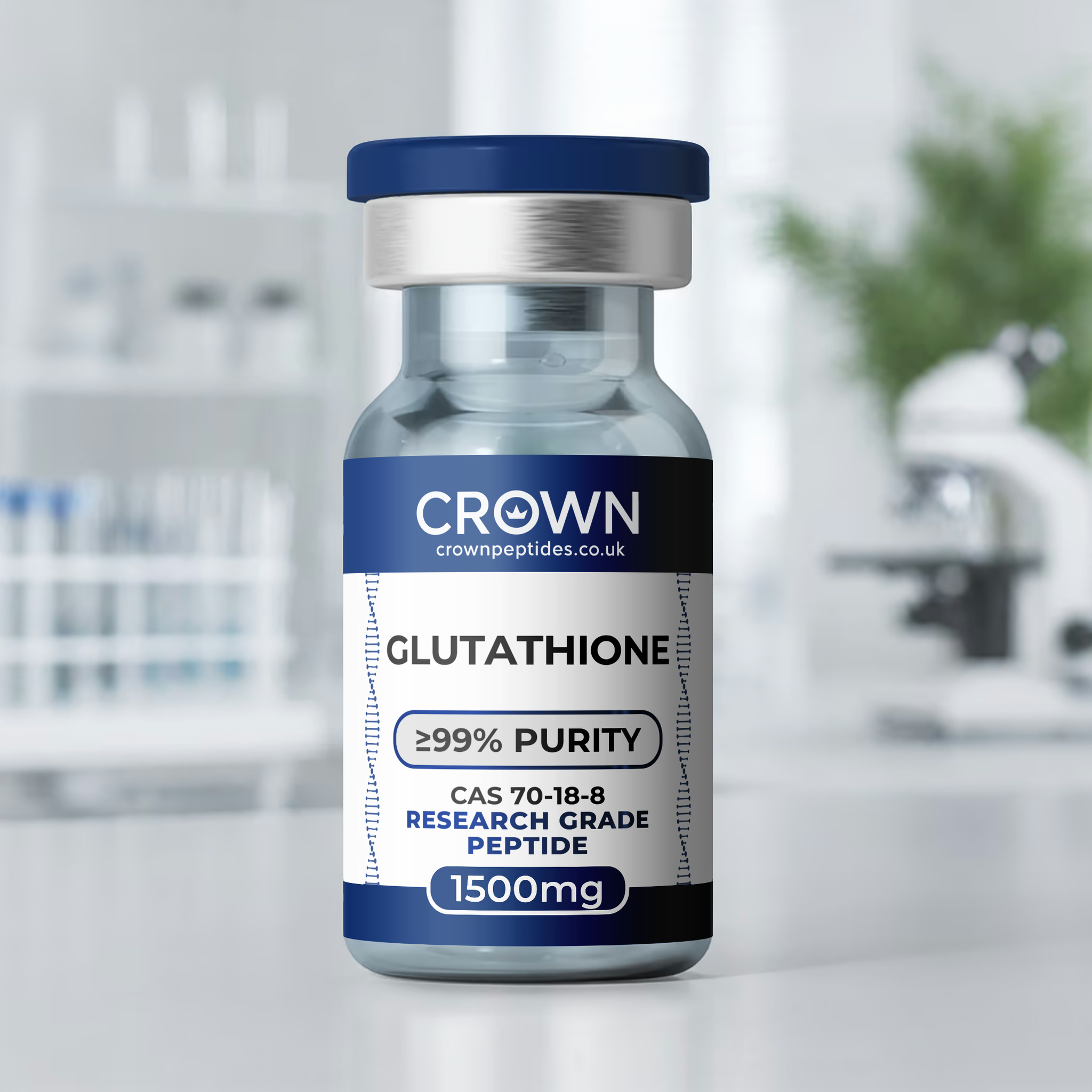
Glutathione Research Peptide

A high-purity research compound studied in antioxidant and cellular-protection research. Available in 1500mg, with every batch independently tested and dispatched from the UK.

£39.99or from £29.99 per vial in packs of 10
Save up to 25%
From: £39.99
Your selection:
Order within
for dispatch tomorrow
17Hrs:50Min:11Sec
In stockEstimated deliveryEst. delivery Saturday 24 OctoberSaturday 24 Oct
All Batches TestedEvery batch, no exceptions
HPLC & MS VerifiedFull certificate published
Same Day PostageOrder before 2pm
UK Based CompanyDispatched from the UK
Product Overview

A high-purity research compound studied in antioxidant and cellular-protection research. Available in 1500mg, with every batch independently tested and dispatched from the UK.

Full Product Specification
Overview

Product Overview

Glutathione peptide UK is Crown Peptides' naturally occurring tripeptide research compound, available in 1500mg strength for laboratory research.

1500mgAvailable strengthHPLC testedChromatographic purityMS verifiedIdentity confirmedBatch CoADocumentation supplied

Supplied for laboratory research purposes only — not for human consumption or for medical, veterinary or diagnostic use.

Key features

Key Features

  • Studied in research involving reduced and oxidised glutathione redox cycling
  • Studied in research involving oxidative-stress models
  • Studied in research involving glutathione peroxidase and transferase systems
  • Studied in research involving cellular thiol and antioxidant biochemistry
  • Batch-specific quality documentation available
Background

About Glutathione Peptide UK

Glutathione is a tripeptide composed of glutamate, cysteine and glycine. It is one of the most important intracellular redox molecules and is widely used in biochemical research examining oxidative stress, thiol chemistry, cellular antioxidant systems and glutathione-dependent enzymes.

Also known as: GSH, L-glutathione, reduced glutathione.

Research

Glutathione Research

Research uses glutathione to study the balance between reduced glutathione and its oxidised form, glutathione disulfide — a redox couple that provides a direct read-out of cellular oxidative state. Its protective role is well documented: in cultured human skin fibroblasts, glutathione protected the cells against the damaging effects of UVB and UVA light, with protection in the UVB range approaching that of the cells’ own DNA repair (Learn more). Glutathione is also central to glutathione peroxidase and glutathione transferase pathways, xenobiotic metabolism and broader research into mitochondrial and cellular redox homeostasis, alongside related redox-research compounds such as Methylene Blue.

  • Reduced and oxidised glutathione redox cycling
  • Oxidative-stress models
  • Glutathione peroxidase and transferase systems
  • Cellular thiol and antioxidant biochemistry
The gamma bond: a tripeptide built without a ribosome

Most peptides are strung together on ribosomes from a genetic template. Glutathione is not. Cells assemble it in two ATP-driven steps: glutamate-cysteine ligase first joins glutamate to cysteine through glutamate’s side-chain carboxyl group, and glutathione synthetase then adds glycine. That first linkage, the gamma-glutamyl bond, is why the molecule is written γ-Glu-Cys-Gly, and it makes glutathione resistant to the ordinary peptidases that chew through conventional peptides inside the cell. Only a specialised enzyme, gamma-glutamyl transpeptidase, which sits on the outer surface of many cells, can cleave it.

The ligase step sets the pace. It depends on cysteine supply and is slowed by glutathione itself through feedback inhibition, which gives cells a built-in thermostat for their glutathione pool. For laboratories, this pathway is a gift: buthionine sulfoximine, a selective inhibitor of the ligase described by Griffith and Meister in the late 1970s, lets researchers drain glutathione from cultured cells in a controlled way, and purified glutathione is the natural reference standard against which that depletion is measured.

Reading the GSH/GSSG couple across cell compartments

When glutathione donates electrons, two molecules join through a disulfide bridge to form glutathione disulfide, GSSG. Glutathione reductase reverses the reaction using NADPH, so the ratio of the two forms acts like a live gauge of how hard a cell is working to stay reduced. In the cytosol of healthy cells the reduced form heavily outnumbers the oxidised form, and total glutathione typically sits in the low millimolar range, far above most other small thiols.

That gauge reads differently from one compartment to the next. The endoplasmic reticulum, where new proteins form their disulfide bonds, keeps a markedly more oxidising glutathione balance than the surrounding cytosol, and published ER ratios fall to single figures. Researchers track these differences with two main tools: the classic Tietze enzymatic recycling assay, which uses glutathione reductase and Ellman’s reagent (DTNB) to quantify total and oxidised glutathione in extracts, and genetically encoded sensors such as Grx1-roGFP2, which report the glutathione redox potential in living cells in real time. Both rely on well-characterised glutathione for calibration.

GPX4, lipid peroxides and the ferroptosis story

One of the most active areas in redox biology over the past decade began with a puzzle: certain compounds killed cancer cell lines by a route that looked nothing like apoptosis. In 2012, Dixon and colleagues named this iron-dependent, lipid-peroxide-driven process ferroptosis, and glutathione turned out to sit right at its centre.

The key enzyme is glutathione peroxidase 4 (GPX4), which uses glutathione to convert dangerous lipid hydroperoxides in membranes into harmless lipid alcohols. Starve GPX4 of glutathione and peroxidised lipids accumulate until the membrane fails. The small molecule erastin does exactly that by blocking system xc−, the transporter that imports cystine for glutathione synthesis, while RSL3 inhibits GPX4 directly. Measuring how glutathione levels fall, and whether adding glutathione back changes the outcome, has become a standard experimental design in ferroptosis research across cancer, neuronal and kidney cell models.

Glutathione as a working tool in cell culture

Beyond being a molecule to measure, glutathione is a reagent that cell biologists add, remove and rescue. Depletion experiments with buthionine sulfoximine are often paired with add-back conditions to show that an effect truly depends on the glutathione pool rather than an off-target action of the inhibitor.

There are practical twists. In culture medium, the free thiol slowly oxidises, especially in the presence of trace metals and at neutral to slightly alkaline pH, so the reduced form does not stay reduced indefinitely. And many cell types take up little intact glutathione from outside: gamma-glutamyl transpeptidase on the cell surface breaks it into its amino acids, which are then reabsorbed and used to rebuild glutathione inside. This is why membrane-permeable derivatives such as glutathione monoethyl ester were developed in Alton Meister’s laboratory, and why careful study designs compare native glutathione, its esters and cysteine precursors side by side.

Specifications

Specifications

Product
Glutathione
Classification
Naturally occurring tripeptide research compound
Available strength
1500mg
CAS number
70-18-8 (reduced glutathione)
Molecular weight
≈ 307.32 g/mol
Molecular formula
C10H17N3O6S
Form
Research material supplied according to product label
Purity and assay
99% (HPLC), batch-specific — refer to Certificate of Analysis
Verification
HPLC and Mass Spectrometry where analytically appropriate

Compound-level reference data. Batch-specific results appear on the Certificate of Analysis.

Work out concentration with the peptide calculator
Testing

Purity and Testing

Crown Peptides Glutathione is supplied with batch-specific quality documentation appropriate to the material. Analytical methods vary by compound and formulation, so the Certificate of Analysis should be used as the definitive source for identity, assay, purity and relevant impurity information.

Storage

Storage Conditions

  • Store unreconstituted material at -20°C ± 5°C in a cool, dry environment
  • Prepared research solutions should use validated storage conditions appropriate to the compound and study design
  • Protect from unnecessary heat, direct light and repeated temperature fluctuations
Full storage guide
Related

Related Compounds

Researchers working with Glutathione may also be interested in Methylene Blue, MOTS-c, SS-31, NAD+ and 5-Amino-1MQ — other compounds studied in cellular redox, oxidative-stress and mitochondrial research.

Compliance

Research Use Only

  • Laboratory research only
  • Not for human or clinical use
  • Not for human or veterinary consumption
  • Qualified personnel only
Questions

Glutathione Frequently Asked Questions

About Glutathione7 questions
What is glutathione?

Glutathione is the tripeptide γ-glutamyl-cysteinyl-glycine (C10H17N3O6S, about 307.32 g/mol), the most abundant non-protein thiol in animal cells. Crown Peptides supplies the reduced form, often labelled GSH, L-glutathione or reduced glutathione, in 1500mg vials for redox, thiol and enzyme research.

Is glutathione a true peptide if its first bond is unusual?

It is, with a twist. Glutamate is attached through the carboxyl group on its side chain rather than the one beside its amino group, forming a gamma-peptide bond. The cysteine-glycine link is entirely conventional. That gamma linkage is what shields glutathione from most intracellular peptidases.

Was glutathione first mistaken for a dipeptide?

For eight years, it was. Frederick Gowland Hopkins coined the name glutathione in 1921 for what he took to be a two-residue peptide, then corrected it to a tripeptide in 1929, the same year Edward Kendall’s group crystallised it. The molecule had been glimpsed earlier still: in 1888 the French scientist J. de Rey-Pailhade described a sulphur-reducing substance in yeast that he called philothion. Chemical syntheses followed in the mid-1930s.

If no gene codes for glutathione, how do cells make it?

Two enzymes do the work. Glutamate-cysteine ligase forms γ-glutamylcysteine, and glutathione synthetase adds the glycine, each step consuming ATP. The genes encode these enzymes rather than the tripeptide itself, so glutathione levels track enzyme activity and cysteine availability.

What is GSSG, and how does it differ from GSH?

GSSG is glutathione disulfide: two glutathione molecules joined through their cysteine sulphur atoms after giving up electrons. GSH is the reduced, single-molecule form with a free thiol group. Our product is supplied as GSH, and the balance between the two is what redox researchers measure.

Why is the cysteine the business end of the molecule?

Its thiol (–SH) group is what reacts. It can donate electrons to peroxides via peroxidase enzymes, attack electrophilic compounds during conjugation, form mixed disulfides with proteins and bind metal ions. Glutamate and glycine mainly govern how enzymes recognise and handle the molecule.

Which enzymes rely on glutathione apart from the peroxidases?

Glutathione transferases attach it to electrophilic and foreign compounds, the first step of the mercapturic acid pathway in detoxification research. Glutaredoxins use it to reduce protein disulfides, glyoxalase I needs it to process methylglyoxal, and glutathione reductase recycles GSSG back to GSH using NADPH.

Glutathione in redox research4 questions
What does the GSH:GSSG ratio tell a researcher?

It indicates how reducing a cell or compartment is at that moment. A falling ratio suggests oxidative load is outpacing recycling by glutathione reductase. Because the ER runs far more oxidised than the cytosol, researchers increasingly measure the ratio compartment by compartment rather than as one whole-cell number.

Why does glutathione keep appearing in ferroptosis papers?

GPX4, the enzyme that protects membranes from lipid peroxidation, cannot work without it. Compounds such as erastin trigger ferroptosis in cell lines by cutting off the cystine needed to make glutathione, so glutathione measurements and add-back experiments are central to showing that a cell death is ferroptotic.

What is protein S-glutathionylation?

It is the reversible attachment of glutathione to a cysteine on a protein, forming a mixed disulfide. It can shield vulnerable cysteines from irreversible oxidation and switch enzyme activity on or off, and glutaredoxins remove it again. Purified glutathione is used to induce and study the modification in vitro.

How does glutathione connect with NAD+ and Methylene Blue?

Through NADPH. Glutathione reductase depends on NADPH to regenerate GSH, and cellular NADP+ is made from NAD+, so the two pools are linked. Methylene Blue is a redox-cycling dye that acts on glutathione reductase in enzyme and parasite studies, which makes it a natural companion when probing how the glutathione system copes with redox pressure.

Working with glutathione4 questions
Why is glutathione offered as a 1500mg vial, rather than the few milligrams typical of peptides?

Cells hold glutathione at millimolar levels, so standards, buffers and culture supplements are made at concentrations far higher than signalling peptides need. At roughly 4.9 millimoles of glutathione per 1500mg vial, one vial supports plenty of assay calibration or medium preparation. Labs running depletion and rescue series over many weeks can take five or ten vials at once, keeping every preparation on the same batch.

Why can a glutathione solution drift towards GSSG on the bench?

Dissolved oxygen oxidises the free thiol, and trace copper or iron speed that reaction up, as does a neutral or alkaline pH. Many protocols prepare solutions fresh, use degassed water or add a metal chelator such as EDTA, and keep working stocks cold to hold the reduced form steady.

Why might a glutathione sample show a signal at m/z 613 in mass spectrometry?

Reduced glutathione appears as its protonated ion near m/z 308. A second ion near m/z 613 is the disulfide, formed when two molecules oxidise together in solution or in the ion source. Seeing how much 613 sits alongside 308 is a quick check on how much of a sample has oxidised, and it confirms the free cysteine thiol is present in the structure.

Will cultured cells absorb glutathione added to the medium?

Often only partly. In many cell types, gamma-glutamyl transpeptidase on the outer membrane breaks extracellular glutathione into amino acids that are reabsorbed and reassembled inside. Researchers therefore compare native glutathione with its monoethyl ester or with cysteine precursors to separate effects outside the cell from changes in the internal pool.

Read the batch certificate before you order

Every batch is published openly — identity, purity and batch number, with no account needed.

View lab reports

Supplied for laboratory research purposes only — not for human consumption or for medical, veterinary or diagnostic use.

All Batches TestedEvery batch, no exceptions

Each batch undergoes internal analytical verification using chromatographic and spectrometric methods prior to lyophilisation.

• HPLC Analysis
• Mass Spectrometry Confirmation
• Batch Traceability

For Research Use Only

By purchasing this product you confirm that you are a qualified researcher and that this compound will be used exclusively for laboratory research purposes.

Not for Human Consumption

This product is not intended for diagnostic or therapeutic use.

Any human or medical use is strictly prohibited.

Store Safely at All Times

Store in a cool, dry, secure and sterile environment away from any unauthorised persons or children.

Other Research Peptides

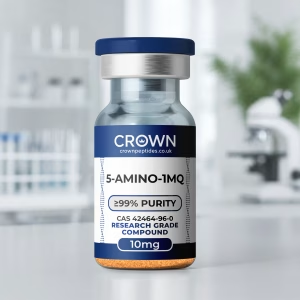
2 strengths5-Amino-1MQ 10mg research compound vial, Crown Peptides UKAgeing research

5-Amino-1MQ Research Compound


From£24.99Strength10mg
Add to basket
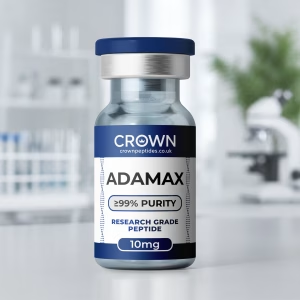
Adamax 10mg research peptide vial, Crown Peptides UKNeurocognitive research

Adamax Research Peptide


From£44.99Strength10mg
Add to basket
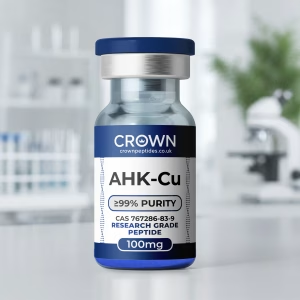
AHK-Cu 100mg copper peptide vial, Crown Peptides UKAgeing research

AHK-Cu Research Peptide


From£29.99Strength100mg
Add to basket
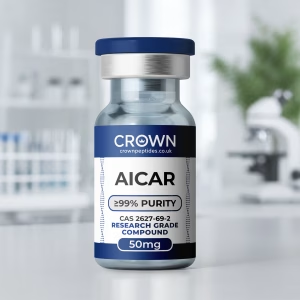
AICAR 50mg research compound vial, Crown Peptides UKAgeing research

AICAR Research Compound


From£34.99Strength50mg
Add to basket

Further reading

UK research peptides. Every batch HPLC and MS verified, certificate published in full.
SUPPORT Mon to Fri, 9am to 5pmDISPATCH Cut-off 2pmEMAIL Email usWHATSAPP +44 7301 802654

Disclaimer: All products are sold strictly for laboratory research purposes only. Not for human or veterinary use, consumption, therapeutic, or diagnostic application. None of our products are medicines, and none are presented as such. By purchasing, you confirm you are a qualified professional and legally permitted to handle these materials in compliance with all applicable laws and regulations. Misuse, resale for unauthorised purposes, or unlawful application is strictly prohibited. Crown Peptides UK disclaims all liability for improper use, handling, or regulatory non-compliance.

© 2026 Crown Peptides UK, a trading name of Crown Peptides Ltd (company no. 17068950), Suite Ra01, 195-197 Wood Street, London E17 3NU . All Rights Reserved.