

RESEARCH USE DISCLAIMER
Crown Peptides supplies glutathione and other research compounds strictly for laboratory research purposes. Our products are not intended for human consumption and are not sold, marketed, or labelled for the diagnosis, treatment, cure or prevention of any disease. Nothing in this document should be read as medical advice or as an endorsement of human use. The discussion below summarises published scientific literature only, and is intended for researchers and students of biochemistry and pharmacology.
Glutathione is the antioxidant your cells manufacture for themselves, and they do it at millimolar concentrations — higher than almost any other small molecule in the cytosol. That alone tells you how central it is. A century of redox biochemistry sits behind this tripeptide, covering its role in cellular defence, detoxification pathways and the glutathione-to-oxidised-glutathione ratio used as a marker of oxidative stress.
This article covers what the published literature shows about glutathione's fundamental biology, where the research on direct supplementation and administration stands, and is direct about a genuine, well-documented safety concern specific to one of its most commercially popular uses — because that concern comes from peer-reviewed safety reviews, not from overcaution on our part.
The short version
- A tripeptide the body makes for itself, at millimolar concentrations inside the cell.
- Its redox chemistry is among the best-characterised in biology, spanning a century of work.
- The reduced-to-oxidised ratio is widely used as a marker of cellular oxidative stress.
- The interventional evidence is far thinner than the biochemical evidence — those are two different literatures.
What Is Glutathione?
Glutathione (GSH) is a tripeptide composed of three amino acids: glutamate, cysteine, and glycine (L-γ-glutamyl-L-cysteinyl-glycine). It is synthesised intracellularly and is considered the most abundant endogenous intracellular antioxidant, found extensively throughout the body and present in essentially every human cell. It was first discovered in 1888, with its tripeptide composition established in 1929 — making it one of the longest-studied biological molecules referenced among research peptides.
Glutathione's antioxidant capacity comes from the sulfhydryl (–SH) group on its cysteine residue, which allows it to directly donate electrons to neutralise reactive oxygen species (ROS) and reactive nitrogen species (RNS), becoming oxidised to glutathione disulfide (GSSG) in the process. The ratio of reduced glutathione (GSH) to its oxidised form (GSSG) is itself used by researchers as a marker of a cell's overall redox status and oxidative stress burden.
Glutathione Mechanism: How This Antioxidant Works
Glutathione operates through several distinct but interconnected mechanisms. It directly scavenges free radicals and reduces peroxides; it is used as a cofactor by glutathione peroxidase (GPx) to reduce hydrogen peroxide, being converted to GSSG in the process and subsequently regenerated back to GSH by glutathione reductase (GR) — a cycle researchers refer to as the glutathione redox cycle. Separately, glutathione S-transferases (GSTs) use glutathione to conjugate and detoxify electrophilic xenobiotic compounds, marking them for excretion. Together, these mechanisms give glutathione both a direct antioxidant role and a broader xenobiotic detoxification role.
Beyond these classical antioxidant and detoxification functions, more recent research has established glutathione's role in redox signalling more broadly — influencing gene expression, DNA and protein synthesis, cell proliferation and apoptosis, autophagy, and even the cellular response to nitric oxide and viral infection. Mitochondria, as a primary cellular source of ROS, are considered to particularly benefit from adequate glutathione availability, and glutathione has been linked to regulation of metal homeostasis and to ferroptosis (an iron-dependent form of regulated cell death), giving it relevance well beyond simple antioxidant "mopping up" of free radicals.
The glutathione redox cycle: reduced glutathione (GSH) neutralises reactive oxygen species via glutathione peroxidase, becoming oxidised glutathione (GSSG), which is then regenerated back to GSH by glutathione reductase.
Why glutathione synthesis, not just glutathione itself, is a major research focus
A recurring theme in this literature, and one that's important for interpreting supplementation research specifically, is that the body's capacity to synthesise glutathione — not simply how much circulating glutathione exists at a given moment — is often the more meaningful variable. Glutathione synthesis depends on adequate availability of its constituent building blocks, particularly cysteine and glycine, and research from Baylor College of Medicine specifically found that older adults had severe glutathione deficiency driven by decreased synthesis due to limited glycine and cysteine availability, rather than simply reflecting increased consumption. In that study, supplementing the precursors glycine and N-acetylcysteine (a stable, bioavailable cysteine donor, together often referred to as "GlyNAC") for two weeks corrected the intracellular glutathione deficiency and normalised synthesis rates in older adults. This distinction — supplying the building blocks for the body's own synthesis, versus administering glutathione directly — is analogous to a theme that recurs elsewhere in this peptide series (for instance, NAD+ versus its precursors NR and NMN), and is worth keeping in mind when comparing different glutathione-related research approaches.
- Classification
- Naturally occurring tripeptide research compound
- Available strength
- 1500mg
- CAS Number
- 70-18-8 (reduced glutathione)
- Molecular Weight
- approximately 307.32 g/mol
- Molecular Formula
- C10H17N3O6S
Glutathione Benefits: Why Researchers Are Interested
Glutathione's centrality to redox homeostasis has made it relevant to an unusually broad span of research areas: ageing biology, neurodegenerative disease, metabolic disease, cancer treatment response, and dermatology, among others. This breadth mirrors MOTS-c's position earlier in this series — a single molecule implicated in many downstream systems, which is part of what makes it scientifically interesting and also part of what makes the literature harder to cleanly interpret, since a change in glutathione status can plausibly affect many things simultaneously.
Key Areas of Glutathione Research
Ageing and glutathione deficiency. Older humans have been found to have severe glutathione deficiency relative to younger adults, driven by reduced synthesis rather than solely by increased consumption, and associated with elevated oxidative stress — a finding that has driven research into precursor supplementation strategies (GlyNAC) specifically aimed at correcting this age-related synthesis deficit.
Parkinson's disease. Because impaired mitochondrial function and glutathione depletion are among the earliest known indicators of substantia nigra degeneration in Parkinson's disease, and the magnitude of glutathione depletion has been found to mirror disease severity, intravenous glutathione has been studied as a potential adjunct therapy. A randomised, double-blind, placebo-controlled pilot trial found glutathione was well tolerated with no safety concerns identified, but the efficacy data was described by the study authors themselves as showing only the possibility of a mild symptomatic effect, not a clear benefit, and requiring evaluation in a larger trial that has not since established a clear benefit.
Skin lightening (a major commercial use with a specific documented safety concern). Intravenous glutathione is widely marketed and used, particularly in parts of Asia and Africa, as a skin-lightening agent, based on a proposed mechanism involving inactivation of the melanogenic enzyme tyrosinase and a shift from brown eumelanin toward lighter phaeomelanin production. This is discussed in detail in the limitations and side-effects sections below, because the evidence and safety picture here is genuinely more concerning than for most uses covered among research peptides.
Oxidative stress in metabolic disease. Glutathione insufficiency has been studied as a contributor to inflammatory pathways in type 2 diabetes, with research examining both glutathione depletion as a disease marker and precursor supplementation as a potential intervention.
Cancer treatment response — a genuine double-edged consideration. Glutathione and its related antioxidant enzymes are studied in oncology for a mechanistically important reason that cuts against a simple "more antioxidant is better" framing: because chemotherapy partly works by increasing oxidative stress in cancer cells to induce their death, elevated glutathione levels have been found to be independently associated with resistance to chemotherapy and radiation in some cancers, while glutathione depletion has been shown to improve cancer cell sensitivity to programmed cell death in research settings.
Methodology: route of administration matters enormously for this molecule. Oral glutathione has historically been considered to have poor bioavailability, since it is substantially broken down during digestion before intact absorption can occur, which is part of why research attention has spread across oral precursor supplementation (such as GlyNAC), intravenous administration, nebulised/inhaled delivery, and topical formulations — each representing a genuinely distinct research question rather than interchangeable routes to the same outcome.
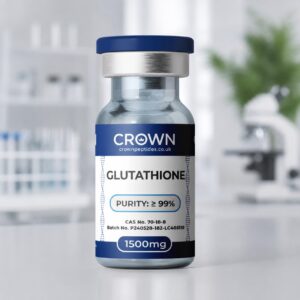
Glutathione Research Peptide
HPLC and MS verified · batch certificate published · dispatched from the UK before 2pm
Summary of Published Glutathione Studies
This table highlights something distinct about glutathione compared to most other compounds in this series: rather than a straightforward "promising but early" evidence profile, several of its most clinically tested and commercially popular applications have returned genuinely mixed or actively concerning findings — doubtful efficacy in Parkinson's disease, and both weak efficacy and real safety concerns for IV skin lightening specifically.
Potential Glutathione Benefits for Antioxidant Research
Based on the published literature, researchers have investigated glutathione and its precursors as tools for studying:
- Cellular redox homeostasis and the relationship between glutathione synthesis capacity and oxidative stress
- Age-related glutathione deficiency and precursor-based correction strategies (such as GlyNAC)
- Mitochondrial oxidative stress and its relationship to neurodegenerative disease processes
- Xenobiotic detoxification pathways mediated by glutathione S-transferases
- The paradoxical relationship between antioxidant status and chemotherapy sensitivity in cancer research
As with the other compounds in this series, this is research investigating a mechanism and, in some areas, an actively studied clinical question — not a general demonstration of therapeutic benefit for any specific supplementation approach. None of the above constitutes a demonstrated therapeutic benefit in humans under any regulatory framework.
Current Limitations of Glutathione Research
Several honest caveats apply to the glutathione literature, and some are more serious than the typical "more research needed" caveat found elsewhere in this series:
- IV glutathione for skin lightening has a specific, documented safety concern. A 2025 narrative review concluded that intravenous glutathione for skin lightening, although fast-acting, is associated with serious safety concerns including anaphylaxis and hepatotoxicity, compounded by a lack of standardised dosing protocols — and a 2016 safety review found no published studies establishing the safety of IV glutathione for chronic or long-term use, for any indication.
- Efficacy for skin lightening is also weaker than commonly assumed. A controlled pilot trial of 10 weekly IV glutathione doses found a statistically significant change in melanin index but explicitly concluded the reduction was not sufficient to show clinically evident skin lightening — while the same trial reported systemic and cutaneous adverse events in its small sample.
- Parkinson's disease efficacy remains doubtful. The best-designed placebo-controlled human trial to date described its own efficacy findings as showing only the possibility of a mild symptomatic effect, explicitly requiring further evaluation in a larger study — a genuinely open question rather than an established benefit.
- No standardised IV dosing protocol exists for any indication. Reviewers have specifically flagged the absence of standardised dosing as compounding the safety concerns around IV administration, since studies to date have used inconsistent doses, concentrations, and treatment schedules.
- The cancer-related evidence cuts both ways. Because elevated glutathione has been associated with chemotherapy and radiation resistance in some cancers, indiscriminately "boosting" glutathione is not something the oncology literature straightforwardly supports as universally beneficial — context and disease state matter considerably, and this is a genuine complicating factor rather than a minor footnote.
Glutathione Side Effects Reported in Research
Reported side effects differ substantially by route of administration, and this is one area where the differences are not a minor technicality. Oral and topical glutathione formulations have generally been associated with limited side effects in the reviewed literature. Intravenous administration presents a materially different and more concerning picture: a specific pilot trial of IV glutathione for skin lightening reported systemic and cutaneous adverse events in its study population, and separate safety reviews have identified anaphylaxis and hepatotoxicity as serious, documented safety concerns specifically associated with the IV route.
In the Parkinson's disease trial, by contrast, IV glutathione at 1,400 mg three times weekly for four weeks was reported as well tolerated with no safety concerns identified and no withdrawals due to adverse events — illustrating that reported tolerability can vary considerably across different trial populations, dosing regimens, and treatment durations, and should not be generalised from one study or use-case to another. No study identified in current reviews has established the safety of glutathione, by any route, for long-term or chronic use. Any research protocol involving human or animal subjects should be developed with appropriate ethical and institutional review, following standard safety monitoring practices for investigational compounds.
Glutathione Dosage Used in Published Research
This section is included for methodological context only and should not be interpreted as guidance for use.
Published human studies have used markedly different protocols depending on the research question: the Parkinson's disease pilot trial used 1,400 mg IV glutathione three times weekly for four weeks; a skin-lightening pilot trial used 600 mg/mL reduced glutathione diluted and administered as a slow intravenous injection once weekly for ten weeks; and the GlyNAC ageing study used oral glycine (1.33 mmol/kg/day) and N-acetylcysteine (0.81 mmol/kg/day) for two weeks as glutathione precursors rather than glutathione itself. These figures illustrate how much study design varies across this literature by route, population, and objective — they are not interchangeable, are not validated for general human use, and are not a basis for self-directed use in any context.
Researchers designing their own experimental protocols should base dosing decisions on the primary literature relevant to their specific model, route of administration, and research question, in consultation with institutional ethics review as applicable, rather than on secondary summaries such as this one.
Analogues and Future Research Directions
Given oral glutathione's bioavailability limitations, much of the applied research interest in this area has shifted toward precursor-based strategies — particularly N-acetylcysteine (NAC), a stable, well-absorbed cysteine donor, often studied in combination with glycine as GlyNAC. These precursor approaches have a partially overlapping but distinct evidence base from direct glutathione administration and shouldn't be assumed to carry identical safety or efficacy profiles.
- Standardising IV dosing and safety monitoring. Given that reviewers have specifically identified the lack of standardised dosing as a safety concern in its own right, establishing consistent, well-monitored dosing protocols would be a foundational next step for any further IV glutathione research.
- Larger, longer Parkinson's disease trials. Given that the existing pilot data explicitly could not resolve whether a genuine symptomatic effect exists, an adequately powered, longer-duration follow-up trial remains the clear next step identified by the original researchers themselves.
- Resolving the chemoresistance question in oncology contexts. Given the double-edged relationship between glutathione status and chemotherapy sensitivity, research clarifying which patient contexts might make glutathione modulation helpful versus harmful would have direct relevance to safe research design in cancer-adjacent studies.
- Comparative precursor research. Given the promising GlyNAC ageing data, further work comparing precursor supplementation against direct glutathione administration across different populations and endpoints would help clarify which approach is better suited to which research question.
Frequently Asked Questions
Is glutathione a peptide?
Yes, technically — it's a tripeptide made of glutamate, cysteine, and glycine, though it functions primarily as an antioxidant and detoxification molecule rather than a signalling peptide in the way most compounds in this series do.
What is glutathione good for?
Glutathione is a powerful antioxidant that neutralizes free radicals, reduces cellular damage, and supports healthy immune function. In skincare, it is widely used to brighten the complexion, fade hyperpigmentation, and even out overall skin tone by inhibiting melanin production.
How many types of glutathione are there?
There are two primary states: reduced glutathione (L-glutathione), which is the active antioxidant form, and oxidized glutathione (GSSG), which is inactive. Skincare and supplements typically use L-glutathione or liposomal glutathione (encapsulated in lipids) for maximum absorption and effectiveness.
Can I mix glutathione and vitamin C?
Yes, combining them is highly recommended because Vitamin C actually helps maintain glutathione in its active, reduced state for much longer. Together, they create a synergistic effect that significantly boosts your antioxidant protection and enhances skin brightening results.
Can I mix glutathione with retinol?
Yes, they work beautifully together because glutathione’s soothing properties can help minimize the irritation and inflammation often caused by retinol. To maximize their individual benefits and protect your skin barrier, apply your glutathione in the morning and reserve retinol for your nighttime routine.
Why Peptide Sourcing Quality Matters for Research Validity
Glutathione's chemistry creates a specific and well-documented sourcing vulnerability: its entire antioxidant function depends on the free sulfhydryl group on its cysteine residue remaining in the reduced (GSH) rather than oxidised (GSSG) state, and this reduced form is chemically prone to oxidation during storage and handling.
Common failure modes relevant to glutathione specifically include:
- Oxidation to GSSG during storage — exposure to air, heat, or light can oxidise reduced glutathione to its disulfide form, meaningfully changing a sample's biological activity in ways that aren't visible on inspection, since the GSH/GSSG ratio is itself central to how researchers interpret redox-related experimental results.
- Inaccurate concentration labelling — without independent mass spectrometry confirmation, there's no reliable way to verify that a vial contains the labelled concentration of intact, reduced glutathione rather than a partially oxidised mixture.
- Bacterial endotoxin contamination — relevant for any in vivo or cell-culture research, particularly given how frequently glutathione research involves inflammatory and immune-relevant endpoints that endotoxin contamination could confound.
- Synthesis impurities — as with any peptide-based compound, incomplete synthesis or inadequate purification can leave process-related impurities in the final product that a less rigorous testing process could miss.
Given that the entire point of studying glutathione is usually its redox state, a batch that has partially oxidised during storage doesn't just under-deliver — it can actively confound the specific measurement the research is designed around. This is precisely why independent testing and verified storage conditions matter more for this compound than for a more chemically stable peptide.
Read the certificate before you order
Every batch is published openly — identity by mass spectrometry, purity by HPLC, and the batch number printed on the vial you receive.
Open the COA libraryWhy Choose Crown Peptides
Testing is only part of the picture. Crown Peptides was built around a simple idea: a UK researcher ordering a peptide should be able to trust everything about how it reached them — not just the number on a Certificate of Analysis, but who made it, how it was handled, how it travelled, and who they can speak to if they have a question. That's the standard we hold ourselves to on every order, and it's worth explaining properly rather than just listing it.
Sourcing You Can Trust
Quality starts long before a product reaches our warehouse. We work directly with one of the world's largest and most established peptide synthesis manufacturers, chosen specifically for its production standards, consistency, and track record — rather than sourcing opportunistically from whichever manufacturer happens to offer the lowest price that month. That close, ongoing partnership is what allows us to stand behind every batch we sell, because we know exactly how it was made.
Verified Through Independent Testing
We don't expect researchers to take a manufacturer's word for it, so we verify every batch independently before it's listed for sale:
Endotoxin Testing
Every batch is screened for bacterial endotoxin, which matters in particular for any research involving cell culture, immune signalling, or in vivo inflammatory endpoints.
HPLC Purity Analysis
High-performance liquid chromatography is used to assess purity and screen for truncated sequences, deletion products, and synthesis by-products.
Mass Spectrometry Identity Confirmation
MS analysis confirms both the molecular identity and the reduced (GSH) versus oxidised (GSSG) state of the supplied compound, providing an independent check on redox integrity beyond the label.
Certificate of Analysis
Every batch is supplied with a Certificate of Analysis, and a QR code linking directly to the testing report on crownpeptides.co.uk, so researchers can document exactly what was used in their own experimental records.
Careful Storage and Handling
A product that's been correctly synthesised and tested can still be let down by poor handling afterward. Once a batch clears testing, we store it under controlled conditions designed to preserve stability and prevent degradation before it ever reaches a researcher's bench. This matters more for peptides and sensitive research compounds than for most laboratory reagents: temperature excursions, light exposure, and poor stock rotation can all silently reduce integrity long before a vial is opened, in ways that aren't visible on inspection and can quietly undermine an experiment's results. We treat that storage window as part of the product, not an afterthought once testing is done.
Packaging and Delivery
Every order is packed in premium, discreet packaging designed to protect the product in transit and arrive intact. Orders placed before 2pm are dispatched the same working day for next-day UK delivery, and we ship to Northern Ireland, the Republic of Ireland, Scotland, England, and across the EU, with international shipping available beyond that. For a researcher working to a study timeline, knowing an order will arrive quickly, safely, and exactly as ordered isn't a convenience — it's part of keeping a research schedule on track.
Support That Goes Beyond the Sale
Peptide and research-compound work raises genuine practical questions — around reconstitution, storage, handling, and interpreting a Certificate of Analysis — and we'd rather a researcher ask us directly than guess. Our team is on hand to provide clear, straightforward guidance from product selection through to delivery and beyond, without the evasiveness or upsell pressure that can come with some suppliers in this space. We see that ongoing relationship, not just the transaction, as the actual job.
Regulatory Compliance and Transparency
Crown Peptides is a UK-based company operating in line with MHRA guidance on research chemicals. Every batch is released against its own certificate of analysis, with HPLC purity and mass-spectrometry identity recorded and the lot number printed on the vial you receive. We'd rather be transparent about what we sell and who it's for than blur that line to chase a wider customer base — that's a deliberate choice on our part, not a legal minimum we begrudgingly meet.
Our Commitment
Put simply, our mission is to supply the UK research community with peptides and research compounds of unmatched purity and consistency, backed by a level of service, transparency, and technical support that researchers can actually rely on — from the first email enquiry to the vial arriving on the bench. That standard applies whether an order is a single vial for an independent researcher or a bulk order for a laboratory, and it holds regardless of whether a customer ever finds out how much work sits behind it.
For researchers who want their results to be reproducible and their experimental record defensible, knowing precisely what's in the vial — and trusting that everyone who handled it got it right — is a basic, non-negotiable starting point.
References
- Kumar, P. et al. "Glutathione Deficiency and Oxidative Stress in Aging: Metabolic Mechanism and Targeted Intervention." PMC. https://www.ncbi.nlm.nih.gov/pmc/articles/PMC6840693/
- Hauser, R.A. et al. "Randomized, double-blind, pilot evaluation of intravenous glutathione in Parkinson's disease." PubMed. https://pubmed.ncbi.nlm.nih.gov/19230029/
- "Intravenous glutathione for skin lightening: Inadequate safety data." PubMed. https://pubmed.ncbi.nlm.nih.gov/27499402/
- "Exploring the Safety and Efficacy of Glutathione Supplementation for Skin Lightening: A Narrative Review." PMC. https://www.ncbi.nlm.nih.gov/pmc/articles/PMC11862975/
- "Intravenous glutathione as a skin lightening agent: a pilot study." Journal of the Philippine Dermatological Society. https://www.ovid.com/jnls/jpds/fulltext/01671546-201120020-00006~intravenous-glutathione-as-a-skin-lightening-agent-a-pilot
- "Oxidative Stress Induced by Chemotherapy: Evaluation of Glutathione and Its Related Antioxidant Enzyme Dynamics in Patients with Colorectal Cancer." PMC. https://www.ncbi.nlm.nih.gov/pmc/articles/PMC10745799/
- "Glutathione: new roles in redox signaling for an old antioxidant." PubMed. https://pubmed.ncbi.nlm.nih.gov/25206336/
Working with Glutathione Research Peptide
Batch-tested material, published certificates, and same-day dispatch on orders placed before 2pm.
See Glutathione Research Peptide