Research Peptides
A high-purity research peptide studied in tissue repair and recovery research. Available in 5mg and 10mg, with every batch independently tested and dispatched from the UK.
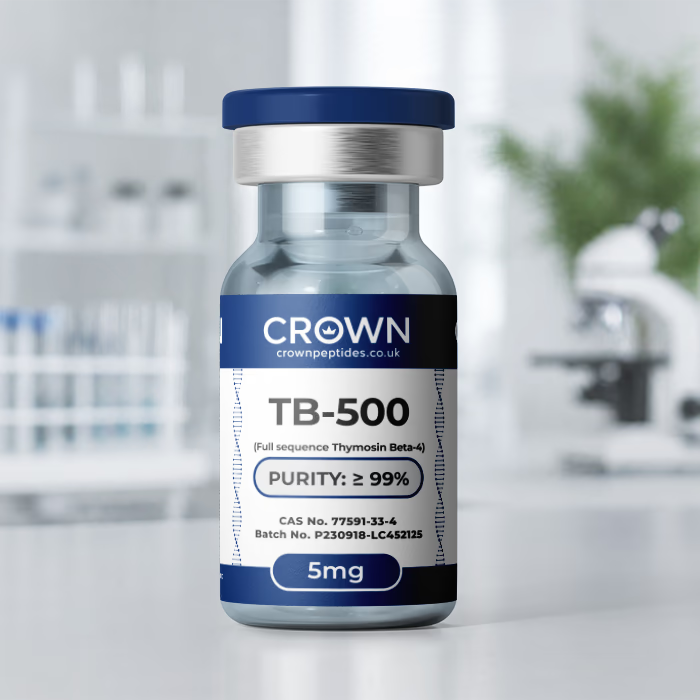
TB-500 peptide UK is Crown Peptides' Thymosin Beta-4-related research peptide, supplied in 5mg and 10mg vials for laboratory research into actin-sequestering biology, cell migration and angiogenesis.
Supplied for laboratory research purposes only — not for human consumption or for medical, veterinary or diagnostic use.
Almost every cell in the body is already carrying thymosin beta-4. It is one of the most abundant peptides inside mammalian cells, and its everyday job is holding actin, the protein that forms the cell's internal scaffolding, in reserve until the cell needs to move, divide or change shape. That simple role has made it one of the most closely studied peptides in tissue-repair research.
Thymosin beta-4 is a naturally occurring 43-amino-acid peptide, first sequenced by Allan Goldstein's group from calf thymus extracts in the early 1980s, and best known for binding monomeric (G-) actin. TB-500 is the name used for thymosin beta-4 material supplied for laboratory research, and the Crown Peptides specification matches the full 43-residue sequence, with a molecular weight of 4963.49 g/mol.
Much of the research interest centres on a short stretch of that sequence, residues 17 to 23 (LKKTETQ), which forms the actin-binding site. Studies have linked this region to the peptide's effects on cell migration and new blood-vessel formation, which is why TB-500 comes up so often in angiogenesis and wound-model research.
Thymosin Beta-4-related research includes actin sequestration, cell migration, angiogenesis, wound-healing models and tissue-response biology, with the actin-binding domain itself identified as the region driving angiogenic activity in experimental models (Learn more). Because actin dynamics influence cell movement and structural organisation, the peptide has been studied in epithelial, endothelial and connective-tissue models, alongside related tissue-repair peptides such as [BPC-157] and [KLOW]. Researchers should distinguish the exact TB-500 material supplied from full-length endogenous thymosin beta-4 where the product specification differs.
Wound-model research. One of the most cited studies, published in the Journal of Investigative Dermatology in 1999, used a rat full-thickness wound model. Thymosin beta-4 increased re-epithelialisation by 42% over controls at day 4 and by up to 61% at day 7, with more collagen deposition and new blood-vessel growth in the treated wounds (Learn more).
Cardiac research. In 2004, a study in Nature showed that thymosin beta-4 forms a complex with PINCH and integrin-linked kinase, activating the survival kinase Akt. In a mouse coronary-ligation model it enhanced early heart-muscle cell survival and improved cardiac function, opening up a whole field of research into the peptide and cardiac repair (Learn more).
Eye and cornea research. Thymosin beta-4 has also been studied extensively in corneal injury models, where it has been reported to speed up wound closure and reduce inflammatory markers. That work led to ophthalmic formulations of the peptide being taken into clinical development.
TB-500 and BPC-157. TB-500 is regularly researched alongside BPC-157, and the two work in different ways. TB-500's activity centres on actin and cell migration, while BPC-157 is a 15-amino-acid peptide derived from a gastric protein, studied mainly for its effects on growth-factor and nitric-oxide signalling. Because the two routes complement each other, many researchers study them together, which is where the pre-mixed Wolverine Stack comes in. Our BPC-157 vs TB-500 guide compares them in more depth.
Compound-level reference data. Batch-specific results appear on the Certificate of Analysis.
Work out concentration with the peptide calculatorCrown Peptides TB-500 / Thymosin β4 is supplied for controlled laboratory research with batch-specific analytical documentation. High-Performance Liquid Chromatography (HPLC) can assess chromatographic purity, while Mass Spectrometry provides molecular information used to support identity verification. The batch-specific Certificate of Analysis is the definitive source for the exact purity result, identity data and analytical specification of the material supplied.
Researchers working with TB-500 may also be interested in [BPC-157], [BPC-157 + TB-500], [KLOW], [GHK-Cu] and [KPV] — other tissue-repair and cell-migration research peptides studied in related research areas.
TB-500 is a research-product name associated with Thymosin Beta-4-related peptide material, supplied by Crown Peptides in 5mg and 10mg vials.
Thymosin beta-4 is a naturally occurring 43-amino-acid peptide that binds monomeric actin.
Research includes actin dynamics, cell migration, angiogenesis, wound-healing models and tissue-response biology.
Actin is a core cytoskeletal protein involved in cell shape, movement and structural organisation.
Use the batch-specific Certificate of Analysis and product specification, because commercial TB-500 naming does not always establish that the material is identical to full-length endogenous thymosin beta-4.
TB-500 is the name used in research supply for thymosin beta-4 material. The Crown Peptides TB-500 specification matches the full 43-amino-acid sequence (C212H350N56O78S, 4963.49 g/mol), and each batch's identity is confirmed by mass spectrometry on its certificate of analysis.
They are different peptides with different mechanisms. TB-500 is a 43-amino-acid peptide whose research centres on actin binding, cell migration and angiogenesis. BPC-157 is a 15-amino-acid peptide derived from a gastric protein, studied mainly for growth-factor and nitric-oxide signalling. Our BPC-157 vs TB-500 guide covers the comparison in full.
Because they act through different pathways, researchers often study them side by side in tissue-repair models to look at complementary effects. Crown Peptides also supplies the two pre-combined as the Wolverine Stack.
LKKTETQ is residues 17 to 23 of thymosin beta-4 and forms its actin-binding site. Research has linked this region to the peptide's effects on cell migration and angiogenesis.
Both contain the same peptide. The choice usually comes down to how much material a study needs and the concentration you want after reconstitution, and the peptide calculator shows how vial size and diluent volume affect that. Packs of 5 and 10 vials are also available, saving 15% and 25% on every vial.
Yes. TB-500 is available in 5mg and 10mg vials, as single vials or in packs of 5 and 10. Orders placed before 2pm on a working day are dispatched the same day from the UK, with free tracked UK delivery on orders over £100.
Every batch is HPLC tested for purity and mass spectrometry verified for identity, and the certificate of analysis is published in full on our Lab Reports page, so you can check it before you order.
Every batch is published openly — identity, purity and batch number, with no account needed.
Supplied for laboratory research purposes only — not for human consumption or for medical, veterinary or diagnostic use.
Each batch undergoes internal analytical verification using chromatographic and spectrometric methods prior to lyophilisation.
• HPLC Analysis
• Mass Spectrometry Confirmation
• Batch Traceability
By purchasing this product you confirm that you are a qualified researcher and that this compound will be used exclusively for laboratory research purposes.
This product is not intended for diagnostic or therapeutic use.
Any human or medical use is strictly prohibited.
Store in a cool, dry, secure and sterile environment away from any unauthorised persons or children.
Disclaimer: All products are sold strictly for laboratory research purposes only. Not for human or veterinary use, consumption, therapeutic, or diagnostic application. By purchasing, you confirm you are a qualified professional and legally permitted to handle these materials in compliance with all applicable laws and regulations. Misuse, resale for unauthorised purposes, or unlawful application is strictly prohibited. Crown Peptides UK disclaims all liability for improper use, handling, or regulatory non-compliance.