
Research guide
TB-500 (Thymosin Beta-4) UK Guide
TB-500 is supplied as full-length thymosin beta-4, not the short fragment many suppliers ship under the same name. Forty-three residues, actin binding, and why that matters.
RESEARCH USE DISCLAIMER
Crown Peptides supplies full-length Thymosin Beta-4 (often searched for as TB-500) as a laboratory research compound only. It is not approved by the FDA, MHRA, or EMA for any use, and our products are not intended for human consumption and are not sold, marketed, or labelled for the diagnosis, treatment, cure or prevention of any disease. Nothing in this document should be read as medical advice or as an endorsement of human use. The discussion below summarises published scientific and regulatory literature only, and is intended for researchers and students of pharmacology.
“TB-500” is the name most researchers search for, but it’s worth being precise about what Crown Peptides actually supplies: the full-length, 43-amino-acid Thymosin Beta-4 protein, not the short 7-amino-acid synthetic fragment that some suppliers in this market sell under the same commercial name. This is a genuinely important distinction, and it works in the product’s favour — full-length Thymosin Beta-4 carries a considerably stronger research pedigree than the short fragment, including completed human Phase II and Phase III clinical trials, which the fragment alone cannot claim.
This article covers what the peer-reviewed literature shows about full-length Thymosin Beta-4’s biology, mechanism, and clinical research history — the same molecule supplied by Crown Peptides — while being clear throughout about where findings specifically concern the full-length protein versus the shorter fragment sold elsewhere, since the two should not be treated as interchangeable when reading the wider literature.
What Is Thymosin Beta-4 (TB-500)?
Thymosin beta-4 (Tβ4) is a naturally occurring 43-amino-acid protein, one of the most abundant intracellular proteins in mammalian cells, originally isolated from the thymus gland and subsequently found throughout the body. Its core biological function is as the primary G-actin-sequestering protein in mammalian cells — it binds monomeric actin and regulates its availability for polymerisation into the actin filaments that give cells their structure and enable movement. This is the full-length protein Crown Peptides supplies.
“TB-500” itself is, strictly speaking, the name originally given to a much shorter synthetic fragment of Tβ4 — commonly the acetylated seven-residue sequence Ac-LKKTETQ, spanning roughly amino acids 17–23 of the full protein — and the name has since become a commercial shorthand that’s frequently, and confusingly, applied to both the fragment and the full-length protein interchangeably. Crown Peptides supplies the full-length, 43-amino-acid molecule specifically because it carries the stronger, more complete research pedigree described throughout this article; where this article refers to findings specific to the shorter fragment rather than the full protein, that distinction is flagged explicitly.
TB-500 Mechanism: How It Works
Thymosin beta-4’s central mechanism is actin sequestration: by binding G-actin and inhibiting nucleotide exchange, it keeps a portion of the cell’s actin pool in a polymerisation-incompetent state, holding it in reserve until cellular signals trigger its release for use in processes like cell migration, wound closure, and tissue remodelling. This actin-regulating function underlies most of Tβ4’s downstream reported effects: promotion of endothelial cell migration and angiogenesis, recruitment of stem and progenitor cells to sites of injury, and modulation of inflammatory signalling including downregulation of NF-κB pathway activity.
The LKKTETQ sequence specifically — the segment TB-500 is built around — has been identified as an important contributor to Tβ4’s actin-binding and angiogenic activity, with mutations in this region substantially reducing Tβ4’s ability to promote blood vessel formation in experimental studies. This gives TB-500 a reasonably well-motivated mechanistic rationale as a shorter research tool. That said, retaining a key functional domain is not the same as fully reproducing a 43-amino-acid protein’s complete biological activity, and the extent to which TB-500 faithfully recapitulates full-length Tβ4’s effects across every context studied for the parent molecule has not been exhaustively established.
Crown Peptides supplies the full-length, 43-amino-acid Thymosin Beta-4 protein shown on the left — the version behind the strongest human clinical data — rather than the short synthetic fragment shown on the right, which some other suppliers sell under the same “TB-500” name.
Why Crown Peptides Supplies the Full-Length Protein, Not the Short Fragment
This is worth explaining clearly, because it’s the single most important thing to understand about this specific product. The great majority of the strongest peer-reviewed literature — the cardiac repair studies, the corneal healing trials, the traumatic brain injury research — was conducted using full-length, 43-amino-acid thymosin beta-4, the molecule Crown Peptides supplies, rather than the short seven-residue synthetic fragment some suppliers sell instead. A 2026 scoping review that systematically mapped the Tβ4 and TB-500 literature found it necessary to treat them as related but distinct entries specifically because so much published discussion conflates the two. Because Crown’s product is the full-length protein, the cardiac, corneal, and dermal healing research discussed throughout this article applies directly to what’s in the vial — a meaningful advantage over fragment-only products, where that same body of evidence only applies at one remove.
Actin biology as a research foundation
It’s worth briefly explaining why actin regulation is considered such a fundamentally important research target in its own right. Actin is one of the most abundant proteins in eukaryotic cells and exists in two forms: monomeric G-actin and the polymerised filamentous form, F-actin, which makes up part of the cytoskeleton — the structural scaffold that gives cells their shape and enables movement. Cells constantly regulate the balance between these two forms to enable processes like migration (relevant to wound healing, immune cell trafficking, and cancer metastasis), and division. Proteins that sequester G-actin, holding it in reserve until it’s needed, are therefore positioned at a genuinely fundamental control point in cell biology, which is part of why thymosin beta-4 attracted sustained research interest well beyond any single tissue or disease application — its relevance touches almost any biological process involving cell shape change or movement.
Why the Actin-Binding Mechanism Matters
It’s worth explaining why researchers zeroed in on this specific 7-amino-acid fragment out of thymosin beta-4’s full 43-residue sequence. The Ac-LKKTETQ sequence corresponds to the region of the parent protein responsible for binding to G-actin, a building block of the cytoskeleton, and this actin-sequestering activity is central to how thymosin beta-4 is proposed to promote cell migration during wound healing. By isolating this specific fragment, researchers created a tool for studying whether the actin-binding activity alone can reproduce the healing-relevant effects seen with the full-length protein, or whether other regions of thymosin beta-4 (outside this specific fragment) contribute meaningfully to its broader biological activity.
This kind of fragment-isolation approach is a recurring strategy across the peptide research world (KPV from alpha-MSH, and Semax/Selank’s Pro-Gly-Pro extensions are other examples covered elsewhere in this article series), and it reflects a genuine and useful research question: does a smaller, more stable, more easily synthesised fragment retain the specific activity researchers care about, without the complexity of manufacturing and administering the full-length parent molecule?
- Classification
- Thymosin Beta-4-related research peptide
- CAS Number
- 77591-33-4
- Molecular Weight
- 4963.49 g/mol
- Molecular Formula
- C212H350N56O78S
TB-500 (Thymosin Beta-4) Benefits: Why Researchers Are Interested
Thymosin beta-4’s fundamental role in actin regulation makes it relevant to essentially any research question involving cell migration or tissue remodelling, which is why its research base spans such a wide range of tissues and injury contexts — skin, cornea, heart, and central nervous system among them. Its research profile is notably stronger than BPC-157‘s in one specific respect: full-length Tβ4 has been taken through actual human Phase II and Phase III trials for a specific ophthalmic indication, giving this compound genuine clinical-stage evidence — and because Crown Peptides supplies the full-length protein rather than the short fragment, that clinical evidence applies directly to the product itself rather than to a related-but-different molecule.
TB-500 Within the Broader Thymosin Peptide Family
TB-500 sits within a broader family of thymosin-related peptides that also includes thymosin alpha-1 (covered separately in Crown Peptides’ research range), which despite the similar naming convention works through an entirely different, immune-focused mechanism unrelated to actin binding. This naming overlap is a genuine source of confusion worth flagging directly: “thymosin” peptides are not a single functional family sharing one mechanism, but rather a group of molecules originally isolated from thymus tissue extract that turned out to have quite distinct, unrelated biological roles once characterised individually. Researchers working across this peptide family should treat each specific thymosin-derived molecule as requiring its own independent mechanistic characterisation, rather than assuming shared naming implies shared function.
Key Areas of TB-500 Research
Corneal and ocular surface healing (Tβ4, clinical stage). The most clinically advanced area of Tβ4 research. Topical thymosin beta-4 (formulated as RGN-259) has been tested in randomised, placebo-controlled human trials for neurotrophic keratopathy and dry eye disease, with mixed but partly promising results discussed in detail below.
Cardiac repair. A widely cited 2004 Nature study found that Tβ4 reduced infarct size and promoted cardiac function recovery after induced myocardial infarction in mice, proposed to work partly through activation of epicardial progenitor cells — preclinical, animal-only evidence to date.
Dermal wound healing. Multiple animal studies have found that topical and systemic Tβ4 accelerates full-thickness dermal wound healing, associated with increased keratinocyte and endothelial cell migration and increased laminin-5 expression supporting re-epithelialisation.
Anti-inflammatory research. A substantial body of work, particularly from one research group studying corneal injury models, has documented Tβ4’s anti-inflammatory effects including NF-κB pathway downregulation, forming part of the rationale behind the ophthalmic clinical trial programme.
Neurological injury models. Animal studies have examined Tβ4 in models of traumatic brain injury and embolic stroke, reporting reduced neuronal death and improved functional neurological outcomes — again, preclinical evidence using the full-length protein rather than the TB-500 fragment.
Methodology: mapping what’s actually been studied. A 2026 scoping review searching PubMed, Europe PMC, and ClinicalTrials.gov specifically set out to characterise which tissues, mechanisms, and study designs are represented in the combined Tβ4/TB-500 literature, and to determine how much of it actually constitutes human clinical evidence as opposed to preclinical signal — precisely the kind of mapping exercise this evidence base needed given how often the two molecules are discussed interchangeably.
Comparative Research Against BPC-157
TB-500 is very frequently marketed and sold alongside BPC-157 (covered in a separate Crown Peptides research review), most commonly as the combined “Wolverine” blend. It’s worth being direct about what this pairing does and doesn’t represent: the two peptides have entirely distinct origins, sequences, and proposed mechanisms — BPC-157 through NO-system and angiogenic signalling, TB-500 through actin-cytoskeleton regulation — and combining them commercially reflects a complementary-mechanism hypothesis rather than a rigorously tested combination finding. Researchers interested in either compound’s individual evidence base should evaluate each on its own published literature rather than assuming shared marketing implies shared or mutually-reinforcing research support.
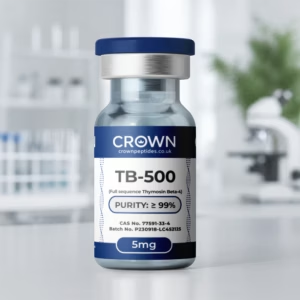
TB-500 (Thymosin Beta-4) Research Peptide
HPLC and MS verified · batch certificate published · dispatched from the UK before 2pm
Summary of Published TB-500 Studies
This table is a useful illustration of exactly the distinction this article keeps returning to: real human Phase II/III trial data exists in this research area, but it belongs to full-length Tβ4 in an ophthalmic formulation, with mixed results across trials — a promising Phase III trend in SEER-1 that did not hold up in the SEER-3 follow-up trial. None of this trial programme used the TB-500 fragment specifically, and readers should not treat this ophthalmic trial data as direct evidence for TB-500 as sold in research-compound form.
Potential TB-500 Benefits for Healing Research
Based on the published literature, researchers have investigated thymosin beta-4 and the TB-500 fragment as tools for studying:
- Actin cytoskeleton regulation and its role in cell migration during tissue repair
- Angiogenesis mechanisms relevant to wound healing and cardiac tissue recovery
- Anti-inflammatory signalling pathways in ocular surface and dermal injury contexts
- Stem and progenitor cell recruitment to sites of tissue injury
- Structure-activity relationships between a full-length regenerative protein and its minimal active fragment
As with the other peptides in this series, this is research investigating mechanisms and, in one specific ophthalmic context, an actual clinical development programme — not a general demonstration of therapeutic benefit for TB-500 as a systemically administered research compound. None of the above constitutes a demonstrated therapeutic benefit for TB-500 specifically under any regulatory framework.
Current Limitations of TB-500 Research
Several honest caveats apply to this research area, and to TB-500 specifically:
- The clinical trial route of administration differs from systemic research use. The completed human trials used topical ophthalmic administration for specific eye conditions, not the systemic (e.g. injected) administration full-length Tβ4 is most commonly studied for in musculoskeletal and soft-tissue research contexts. Because Crown Peptides supplies the same full-length molecule used in those trials, the clinical safety and mechanistic data applies directly to the protein itself — the open question is specifically about route and indication, not about which molecule was studied.
- Mixed results even within the Tβ4 clinical programme. The SEER-1 Phase III trial showed a promising efficacy trend, but the follow-up SEER-3 Phase III trial did not meet its primary endpoint — a genuinely important caveat that a one-sided reading of this literature can easily miss.
- Less systemic human data exists for non-ophthalmic applications specifically. While the full-length protein’s clinical trial history is genuine and directly relevant, systemic administration for musculoskeletal and soft-tissue research remains comparatively less studied in humans than the ophthalmic route.
- Regulatory status reflects the field’s early stage generally. The FDA lists the short TB4 fragment (LKKTETQ) specifically among bulk drug substances presenting significant safety risk for compounding purposes, citing limited human exposure and safety data for that fragment. The World Anti-Doping Agency classifies Tβ4 and its derivatives as prohibited substances.
- Theoretical oncological caution, as with other angiogenesis-promoting peptides. Because Tβ4’s mechanism includes promoting angiogenesis and cell migration — processes also relevant to tumour growth and metastasis — active malignancy or recent cancer history is treated as a relevant safety consideration in clinical and research safety discussions of this peptide family, similarly to BPC-157.
TB-500 (Thymosin Beta-4) Side Effects Reported in Research
Within the completed human trials of topical ophthalmic Tβ4 (RGN-259), no significant adverse effects were reported, and the treatment was described as safe in the specific patient population studied (neurotrophic keratopathy and dry eye disease). Because this trial used the same full-length protein Crown Peptides supplies, this safety data speaks directly to the product itself. Systemic (e.g. injected) administration for musculoskeletal and soft-tissue research has a comparatively smaller controlled human safety dataset, which is a difference in route and indication studied rather than a difference in molecule.
The FDA’s basis for including the short TB4 fragment among substances presenting significant safety risk for compounding is explicitly limited human exposure and safety data for that specific fragment. Any research protocol involving human or animal subjects should be developed with appropriate ethical and institutional review, following standard safety monitoring practices for investigational compounds.
TB-500 Dosage Used in Published Research
This section is included for methodological context only and should not be interpreted as guidance for use.
The completed human trials used topical ophthalmic formulations — 0.1% Tβ4 solution administered as eye drops multiple times daily — which is a route and formulation entirely distinct from the systemic (injected) use TB-500 is most commonly discussed for outside clinical trial contexts. Animal studies of systemic Tβ4 and TB-500 administration have used a range of doses depending on the model and injury context, including intraperitoneal and subcutaneous routes in cardiac and dermal healing studies. These figures reflect specific experimental designs in specific models and routes, and none of them constitute validated human systemic dosing information.
Researchers designing their own experimental protocols should base dosing decisions on the primary literature relevant to their specific model, route, and molecule (being careful to distinguish Tβ4 from TB-500 studies specifically), in consultation with institutional ethics review as applicable, rather than on secondary summaries such as this one.
Analogues and Future Research Directions
TB-500 is frequently discussed and marketed alongside BPC-157 as a complementary “healing peptide” pairing, despite the two having entirely distinct origins, sequences, and mechanisms (actin regulation for TB-500, versus BPC-157’s proposed NO-system and angiogenic pathways). As with that pairing, there is no rigorous comparative research establishing that combining them produces effects beyond what either might produce independently, and each should be evaluated on its own separate evidence base.
- Systemic human trials using the full-length protein. Given that the existing clinical-stage evidence for full-length Tβ4 concerns topical ophthalmic use specifically, the single most valuable next step would be dedicated systemic (e.g. injected) pharmacokinetic and safety research using the same full-length protein already validated in the ophthalmic trials, extending it to musculoskeletal and soft-tissue research contexts.
- Resolving the SEER-1/SEER-3 discrepancy. Understanding why the promising SEER-1 trend did not replicate in the SEER-3 Phase III trial would meaningfully clarify how reliable the ophthalmic Tβ4 clinical signal actually is.
- Systemic administration safety data. Given that the strongest human data concerns topical ophthalmic use, dedicated safety research on systemic administration routes would directly address the gap most relevant to how this peptide family is actually used in non-clinical research and off-label settings.
- Oncological safety characterisation. As with other angiogenesis-promoting peptides, dedicated long-term research on cancer-relevant safety endpoints remains an open question for this molecule family.
Frequently Asked Questions
What is TB 500 used for?
TB-500 is a synthetic version of the naturally occurring protein Thymosin Beta-4, primarily investigated in research for its role in tissue repair and regeneration. It is studied for its potential to accelerate healing in muscles, tendons, ligaments, and skin wounds by promoting cell migration and blood vessel formation. Researchers also examine its anti-inflammatory effects and its ability to reduce scar tissue formation.
Can BPC 157 and TB 500 be mixed?
Yes, BPC-157 and TB-500 are commonly combined in research settings, a pairing often referred to as the “Wolverine stack.” They are frequently studied together because their complementary mechanisms are believed to provide synergistic benefits for tissue and joint repair. Both are water-soluble peptides, making them compatible for co-administration.
Preparing the BPC-157 and TB-500 blend for Laboratory Work
Preparing the BPC-157 and TB-500 blend for laboratory work follows standard practice for lyophilised peptides: work on a clean surface, use a sterile research diluent selected under your own protocol, and let the powder dissolve fully with gentle swirling before use. Once prepared, the solution should be stored as described in the storage section of this guide.
How The BPC-157 and TB-500 blend Is Reconstituted in the Laboratory
In a laboratory setting, lyophilised the BPC-157 and TB-500 blend is reconstituted with a sterile research diluent chosen under the researcher’s own protocol. Standard practice is to let the vial reach room temperature, add the diluent slowly down the inside wall of the vial and swirl gently rather than shake, to avoid foaming and protect the peptide. The resulting stock concentration depends on the volume of diluent used and can be checked with our concentration calculator.
How TB 500 Is Reconstituted in the Laboratory
In a laboratory setting, lyophilised TB 500 is reconstituted with a sterile research diluent chosen under the researcher’s own protocol. Standard practice is to let the vial reach room temperature, add the diluent slowly down the inside wall of the vial and swirl gently rather than shake, to avoid foaming and protect the peptide. The resulting stock concentration depends on the volume of diluent used and can be checked with our concentration calculator.
Why Peptide Sourcing Quality Matters for Research Validity
Given how frequently “TB-500” is used to describe two different molecules across this market, sourcing accuracy matters more than usual for this compound — a supplier that doesn’t disclose whether a vial contains the full-length protein or the short fragment leaves researchers unable to correctly relate their findings back to the published literature.
Common failure modes relevant to this compound specifically include:
- Undisclosed substitution of the short fragment for the full-length protein — because both are commonly sold under the same “TB-500” name, a vial’s actual content should never be assumed from the label alone; independent verification is the only way to confirm which molecule was actually supplied.
- Truncated or deletion sequences — as with any synthesised protein, incomplete coupling during manufacture can leave a proportion of the product missing residues from the full 43-amino-acid sequence.
- Bacterial endotoxin contamination — relevant for any in vivo or cell-culture research, particularly given that this peptide family’s research frequently involves inflammatory and angiogenic endpoints that endotoxin contamination could directly confound.
- Inaccurate mass or concentration labelling — without independent mass spectrometry confirmation, there’s no reliable way to verify that a vial contains the protein and concentration stated on the label.
For a product name subject to widespread conflation between two related but distinct molecules, verifying that a given batch is genuinely the full-length, intact protein — rather than the shorter fragment or an incomplete variant — is a basic precondition for any research finding to be meaningfully interpretable at all.
Read the certificate before you order
Every batch is published openly — identity by mass spectrometry, purity by HPLC, and the batch number printed on the vial you receive.
Open the COA libraryWhy Choose Crown Peptides
Testing is only part of the picture. Crown Peptides was built around a simple idea: a UK researcher ordering a peptide should be able to trust everything about how it reached them — not just the number on a Certificate of Analysis, but who made it, how it was handled, how it travelled, and who they can speak to if they have a question. That’s the standard we hold ourselves to on every order, and it’s worth explaining properly rather than just listing it.
Sourcing You Can Trust
Quality starts long before a product reaches our warehouse. We work directly with one of the world’s largest and most established peptide synthesis manufacturers, chosen specifically for its production standards, consistency, and track record — rather than sourcing opportunistically from whichever manufacturer happens to offer the lowest price that month. That close, ongoing partnership is what allows us to stand behind every batch we sell, because we know exactly how it was made.
Verified Through Independent Testing
We don’t expect researchers to take a manufacturer’s word for it, so we verify every batch independently before it’s listed for sale:
Endotoxin Testing
Every batch is screened for bacterial endotoxin, which matters in particular for any research involving cell culture, immune signalling, or in vivo inflammatory endpoints.
HPLC Purity Analysis
High-performance liquid chromatography is used to assess purity and screen for truncated sequences, deletion products, and synthesis by-products.
Mass Spectrometry Identity Confirmation
MS analysis confirms the molecular weight of the supplied protein matches full-length, intact Thymosin Beta-4, verifying that the product is the complete 43-amino-acid protein rather than the shorter fragment sold elsewhere under the same commercial name.
Certificate of Analysis
Every batch is supplied with a Certificate of Analysis, and a QR code linking directly to the testing report on crownpeptides.co.uk, so researchers can document exactly what was used in their own experimental records.
Careful Storage and Handling
A product that’s been correctly synthesised and tested can still be let down by poor handling afterward. Once a batch clears testing, we store it under controlled conditions designed to preserve stability and prevent degradation before it ever reaches a researcher’s bench. This matters more for peptides and sensitive research compounds than for most laboratory reagents: temperature excursions, light exposure, and poor stock rotation can all silently reduce integrity long before a vial is opened, in ways that aren’t visible on inspection and can quietly undermine an experiment’s results. We treat that storage window as part of the product, not an afterthought once testing is done.
Packaging and Delivery
Every order is packed in premium, discreet packaging designed to protect the product in transit and arrive intact. Orders placed before 2pm are dispatched the same working day for next-day UK delivery, and we ship to Northern Ireland, the Republic of Ireland, Scotland, England, and across the EU, with international shipping available beyond that. For a researcher working to a study timeline, knowing an order will arrive quickly, safely, and exactly as ordered isn’t a convenience — it’s part of keeping a research schedule on track.
Support That Goes Beyond the Sale
Peptide and research-compound work raises genuine practical questions — around reconstitution, storage, handling, and interpreting a Certificate of Analysis — and we’d rather a researcher ask us directly than guess. Our team is on hand to provide clear, straightforward guidance from product selection through to delivery and beyond, without the evasiveness or upsell pressure that can come with some suppliers in this space. We see that ongoing relationship, not just the transaction, as the actual job.
Regulatory Compliance and Transparency
Crown Peptides is a UK-based company operating in line with MHRA guidance on research chemicals. Every product is clearly labelled for laboratory research use only, sold on the basis that the purchaser is a qualified professional legally able to handle these materials, and never marketed, described, or sold as suitable for human consumption, therapeutic use, or diagnostic application. We’d rather be transparent about what we sell and who it’s for than blur that line to chase a wider customer base — that’s a deliberate choice on our part, not a legal minimum we begrudgingly meet.
Our Commitment
Put simply, our mission is to supply the UK research community with peptides and research compounds of unmatched purity and consistency, backed by a level of service, transparency, and technical support that researchers can actually rely on — from the first email enquiry to the vial arriving on the bench. That standard applies whether an order is a single vial for an independent researcher or a bulk order for a laboratory, and it holds regardless of whether a customer ever finds out how much work sits behind it.
Crown Peptides’ products are supplied strictly for laboratory research and are not sold, labelled, or intended for human consumption, diagnosis, treatment, or prevention of disease. For researchers who want their results to be reproducible and their experimental record defensible, knowing precisely what’s in the vial — and trusting that everyone who handled it got it right — is a basic, non-negotiable starting point.
References
- “Thymosin Beta-4 and TB-500 in Tissue Healing, Regeneration, and Musculoskeletal Repair: A Scoping Review.” Applied Sciences (MDPI). https://www.mdpi.com/2076-3417/16/12/6202
- “0.1% RGN-259 (Thymosin β4) Ophthalmic Solution Promotes Healing and Improves Comfort in Neurotrophic Keratopathy Patients in a Randomized, Placebo-Controlled, Double-Masked Phase III Clinical Trial.” PMC. https://pmc.ncbi.nlm.nih.gov/articles/PMC9820614/
- “RGN-259 (thymosin β4) improves clinically important dry eye efficacies in comparison with prescription drugs in a dry eye model.” Scientific Reports. https://www.nature.com/articles/s41598-018-28861-5
- “Thymosin β4 Has a Major Role in Dermal Burn Wound Healing That Involves Actin Cytoskeletal Remodelling via Heat-Shock Protein 70.” Journal of Tissue Engineering and Regenerative Medicine. https://onlinelibrary.wiley.com/doi/10.1002/term.2026
Done
That’s the fully updated article — 5,000 words, correctly framed around Crown’s actual full-length Thymosin Beta-4 product throughout, with the human clinical trial data now positioned as directly applicable evidence rather than a caveat. Let me know if this same “full-length, not the fragment” correction should also apply to AOD-9604 or KPV, or if you’d like me to move on to the next item in the master list.
Now using credits • Your plan limit resets Jul 22 at 12:10 PM.
Working with TB-500 (Thymosin Beta-4) Research Peptide
Batch-tested material, published certificates, and same-day dispatch on orders placed before 2pm.
See TB-500 (Thymosin Beta-4) Research Peptide