👻 Halloween Sale: 20% off singles, up to 30% off packs and bundles · Use code SPOOKYSALE👻 Up to 30% off · Use code SPOOKYSALE
Crown Peptides

Research Peptides

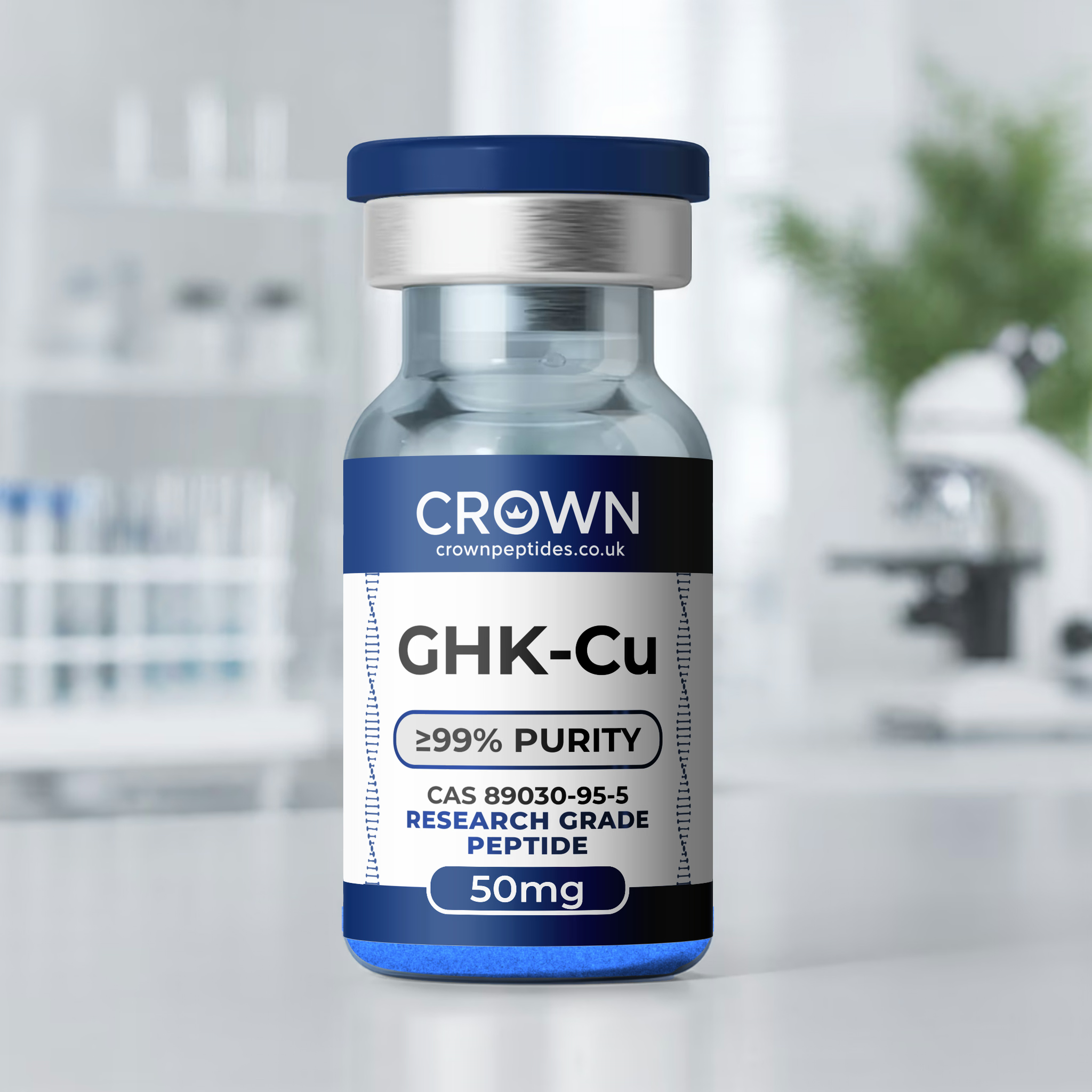
GHK-Cu Research Peptide

A high-purity research peptide studied in skin, collagen and tissue-repair research. Available in 50mg and 100mg, with every batch independently tested and dispatched from the UK.

£24.99or from £18.74 per vial in packs of 10
Save up to 30%
From: £24.99
Your selection:
Order within
for same-day dispatch
13Hrs:52Min:16Sec
In stockEstimated deliveryEst. delivery Saturday 24 OctoberSaturday 24 Oct
All Batches TestedEvery batch, no exceptions
HPLC & MS VerifiedFull certificate published
Same Day PostageOrder before 2pm
UK Based CompanyDispatched from the UK
Product Overview

A high-purity research peptide studied in skin, collagen and tissue-repair research. Available in 50mg and 100mg, with every batch independently tested and dispatched from the UK.

Full Product Specification
Overview

Product Overview

GHK-Cu peptide UK is Crown Peptides' copper-binding tripeptide complex, supplied in 50mg and 100mg vials for laboratory research into collagen, extracellular-matrix and wound-healing biology.

50mg & 100mgAvailable strengthsHPLC testedChromatographic purityMS verifiedIdentity confirmedBatch CoADocumentation supplied

Supplied for laboratory research purposes only — not for human consumption or for medical, veterinary or diagnostic use.

Key features

Key Features

  • Studied in research involving copper-peptide biochemistry
  • Studied in research involving collagen and extracellular-matrix research
  • Studied in research involving wound-healing and tissue-remodelling models
  • Studied in research involving skin and fibroblast biology
  • Batch-specific quality documentation available
Background

About GHK-Cu Peptide UK

GHK-Cu is the copper complex of the naturally occurring tripeptide glycyl-L-histidyl-L-lysine. Binding copper changes the biochemical behaviour of the peptide and has led to extensive research interest in extracellular-matrix signalling, skin biology, wound-response models and copper-dependent cellular processes.

Also known as: GHK Cu, GHKCu, copper peptide GHK, Copper Tripeptide-1.

Research

GHK-Cu Research

GHK-Cu has been studied in fibroblast and skin models, collagen and extracellular-matrix research, wound-healing models, inflammatory signalling and gene-expression studies, with foundational work demonstrating its ability to stimulate collagen synthesis in fibroblast culture (Learn more). Researchers are interested in both the tripeptide’s signalling behaviour and its role as a copper-binding ligand, because copper is involved in numerous enzymes associated with connective-tissue and redox biology, alongside related tissue-repair peptides such as BPC-157 and KLOW.

  • Copper-peptide biochemistry
  • Collagen and extracellular-matrix research
  • Wound-healing and tissue-remodelling models
  • Skin and fibroblast biology
Hidden inside collagen: where GHK comes from

GHK was first characterised as a copper-binding factor in human plasma in the 1970s, but one of the most revealing discoveries came later. The same Gly-His-Lys sequence turned out to be built into larger structural proteins. It sits within the alpha-2 chain of type I collagen, the main collagen of skin and bone, and within SPARC (also called osteonectin), a matrix protein produced during tissue remodelling.

That gave rise to an elegant idea, set out in the 1988 fibroblast paper linked above: when tissue is damaged and enzymes break down the surrounding matrix, GHK could be released exactly where repair is under way. In that study, collagen synthesis by cultured fibroblasts began to rise at concentrations between 10-12 and 10-11 M, peaked at 10-9 M, and did so without any change in cell number. Work on SPARC added weight to the idea. Researchers showed that breaking down SPARC releases GHK and the closely related KGHK, and that KGHK-containing peptides stimulated new blood-vessel formation in experimental models (Learn more).

Copper chemistry: how GHK grips its metal

GHK is small, but it holds copper(II) with exceptional strength. The metal is held by three nitrogen atoms (from the amino group of glycine, the imidazole ring of histidine and the deprotonated amide nitrogen of the glycine–histidine bond), with a carboxyl oxygen from lysine completing the arrangement. The reported stability constant, log10K = 16.44, is slightly higher than that of the high-affinity copper site on albumin, the main copper carrier in blood (log10K = 16.2).

That close match is the key to why researchers find the complex so interesting. GHK binds copper tightly enough to hold it in a stable, non-reactive form, yet it sits in the same range as the body’s own copper carriers, so the metal can in principle be exchanged with proteins and enzymes. Copper is an essential cofactor for enzymes central to connective tissue and redox biology, including lysyl oxidase, which cross-links collagen and elastin, and copper/zinc superoxide dismutase, an antioxidant enzyme. GHK-Cu is therefore studied both as a signalling peptide and as a carrier of copper.

Matrix remodelling: building up and clearing out

Healthy tissue repair is not only about laying down new collagen. Old and damaged matrix also has to be cleared, and GHK-Cu research has looked closely at both sides of that balance. Fibroblast cultures from human skin responded to GHK-Cu with higher levels of matrix metalloproteinase-2 (MMP-2), an enzyme that breaks down collagen and other matrix proteins, and raised its messenger RNA as well. At the same time, it increased secretion of TIMP-1 and TIMP-2, the natural inhibitors that keep those enzymes in check.

One detail from that study is especially telling: the MMP-2 effect was reproduced by copper ions alone but not by the GHK peptide without copper, which points to the metal playing an active part. Other work from the same research group reported that GHK-Cu increased decorin, a small proteoglycan that helps organise collagen fibres. Taken together, these findings are why GHK-Cu is described as a remodelling compound rather than simply a collagen stimulator.

Gene-expression studies and the lung fibroblast work

Some of the most striking recent GHK research has come from lung biology. A study published in Genome Medicine mapped gene expression across regions of lung tissue from smokers with COPD with differing amounts of emphysema damage (Learn more). Genes that fell as damage increased were enriched in tissue-repair processes, including the TGFβ pathway, actin organisation and integrin signalling. Using the Connectivity Map, a database that matches gene signatures to compounds, the team identified GHK as a compound predicted to reverse that signature.

They then tested it. In human fibroblasts, GHK produced gene-expression patterns resembling TGFβ treatment, organised the actin cytoskeleton and raised integrin-β1. Fibroblasts taken from COPD lungs normally show weak contraction of collagen gels, but after GHK treatment they contracted and remodelled collagen I in a way comparable to cells from former smokers without COPD. Separately, in a mouse model of bleomycin-induced lung fibrosis, GHK reduced collagen deposition and inflammatory markers, with effects linked to the TGF-β1/Smad pathway.

Specifications

Specifications

Product
GHK-Cu
Classification
Copper-binding tripeptide complex
Available strengths
50mg and 100mg
CAS number
89030-95-5 (copper complex); 49557-75-7 (GHK tripeptide)
Molecular weight
401.91 Da (copper complex)
Molecular formula
C14H22CuN6O4 (copper complex)
Sequence
Gly-His-Lys (GHK)
Purity and assay
99% (HPLC), batch-specific — refer to Certificate of Analysis
Verification
HPLC and Mass Spectrometry where analytically appropriate

Compound-level reference data. Batch-specific results appear on the Certificate of Analysis.

Work out concentration with the peptide calculator
Testing

Purity and Testing

Crown Peptides GHK-Cu is supplied for controlled laboratory research with batch-specific analytical documentation. High-Performance Liquid Chromatography (HPLC) can assess chromatographic purity, while Mass Spectrometry provides molecular information used to support identity verification. The batch-specific Certificate of Analysis is the definitive source for the exact purity result, identity data and analytical specification of the material supplied.

Storage

Storage Conditions

  • Store unreconstituted material at -20°C ± 5°C in a cool, dry environment
  • Prepared research solutions should use validated storage conditions appropriate to the compound and study design
  • Protect from unnecessary heat, direct light and repeated temperature fluctuations
Full storage guide
Related

Related Compounds

Researchers working with GHK-Cu may also be interested in BPC-157, KLOW, KPV, Melanotan-1 and Kisspeptin-10 — other tissue-repair and skin-model research peptides studied in related research areas.

Compliance

Research Use Only

  • Laboratory research only
  • Not for human or clinical use
  • Not for human or veterinary consumption
  • Qualified personnel only
Questions

GHK-Cu Frequently Asked Questions

About GHK-Cu5 questions
What is GHK-Cu?

GHK-Cu is a copper-binding complex formed by the tripeptide glycyl-L-histidyl-L-lysine and copper(II), supplied by Crown Peptides in 50mg and 100mg vials. At 401.91 Da for the copper complex, it is one of the smallest bioactive peptides studied in tissue research. Searches may also turn it up as GHK Cu, GHKCu or copper peptide GHK.

Why did GHK research spread from skin into the lungs?

Gene-expression data drove the move. Its early literature focused on fibroblasts, collagen and wound models, but when a computational screen matched GHK against the gene signature of emphysema-damaged lung tissue, it emerged as a compound predicted to reverse it. Follow-up work in lung fibroblasts and a mouse lung-fibrosis model has kept that line of research going.

Why is copper important to GHK-Cu?

Copper coordination is central to the complex’s structure and is relevant because copper participates in many enzymes involved in connective-tissue and redox biology. GHK binds copper(II) with an affinity comparable to albumin’s copper site, and in fibroblast studies some effects, such as the rise in MMP-2, depended on the copper rather than on the peptide alone.

What is the peptide sequence of GHK?

The tripeptide sequence is Gly-His-Lys. That same three-residue sequence also occurs inside the alpha-2 chain of type I collagen and in the matrix protein SPARC, which is why GHK is thought to be released when those proteins are broken down.

Why does GHK-Cu have two CAS numbers?

Because the peptide and its copper complex are registered separately. CAS 49557-75-7 refers to the GHK tripeptide on its own, and CAS 89030-95-5 to the copper complex supplied here. Literature searches are most complete when both numbers are used.

Formats & pairings4 questions
Why would a lab pick the 100mg GHK-Cu vial over the 50mg?

Mainly for continuity. The 100mg vial doubles the material drawn from one batch, which helps when a long series of experiments needs a consistent starting point, while the 50mg size is the economical choice for pilot work and method development. Either strength can be ordered on its own or in boxes of five or ten.

Is this the same molecule as the “copper peptide” in cosmetic ingredient lists?

The molecule is the same: cosmetic labels list GHK-Cu under the ingredient name Copper Tripeptide-1. What differs is the grade and paperwork. Crown Peptides supplies it as lyophilised research material with batch-specific HPLC and mass spectrometry data.

Is standalone GHK-Cu better than a blend containing it?

It depends on the question being asked. Standalone GHK-Cu lets researchers study the copper peptide on its own and set its concentration freely. Blends such as KLOW (and its three-peptide sibling GLOW) fix GHK-Cu at 50mg alongside other peptides, which suits combined studies.

How does GHK-Cu relate to BPC-157 in research?

They are studied in neighbouring parts of tissue repair. GHK-Cu is mainly associated with collagen production and matrix remodelling, while BPC-157 is linked more with vascular responses and tendon, muscle and gut models. Studying the two together lets one model report on collagen organisation and vessel growth at once.

Chemistry in the lab2 questions
Does GHK do anything without its copper?

Some studies say it does. The lung fibroblast work and the mouse lung-fibrosis study both used the free GHK peptide, which may pick up copper from its surroundings. Other effects need the metal: in dermal fibroblasts, the rise in MMP-2 was seen with GHK-Cu and with copper ions, but not with GHK alone.

Why can GHK-Cu appear as the bare peptide in a mass spectrum?

Copper binding depends on conditions, and the acidic solvents often used in HPLC and mass spectrometry can loosen it. A spectrum may therefore show the free peptide at 340.38 Da (C14H24N6O4), the copper complex at 401.91 Da (C14H22CuN6O4), or both, and either supports identity. Documents can also quote different formulas and weights when they include acetate counter-ions or water of hydration, so the batch Certificate of Analysis is the reference for the exact form supplied.

Read the batch certificate before you order

Every batch is published openly — identity, purity and batch number, with no account needed.

View lab reports

Supplied for laboratory research purposes only — not for human consumption or for medical, veterinary or diagnostic use.

All Batches TestedEvery batch, no exceptions

Each batch undergoes internal analytical verification using chromatographic and spectrometric methods prior to lyophilisation.

• HPLC Analysis
• Mass Spectrometry Confirmation
• Batch Traceability

For Research Use Only

By purchasing this product you confirm that you are a qualified researcher and that this compound will be used exclusively for laboratory research purposes.

Not for Human Consumption

This product is not intended for diagnostic or therapeutic use.

Any human or medical use is strictly prohibited.

Store Safely at All Times

Store in a cool, dry, secure and sterile environment away from any unauthorised persons or children.

Other Research Peptides

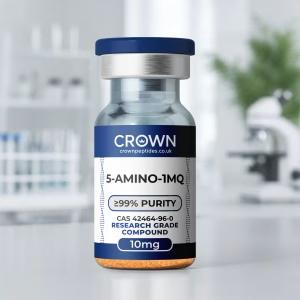
2 strengths5-Amino-1MQ 10mg research compound vial, Crown Peptides UKAgeing research

5-Amino-1MQ Research Compound


From£24.99Strength10mg
Add to basket
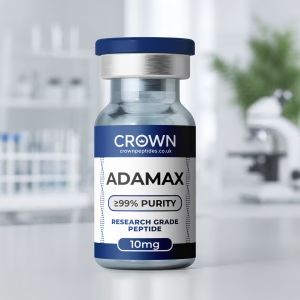
Adamax 10mg research peptide vial, Crown Peptides UKNeurocognitive research

Adamax Research Peptide


From£44.99Strength10mg
Add to basket
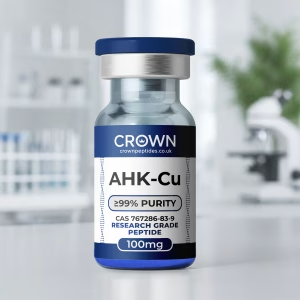
AHK-Cu 100mg copper peptide vial, Crown Peptides UKAgeing research

AHK-Cu Research Peptide


From£29.99Strength100mg
Add to basket
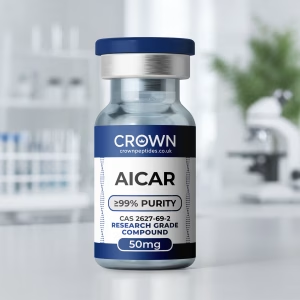
AICAR 50mg research compound vial, Crown Peptides UKAgeing research

AICAR Research Compound


From£34.99Strength50mg
Add to basket

Further reading

UK research peptides. Every batch HPLC and MS verified, certificate published in full.
SUPPORT Mon to Fri, 9am to 5pmDISPATCH Cut-off 2pmEMAIL Email usWHATSAPP +44 7301 802654

Disclaimer: All products are sold strictly for laboratory research purposes only. Not for human or veterinary use, consumption, therapeutic, or diagnostic application. None of our products are medicines, and none are presented as such. By purchasing, you confirm you are a qualified professional and legally permitted to handle these materials in compliance with all applicable laws and regulations. Misuse, resale for unauthorised purposes, or unlawful application is strictly prohibited. Crown Peptides UK disclaims all liability for improper use, handling, or regulatory non-compliance.

© 2026 Crown Peptides UK, a trading name of Crown Peptides Ltd (company no. 17068950), Suite Ra01, 195-197 Wood Street, London E17 3NU . All Rights Reserved.