

Research guide
FOXO4-DRI Peptide UK: Senolytic Research, Mechanism and Study Data
FOXO4-DRI is the peptide built to break the FOXO4-p53 grip that keeps senescent cells alive. Here is where it came from, how the mechanism works, and what every published cell and animal study has found.
Old cells do not always die quietly. Some of them stop dividing for good, refuse to self-destruct, and then sit in the tissue leaking inflammatory signals at their neighbours for years. Biologists call them senescent cells, and by the mid-2010s the evidence that they drive ageing was strong enough that one question had become urgent: if these cells are so good at dodging their own death programme, what exactly is holding the trigger?
In 2017 a team in Rotterdam published an answer, and a molecule built to act on it. They found that senescent cells keep a protein called FOXO4 clamped onto p53, the cell’s own self-destruct supervisor, and that breaking that grip caused senescent cells to die while their healthy neighbours carried on. The molecule they designed to do it is FOXO4-DRI. This guide covers where it came from, how the mechanism is supposed to work, what every published study has actually found and in what kind of model, how it compares with the other senolytic compounds, and the open questions that will decide where the field goes next. FOXO4-DRI is sold by Crown Peptides strictly for laboratory research use only, and everything below is written for readers interested in the science. One point belongs right at the top, because it shapes how every finding below should be read: all of the FOXO4-DRI work published so far has been done in cultured cells, in mice and rats, and in human tissue studied outside the body. It has never been tested in people. You can find it on our FOXO4-DRI Research Peptide page.
What Is FOXO4-DRI, and Why Is It Called a Senolytic?
FOXO4-DRI is a synthetic peptide of 46 amino acids, built in two halves. One half copies a short stretch of the human FOXO4 protein. The other half is a cell-penetrating tail that drags the whole thing through the cell membrane. It was designed for a single job: to get inside a cell, find p53, and sit where FOXO4 would normally sit.
A senolytic is a compound that kills senescent cells and leaves other cells alone. That is a harder target than it sounds, because senescent cells are ordinary cells of the body that have taken a particular route: enough damage to make dividing dangerous, so they shut division down permanently and stay put. The problem is what they do next. They start pumping out a cocktail of inflammatory proteins, growth factors and enzymes known as the senescence-associated secretory phenotype, or SASP, which pushes nearby healthy cells towards the same state and degrades the tissue around them.
Where the name comes from
The first part is the protein it imitates: FOXO4, one of the forkhead box O family of transcription factors. The second part, DRI, stands for D-Retro-Inverso. That is a chemistry trick. Natural peptides are built from L-amino acids and are chewed up quickly by the body’s enzymes. Reverse the order of the amino acids and flip each one to its mirror-image D form, and you get a molecule that presents roughly the same shape to its binding partner while being far more resistant to breakdown. The designers borrowed that approach deliberately, and it is the reason the compound is a D-peptide rather than an ordinary one.
Alternative names and spellings
You will see it written FOXO4-DRI, FOXO4 DRI, FOXO4-D-Retro-Inverso, FOXO4-DRI-isoform peptide, or simply “the FOXO4 peptide” or “FOXO4 p53 interfering peptide” in papers that do not spell it out. Some papers write the protein as FoxO4 or Foxo4. All of these refer to the same compound. There is no brand name, because it has never been through drug development as a named product.
The Hunt for the Switch That Keeps Old Cells Alive
The story starts with a puzzle. Senescent cells are stuffed with exactly the sort of damage that normally triggers apoptosis, the orderly self-destruct programme. So why do they survive?
The Rotterdam group, with collaborators at the Buck Institute in California and the Medical University of Graz, went looking by sequencing the RNA of human IMR90 lung fibroblasts before and after they were pushed into senescence with radiation. They expected the pro-death genes to be switched off. The opposite turned out to be true, which meant something downstream had to be holding the brake on. Working through the transcription factors linked to apoptosis, they landed on FOXO4 (PMID: 28340339).
FOXO4 turned out to be a good target for an unusual reason: unlike its relatives FOXO1 and FOXO3, it is only modestly expressed in most tissues, and mice engineered without it do not show a dramatic phenotype, so interfering with it was less likely to cause collateral damage. The team picked a region of FOXO4 conserved between humans and mice but different from FOXO1 and FOXO3, rebuilt it as a D-retro-inverso peptide, and fused it to a short basic sequence derived from HIV-TAT so it could cross the membrane.
The name they gave the effect is worth knowing, because it tells you what they were aiming at: TASC, Targeted Apoptosis of Senescent Cells. Not slowing senescence down, not quietening the SASP, but removing the cells.
- Classification
- Synthetic D-retro-inverso FOXO4 research peptide
- Available strength
- 10mg (coming soon)
- CAS Number
- 2460055-10-9
- Molecular Weight
- approximately 5,358 g/mol
- Molecular Formula
- C228H388N86O64
How FOXO4-DRI Is Designed to Work
The mechanism is unusually easy to follow, because it comes down to one protein being in the wrong room.
The partnership that keeps senescent cells alive
In a senescent cell, FOXO4 and p53 are found together in nuclear structures, keeping p53 where FOXO4 wants it: in the nucleus, where it drives the permanent growth arrest, and crucially not at the mitochondria, where p53 does its killing. So the same protein that would normally order a damaged cell to die is being held in a job that keeps it alive instead.
Breaking the grip
FOXO4-DRI competes with the cell’s own FOXO4 for the same spot on p53, and the published work indicates it binds there with higher affinity than the natural protein does. Once it wins that competition, the FOXO4-p53 structures in the nucleus come apart (PMID: 28340339).
p53 leaves the nucleus and does its other job
Released from FOXO4, active p53 is excluded from the nucleus. In the cytoplasm it drives the cell’s internal self-destruct route through the caspase enzymes. Work in aged mouse blood-vessel cells has traced the same sequence in detail, through p53, BCL-2, BAX and cleaved caspase-3 (PMID: 41625068).
Why healthy cells are largely spared
This is the part that makes the design interesting. A non-senescent cell does not depend on the FOXO4-p53 partnership for survival, so taking the partnership apart does very little to it. In the original cell experiments, the peptide reduced the viability of senescent human IMR90 fibroblasts with roughly an eleven-fold difference compared with non-senescent cells of the same type, and the effect appeared within about 24 to 36 hours (PMID: 28340339). Selectivity of that kind is what separates a senolytic from a general poison, and it is the single most studied property of this compound.
- Also known as
- FOXO4 DRI, FOXO4-D-Retro-Inverso, FOXO4 peptide, FOXO4-p53 interfering peptide
- Classification
- Synthetic cell-penetrating retro-inverso peptide; senolytic research compound
- Sequence
- 46 residues in D-isoform: ltlrkepaseiaqsileaysqngwanrrsggkrppprrrqrrkkrg (FOXO4-derived region fused to a cationic cell-penetrating tail)
- Molecular weight
- 5358.2 Da as reported in the original Cell paper
- Research status
- Studied in cultured cells, human tissue outside the body, and mice and rats; no human studies published
What the Research Has Actually Found
FOXO4-DRI has a short but unusually clear research record. Here it is study by study, with the kind of model each one used, because that matters more than any single number.
The original paper: cells, fast-ageing mice and naturally aged mice
The 2017 paper in Cell ran three separate animal models alongside the cell work (PMID: 28340339). In the first, mice given the chemotherapy drug doxorubicin accumulated senescent cells and showed signs of liver stress; the peptide counteracted that chemotoxicity. In the second, fast-ageing XpdTTD/TTD mice, a strain with a DNA-repair defect that ages prematurely, the peptide improved fur density, general responsiveness and voluntary running-wheel activity, and reduced the rise in blood urea that marks declining kidney filtration. In the third, ordinary mice simply allowed to grow old, the peptide reduced the senescence signal measured by a p16 reporter, improved fur density and improved renal function.
Two details deserve equal billing. The authors reported the compound was well tolerated in the mice under the conditions they used, and noted it did not cause the drop in platelets that limits some other senolytics. Equally, the variation between individual naturally aged mice was large, which the authors said plainly, and the running-wheel measurements in that group were too variable to analyse. These were mouse studies, not trials.
The testis studies: senescent Leydig cells
Two groups at Sun Yat-sen University have followed the same thread. The first found FOXO4 specifically expressed in human Leydig cells, the cells in the testis that make testosterone, with its movement into the nucleus in older men tracking with lower testosterone synthesis. Using hydrogen-peroxide-aged TM3 Leydig cells as a laboratory model, they showed FOXO4 keeps those senescent cells alive, and that FOXO4-DRI selectively pushed p53 out of the nucleus and triggered apoptosis in them. In naturally aged mice, the peptide improved the testicular environment and eased the age-related shortfall in testosterone secretion (PMID: 31959736).
The follow-up in Experimental Gerontology looked at what that does downstream. Clearing senescent Leydig cells reduced the secretion of certain SASP components and improved the growth of co-cultured germ cells, and in naturally aged mice the treated animals showed better sperm quality and improved spermatogenesis (PMID: 39025385). Both are animal and cell studies.
Human cartilage cells: a mixed result reported honestly
One of the most useful studies is the one that did not deliver everything it set out to test. A group at the University of Pittsburgh worked with chondrocytes, the cells that build cartilage, taken from healthy donors and expanded in culture to the point they would normally be used for implantation. Expanding cartilage cells in a dish generates senescent cells, a real practical problem.
FOXO4-DRI did what it was supposed to at the cell level: it removed more than half of the cells in the heavily expanded population while barely touching a minimally expanded control population, and the senescence markers in the treated cells fell significantly. But when those cells were then asked to make cartilage in pellet culture, the pre-treatment did not improve their chondrogenic potential. The cartilage they produced did show lower expression of senescence-related secretory factors, and the authors concluded that the peptide can clear senescent chondrocytes but that its usefulness for cartilage formation needs more work (PMID: 33996787). Removing senescent cells and restoring function are two different achievements, and this study is the clearest illustration of the gap between them.
Blood vessels: endothelial senescence in aged mice
More recent work has turned to the lining of blood vessels, where senescent endothelial cells are thought to drive vascular stiffening. In naturally aged mice and in a progeroid mouse model, the peptide suppressed markers of aortic ageing and improved aortic function; in cultured endothelial cells stressed by oxygen and glucose deprivation, it eased the senescent state. The authors mapped the route as phosphorylated p53 being pushed out of the nucleus, then BAX and cleaved caspase-3 driving apoptosis of the senescent cells (PMID: 41625068).
Fibrosis and scar tissue
Senescent cells are also implicated in tissues that scar. In mice given bleomycin to induce lung fibrosis, FOXO4-DRI reduced senescent cell numbers, lowered SASP gene expression and limited collagen deposition, with one group reporting effects comparable to pirfenidone, an approved antifibrotic medicine, in the same model (PMID: 35510614). A second group found the peptide reduced extracellular matrix production in fibroblasts and produced milder lung changes in the same mouse model (PMID: 37074394).
In human keloid scars, a team found an enlarged population of senescent fibroblasts and raised levels of a specific activated form of p53. FOXO4-DRI promoted apoptosis in keloid organ cultures and in keloid fibroblasts, with p53 leaving the nucleus as predicted (PMID: 39994346). That is human tissue, but studied outside the body.
The counterpoint: when clearing senescent cells made things worse
A fair picture has to include this one. A study in Circulation asked what senescent cell clearance does to the lung circulation, and the answer was uncomfortable. Using several different approaches, including a suicide-gene system, the senolytic drug ABT-263 and FOXO4-DRI, the authors found that eliminating senescent cells worsened pulmonary haemodynamics in mouse models, with higher right ventricular pressures, more vessel remodelling and a marked loss of pulmonary endothelial cells. In rats given monocrotaline, ABT-263 helped slightly at one week but made the disease worse by three weeks (PMID: 36515093).
The lesson is not that senolytics fail. It is that senescent cells are not uniformly harmful: in some tissues they appear to be holding something together, and removing them has a cost. The authors said as much, calling for the effect on lung vessels to be considered in any strategy aimed at senescence.
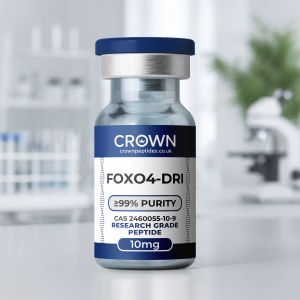
FOXO4-DRI Research Peptide
HPLC and MS verified · certificate with every batch · pricing announced when stock arrives
FOXO4-DRI vs the Other Senolytics
FOXO4-DRI did not arrive in an empty field. The idea that removing senescent cells could improve ageing was established genetically before anyone had a compound to do it, and several very different chemical approaches now exist. Comparing them is where the design choice behind this peptide makes most sense.
Genetic clearance set the benchmark. Using a transgene that kills p16-positive cells on command, one group delayed the onset of age-related changes in fat, skeletal muscle and eye in progeroid mice (PMID: 22048312). The same system applied to ordinary wild-type mice from one year of age extended median lifespan in both sexes and on two different genetic backgrounds, and delayed tumour development (PMID: 26840489). Those results are what made everyone want a drug.
Dasatinib plus quercetin was the first chemical answer: a repurposed cancer drug and a plant flavonoid, found by looking for the survival pathways senescent cells depend on. In old mice, a single dose improved cardiac function and carotid vascular reactivity within five days, and in irradiated mice a single dose improved exercise capacity for at least seven months (PMID: 25754370). Later work showed that transplanting senescent cells into young mice is enough to cause lasting physical dysfunction, and that intermittent oral dasatinib and quercetin eased physical dysfunction in both transplanted young mice and naturally aged mice, increasing post-treatment survival by 36% (PMID: 29988130).
Fisetin, another flavonoid, came out of a screen of ten of them as the most potent, and late-life treatment extended both median and maximum lifespan in wild-type mice (PMID: 30279143).
Here is where the comparison gets genuinely useful. The dasatinib and quercetin combination has reached people: a first-in-human, open-label pilot study gave it to 14 patients with idiopathic pulmonary fibrosis, with no control group, primarily to see whether such a study was feasible at all. Retention was complete, walking distance, gait speed and chair-stand time improved, pulmonary function was unchanged, one serious adverse event was reported, and the effects on circulating SASP factors were inconclusive (PMID: 30616998). That is a 14-person uncontrolled pilot of a different senolytic, not of FOXO4-DRI, and it is the whole of the human senolytic story that touches this field so far.
Against that background, the peptide’s distinguishing feature is precision. Dasatinib and quercetin act broadly, and the Rotterdam group reported finding no selectivity for senescent cells with that combination in their own fibroblast system. ABT-263 works through the BCL-2 family and is limited by its tendency to drop platelet counts. FOXO4-DRI goes after one specific protein-protein interaction that, on current evidence, senescent cells rely on and healthy cells do not.
The Questions That Decide What Happens Next
This is an early field, and the open questions are the interesting part.
Which tissues benefit and which do not. The pulmonary hypertension finding makes this the central question. Senescent cells in the kidney, testis and ageing aorta look like a liability on current evidence; senescent cells lining the lung vessels may not be. Mapping that tissue by tissue is the real work ahead.
Independent replication outside the founding groups. The strongest FOXO4-DRI results come from a relatively small number of laboratories. The vascular, fibrosis and keloid studies from unrelated groups are encouraging precisely because they are independent, and more of that is what the field needs.
What happens to a D-peptide in the body. Retro-inverso chemistry buys resistance to enzymes. Nobody has published a full account of where the molecule goes, how long it lasts, or what becomes of it.
Better molecules. Work is already moving past the original design. One group has used the structural information to build a shorter inhibitor made from ordinary L-amino acids with fewer negative charges and a cell-penetrating tail, reporting high selectivity for senescent cells and apoptosis in senescent cancer cells induced by different chemotherapy agents (PMID: 40739602). That is the normal arc of a research compound: the first one proves the idea, and the next ones are built from what it taught.
The Technical Breakdown: Sequence, Structure and Chemistry
This section is for readers who want molecular detail. Everything above makes sense without it.
Sequence and construction
The peptide published in the original paper is 46 residues long, written in D-isoform as ltlrkepaseiaqsileaysqngwanrrsggkrppprrrqrrkkrg, with a reported molecular weight of 5358.2 Da. The first part corresponds to the FOXO4 region chosen for its conservation between species and its divergence from FOXO1 and FOXO3. The arginine-rich tail at the other end is the cell-penetrating element, derived from HIV-TAT, which allows energy-independent entry into cells. The published material was made at greater than 95% purity and stored at minus 20 degrees in single-use aliquots specifically to avoid freeze-thaw artefacts (PMID: 28340339).
What the structural work showed
For years the binding was described functionally rather than structurally. That changed with a solution NMR study which solved structural models of the p53 transactivation domain bound to the FOXO4 forkhead domain, and bound to FOXO4-DRI. The striking finding was that two disordered regions form a transiently folded complex: FOXO4-DRI is itself disordered, p53’s TAD2 region is disordered, and they organise each other on contact. Both the FOXO4-derived region and the cationic cell-permeability tail contribute to the interaction, which means the delivery half of the molecule is not just a passenger. The authors also showed that phosphorylation of p53 increases its affinity for both FOXO4 and FOXO4-DRI (PMID: 40593617). That last point ties the chemistry to the biology neatly, since the stressed, damaged cells that become senescent are exactly the ones with heavily phosphorylated p53.
The wider FOXO4-p53 axis
FOXO proteins and p53 both sit at the centre of decisions about cell division, metabolism and death, and the overlap between them has been reviewed in detail, with the FOXO4-p53 interaction identified as a candidate point of intervention in senescence (PMID: 29683489).
Concentrations used in the laboratory studies
The published cell work used micromolar concentrations in culture medium, for example 25 micromolar in the real-time cell density experiments, and the animal studies used short courses given intravenously or intraperitoneally in mice. Those figures are pharmacology context for reading the papers, not guidance for laboratory work, where concentrations depend entirely on the experimental design. Our understanding quantities page explains how milligram figures on a vial relate to working solutions, and the peptide calculator handles the arithmetic.
Why Purity and Identity Matter Especially for a 46-Residue D-Peptide
Peptide synthesis gets harder the longer the chain. Each amino acid added is another coupling step with its own small failure rate, so a 46-residue sequence accumulates far more opportunity for truncated chains and deletions than a short tripeptide does. FOXO4-DRI adds two complications. Every residue is a D-amino acid, so any L-contamination changes the molecule’s shape. And the arginine-rich cell-penetrating tail is exactly the kind of highly basic sequence that is awkward to purify cleanly.
That combination is why identity testing matters here more than for most compounds. A chain that is one residue short, or built with the wrong stereochemistry at one position, can still look broadly correct on a label and behave completely differently in a dish.
What every Crown Peptides batch comes with
Every batch we sell is analysed before it is listed. HPLC separates the target molecule from everything else present and gives a purity figure. Mass spectrometry weighs the molecule to confirm it is the sequence it is supposed to be, which is the test that catches a truncated or mis-assembled chain. The results go up as a batch-specific certificate on our Lab Reports page, and the batch number printed on the vial matches the certificate, so you can check one against the other rather than taking a label on trust. If you have not read one before, our guide to how to read a peptide certificate of analysis goes through each section, and peptide testing UK explains what the two methods can and cannot tell you.
Stored, packed and dispatched properly
Compounds are supplied as lyophilised powder, which is the most stable form for a long peptide in transit. Vials are kept cold, sealed and away from light and moisture, as set out on our storage information page. Orders placed before 2pm on a weekday are dispatched the same day from the UK, with free UK delivery on orders over £100.
A UK company you can talk to
Crown Peptides is a UK company. Our team answers enquiries within 24 hours on business days, with WhatsApp for quicker questions. If you want to ask about a certificate, a batch, or a compound in our range, you can get in touch.
Related Compounds Worth Knowing About
FOXO4-DRI belongs to the senescence corner of ageing research, where the aim is to remove or quieten damaged cells. The compounds below come at ageing biology from other directions entirely, and most of them sit in our ageing and cellular research peptides category.
Epitalon
Epitalon is a four-amino-acid peptide from the Russian bioregulator programme, studied for its effects on telomerase activity, melatonin rhythms and lifespan in animal models. Where FOXO4-DRI is studied for clearing cells that have already stopped dividing, Epitalon research focuses on the machinery that sets how long cells can divide in the first place. Our Epitalon guide covers that work.
NAD+
NAD+ is the coenzyme every cell uses to move electrons around, and its levels fall with age. It is the most studied molecule in the “fuel the cell” approach to ageing, in contrast to the “remove the broken cells” approach. Our NAD+ guide and Epitalon vs NAD+ set the two routes side by side.
SS-31
SS-31 targets the mitochondrial membrane, where it binds cardiolipin and is studied for reducing the leakage of reactive oxygen species. Since oxidative damage is one of the main routes into senescence, SS-31 is often framed as working upstream of where FOXO4-DRI acts.
MOTS-c
MOTS-c is encoded in mitochondrial DNA rather than nuclear DNA and is studied in metabolic and exercise research, particularly in how older muscle handles glucose. Our mitochondrial peptides explained article covers how it sits alongside SS-31.
GHK-Cu
GHK-Cu is a copper-binding tripeptide whose levels in human plasma fall sharply with age, and it is studied for gene expression changes in skin and connective tissue. It is the best-studied example of the opposite strategy to senolysis: nudging existing cells back towards a younger pattern of activity rather than removing them.
Glutathione
Glutathione is the cell’s main internal antioxidant, a tripeptide whose availability shapes how much oxidative damage accumulates. It is the classic reference point for any study of the damage that drives cells into senescence in the first place.
For a wider view of this area, our roundup of the best peptides for longevity research covers how these approaches are combined in practice, and the full range sits in our ageing and cellular research peptides category.
Common Questions About FOXO4-DRI
What is FOXO4-DRI?
It is a synthetic 46-amino-acid peptide designed to break the interaction between the FOXO4 protein and p53 inside senescent cells, which releases p53 and triggers those cells to self-destruct. It was first described by a group at Erasmus MC in Rotterdam with collaborators in California and Austria.
Has FOXO4-DRI been tested in humans?
No. Every study published to date has used cultured cells, human tissue studied outside the body such as keloid organ cultures and expanded chondrocytes, or animals, mostly mice. There are no published human studies of FOXO4-DRI, no registered clinical trials of it, and no human safety or pharmacokinetic data. Where human senolytic data exists at all, it comes from a different compound combination: a 14-patient open-label pilot of dasatinib plus quercetin in idiopathic pulmonary fibrosis, with no control group.
What does DRI stand for?
D-Retro-Inverso. The sequence is reversed and every amino acid is switched to its mirror-image D form, which makes the peptide much harder for enzymes to break down while keeping a similar binding surface.
What is a senolytic?
A compound that kills senescent cells selectively and leaves normal cells alone. Senescent cells have permanently stopped dividing but do not die, and they secrete inflammatory signals that degrade the tissue around them.
How is FOXO4-DRI different from dasatinib and quercetin or fisetin?
Those are small molecules that work on broad survival pathways, and fisetin and quercetin are plant flavonoids. FOXO4-DRI is a peptide aimed at one specific protein-protein interaction. In the original paper the researchers reported finding no senescent-cell selectivity with dasatinib and quercetin in their own fibroblast system, which is part of why they pursued a targeted peptide instead.
What did the studies in aged mice actually show?
In the original Cell paper, naturally aged mice given the peptide showed a reduced senescence signal, improved fur density and improved kidney function, and fast-ageing mice also showed better fur, responsiveness and running-wheel activity. Later groups reported improved testosterone secretion and sperm quality in aged mice, and improved aortic function in aged and progeroid mice. All of these are mouse findings.
Is there research that points the other way?
Yes, and it is important. A study in Circulation found that eliminating senescent cells, including with FOXO4-DRI, worsened pulmonary haemodynamics in mouse models and caused loss of pulmonary endothelial cells. Senescent cells appear to be harmful in some tissues and protective in others, and that is an active question rather than a settled one.
Is FOXO4-DRI legal in the UK?
FOXO4-DRI is not a controlled drug under the Misuse of Drugs Act, and compounds that are not medicines can be supplied in the UK for laboratory research. Our article are peptides legal in the UK explains how UK law applies to research compounds and where the lines sit.
Can I buy FOXO4-DRI in the UK?
Yes. Crown Peptides supplies FOXO4-DRI in 10mg vials, in our ageing and cellular research peptides category with HPLC purity and mass spectrometry identity published for every batch. Wherever you buy a long D-peptide, ask for a batch-specific certificate showing a mass spectrometry result, not just a purity percentage.
Read the certificate before you order
Every batch is published openly — identity by mass spectrometry, purity by HPLC, and the batch number printed on the vial you receive.
Open the COA libraryOne Interaction, and What It Opened Up
What makes FOXO4-DRI worth following is not a headline number. It is that a specific, testable idea about ageing turned into a molecule, and that molecule then behaved the way the idea predicted in cells, in fast-ageing mice, in old mice, in testis tissue, in blood vessels and in human scar tissue. Along the way it has also produced a genuinely awkward result in the lung circulation, and a structural paper showing that the binding event at the centre of it all is two disordered proteins organising each other as they meet. That is what a healthy research story looks like: a clear mechanism, converging results from independent groups, one serious complication, and better-designed molecules already appearing.
The senescence field is moving quickly, and the compounds that come at ageing from the other directions are available to work with today. Find FOXO4-DRI itself on our FOXO4-DRI Research Peptide page, or explore our ageing and cellular research peptides, every batch HPLC and mass spectrometry verified, with the full certificate published and dispatched from the UK.
References
- Baar MP, Brandt RMC, Putavet DA, et al. Targeted Apoptosis of Senescent Cells Restores Tissue Homeostasis in Response to Chemotoxicity and Aging. Cell. 2017;169:132-147.e16. PMID: 28340339
- Zhang C, Xie Y, Chen H, et al. FOXO4-DRI alleviates age-related testosterone secretion insufficiency by targeting senescent Leydig cells in aged mice. Aging (Albany NY). 2020;12:1272-1284. PMID: 31959736
- Li Y, Zhang C, Cheng H, et al. FOXO4-DRI improves spermatogenesis in aged mice through reducing senescence-associated secretory phenotype secretion from Leydig cells. Exp Gerontol. 2024;195:112522. PMID: 39025385
- Huang Y, He Y, Makarcyzk MJ, et al. Senolytic Peptide FOXO4-DRI Selectively Removes Senescent Cells From in vitro Expanded Human Chondrocytes. Front Bioeng Biotechnol. 2021;9:677576. PMID: 33996787
- Bourgeois B, Spreitzer E, Platero-Rochart D, et al. The disordered p53 transactivation domain is the target of FOXO4 and the senolytic compound FOXO4-DRI. Nat Commun. 2025;16:5672. PMID: 40593617
- Hu Z, Li F, Hu C, et al. FOXO4-DRI regulates endothelial cell senescence via the P53 signaling pathway. Front Bioeng Biotechnol. 2025;13:1729166. PMID: 41625068
- Bourgeois B, Madl T. Regulation of cellular senescence via the FOXO4-p53 axis. FEBS Lett. 2018;592:2083-2097. PMID: 29683489
- Born E, Lipskaia L, Breau M, et al. Eliminating Senescent Cells Can Promote Pulmonary Hypertension Development and Progression. Circulation. 2023;147:650-666. PMID: 36515093
- Han X, Yuan T, Zhang J, et al. FOXO4 peptide targets myofibroblast ameliorates bleomycin-induced pulmonary fibrosis in mice through ECM-receptor interaction pathway. J Cell Mol Med. 2022;26:3269-3280. PMID: 35510614
- Liu Y, Hou Q, Wang R, et al. FOXO4-D-Retro-Inverso targets extracellular matrix production in fibroblasts and ameliorates bleomycin-induced pulmonary fibrosis in mice. Naunyn Schmiedebergs Arch Pharmacol. 2023;396:2393-2403. PMID: 37074394
- Kong YX, Li ZS, Liu YB, et al. FOXO4-DRI induces keloid senescent fibroblast apoptosis by promoting nuclear exclusion of upregulated p53-serine 15 phosphorylation. Commun Biol. 2025;8:299. PMID: 39994346
- Kang D, Lim Y, Ahn D, et al. Peptide Inhibitors Targeting FOXO4-p53 Interactions and Inducing Senescent Cancer Cell-specific Apoptosis. J Med Chem. 2025;68:15683-15694. PMID: 40739602
- Baker DJ, Wijshake T, Tchkonia T, et al. Clearance of p16Ink4a-positive senescent cells delays ageing-associated disorders. Nature. 2011;479:232-6. PMID: 22048312
- Baker DJ, Childs BG, Durik M, et al. Naturally occurring p16(Ink4a)-positive cells shorten healthy lifespan. Nature. 2016;530:184-9. PMID: 26840489
- Zhu Y, Tchkonia T, Pirtskhalava T, et al. The Achilles’ heel of senescent cells: from transcriptome to senolytic drugs. Aging Cell. 2015;14:644-58. PMID: 25754370
- Xu M, Pirtskhalava T, Farr JN, et al. Senolytics improve physical function and increase lifespan in old age. Nat Med. 2018;24:1246-1256. PMID: 29988130
- Yousefzadeh MJ, Zhu Y, McGowan SJ, et al. Fisetin is a senotherapeutic that extends health and lifespan. EBioMedicine. 2018;36:18-28. PMID: 30279143
- Justice JN, Nambiar AM, Tchkonia T, et al. Senolytics in idiopathic pulmonary fibrosis: Results from a first-in-human, open-label, pilot study. EBioMedicine. 2019;40:554-563. PMID: 30616998
Working with FOXO4-DRI Research Peptide
Coming soon to Crown Peptides. Every batch will be HPLC and MS tested, with its certificate published before it goes on sale.
See FOXO4-DRI Research Peptide