What Is GnRH? Gonadotropin-Releasing Hormone Research, Pulses and the Reproductive Axis
GnRH is the ten-amino-acid brain hormone at the top of the reproductive axis. Discover who found it, why its pulses decide between LH and FSH, what switches it on at puberty, and how copies became UK medicines.
On this page
- What Is GnRH? The Gonadotropin-Releasing Hormone in Plain English
- Who Found GnRH? Two Rival Laboratories and a Shared Nobel Prize
- The Hypothalamic-Pituitary-Gonadal Axis Across a Lifetime
- Why Does the Brain Send GnRH in Pulses?
- The GnRH Receptor: More Than a Pituitary Lock
- The Switch Above GnRH: What Starts Puberty?
- GnRH Analogues: How a Brain Hormone Became a Major Class of Medicines
- The Open Questions: A Second GnRH, an Ancient Family and a Rhythm Still Being Decoded
- The Technical Breakdown: Sequence, Signalling and Analogue Chemistry
- What a Mass Reading Reveals About a GnRH Copy
- Related Compounds and Reading
- Common Questions About GnRH
- The Rhythm Section of the Brain Still Has Secrets to Give Up
- References
In a small study of ten men with prostate cancer, researchers gave super-active, longer-lasting copies of the brain hormone that tells the body to make testosterone. Within three weeks, average testosterone had not risen. It had fallen by 75%, and it stayed low (PMID: 6461861). A hormone built to switch the reproductive system on had switched it off.
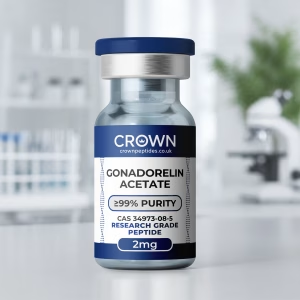
That paradox sits at the heart of gonadotropin-releasing hormone, or GnRH, the ten-amino-acid peptide at the top of the reproductive axis. This guide explains what the GnRH hormone is and what it does, who found it, how the hypothalamic-pituitary-gonadal axis switches on before birth, goes quiet through childhood and wakes at puberty, why the brain sends GnRH in pulses, what kisspeptin has revealed about the switch above it, and how copies of GnRH became a major family of UK medicines. Every compound mentioned here that Crown Peptides sells, including our Gonadorelin Acetate Research Peptide, is supplied strictly for laboratory research use only, and this guide is written for readers interested in the science.
What Is GnRH? The Gonadotropin-Releasing Hormone in Plain English
The GnRH hormone is a small peptide made by a scattered group of nerve cells in the hypothalamus, the part of the brain just above the pituitary gland. Its job is to tell the pituitary to release two other hormones, luteinising hormone (LH) and follicle-stimulating hormone (FSH). Those travel in the blood to the ovaries or testes, which make oestrogen, progesterone and testosterone and produce eggs or sperm. In older papers you will see it called LHRH or LRF; gonadorelin is the name for a laboratory-made copy with exactly the natural sequence, and its own research story is told in our Gonadorelin guide.
A ten-amino-acid message
For a hormone with such a big job, GnRH is remarkably small: a chain of just ten amino acids (PMID: 4938639). Its first amino acid is folded into a ring and its last carries an amide group, so neither end is left open. It reaches the pituitary through a tiny, private network of blood vessels, so very little of it ever reaches the rest of the body.
GnRH, LH and FSH: who does what?
GnRH acts on pituitary cells called gonadotropes, which make both LH and FSH. LH is the main trigger for testosterone production and for ovulation. FSH supports the growth of ovarian follicles and the production of sperm. One brain signal controls both, which raises a question the field spent decades answering: how does the pituitary know which one to make?
- Full name
- Gonadotropin-releasing hormone (GnRH, GnRH-I)
- Also known as
- LHRH, LRF, gonadoliberin; gonadorelin (the synthetic natural sequence)
- Made in
- Specialised neurons of the hypothalamus and preoptic area
- Sequence
- pGlu-His-Trp-Ser-Tyr-Gly-Leu-Arg-Pro-Gly-NH2 (ten amino acids)
- Molecular formula and weight
- C55H75N17O13, 1,182.3 g/mol (PubChem, gonadorelin)
- Receptor
- Type I GnRH receptor, a G protein-coupled receptor on pituitary gonadotropes
- Upstream switch
- Kisspeptin, acting on KISS1R (GPR54) on GnRH neurons
Who Found GnRH? Two Rival Laboratories and a Shared Nobel Prize
By the 1950s, scientists suspected that the brain controlled the pituitary with chemical messengers, but these exist in such tiny amounts that finding one meant processing enormous numbers of animal brains. Andrew Schally's New Orleans laboratory used pig brains, while Roger Guillemin's team at the Salk Institute in California used sheep. In 1971 the New Orleans team published the proposed sequence of the porcine hormone (PMID: 4936338), while Guillemin's team reported the purification and composition of the sheep version (PMID: 4940370).
The surprise was that one peptide released both LH and FSH, where many had expected two separate releasing factors (PMID: 4938639). How one signal could control two hormones independently would take nearly two decades to start to unravel. Because GnRH is so short, chemists could build it within months, assembling it one amino acid at a time on a resin (PMID: 4942726), and by 1973 a Salk team including Wylie Vale was already describing modified versions with stronger agonist or antagonist properties (PMID: 4589943). Those were the first steps towards today's medicines.
In 1977, Guillemin and Schally shared half of the Nobel Prize in Physiology or Medicine "for their discoveries concerning the peptide hormone production of the brain"; Rosalyn Yalow received the other half for radioimmunoassays of peptide hormones (Nobel Prize summary).
The Hypothalamic-Pituitary-Gonadal Axis Across a Lifetime
The hypothalamic-pituitary-gonadal axis, or HPG axis, is a three-level chain of command: GnRH from the hypothalamus, LH and FSH from the pituitary, sex steroids from the gonads, with signals flowing back up to adjust the system. What makes it fascinating is that this chain is not simply on or off. It has a life story of its own.
Why do GnRH neurons start life in the nose?
Strangely, the cells that make GnRH begin life outside the brain. Work in fetal mice traced them to the developing nose, from where they travel inwards to reach the hypothalamus (PMID: 2645530). That shared route with smell nerves explains Kallmann syndrome, in which people lack both a sense of smell and puberty. A gene linked to the syndrome encodes a protein resembling molecules involved in neural cell adhesion and axon path-finding, consistent with a role in guiding that migration (PMID: 1922361).
Why does the system go quiet in childhood?
Here is a part of the story many people never hear. The HPG axis is built before birth and switches on briefly in the period just after birth. Then, through the whole of childhood, it is held in check by a combination of signals from the gonads and from elsewhere. A review by Allan Herbison of the University of Otago describes how, at puberty, the pulse generator reactivates, probably because of growing stimulatory input to GnRH neurons from glial cells and nerve signals, and the return of stimulatory kisspeptin input (PMID: 27199290). Puberty, in other words, is less a new system being built than an old one being released.
How do the gonads talk back?
Once the adult system is running, feedback from the ovaries is powerful. In monkeys whose own GnRH production had been removed, Ernst Knobil's team restored regular monthly ovulation with an unvarying pattern of one GnRH pulse every hour. They argued that the mid-month LH surge was directed by the ebb and flow of ovarian oestrogen acting on the pituitary, with GnRH playing a permissive role (PMID: 6766566). Later work showed that the brain also generates its own surge signal, through kisspeptin cells in the preoptic area in female rodents (PMID: 27199290).
Why Does the Brain Send GnRH in Pulses?
GnRH neurons fire together in bursts, so the pituitary receives a short pulse of hormone, then a gap, then another. The rhythm is not decoration. It carries the message.
Constant versus pulsed: what the monkey experiments showed
In rhesus monkeys with hypothalamic lesions that had stopped their own GnRH release, a constant infusion failed to restore sustained LH and FSH secretion, while one pulse an hour re-established it. Switching animals already restored by pulses to a constant supply shut the pituitary's response down, which the authors described as desensitisation or down-regulation (PMID: 100883). That single observation is the reason the drugs in our opening work.
Can the rhythm choose between LH and FSH?
Yes, to a striking degree. In the same monkey model, speeding the pulses up lowered both hormones, while slowing them to one every three hours raised FSH (PMID: 6788538). In rats, fast pulses switched on the genes for LH and slow pulses the gene for FSH, even when the total amount of GnRH was kept equal (PMID: 2502379). The pituitary reads GnRH almost like Morse code. In people, a small study found that pulsed GnRH brought on puberty in men whose own GnRH signal had failed (PMID: 6813732); our Gonadorelin guide covers the pulse studies in detail.
The GnRH Receptor: More Than a Pituitary Lock
To act, GnRH docks with a receptor on gonadotrope cells. Finding it took another twenty years, and when it arrived it changed how researchers thought about where GnRH works.
What does the receptor look like?
The mouse receptor, cloned at Mount Sinai in New York in 1992, is a 327-amino-acid protein with the seven membrane-spanning segments of a G protein-coupled receptor, the family that includes receptors for adrenaline and many other hormones. Unusually, it lacks the tail most such receptors have on the inside of the cell (PMID: 1324422). In many receptors, that tail is where the cell attaches tags that quickly switch the receptor off after strong stimulation, and the authors suggested its absence might explain unique aspects of how this receptor is regulated.
Why is the receptor found outside the pituitary?
When the human receptor was cloned the same year, its genetic message turned up not only in the pituitary but also in the ovary, testis, breast and prostate, though not in liver or spleen. The authors noted that the human pituitary receptor was already the target of agonists used to suppress prostate cancer (PMID: 1333190). A review from the Medical Research Council unit in Edinburgh later described how the receptor works mainly through a G protein called Gq, but can also signal by other routes, and that the shape of the molecule binding it may influence which route is chosen (PMID: 15082521). Whether GnRH signals have direct jobs in these other tissues is still an open and lively question.
The Switch Above GnRH: What Starts Puberty?
For three decades after its sequence was published, nothing was known to sit above GnRH. The full kisspeptin story, from its unexpected start in cancer research, is told in our article Kisspeptin-10: the peptide that turned out to be the master switch for puberty. Here we focus on what it means for GnRH itself.
What switches GnRH neurons on?
In 2001, a Japanese team showed that a gene known for suppressing cancer spread encodes a 54-amino-acid peptide, later called kisspeptin, that binds an orphan receptor now known as GPR54 or KISS1R (PMID: 11385580). Two years later, two groups found that families who never went through puberty carried faults in that receptor (PMID: 12944565; PMID: 14573733). Mice lacking it still responded to GnRH and had normal amounts of it in the hypothalamus, so the problem was releasing GnRH, not making it (PMID: 14573733). The receptor turned out to sit on GnRH neurons themselves, and in sheep, kisspeptin given into the brain produced a dramatic release of GnRH with a parallel rise in LH (PMID: 15665093).
Does the switch work the same way in people?
Yes. At Imperial College London, in a double-blind crossover study of six men, average LH over a 90-minute infusion was 10.8 units per litre with kisspeptin-54 against 4.2 with saline, with smaller but significant rises in FSH and testosterone (PMID: 16174713). In Edinburgh, an infusion of the shorter kisspeptin-10 increased LH pulse frequency in healthy men (PMID: 21632807). Because each LH pulse follows a GnRH pulse, that points to kisspeptin speeding up the GnRH rhythm itself.
Which cells set the GnRH rhythm?
In the arcuate nucleus of the hypothalamus sits a group of cells that make kisspeptin, neurokinin B and dynorphin at once, abbreviated to KNDy (pronounced "candy"). A review led from the University of Western Ontario described these cells as conserved from rodents to humans, interconnected, a major target for steroid hormones and projecting onto GnRH neurons, well placed to form part of the pulse generator (PMID: 20501670). In female mice, a Seattle group proposed that neurokinin B and dynorphin act back on these cells to synchronise their pulsing (PMID: 19776272), and in freely moving mice, switching the arcuate kisspeptin cells on for one minute generated an LH pulse while silencing them suppressed pulsing (PMID: 29109258).
Human genetics points the same way: four families with failed puberty carried loss-of-function mutations in the gene for neurokinin B or its receptor (PMID: 19079066). That line of research has already reached the clinic: fezolinetant, a drug that blocks the neurokinin 3 receptor, was licensed by the MHRA in December 2023 for hot flushes and night sweats associated with the menopause (The Pharmaceutical Journal).
GnRH Analogues: How a Brain Hormone Became a Major Class of Medicines
Knobil's finding that a constant signal shuts the pituitary down had an obvious implication. A GnRH-like molecule that lasted far longer than the natural hormone could turn the reproductive axis down on demand, and reversibly. Today GnRH analogues are a major class of peptide-based medicines, and they come in two opposite designs.
Agonists: why does overstimulation switch the axis off?
GnRH agonists are modified versions of the hormone that bind the receptor more strongly and resist breakdown. At first they trigger a burst of LH and FSH, called a flare. But because the signal never pauses, the pituitary stops responding and sex hormone production falls. The study in our opening was a small uncontrolled study involving Schally and Fernand Labrie, and its authors concluded that such analogues could become an alternative to surgical castration and oestrogen in hormone-dependent prostate cancer (PMID: 6461861). That prediction came true.
Antagonists: what changes when you block the lock instead?
GnRH antagonists sit in the receptor without activating it, so hormone levels fall without the initial flare. In a year-long randomised phase 3 trial of 610 men with prostate cancer, the peptide antagonist degarelix was non-inferior to the agonist leuprolide (known in the UK as leuprorelin) at keeping testosterone low, but acted far faster: after three days, testosterone had reached the target level in more than 95% of men in both degarelix groups and in none of the leuprolide group (PMID: 19035858).
The newest antagonists are not peptides at all but small molecules taken by mouth. In the HERO phase 3 trial of 930 men with advanced prostate cancer, castrate testosterone levels were sustained through 48 weeks in 96.7% of men on oral relugolix compared with 88.8% on leuprolide, and on day 4, 56.0% of the relugolix group had reached castrate levels against 0% with leuprolide (PMID: 32469183). The speed difference follows directly from the biology: no flare to wait out.
Which GnRH medicines are used in the UK?
In the UK, GnRH agonists such as goserelin, leuprorelin and triptorelin, and the antagonist degarelix, are long-established prescription medicines. Between them they are used in prostate and breast cancer, endometriosis, uterine fibroids, central precocious puberty and to control timing in IVF. The MHRA has also licensed Ryeqo, a tablet combining relugolix with estradiol and norethisterone acetate, for moderate to severe symptoms of uterine fibroids, described as the first oral GnRH receptor antagonist licensed in Great Britain (The Pharma Letter); it has since also been licensed for endometriosis symptoms. The whole family traces back to one ten-amino-acid peptide and the discovery that rhythm matters.
The Open Questions: A Second GnRH, an Ancient Family and a Rhythm Still Being Decoded
Half a century after its structure was solved, GnRH still holds some genuinely exciting open questions.
What is GnRH-II, and what does it do?
Humans have a second GnRH gene. A Stanford team showed that GnRH-II is expressed in humans from a separate chromosome and, unlike classic GnRH, at levels up to 30 times higher outside the brain, particularly in the kidney, bone marrow and prostate (PMID: 9419371). The human version of its dedicated receptor gene contains a frame-shift and stop codon, so GnRH-II signalling in people appears to run through the type I receptor (PMID: 15082521). In female musk shrews, GnRH-II given into the brain increased mating behaviour in underfed animals and reduced short-term food intake, apparently through the type 2 receptor, hinting that it may link energy balance with reproduction (PMID: 16011485). What it does in humans remains open.
How old is the GnRH family?
Very old. The Edinburgh review counted 23 structural variants of GnRH across protochordates and vertebrates, with many vertebrates carrying three GnRHs and three matching receptors, each with its own distribution and job (PMID: 15082521). The Stanford analysis suggested the second gene arose from a duplication before vertebrates appeared, and predicted a third form in humans and other vertebrates (PMID: 9419371). Comparing these forms is one of the best ways to learn which parts of the molecule matter.
How does one cell read a rhythm?
The pituitary turns pulse speed into an LH-or-FSH decision, but exactly how a single receptor and its signalling chain decode timing is still being worked out. Herbison's review sets out the wider picture, with arcuate kisspeptin neurons as key components of the pulse generator in mammals and preoptic kisspeptin cells involved in generating the ovulatory surge in female rodents (PMID: 27199290). How closely the mouse findings map onto primates and people is one of the field's big next steps.
The Technical Breakdown: Sequence, Signalling and Analogue Chemistry
This section is for readers who want the molecular detail. Everything above makes sense without it.
Sequence and formula
Mammalian GnRH is pGlu-His-Trp-Ser-Tyr-Gly-Leu-Arg-Pro-Gly-NH2 (PMID: 4938639). PubChem gives gonadorelin, the synthetic natural sequence, as C55H75N17O13, 1,182.3 g/mol. Enzymes cut the native hormone mainly around Gly6 and at the Pro9-Gly10 bond, which is why it is so short-lived.
How agonists and antagonists are built
Many agonist analogues share two changes: a D-amino acid in place of glycine at position 6, which stabilises the bent shape the receptor prefers and slows breakdown, and an ethylamide in place of the C-terminal glycinamide. The two agonists in the 1982 prostate study illustrate both: [D-Trp6]LH-RH, and [D-Ser(But)6]des-Gly-NH2(10)-LH-RH ethylamide (PMID: 6461861). Peptide antagonists such as degarelix carry more extensive substitutions, including several unnatural D-amino acids near the N-terminus, which allow binding without activation. Relugolix and elagolix are non-peptide antagonists that reach the same receptor from a completely different chemical starting point.
Receptor signalling
The type I GnRH receptor couples mainly to Gq, which activates phospholipase C, raising inositol phosphates and releasing calcium inside the cell, alongside activation of protein kinase C (PMID: 15082521). Without a typical C-terminal tail (PMID: 1324422), the receptor escapes the phosphorylation tagging that quickly switches off receptors with a tail; the slower shutdown seen with continuous exposure develops through other mechanisms. KISS1R signals through a similar route: disease-causing GPR54 mutants showed significantly reduced inositol phosphate accumulation in transfected cells (PMID: 14573733).
GnRH-II and kisspeptin-10 sequences
GnRH-II is pGlu-His-Trp-Ser-His-Gly-Trp-Tyr-Pro-Gly-NH2, differing from GnRH-I at positions 5, 7 and 8; its gene lies on chromosome 20p13, while the GnRH-I gene lies on 8p21-p11.2 (PMID: 9419371). Kisspeptin-10 is the C-terminal ten residues of kisspeptin-54, Tyr-Asn-Trp-Asn-Ser-Phe-Gly-Leu-Arg-Phe-NH2, the minimal sequence with full intrinsic activity (PMID: 21632807). Kisspeptin-54 had a plasma half-life of 27.6 minutes in men (PMID: 16174713); our guide to peptide half-life explains why short peptides clear so quickly.
What a Mass Reading Reveals About a GnRH Copy
A copy of GnRH that has lost its C-terminal amide weighs about one mass unit more than the real hormone, and one whose first residue has not closed into its ring weighs about 17 more. Both faults sit at the capped ends, two places where small errors can hide in a ten-amino-acid peptide, and a mass reading catches both.
Crown Peptides supplies Gonadorelin Acetate and Kisspeptin-10, and every batch we sell is checked by HPLC for purity and by mass spectrometry for identity, with its certificate published on our Lab Reports page and the batch number printed on the vial. Vials are supplied freeze-dried and kept cold and sealed; weekday orders placed before 2pm leave the same day, and UK delivery is free over £100. We usually reply within 24 hours on business days, and WhatsApp is there for quicker answers via our contact page.
Related Compounds and Reading
GnRH belongs to a small family of hypothalamic peptides that control the pituitary, and it works hand in hand with signals above and around it. These are its closest relatives in our range.
Gonadorelin Acetate
Gonadorelin Acetate is synthetic GnRH with exactly the natural ten-amino-acid sequence, supplied as the acetate salt: the compound for researchers who want to work with the hormone itself. Our Gonadorelin guide covers its own research in depth.
Kisspeptin-10
Kisspeptin-10 works one level higher, on the KISS1R receptor of GnRH neurons, making it a tool for studying what drives the GnRH rhythm rather than the pituitary's response to it.
Oxytocin Acetate
Oxytocin Acetate is a nine-amino-acid relative from the same brain region, made in the hypothalamus but released from the back of the pituitary. Our Kisspeptin-10 vs Oxytocin comparison and Oxytocin guide explore how these signalling peptides differ.
Sermorelin and Tesamorelin
GnRH's counterpart for growth hormone is GHRH, another pulsed hypothalamic releasing hormone. Sermorelin (the first 29 amino acids of GHRH) and Tesamorelin (full-length GHRH with a protective cap) are analogues of it, and our Sermorelin vs Tesamorelin comparison sets them side by side.
Further reading
New to the subject? Our plain-English guide What Are Peptides? explains how chains of amino acids become signalling molecules like GnRH. Browse every hormone-signalling compound we stock in our Endocrine & Hormonal research peptides category.
Common Questions About GnRH
What is the GnRH hormone?
GnRH, or gonadotropin-releasing hormone, is a ten-amino-acid peptide made by specialised neurons in the hypothalamus. It signals the pituitary gland, just below, to release LH and FSH, the two hormones that control the ovaries and testes.
What is the function of GnRH?
Its main function is to start the reproductive hormone chain. GnRH pulses drive the pituitary to release LH and FSH, which in turn drive sex hormone production, ovulation and sperm production. It is also the signal that reawakens at puberty.
How does GnRH control both LH and FSH?
Largely through the speed of its pulses. In rats, fast GnRH pulses favoured the genes for LH and slow pulses favoured FSH, even with the same total amount of GnRH.
Why is GnRH released in pulses rather than continuously?
Because the pituitary only keeps responding to an intermittent signal. In monkeys, hourly pulses restored sustained LH and FSH release while a constant infusion did not, and switching to a constant supply shut a restored pituitary down.
What happens when GnRH is missing?
Puberty does not start. In Kallmann syndrome, GnRH neurons fail to complete their journey from the nose to the brain, and in families with faulty KISS1R, GnRH is made but not released properly. Both are described in the sections above.
Is GnRH a peptide or a steroid?
GnRH is a peptide, a short chain of amino acids. It controls the production of steroid hormones such as testosterone and oestrogen, but is not one itself. Our article on peptides vs steroids explains the difference.
What is the difference between a GnRH agonist and a GnRH antagonist?
An agonist activates the GnRH receptor. Long-acting agonists cause a brief rise in LH and FSH, then switch the pituitary off through constant stimulation. An antagonist blocks the receptor without activating it, so hormone levels fall without a surge.
Are GnRH medicines prescription-only in the UK?
Yes. GnRH agonists such as goserelin, leuprorelin and triptorelin, and the antagonist degarelix, are prescription-only medicines in the UK, and the MHRA has licensed relugolix combination therapy. Our guide are peptides legal in the UK explains how the wider rules work.
The Rhythm Section of the Brain Still Has Secrets to Give Up
In just over fifty years, GnRH has gone from a hypothetical factor in a mountain of pig and sheep brains to one of the best-understood hormones in the body. Its lesson, that timing can matter as much as presence, gave medicine a family of drugs that switch the reproductive axis down on demand.
Yet some of the most interesting chapters may still be ahead. Researchers are mapping how a one-minute burst in a cluster of KNDy cells becomes a pulse of GnRH, how the pituitary reads that rhythm into LH or FSH, why the system sleeps through childhood, and what GnRH-II is doing in the kidney and prostate.
To work with the hormone itself, see our Gonadorelin Acetate Research Peptide; to work one step above it, see Kisspeptin-10.
References
- Belchetz PE, Plant TM, Nakai Y, et al. Hypophysial responses to continuous and intermittent delivery of hypothalamic gonadotropin-releasing hormone. Science. 1978;202:631-3. PMID: 100883
- Schally AV, Arimura A, Kastin AJ, et al. Gonadotropin-releasing hormone: one polypeptide regulates secretion of luteinizing and follicle-stimulating hormones. Science. 1971;173:1036-8. PMID: 4938639
- Matsuo H, Baba Y, Nair RM, et al. Structure of the porcine LH- and FSH-releasing hormone. I. The proposed amino acid sequence. Biochem Biophys Res Commun. 1971;43:1334-9. PMID: 4936338
- Amoss M, Burgus R, Blackwell R, et al. Purification, amino acid composition and N-terminus of the hypothalamic luteinizing hormone releasing factor (LRF) of ovine origin. Biochem Biophys Res Commun. 1971;44:205-10. PMID: 4940370
- Matsuo H, Arimura A, Nair RM, et al. Synthesis of the porcine LH- and FSH-releasing hormone by the solid-phase method. Biochem Biophys Res Commun. 1971;45:822-7. PMID: 4942726
- Monahan MW, Amoss MS, Anderson HA, et al. Synthetic analogs of the hypothalamic luteinizing hormone releasing factor with increased agonist or antagonist properties. Biochemistry. 1973;12:4616-20. PMID: 4589943
- Schwanzel-Fukuda M, Pfaff DW. Origin of luteinizing hormone-releasing hormone neurons. Nature. 1989;338:161-4. PMID: 2645530
- Franco B, Guioli S, Pragliola A, et al. A gene deleted in Kallmann's syndrome shares homology with neural cell adhesion and axonal path-finding molecules. Nature. 1991;353:529-36. PMID: 1922361
- Knobil E, Plant TM, Wildt L, et al. Control of the rhesus monkey menstrual cycle: permissive role of hypothalamic gonadotropin-releasing hormone. Science. 1980;207:1371-3. PMID: 6766566
- Wildt L, Häusler A, Marshall G, et al. Frequency and amplitude of gonadotropin-releasing hormone stimulation and gonadotropin secretion in the rhesus monkey. Endocrinology. 1981;109:376-85. PMID: 6788538
- Dalkin AC, Haisenleder DJ, Ortolano GA, et al. The frequency of gonadotropin-releasing-hormone stimulation differentially regulates gonadotropin subunit messenger ribonucleic acid expression. Endocrinology. 1989;125:917-24. PMID: 2502379
- Hoffman AR, Crowley WF Jr. Induction of puberty in men by long-term pulsatile administration of low-dose gonadotropin-releasing hormone. N Engl J Med. 1982;307:1237-41. PMID: 6813732
- Tsutsumi M, Zhou W, Millar RP, et al. Cloning and functional expression of a mouse gonadotropin-releasing hormone receptor. Mol Endocrinol. 1992;6:1163-9. PMID: 1324422
- Kakar SS, Musgrove LC, Devor DC, et al. Cloning, sequencing, and expression of human gonadotropin releasing hormone (GnRH) receptor. Biochem Biophys Res Commun. 1992;189:289-95. PMID: 1333190
- Millar RP, Lu ZL, Pawson AJ, et al. Gonadotropin-releasing hormone receptors. Endocr Rev. 2004;25:235-75. PMID: 15082521
- Ohtaki T, Shintani Y, Honda S, et al. Metastasis suppressor gene KiSS-1 encodes peptide ligand of a G-protein-coupled receptor. Nature. 2001;411:613-7. PMID: 11385580
- de Roux N, Genin E, Carel JC, et al. Hypogonadotropic hypogonadism due to loss of function of the KiSS1-derived peptide receptor GPR54. Proc Natl Acad Sci U S A. 2003;100:10972-6. PMID: 12944565
- Seminara SB, Messager S, Chatzidaki EE, et al. The GPR54 gene as a regulator of puberty. N Engl J Med. 2003;349:1614-27. PMID: 14573733
- Messager S, Chatzidaki EE, Ma D, et al. Kisspeptin directly stimulates gonadotropin-releasing hormone release via G protein-coupled receptor 54. Proc Natl Acad Sci U S A. 2005;102:1761-6. PMID: 15665093
- Dhillo WS, Chaudhri OB, Patterson M, et al. Kisspeptin-54 stimulates the hypothalamic-pituitary gonadal axis in human males. J Clin Endocrinol Metab. 2005;90:6609-15. PMID: 16174713
- George JT, Veldhuis JD, Roseweir AK, et al. Kisspeptin-10 is a potent stimulator of LH and increases pulse frequency in men. J Clin Endocrinol Metab. 2011;96:E1228-36. PMID: 21632807
- Tolis G, Ackman D, Stellos A, et al. Tumor growth inhibition in patients with prostatic carcinoma treated with luteinizing hormone-releasing hormone agonists. Proc Natl Acad Sci U S A. 1982;79:1658-62. PMID: 6461861
- Klotz L, Boccon-Gibod L, Shore ND, et al. The efficacy and safety of degarelix: a 12-month, comparative, randomized, open-label, parallel-group phase III study in patients with prostate cancer. BJU Int. 2008;102:1531-8. PMID: 19035858
- Shore ND, Saad F, Cookson MS, et al. Oral Relugolix for Androgen-Deprivation Therapy in Advanced Prostate Cancer. N Engl J Med. 2020;382:2187-2196. PMID: 32469183
- Lehman MN, Coolen LM, Goodman RL. Minireview: kisspeptin/neurokinin B/dynorphin (KNDy) cells of the arcuate nucleus: a central node in the control of gonadotropin-releasing hormone secretion. Endocrinology. 2010;151:3479-89. PMID: 20501670
- Navarro VM, Gottsch ML, Chavkin C, et al. Regulation of gonadotropin-releasing hormone secretion by kisspeptin/dynorphin/neurokinin B neurons in the arcuate nucleus of the mouse. J Neurosci. 2009;29:11859-66. PMID: 19776272
- Topaloglu AK, Reimann F, Guclu M, et al. TAC3 and TACR3 mutations in familial hypogonadotropic hypogonadism reveal a key role for Neurokinin B in the central control of reproduction. Nat Genet. 2009;41:354-358. PMID: 19079066
- Clarkson J, Han SY, Piet R, et al. Definition of the hypothalamic GnRH pulse generator in mice. Proc Natl Acad Sci U S A. 2017;114:E10216-E10223. PMID: 29109258
- Herbison AE. Control of puberty onset and fertility by gonadotropin-releasing hormone neurons. Nat Rev Endocrinol. 2016;12:452-66. PMID: 27199290
- White RB, Eisen JA, Kasten TL, et al. Second gene for gonadotropin-releasing hormone in humans. Proc Natl Acad Sci U S A. 1998;95:305-9. PMID: 9419371
- Kauffman AS, Wills A, Millar RP, et al. Evidence that the type-2 gonadotrophin-releasing hormone (GnRH) receptor mediates the behavioural effects of GnRH-II on feeding and reproduction in musk shrews. J Neuroendocrinol. 2005;17:489-97. PMID: 16011485
- The Nobel Prize in Physiology or Medicine 1977: summary. NobelPrize.org. Nobel Prize
- The Pharma Letter. MHRA licenses first oral GnRH antagonist in UK for moderate to severe symptoms of uterine fibroids. The Pharma Letter
- The Pharmaceutical Journal. Non-hormonal treatment for menopause vasomotor symptoms approved for use in the UK. The Pharmaceutical Journal