Immunology Research Peptides
A high-purity research peptide studied in immune and antimicrobial research. Available in 5mg, with every batch independently tested and dispatched from the UK.
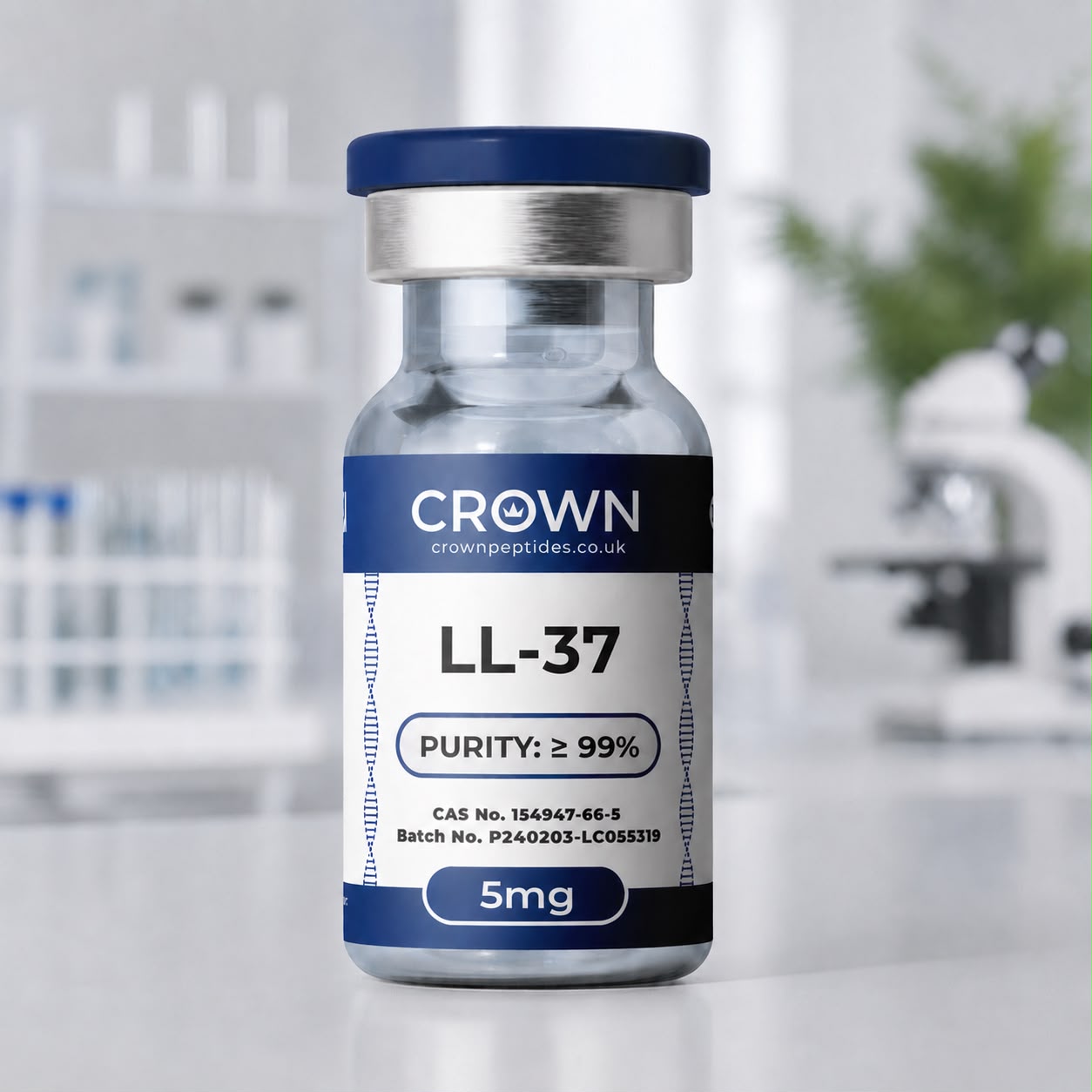
LL-37 peptide UK is Crown Peptides' human cathelicidin-derived 37-amino-acid antimicrobial peptide, available in 5mg strength for laboratory research.
Supplied for laboratory research purposes only — not for human consumption or for medical, veterinary or diagnostic use.
LL-37 is a 37-amino-acid cationic peptide generated from the human cathelicidin precursor hCAP18. It is an important research molecule in innate immunity because it combines direct antimicrobial activity with effects on host-cell signalling.
LL-37 has been extensively investigated in antimicrobial assays, biofilm models, membrane interactions, innate immune signalling, inflammatory responses and wound-related research, with pleiotropic activity documented across this literature (Learn more). Its amphipathic cationic structure allows interaction with microbial membranes, while separate research examines chemotactic, immune-modulatory and epithelial signalling functions, alongside related host-defence and barrier-research peptides such as [KPV].
Compound-level reference data. Batch-specific results appear on the Certificate of Analysis.
Work out concentration with the peptide calculatorCrown Peptides LL-37 is supplied for controlled laboratory research with batch-specific analytical documentation. High-Performance Liquid Chromatography (HPLC) can assess chromatographic purity, while Mass Spectrometry provides molecular information used to support identity verification.
The batch-specific Certificate of Analysis is the definitive source for the exact purity result, identity data and analytical specification of the material supplied.
Researchers working with LL-37 may also be interested in [KPV], [BPC-157], [Thymosin Alpha-1], [VIP] and [GHK-Cu] — other compounds studied in host-defence, immune and barrier-related research.
LL-37 is a 37-amino-acid cationic antimicrobial peptide produced from the human cathelicidin precursor hCAP18, supplied by Crown Peptides at 5mg strength.
Research includes antimicrobial activity, biofilms, membrane interactions, innate immunity, inflammatory signalling and epithelial responses.
Its cationic amphipathic structure allows it to interact with microbial membranes in experimental systems.
No. It is also studied in chemotaxis, immune signalling, inflammation and wound-related cellular models.
Peptide identity and purity can be assessed using Mass Spectrometry and HPLC, with the exact sequence/form and results documented for the batch.
Every batch is published openly — identity, purity and batch number, with no account needed.
Supplied for laboratory research purposes only — not for human consumption or for medical, veterinary or diagnostic use.
Each batch undergoes internal analytical verification using chromatographic and spectrometric methods prior to lyophilisation.
• HPLC Analysis
• Mass Spectrometry Confirmation
• Batch Traceability
By purchasing this product you confirm that you are a qualified researcher and that this compound will be used exclusively for laboratory research purposes.
This product is not intended for diagnostic or therapeutic use.
Any human or medical use is strictly prohibited.
Store in a cool, dry, secure and sterile environment away from any unauthorised persons or children.
Disclaimer: All products are sold strictly for laboratory research purposes only. Not for human or veterinary use, consumption, therapeutic, or diagnostic application. By purchasing, you confirm you are a qualified professional and legally permitted to handle these materials in compliance with all applicable laws and regulations. Misuse, resale for unauthorised purposes, or unlawful application is strictly prohibited. Crown Peptides UK disclaims all liability for improper use, handling, or regulatory non-compliance.