Adamax Peptide UK: Adamantane Semax Analogue Research, Mechanism and Study Data
Adamax is a supplier-described Semax analogue carrying an adamantane cage. Here is what is known about its parent peptide, what adamantane does to other molecules, and what Adamax research still needs to show.
On this page
- What Is Adamax, and Why Is It So Hard to Pin Down?
- Where the Story Starts: A Hormone Fragment That Changed Behaviour
- How Adamax Is Thought to Work: A Semax Core With a Chemical Cage
- What the Research Has Actually Found
- Adamax vs Semax, N-Acetyl Semax and Selank
- What Would Need to Be Shown About Adamax
- The Technical Breakdown: Sequence, Mass and Chemistry
- Why Verified Testing Matters So Much for Adamax
- Related Compounds Worth Knowing About
- Common Questions About Adamax
- A Cage, a Chain and the Experiments Still Waiting to Be Run
- References
Chemists have a nickname for a tiny cage of ten carbon atoms: the "lipophilic bullet". Built into a molecule, it has helped turn simple chemicals into several well-known medicines, none of which tells us anything about Adamax itself. Adamax is what you get when that same cage is fixed to Semax, one of the best-known research peptides to come out of Moscow. It is an intriguing idea. It is also, at the time of writing, a molecule with no published paper of its own.
That combination is what makes Adamax worth a careful look. This guide explains what suppliers say Adamax is, why the full 1032 Da form is the superior version to the 984 Da backbone sold under the same name, where Semax came from, why chemists attach adamantane to molecules, what that has achieved elsewhere, and what experiments Adamax still needs. We are clear throughout about which findings belong to Semax, which to adamantane chemistry, and which to Adamax itself (so far, none). Adamax is sold by Crown Peptides strictly for laboratory research use only, and everything below is written for readers interested in the science. You can find it on our Adamax Research Peptide page.
What Is Adamax, and Why Is It So Hard to Pin Down?
Adamax is a synthetic peptide described by suppliers as a modified form of Semax. Semax is a seven-amino-acid chain, Met-Glu-His-Phe-Pro-Gly-Pro, built from a fragment of the hormone ACTH. Adamax, as most suppliers describe it, takes that same chain, adds an acetyl group to the front and attaches an adamantane group, the compact, cage-shaped hydrocarbon that gives the compound its name.
Has Adamax been published anywhere?
Not that we have been able to find. We searched PubMed again in October 2026: there are no studies of the Adamax peptide, and the papers that do mention "Adamax" almost all refer to a computer optimisation algorithm of the same name used in machine learning. PubChem has no compound record under the name either, and we have found no discovery paper, patent or named developer. Its structure has not been published in the peer-reviewed literature. That shapes the rest of this article: every biological finding below was reported for Semax, for an acetylated form of Semax, or for other adamantane-containing molecules, and none of it has been measured for Adamax.
Why do descriptions of Adamax differ?
With no reference paper, there is no agreed structure. Most listings describe an N-acetylated Semax chain carrying an adamantane group at one end. Others sell a slightly longer acetylated sequence with no adamantane at all. In practice that has split the market into two materials, best told apart by their molecular mass: 1032 Da and 984 Da. For a compound like this, the batch mass spectrometry result is the most direct evidence of what the material actually is.
Adamax 1032 vs 984: why the 1032 version is superior
The two versions are not two grades of one compound. They are different molecules.
- Adamax 1032 Da (molecular formula C50H69N11O11S) is the complete compound. It carries the adamantane group, the cage that gives Adamax its name and its whole reason for existing.
- Adamax 984 Da (C44H61N11O13S) is an acetylated nine-residue Semax-based backbone, Ac-Met-Glu-His-Phe-Pro-Gly-Pro-Ala-Gly, with no adamantane group at all. One independent laboratory report described a 984 Da sample as “Adamax lacking adamantane moiety”.
That makes the 1032 Da version the superior one, for a simple reason: it is the only one of the two that contains the modification Adamax is built around. Everything chemists hope adamantane can do for a short peptide, from making it more lipophilic to slowing the enzymes that break Semax down, depends on the group actually being there. Those effects are the design rationale rather than measured results for Adamax, which has not yet been studied in published work, but a 984 Da backbone cannot offer them at all.
Price is often the giveaway. The adamantane step adds work to the synthesis, so a backbone can be sold more cheaply, and a much lower price is one sign a vial may hold the 984 Da material. The reliable check is the mass on the batch Certificate of Analysis. Crown Peptides supplies Adamax in its full 1032 Da form, with mass spectrometry on every batch.
Other names people search for
You will see Adamax written as "Adamax peptide", "adamantane Semax", "adamantane-modified Semax", "adamantylated Semax" or simply "Semax analogue". It should not be confused with plain Semax, with N-acetyl Semax, or with P21, a separate adamantane-containing peptide covered below.
Where the Story Starts: A Hormone Fragment That Changed Behaviour
To understand why anyone would modify Semax, it helps to know why Semax exists at all.
David de Wied and the ACTH fragments
ACTH is the pituitary hormone that tells the adrenal glands to make cortisol. The Dutch pharmacologist David de Wied and colleagues found that short pieces of it still changed how rats behaved in learning tasks. In a 1973 paper, Bohus, Gispen and de Wied studied the fragment ACTH 4-10 on conditioned avoidance behaviour in rats whose pituitary glands had been removed (PMID: 4349360). A 1990 review by de Wied summarised this work: ACTH and MSH fragments affected learning, motivation, attention and concentration in animal tests, and these effects lived mainly in the front part of the hormone, ACTH(4-10), separate from its hormonal effect on the adrenals (PMID: 1966658).
The same review described something that foreshadows the whole Adamax idea. By changing a few residues in ACTH(4-9), researchers made Org 2766, which was 1,000 times more active on avoidance behaviour than ACTH(4-10) and had 1,000 times less melanotrophic activity (PMID: 1966658). Small edits to a short peptide could change it dramatically.
Moscow adds a Pro-Gly-Pro tail
Natural hormone fragments are broken down quickly by enzymes. The Moscow researchers behind Semax, including Ashmarin and Myasoedov, worked extensively on "glyprolines", short peptides such as Pro-Gly-Pro that resist breakdown. A 2003 review from the group described glyprolines and derivatives of the "hybrid peptide MEHFPGP" among the most stable regulatory peptides they had studied (PMID: 14682258). MEHFPGP is Semax: the first four residues of ACTH(4-10), Met-Glu-His-Phe, joined to Pro-Gly-Pro in place of the hormone's own residues 8 to 10. That is why Semax is also written ACTH(4-7)PGP.
We cover the full Semax story in our Semax peptide guide. For Adamax, the key point is that Semax was itself an engineered analogue, built to outlast the fragment it came from. Adamax, as described, is a second round of engineering on top of the first.
How Adamax Is Thought to Work: A Semax Core With a Chemical Cage
Because Adamax has not been studied directly, "how it works" means two things: how its Semax core works, and what adamantane does when attached to other molecules. Here is where it gets interesting, because both halves have a solid literature of their own.
The Semax core: binding sites and BDNF
In 2006, the Moscow group showed that tritium-labelled Semax binds specifically and reversibly to membranes from the rat basal forebrain. The binding needed calcium and had a dissociation constant of about 2.4 nanomolar, which indicates a high-affinity site. When Semax was applied into the nose of rats, BDNF protein was raised in the basal forebrain 3 hours later, but not in the cerebellum (PMID: 16635254). BDNF, brain-derived neurotrophic factor, is a growth factor that supports nerve cells and the connections between them. Whether Adamax engages the same site has not been tested.
The weak point: how quickly Semax is broken down
Semax does not last long. In a rat study using Semax labelled at its C-terminal proline, 0.093% of the applied radioactivity per gram was found in the brain 2 minutes after application into the nose, and 80% of that radioactivity was still intact Semax. The peptide then underwent rapid enzymatic breakdown, with the tripeptide Pro-Gly-Pro becoming the main labelled product (PMID: 16523722). That rapid clearance is the usual reason for building Semax analogues.
The adamantane half: a lipophilic, bulky add-on
Adamantane is a rigid hydrocarbon whose ten carbons sit like a tiny fragment of diamond. A major review in Chemical Reviews, titled "The lipophilic bullet hits the targets", describes how adamantane is used as an "add-on" to known drug molecules, chosen to increase lipophilicity (fat solubility) and stability. The authors note that adding adamantane frequently increases how well a compound passes the blood-brain barrier, and that building it into neuropeptides frequently increases receptor selectivity and stability in the body (PMID: 23432396). Those are the properties Semax most obviously lacks, which is the logic behind Adamax; whether it holds for this molecule is untested.
- Also known as
- Adamax peptide; adamantane Semax; adamantane-modified Semax; adamantylated Semax analogue
- Classification
- Synthetic adamantane-modified Semax analogue (supplier-described)
- Sequence
- Described by suppliers as Ac-Met-Glu-His-Phe-Pro-Gly-Pro with an adamantane group; no peer-reviewed structure published
- Research status
- No published studies of Adamax itself; parent compound Semax studied in rodent and cell models
What the Research Has Actually Found
The findings below are grouped by source: the parent peptide, acetylated Semax, then adamantane in other molecules. None of these studies used Adamax.
Semax and the BDNF and trkB system
The best-known Semax finding comes from a 2006 rat study in the hippocampus, the brain region most associated with learning and memory. A single application of Semax produced a maximal 1.4-fold rise in BDNF protein and a 1.6-fold rise in activation of its receptor trkB. Messenger RNA for one form of BDNF (exon III) rose three-fold and trkB messenger RNA two-fold. Semax-treated rats also made more conditioned avoidance responses in a learning task (PMID: 16996037). This BDNF and trkB response is the obvious first thing to measure for Adamax.
Where enzymes cut Semax
To design a more durable analogue, you need to know where the original is attacked. Another 2006 study labelled every residue of Semax and followed its breakdown in the presence of rat basal forebrain membranes and cultures of glial and neuronal cells. In all of them, the main events were the removal of the first two residues (Met-Glu) or the last two (Gly-Pro), leaving five-residue fragments. Glial and neuronal cells produced different patterns of breakdown products (PMID: 16773243).
Both ends, then, are vulnerable. That is exactly why end-modifications such as N-terminal acetylation, and bulky end groups such as adamantane, are the natural places to start. The same Moscow group went on to publish short reports on the stability of acetylated Semax to breakdown in various biological media (PMID: 23652441) and on how Semax analogues with different N-terminal amino acids are broken down by carboxypeptidases, enzymes that trim peptides from the far end (PMID: 23821053). Neither has an abstract on PubMed, so we cite them for the questions they asked, not for numbers.
What acetylation alone changes
Here is a finding that every Adamax researcher should know about, because it shows that even a small modification can change more than stability. In a 2016 Italian study, researchers compared Semax with N-acetyl Semax (Ac-Semax) in solution chemistry and in SH-SY5Y neuroblastoma cells. Acetylating the front of the peptide changed the way it held copper ions: Ac-Semax formed a different copper complex with a different redox behaviour. Unlike Semax, acetylated Semax did not protect the cells against copper-induced toxicity, which the authors took as showing that the free amino group at the front of Semax plays a crucial role in that protection. Zinc binding, by contrast, was of comparable strength for both peptides, and acetylation did not change zinc entry into the cells (PMID: 27586814).
If a two-carbon acetyl group measurably changes how Semax behaves in cells, a ten-carbon cage could change things further, in either direction. That is why Adamax cannot simply borrow Semax's results.
Adamantane in medicine: from influenza to dementia
Adamantane's own record is genuinely impressive. In 1964, a team in Science reported that 1-adamantanamine, now known as amantadine, produced a selective, reproducible, dose-related inhibition of influenza infection in tissue culture, chick embryos and mice. It appeared to work by stopping the virus entering host cells (PMID: 14151624). In 1969 a paper in JAMA described amantadine in Parkinson's disease, a second use the adamantane review calls a fortuitous finding (PMID: 5818715). Memantine, another simple adamantane derivative, blocks NMDA-type glutamate receptors in a way that is clinically tolerated, and it was approved in the European Union and by the US FDA for dementia (PMID: 16424917).
The Chemical Reviews authors note that adamantane was isolated from crude oil in 1933 but only became widely available after a simpler synthesis in 1957, after which its use in drug design took off, reaching medicines as different as antivirals and the DPP-IV enzyme inhibitors vildagliptin and saxagliptin (PMID: 23432396).
Adamantane as a carrier into the brain
Japanese researchers tested adamantane directly as a "brain-directed drug carrier". Their first paper, in 1991, attached the 1-adamantane group to derivatives of an enkephalin, a small opioid peptide, and studied their pain-relieving effects (PMID: 1996999). Their 1994 follow-up gives clearer numbers. Five versions of the antiviral AZT were made with an adamantane group attached by an ester bond. They were much more fat-soluble than AZT, were converted back to AZT by enzymes in rat and human plasma, and after intravenous delivery in rats they reached concentrations in brain tissue 7 to 18 times higher than AZT itself (PMID: 8046599). That design used a removable link to release the parent drug; whether Adamax's adamantane is meant to stay attached has never been stated.
P21: an adamantane peptide in mouse learning studies
The closest published example of what Adamax is aiming at is a different peptide altogether. In 2010, a New York team whose authors included Wanka, of the adamantane review, reported a compound called P21 (written Ac-DGGLAG-NH2) in a paper on neurotrophic peptides incorporating adamantane. Given peripherally to normal adult mice, P21 enhanced learning and both short-term and spatial reference memory, and increased the formation and maturation of new neurons in the dentate gyrus of the hippocampus (PMID: 20600002).
A long-term follow-up in genetically modified mice
The same group later tested P021, as it came to be written, in 3xTg-AD mice, a strain engineered to develop amyloid and tau changes as it ages. Continuous P021 delivery starting at 3 months of age, assessed 9, 15 and 18 months later, was associated with an absence of the expected neurodegeneration and amyloid-beta and tau changes, better episodic memory in a novel object recognition task and markedly lower mortality in these mice (PMID: 28387677). P21 shares no sequence with Semax, so this says nothing direct about Adamax, but it shows a short adamantane-carrying peptide being active after peripheral delivery in mice.
The wider Semax picture, in brief
Three further rodent findings show the range of Semax research. Semax raised the serotonin breakdown product 5-HIAA in the striatum, with levels outside the cells climbing to 180% of baseline over 1 to 4 hours, and enhanced amphetamine-induced dopamine release (PMID: 16362768). In a rat model of focal ischaemia, over 50% of the cortical genes Semax altered were linked to the immune response (PMID: 24661604). And in rats under acute restraint stress, Semax and ACTH(6-9)PGP reduced stress-induced behavioural changes and reversed many of the stress-related shifts in hippocampal gene expression (PMID: 34576218). These are the experimental models a future Adamax study would most likely borrow.
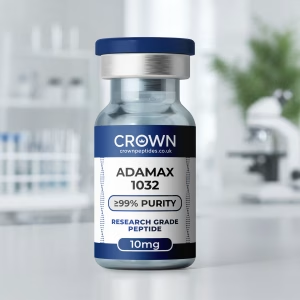
Adamax (1032 Da) Research Peptide
From £44.99
HPLC and MS verified · same-day UK dispatch before 2pm
View Adamax (1032 Da) Research Peptide ›Adamax vs Semax, N-Acetyl Semax and Selank
Adamax vs Semax
Semax is the documented reference: a defined sequence, a PubChem record, a high-affinity binding site in rat brain and a large body of rodent and cell research. Adamax is the modified test compound, with no published data. Semax is the natural control in any Adamax study. Our Semax guide covers the parent compound's research in full, and the Semax Research Peptide is the obvious reference material.
Adamax vs N-acetyl Semax
N-acetyl Semax is the intermediate step: Semax with an acetyl cap and nothing else. Unlike Adamax, it has a small published footprint, including the copper and zinc study (PMID: 27586814) and the Moscow stability report (PMID: 23652441). Variants that are also amidated at the far end, often sold as "N-acetyl Semax amidate", are widely discussed, but we found no PubMed study indexed under that name. For Adamax work, N-acetyl Semax is a valuable second control, separating the effect of acetylation from that of adamantane.
Adamax vs Selank
Selank comes from the same Moscow tradition and shares the Pro-Gly-Pro tail, but its front end comes from tuftsin, an immune peptide, rather than ACTH. Its sequence is Thr-Lys-Pro-Arg-Pro-Gly-Pro (PMID: 24450168). Selank is mostly studied in stress-response models, Semax more for learning and BDNF. Our Semax vs Selank article sets out the difference in detail.
What Would Need to Be Shown About Adamax
An unstudied analogue is not a dead end. It is a set of very answerable questions, most of which can be tackled with methods the Semax literature has already developed.
A published structure. The first step is the simplest: a peer-reviewed description of exactly where the adamantane is attached, how it is linked, and the resulting molecular mass, confirmed by mass spectrometry and NMR.
Stability against the known cut sites. Semax is clipped at both ends. The labelled-peptide approach used for Semax (PMID: 16773243) could show directly whether Adamax survives longer in brain membranes, cell cultures or plasma.
Binding and BDNF. Does Adamax still recognise the high-affinity Semax binding site, at a similar strength to Semax's 2.4 nanomolar (PMID: 16635254)? Does it raise hippocampal BDNF and trkB activation in the same way, or more durably?
Fat solubility and brain entry. An octanol-buffer partition test, as used for the adamantane AZT compounds (PMID: 8046599), would show how much more lipophilic Adamax is, and tissue measurements whether more of it reaches the brain.
Staying attached or letting go. If enzymes can cleave the adamantane link, Adamax might act partly as a delivery form of acetyl Semax; if not, it is a genuinely new molecule. That answer would shape every other experiment.
The Technical Breakdown: Sequence, Mass and Chemistry
This section is for readers who want the molecular detail. Everything above makes sense without it.
The Semax sequence
Semax is Met-Glu-His-Phe-Pro-Gly-Pro (MEHFPGP) (PMID: 16996037). PubChem lists it with the formula C37H51N9O10S and a molecular weight of 813.9 g/mol. The first four residues correspond to ACTH(4-7). The Pro-Gly-Pro tail is a glyproline, chosen for its resistance to breakdown (PMID: 14682258), although Pro-Gly-Pro itself is a major product once Semax is broken down in rats (PMID: 16523722).
What acetylation and adamantane add
N-terminal acetylation caps the free amino group on methionine with an acetyl group, adding about 42 daltons. In Semax, that free amino group takes part in copper binding, which is why acetylation changes the copper complex (PMID: 27586814). Adamantane itself is C10H16, 136.2 g/mol on PubChem. Depending on how it is linked, for example as an adamantyl group, through a carbonyl linker or as an adamantane-bearing amino acid such as adamantylglycine, it would add roughly 130 to 200 daltons. That arithmetic puts an acetylated, adamantane-modified Semax in the region of 1,000 daltons, which matches the molecular weights suppliers report for Adamax. The exact figure is what the batch certificate is for.
Why the end positions matter
Enzymes that trim peptides from the front, aminopeptidases, generally need a free amino group, so an acetyl cap is a classic way to slow them; a bulky group could also shield nearby bonds. Since Semax is mainly cut at both ends (PMID: 16773243), both ideas are plausible for Adamax, but neither has been measured.
Methionine and oxidation
The sequence begins with methionine, whose sulphur atom oxidises readily to methionine sulfoxide, adding 16 daltons. In the copper study, that sulphur even made a weak contact with the metal in the acetylated peptide's complex (PMID: 27586814), a reminder that this residue matters chemically and is worth protecting in storage.
Why Verified Testing Matters So Much for Adamax
For most peptides, testing confirms a known structure. For Adamax, testing is close to the only structural evidence there is. Plain Semax, N-acetyl Semax and an adamantane-modified acetyl Semax are all white powders, and HPLC shows how pure a sample is, not which of them it is. Mass spectrometry tells them apart, because each modification shifts the mass, and that is how a researcher knows the adamantane is really there.
What every Crown Peptides batch comes with
Every batch is tested before sale: HPLC (high-performance liquid chromatography) measures purity, and mass spectrometry confirms identity by measuring the molecule's mass. Results are published as a batch-specific certificate of analysis on our Lab Reports page, and the batch number printed on each vial ties it to that certificate. See how to read a peptide certificate of analysis for what each figure means, and how to tell if peptides are real for why identity testing matters for less familiar compounds.
Stored, packed and dispatched properly
Adamax is supplied as a lyophilised (freeze-dried) powder in 10mg vials, the most stable form for storage and transport. Vials are kept cold, sealed and away from light and moisture, which matters for a sequence that starts with oxidation-prone methionine. Our storage information page has the details. Orders placed before 2pm on a weekday are dispatched from the UK the same day, and UK delivery is free on orders over £100.
A UK company you can talk to
Crown Peptides is a UK company, and we reply to enquiries within 24 hours on business days, with WhatsApp available when you need a quicker answer. If you have a question about an Adamax batch or its certificate, contact us.
Related Compounds Worth Knowing About
These are Adamax's closest relatives in our range, several from the same Moscow research tradition.
Semax
Semax is Adamax's parent compound, with the binding, BDNF, breakdown and gene-expression data that Adamax does not yet have.
Selank
Selank shares Semax's Pro-Gly-Pro tail but is built on tuftsin rather than ACTH, and it is mostly studied in stress-response models. Our Selank guide covers its research.
Semax 5mg + Selank 5mg (Blend)
The Semax 5mg + Selank 5mg (Blend) combines the two Moscow peptides in one vial. Our article on Semax and Selank together explains why researchers look at them side by side.
Pinealon
Pinealon is a three-amino-acid bioregulator peptide studied in neuronal cell and ageing models. It approaches brain research from a different angle to the ACTH-derived peptides.
DSIP
DSIP, delta sleep-inducing peptide, is a short neuropeptide studied mainly in sleep and stress research, and a useful contrast to the learning-focused Semax family.
PE-22-28
PE-22-28 is a seven-residue shortened analogue of spadin, studied for its action on the TREK-1 potassium channel. Like Adamax, it is a product of the drive to make a natural peptide shorter, more stable or more targeted.
Browse the full range in our Neurocognitive Research Peptides category, including Adamax itself, or see how these compounds compare in our roundup of the best peptides for brain research.
Common Questions About Adamax
What is Adamax?
Adamax is a synthetic peptide described by suppliers as N-acetyl Semax with an adamantane group attached. Semax is a seven-residue peptide based on a fragment of the hormone ACTH. Adamax has not yet been characterised in peer-reviewed studies.
Is Adamax the same as adamantane Semax?
Yes. "Adamantane Semax", "adamantane-modified Semax" and "Adamax peptide" refer to the same supplier-described compound. It differs from plain Semax, which has decades of rodent and cell research behind it, and from N-acetyl Semax, which has only a small published footprint; neither carries the adamantane group.
Has Adamax been studied in published research?
Not under that name. A PubMed search in October 2026 found no studies of the Adamax peptide, only a machine-learning algorithm of the same name, and there is no PubChem record or published structure. Published data in this area relate to Semax, N-acetyl Semax or other adamantane compounds.
Is Adamax related to P21?
Only by approach. P21, later written P021, is a separate adamantane-containing peptide reported in 2010 to enhance learning and new neuron formation in mice. It has a different sequence and is not derived from Semax.
Is Adamax legal in the UK?
Adamax is not a controlled drug under the Misuse of Drugs Act 1971, and it is not a licensed medicine in the UK. Our guide are peptides legal in the UK explains how the rules apply to research peptides.
Can I buy Adamax in the UK?
Yes. Crown Peptides supplies Adamax in 10mg vials, within our Neurocognitive research peptides category, with each batch's certificate showing HPLC purity and the mass spectrometry result that confirms its identity.
How should Adamax be stored?
As a freeze-dried powder at -20°C ± 5°C, kept dry, sealed and away from light. Its sequence starts with methionine, which oxidises readily, so vials are best left sealed until use.
A Cage, a Chain and the Experiments Still Waiting to Be Run
Adamax brings together two productive ideas. One is Semax: a hormone fragment re-engineered to last, with a high-affinity brain binding site and a well-mapped effect on BDNF in rats. The other is adamantane: a cage of carbon that has improved molecules from antivirals to enzyme inhibitors, and has helped carry other molecules into the rat brain.
What nobody has yet done is put the two together in a published experiment. That is not a weakness of the idea; it is the opportunity. Every question that matters, from where the cage sits to whether Semax's BDNF signal survives or strengthens, can be answered with existing methods, using Semax and N-acetyl Semax as controls. For laboratories ready to ask those questions, explore the Adamax Research Peptide, where every batch is tested by HPLC and mass spectrometry before it is sold.
References
- Bohus B, Gispen WH, De Wied D. Effect of lysine vasopressin and ACTH 4-10 on conditioned avoidance behavior of hypophysectomized rats. Neuroendocrinology. 1973;11:137-43. PMID: 4349360
- de Wied D. Neurotrophic effects of ACTH/MSH neuropeptides. Acta Neurobiol Exp (Wars). 1990;50:353-66. PMID: 1966658
- Ashmarin IP, Bakaeva ZV, Vas'kovskiĭ BV, et al. [Highly stable regulatory oligopeptides: experience and applications]. Patol Fiziol Eksp Ter. 2003;(4):2-5. PMID: 14682258
- Dolotov OV, Karpenko EA, Seredenina TS, et al. Semax, an analogue of adrenocorticotropin (4-10), binds specifically and increases levels of brain-derived neurotrophic factor protein in rat basal forebrain. J Neurochem. 2006;97 Suppl 1:82-6. PMID: 16635254
- Shevchenko KV, Nagaev IIu, Alfeeva LIu, et al. [Kinetics of Semax penetration into the brain and blood of rats after its intranasal administration]. Bioorg Khim. 2006;32:64-70. PMID: 16523722
- Wanka L, Iqbal K, Schreiner PR. The lipophilic bullet hits the targets: medicinal chemistry of adamantane derivatives. Chem Rev. 2013;113:3516-604. PMID: 23432396
- Dolotov OV, Karpenko EA, Inozemtseva LS, et al. Semax, an analog of ACTH(4-10) with cognitive effects, regulates BDNF and trkB expression in the rat hippocampus. Brain Res. 2006;1117:54-60. PMID: 16996037
- Zolotarev YA, Dolotov OV, Inozemtseva LS, et al. Degradation of the ACTH(4-10) analog Semax in the presence of rat basal forebrain cell cultures and plasma membranes. Amino Acids. 2006;30:403-8. PMID: 16773243
- Shevchenko KV, Nagaev IY, Andreeva LA, et al. Stability of Semax acetyl to proteolysis in various biological media. Dokl Biol Sci. 2013;449:110-2. PMID: 23652441
- Shevchenko KV, Nagaev IY, Andreeva LA, et al. Study of proteolysis of Semax analogues with different N-terminal amino acids by carboxypeptidases. Dokl Biol Sci. 2013;450:146-8. PMID: 23821053
- Magrì A, Tabbì G, Giuffrida A, et al. Influence of the N-terminus acetylation of Semax, a synthetic analog of ACTH(4-10), on copper(II) and zinc(II) coordination and biological properties. J Inorg Biochem. 2016;164:59-69. PMID: 27586814
- Davies WL, Grunert RR, Haff RF, et al. Antiviral activity of 1-adamantanamine (amantadine). Science. 1964;144:862-3. PMID: 14151624
- Schwab RS, England AC Jr, Poskanzer DC, et al. Amantadine in the treatment of Parkinson's disease. JAMA. 1969;208:1168-70. PMID: 5818715
- Lipton SA. Paradigm shift in neuroprotection by NMDA receptor blockade: memantine and beyond. Nat Rev Drug Discov. 2006;5:160-70. PMID: 16424917
- Tsuzuki N, Hama T, Hibi T, et al. Adamantane as a brain-directed drug carrier for poorly absorbed drug: antinociceptive effects of [D-Ala2]Leu-enkephalin derivatives conjugated with the 1-adamantane moiety. Biochem Pharmacol. 1991;41:R5-8. PMID: 1996999
- Tsuzuki N, Hama T, Kawada M, et al. Adamantane as a brain-directed drug carrier for poorly absorbed drug. 2. AZT derivatives conjugated with the 1-adamantane moiety. J Pharm Sci. 1994;83:481-4. PMID: 8046599
- Li B, Wanka L, Blanchard J, et al. Neurotrophic peptides incorporating adamantane improve learning and memory, promote neurogenesis and synaptic plasticity in mice. FEBS Lett. 2010;584:3359-65. PMID: 20600002
- Baazaoui N, Iqbal K. Prevention of Amyloid-β and Tau Pathologies, Associated Neurodegeneration, and Cognitive Deficit by Early Treatment with a Neurotrophic Compound. J Alzheimers Dis. 2017;58:215-230. PMID: 28387677
- Eremin KO, Kudrin VS, Saransaari P, et al. Semax, an ACTH(4-10) analogue with nootropic properties, activates dopaminergic and serotoninergic brain systems in rodents. Neurochem Res. 2005;30:1493-500. PMID: 16362768
- Medvedeva EV, Dmitrieva VG, Povarova OV, et al. The peptide semax affects the expression of genes related to the immune and vascular systems in rat brain focal ischemia: genome-wide transcriptional analysis. BMC Genomics. 2014;15:228. PMID: 24661604
- Filippenkov IB, Stavchansky VV, Glazova NY, et al. Antistress Action of Melanocortin Derivatives Associated with Correction of Gene Expression Patterns in the Hippocampus of Male Rats Following Acute Stress. Int J Mol Sci. 2021;22(18):10054. PMID: 34576218
- Kolomin TA, Agapova TIu, Agniullin IaV, et al. [Transcriptome alteration in hippocampus under the treatment of tuftsin analog Selank]. Zh Vyssh Nerv Deiat Im I P Pavlova. 2013;63:365-74. PMID: 24450168
- PubChem. Semax (CID 9811102) and adamantane (CID 9238) compound records. Semax record; Adamantane record