

RESEARCH USE DISCLAIMER
Crown Peptides supplies Epitalon as a laboratory research compound only. It is not approved by the FDA, MHRA, or EMA for any use, and our products are not intended for human consumption and are not sold, marketed, or labelled for the diagnosis, treatment, cure or prevention of any disease. Nothing in this document should be read as medical advice or as an endorsement of human use. The discussion below summarises published scientific literature only, and is intended for researchers and students of gerontology and biochemistry.
Epitalon, also written Epithalon, is four amino acids long — Ala-Glu-Asp-Gly — and has been studied continuously for over three decades by the St Petersburg Institute of Bioregulation and Gerontology. That is an unusually long run for a short peptide. The research centres on telomerase activity and pineal regulation, and while much of it sits outside the internationally replicated literature, the volume and consistency of the work is what keeps drawing researchers back to it.
Epitalon was among several peptides scheduled for review at a July 2026 FDA Pharmacy Compounding Advisory Committee meeting, alongside other research peptides generally — a useful, current marker of where its regulatory status stands as of this article.
The short version
- Four amino acids: Ala-Glu-Asp-Gly, also written AEDG.
- Studied for over three decades by one research group in St Petersburg.
- The research centres on telomerase activity and pineal regulation.
- Much of that work sits outside the internationally replicated literature — volume is not the same as independent verification.
What Is Epitalon Peptide?
Epitalon is a synthetic tetrapeptide with the sequence Ala-Glu-Asp-Gly, developed as a standardised synthetic version of the active component of epithalamin, a pineal gland extract studied in Russian ageing research since the 1980s under Professor Vladimir Khavinson at the St. Petersburg Institute of Bioregulation and Gerontology. Synthesising a defined, standardised peptide sequence from a crude natural extract is a common strategy in this research field, since it allows for more precise and reproducible experimental study than working with the original extract.
Epitalon's research base centres on two connected proposed mechanisms: activation of telomerase (an enzyme that extends the protective caps, called telomeres, on the ends of chromosomes), and regulation of pineal gland function, particularly melatonin production and circadian rhythm.
The Discovery Story: Vladimir Khavinson and Russian Gerontology Research
It's worth understanding Epitalon's genuine research origins, since they explain both its scientific rationale and its considerable regional concentration. Epitalon was developed by Russian scientist Vladimir Khavinson, building on earlier research into a natural pineal gland extract called epithalamin, which had been studied for decades in the Soviet and subsequently Russian gerontology research tradition as a potential anti-ageing intervention. Epitalon itself is a synthetic tetrapeptide (Ala-Glu-Asp-Gly) designed to reproduce and simplify the proposed active component of the more complex natural epithalamin extract, offering a defined, synthesisable molecule rather than a variable biological extract.
This origin story matters for understanding the shape of Epitalon's evidence base today: a substantial portion of the foundational animal and mechanistic literature originates from Khavinson's own research institute and affiliated Russian research groups, a concentration pattern that recurs across several of the Russian-origin peptides discussed among research peptides (Semax and Selank being other examples), and one that's worth factoring into how confidently any given finding is weighted, independent of whether the finding itself is accurate.
Epitalon Mechanism: Telomerase Activation and Pineal Regulation
Epitalon's signature proposed mechanism is telomerase activation. In vitro research has reported that Epitalon-treated human cells in culture exceeded their normal replicative limit (the Hayflick limit) by at least ten additional divisions compared to untreated control cells, attributed to telomerase-mediated telomere elongation. Because telomere shortening is one of several recognised hallmarks of cellular ageing, this finding is the central basis for Epitalon's reputation as a longevity-focused research peptide.
Separately, because Epitalon is derived from a pineal gland extract, it has also been studied for effects on melatonin production and circadian regulation. This connects to a broader ageing-research narrative: melatonin synthesis is known to decline with age, and some reviewers have described the relationship between reduced melatonin and age-related decline as a self-reinforcing cycle, since lower melatonin has itself been associated with conditions including cardiovascular disease and neurodegenerative changes. Epitalon's proposed role in supporting melatonin production is presented in this literature as a second, complementary mechanism alongside its telomerase-activation research.
Epitalon has been studied through two largely separate research threads: cell-culture telomerase activation research, and animal research into pineal gland melatonin regulation and circadian ageing biology.
Why researchers describe Epitalon as a broader neuroendocrine regulator
A 2025 review by Khavinson and colleagues characterised Epitalon's profile as extending beyond a single-pathway mechanism, describing direct influence on melatonin synthesis, immune markers, and telomerase activity together — positioning it as a multi-target neuroendocrine regulator rather than a peptide acting through one isolated mechanism. This is a broader mechanistic claim than most compounds among research peptides make, and as with similarly broad claims made about other compounds (BPC-157's proposed pleiotropic effects, GHK-Cu's proposed genome-wide transcriptional effects), a claim of this breadth warrants particular scrutiny and independent replication before being treated as an established fact rather than a compelling research hypothesis.
Telomere Biology as a Research Foundation
It's worth briefly explaining why telomere length and telomerase activity are considered such an important research target in ageing biology generally, independent of Epitalon specifically. Telomeres are repetitive DNA sequences capping the ends of chromosomes, protecting genetic material during cell division; each time a cell divides, its telomeres shorten slightly, and once they become critically short, the cell typically enters senescence (a non-dividing state) or triggers programmed cell death. Telomerase is the enzyme capable of rebuilding these telomere caps, and its activity naturally declines in most adult human somatic cells, which is part of why telomere shortening is considered one of several proposed hallmarks of cellular ageing in the broader gerontology literature. This is the specific biological target Epitalon's telomerase-activation research is aimed at.
- Classification
- Synthetic tetrapeptide also known as Epithalon
- Available strengths
- 10mg and 50mg
- CAS Number
- 307297-39-8
- Molecular Weight
- 390.35 g/mol
- Molecular Formula
- C14H22N4O9
- Sequence
- Ala-Glu-Asp-Gly (AEDG)
Why Researchers Are Interested in Epitalon
Epitalon's research interest centres on longevity and healthy-ageing biology broadly, connecting telomere maintenance, neuroendocrine regulation, sleep and circadian rhythm, and immune function under a single proposed regulatory framework. This breadth is part of what has sustained decades of Russian research interest in the compound, and part of why it continues to attract international attention despite the evidence-quality caveats discussed throughout this article.
Why Two Separate Mechanisms Are Studied Under One Peptide
It's worth being direct about something that can be genuinely confusing when reading the Epitalon literature: the telomerase-activation research and the pineal/melatonin-regulation research represent two largely separate lines of investigation, conducted using different experimental models (cell culture for the former, live animal studies for the latter), and it is not fully established how, or whether, these two proposed mechanisms are mechanistically connected to one another. Researchers reading Epitalon studies should be careful to note which specific mechanism a given finding relates to, rather than assuming a single unified mode of action explains both research threads.
Key Areas of Epitalon Research
Telomerase activation and cellular lifespan. In vitro studies in cultured human cells have reported Epitalon-treated cells exceeding their normal replicative limit, attributed to telomerase-mediated telomere elongation — the foundational mechanistic claim behind the compound's longevity research reputation.
Animal lifespan studies. Long-term rodent studies have reported lifespan extension with chronic Epitalon administration; one frequently cited study administering Epitalon to female mice from 3 months of age until natural death reported a 12–13% increase in mean lifespan compared to controls, along with delayed age-related reproductive decline.
Melatonin and circadian regulation. Given its pineal-gland origin, Epitalon has been studied for effects on restoring melatonin rhythm and improving sleep quality, connecting to broader research on melatonin's role in ageing-related pathology.
Immune and antioxidant research. Separate strands of the Russian research literature have examined Epitalon's effects on immune markers and oxidative stress resistance, part of the broader “bioregulator” framing applied to this peptide and related compounds from the same research programme.
Methodology: the concentration of evidence within one research programme. As with Selank and several other research peptides, the substantial majority of Epitalon's foundational research originates from one research group (Khavinson and colleagues), and independent replication by unaffiliated international laboratories remains limited relative to the volume of the original research programme.
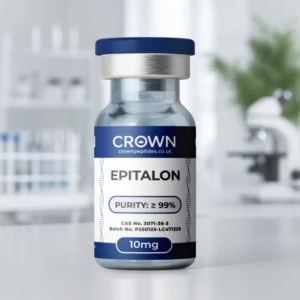
Epitalon Research Peptide
HPLC and MS verified · batch certificate published · dispatched from the UK before 2pm
Summary of Published Epitalon Studies
As with other peptides in this series originating from a concentrated research programme, it's worth being explicit about scope: the animal lifespan data and in vitro telomerase findings are genuinely interesting and have been reported consistently within this research programme, but independent, internationally replicated human trial data — particularly for the specific telomerase and lifespan claims — remains limited.
Potential Research Applications
Based on the published literature, researchers have investigated Epitalon as a tool for studying:
- Telomerase activity and its relationship to cellular replicative capacity and ageing
- Pineal gland function, melatonin regulation, and circadian rhythm biology
- Neuroendocrine regulatory networks connecting sleep, immune function, and cellular ageing markers
- Comparative longevity research alongside other bioregulator peptides from the same research tradition
As with the other compounds in this series, this is research investigating mechanisms, not evidence of an established treatment effect in humans. None of the above constitutes a demonstrated therapeutic benefit under any regulatory framework.
Current Limitations of Epitalon Research
- Concentrated within one research programme. The substantial majority of foundational Epitalon research originates from the Khavinson group, and independent replication by unaffiliated international laboratories remains limited relative to the scale of the original research programme.
- No modern Western randomised controlled human trial exists. Epitalon has not been evaluated in a large, adequately powered, placebo-controlled human trial meeting current international reporting standards.
- The telomerase mechanism has not been definitively confirmed by independent groups at the same scale. While the in vitro telomerase finding is a genuinely specific, testable claim, broader independent confirmation of its magnitude and consistency remains more limited than the volume of Russian-language literature might suggest.
- The 2025 multi-target review claim is broad and warrants further scrutiny. As with other very broad mechanistic claims covered in our other guides, a proposed regulatory profile spanning telomerase, melatonin, and immune function together is a substantial claim that benefits from further independent functional validation rather than being treated as settled.
Side Effects Reported in Research
Within the published research from its originating research programme, Epitalon has been described as having a favourable safety profile in the animal and limited human studies conducted. As with other research peptides concentrated within a single research tradition, this safety picture has not been through the kind of extensive independent, internationally reviewed safety surveillance that would exist for an approved medicine.
Any research protocol involving human or animal subjects should be developed with appropriate ethical and institutional review, following standard safety monitoring practices for investigational peptides.
Dosing Used in Published Research
This section is included for methodological context only and should not be interpreted as guidance for use.
Published animal studies have used a range of doses and administration schedules depending on the specific research question, including chronic administration protocols in lifespan studies. These figures describe specific animal research protocols under controlled laboratory conditions and are not human dosing figures, have not been independently validated in adequately controlled human trials, and are not a basis for self-directed use in any context.
Researchers designing their own experimental protocols should base dosing decisions on the primary literature relevant to their specific model, in consultation with institutional ethics review as applicable, rather than on secondary summaries such as this one.
Related Compounds and Future Research Directions
Epitalon belongs to a broader family of “bioregulator” peptides from the same Russian research tradition, including Thymalin (immune-focused) and others, each proposed to act through tissue-specific short-peptide regulation. As with related compounds discussed elsewhere in this series, comparative and independently replicated research would meaningfully strengthen confidence in the specific claims made for each.
- Independent international replication. Given how concentrated the existing evidence is within one research programme, independent replication of both the telomerase and lifespan findings by unaffiliated laboratories represents the single most valuable next step for this compound.
- Modern human trials. An adequately powered, placebo-controlled human trial meeting current international reporting standards would considerably strengthen the evidence base beyond its current largely preclinical and older clinical foundation.
- Direct mechanistic dissection. Given the breadth of the proposed multi-target mechanism, research clarifying which specific effects (telomerase, melatonin, immune) are primary versus downstream consequences of one another would sharpen the mechanistic picture considerably.
Frequently Asked Questions
What does Epitalon peptide do?
Epitalon stimulates the enzyme telomerase to elongate cellular telomeres, which helps protect DNA and extend cell lifespan. It also regulates melatonin production from the pineal gland to normalize sleep cycles and lower oxidative stress.
What is Epitalon peptide?
Epitalon (also known as Epithalon) is a synthetic tetrapeptide composed of four amino acids: alanine, glutamic acid, aspartic acid, and glycine. It was originally developed in Russia as a synthetic counterpart to epithalamin, a peptide naturally produced by the pineal gland.
What is Epitalon peptide used for?
It is primarily studied in longevity and anti-aging research to counteract cellular aging and promote tissue rejuvenation. Researchers also use it to investigate circadian rhythm regulation, immune function support, and age-related disease prevention.
Is Epitalon legal to purchase for research in the UK?
Epitalon is not a controlled substance under UK law and is available from suppliers as a research chemical, sold explicitly for laboratory use rather than human consumption. Researchers should ensure their institution's own procurement and ethics policies are followed regardless of a supplier's terms of sale.
Why is so much of the Epitalon literature Russian in origin?
Epitalon emerged from, and remains closely associated with, the Russian gerontology research tradition established by its discoverer, Vladimir Khavinson, and his affiliated research institute. This regional concentration is worth factoring into how independently the existing evidence base has been verified.
Why Peptide Sourcing Quality Matters for Research Validity
As a very short tetrapeptide, Epitalon shares the general sourcing vulnerabilities common to short peptides: the reliability of any experimental finding depends on the reliability of the material used to generate it, and a molecule this small is particularly sensitive to synthesis errors.
Common failure modes relevant to Epitalon specifically include:
- Truncated or deletion sequences — incomplete coupling during synthesis of a four-residue peptide can leave a meaningful proportion of the product missing one or more residues, given how few residues there are to begin with.
- Inaccurate mass or concentration labelling — without independent mass spectrometry confirmation, there's no reliable way to verify that a vial contains the peptide and concentration stated on the label.
- Bacterial endotoxin contamination — relevant for any in vivo or cell-culture research, particularly given Epitalon's proposed immune-modulatory research applications.
For a peptide whose entire research programme rests on subtle, longer-duration effects (telomerase activity, lifespan), verifying that a given batch is actually the intact, correctly synthesised molecule is a basic precondition for any research finding to be interpretable at all.
Read the certificate before you order
Every batch is published openly — identity by mass spectrometry, purity by HPLC, and the batch number printed on the vial you receive.
Open the COA libraryWhy Choose Crown Peptides
Testing is only part of the picture. Crown Peptides was built around a simple idea: a UK researcher ordering a peptide should be able to trust everything about how it reached them — not just the number on a Certificate of Analysis, but who made it, how it was handled, how it travelled, and who they can speak to if they have a question. That's the standard we hold ourselves to on every order, and it's worth explaining properly rather than just listing it.
Sourcing You Can Trust
Quality starts long before a product reaches our warehouse. We work directly with one of the world's largest and most established peptide synthesis manufacturers, chosen specifically for its production standards, consistency, and track record — rather than sourcing opportunistically from whichever manufacturer happens to offer the lowest price that month. That close, ongoing partnership is what allows us to stand behind every batch we sell, because we know exactly how it was made.
Verified Through Independent Testing
We don't expect researchers to take a manufacturer's word for it, so we verify every batch independently before it's listed for sale:
Endotoxin Testing
Every batch is screened for bacterial endotoxin, which matters in particular for any research involving cell culture, immune signalling, or in vivo inflammatory endpoints.
HPLC Purity Analysis
High-performance liquid chromatography is used to assess purity and screen for truncated sequences, deletion products, and synthesis by-products.
Mass Spectrometry Identity Confirmation
MS analysis confirms the molecular weight of the supplied peptide matches intact Epitalon (Ala-Glu-Asp-Gly), providing an independent check on identity beyond the label.
Certificate of Analysis
Every batch is supplied with a Certificate of Analysis, and a QR code linking directly to the testing report on crownpeptides.co.uk, so researchers can document exactly what was used in their own experimental records.
Careful Storage and Handling
A product that's been correctly synthesised and tested can still be let down by poor handling afterward. Once a batch clears testing, we store it under controlled conditions designed to preserve stability and prevent degradation before it ever reaches a researcher's bench. This matters more for peptides and sensitive research compounds than for most laboratory reagents: temperature excursions, light exposure, and poor stock rotation can all silently reduce integrity long before a vial is opened, in ways that aren't visible on inspection and can quietly undermine an experiment's results. We treat that storage window as part of the product, not an afterthought once testing is done.
Packaging and Delivery
Every order is packed in premium, discreet packaging designed to protect the product in transit and arrive intact. Orders placed before 2pm are dispatched the same working day for next-day UK delivery, and we ship to Northern Ireland, the Republic of Ireland, Scotland, England, and across the EU, with international shipping available beyond that. For a researcher working to a study timeline, knowing an order will arrive quickly, safely, and exactly as ordered isn't a convenience — it's part of keeping a research schedule on track.
Support That Goes Beyond the Sale
Peptide and research-compound work raises genuine practical questions — around reconstitution, storage, handling, and interpreting a Certificate of Analysis — and we'd rather a researcher ask us directly than guess. Our team is on hand to provide clear, straightforward guidance from product selection through to delivery and beyond, without the evasiveness or upsell pressure that can come with some suppliers in this space. We see that ongoing relationship, not just the transaction, as the actual job.
Regulatory Compliance and Transparency
Crown Peptides is a UK-based company operating in line with MHRA guidance on research chemicals. Every batch is released against its own certificate of analysis, with HPLC purity and mass-spectrometry identity recorded and the lot number printed on the vial you receive. We'd rather be transparent about what we sell and who it's for than blur that line to chase a wider customer base — that's a deliberate choice on our part, not a legal minimum we begrudgingly meet.
Our Commitment
Put simply, our mission is to supply the UK research community with peptides and research compounds of unmatched purity and consistency, backed by a level of service, transparency, and technical support that researchers can actually rely on — from the first email enquiry to the vial arriving on the bench. That standard applies whether an order is a single vial for an independent researcher or a bulk order for a laboratory, and it holds regardless of whether a customer ever finds out how much work sits behind it.
For researchers who want their results to be reproducible and their experimental record defensible, knowing precisely what's in the vial — and trusting that everyone who handled it got it right — is a basic, non-negotiable starting point.
References
- Khavinson, V. et al. “Peptide regulation of gene expression and protein synthesis in bronchial epithelium.” Bulletin of Experimental Biology and Medicine (representative Khavinson group methodology). https://link.springer.com/journal/10517
- Anisimov, V.N. et al. “Effect of Epitalon on biomarkers of aging, life span and spontaneous tumor incidence in female Swiss-derived SHR mice.” Biogerontology. https://pubmed.ncbi.nlm.nih.gov/14618016/
- “Epitalon Peptide | Benefits, Safety & Buying Advice.” Innerbody Research (secondary review summarising primary literature). https://www.innerbody.com/epitalon
Working with Epitalon Research Peptide
Batch-tested material, published certificates, and same-day dispatch on orders placed before 2pm.
See Epitalon Research Peptide