
Research guide
Thymosin Alpha-1: Approved in 35 Countries, Not in the US
Forty years of trials, more than 11,000 patients, and prescription approval in over 35 countries — yet never approved in the United States. That gap is the most interesting thing about this peptide.
RESEARCH USE DISCLAIMER
Crown Peptides supplies Thymosin Alpha-1 as a laboratory research compound only. It is not FDA-approved in the United States, and our products are not intended for human consumption and are not sold, marketed, or labelled for the diagnosis, treatment, cure or prevention of any disease. Nothing in this document should be read as medical advice or as an endorsement of human use. The discussion below summarises published scientific and international regulatory literature only, and is intended for researchers and students of immunology.
Thymosin Alpha-1 occupies a genuinely unusual regulatory position among the compounds discussed in this article series: it is approved as a prescription medicine (Zadaxin) in more than 35 countries worldwide, including China and Italy, backed by decades of clinical trial data involving over 11,000 patients — yet it has never received FDA approval in the United States. This article covers what the substantial published international clinical literature shows about Thymosin Alpha-1’s immune-modulating mechanism, its extensive international approval history, and its current, more restricted US regulatory status.
This article is direct about a naming point worth clarifying at the outset: “TB-500” and thymosin-related compounds discussed elsewhere in this article series (thymosin beta-4) work through an entirely different, actin-regulating mechanism unrelated to Thymosin Alpha-1’s immune-modulating activity, despite the shared “thymosin” naming convention.
What Is Thymosin Alpha-1 Peptide?
Thymosin Alpha-1 (Tα1, generic name thymalfasin, brand name Zadaxin) is a synthetic 28-amino-acid peptide, identical in sequence to the naturally occurring thymic hormone produced by the thymus gland, the primary immune organ responsible for T-cell development and immune system maturation. It is biochemically derived by cleavage of a larger precursor protein, prothymosin alpha (composed of 109 amino acids), via the enzyme asparagine endopeptidase.
The thymus gland reaches its maximum size and activity during adolescence, then gradually undergoes involution (shrinks) with age — a process that contributes to age-related immune decline. Thymosin Alpha-1 concentration in the body has been reported to peak in young adulthood and decline significantly by age 50–60, giving this peptide’s endogenous production pattern a genuinely direct connection to broader immune-ageing research.
The International Approval Story: Zadaxin’s Global Reach
It’s worth understanding Thymosin Alpha-1’s genuinely unusual international regulatory profile in detail, since it differs meaningfully from almost every other compound discussed in this article series. Zadaxin, the branded synthetic version of Thymosin Alpha-1, is currently approved in more than 35 countries for indications including chronic hepatitis B, chronic hepatitis C, and use as a general immunomodulatory agent, with China representing a particularly major market where it is also widely used in oncology and critical care settings. Italy and other European countries use it in clinical practice and clinical trials, though it has not received centralised EMA approval covering the entire European Union.
In the United States specifically, Thymosin Alpha-1 has never received FDA approval for any indication, despite having been under clinical development for hepatitis C and melanoma at various points. As of a February 2026 reclassification, it holds FDA 503A Category 2 status, meaning it is available in the US by prescription only through licensed compounding pharmacies, with access varying by state — a genuinely different regulatory pathway from either a fully approved medicine or an entirely unregulated research chemical.
Thymosin Alpha-1 Mechanism: Toll-Like Receptor Activation and Immune Modulation
Thymosin Alpha-1 functions as a biological response modifier acting on both the innate and adaptive arms of the immune system. Unlike conventional cytokines, it does not directly stimulate immune cells in an antigen-specific manner, but instead modulates and optimises immune responses through several interconnected signalling pathways. A central mechanism involves direct interaction with toll-like receptors (TLRs), particularly TLR9 on dendritic cells, driving Th1 polarisation, T-cell maturation, and coordinated adaptive immune responses. Research has also documented Thymosin Alpha-1 binding to TLR3, TLR4, TLR2, and TLR7, activating downstream signalling pathways including IRF3 and NF-κB, which together promote the proliferation and activation of target immune cells and enhance cytokine production across both innate and adaptive immune responses.
Why Prothymosin Alpha, Not the Thymus Itself, Is the True Source
It’s worth clarifying a point of frequent confusion in this literature: despite its name suggesting thymus-specific production, Thymosin Alpha-1 is not exclusively produced by the thymus gland. It’s cleaved from prothymosin alpha, a precursor protein expressed broadly across many tissue types throughout the body, not confined to thymic tissue. The “thymosin” naming convention reflects the historical discovery context — the peptide was first isolated from thymic extracts in the 1960s and 70s during research into thymus-derived immune factors — rather than a strict statement about its sole tissue of origin. This distinction matters for understanding why circulating Thymosin Alpha-1 levels don’t simply track thymic mass alone, and why the peptide continues to be detectable, at reduced levels, even after age-related thymic involution has substantially reduced the thymus gland’s own size and activity.
Thymosin Alpha-1 acts through multiple toll-like receptors simultaneously, coordinating both innate and adaptive immune responses rather than acting as a single-pathway immune stimulant.
Why It’s Described as an Immune “Modulator” Rather Than a Simple Stimulant
It’s worth explaining a specific mechanistic distinction that recurs throughout the Thymosin Alpha-1 literature: researchers consistently describe it as an immune modulator rather than a straightforward immune stimulant, and this terminology reflects a genuine mechanistic property rather than a marketing choice. Because Thymosin Alpha-1 acts through multiple interconnected toll-like receptor pathways simultaneously, rather than driving one single immune process in one direction, it has been documented to both enhance immune-inflammatory responses in some contexts (relevant to infectious disease and cancer immunotherapy applications) and decrease immune-inflammatory responses in others (relevant to conditions requiring immune calming rather than activation) — a genuinely bidirectional regulatory profile that distinguishes it from single-target immune stimulants that only push in one direction.
- Classification
- Synthetic 28-amino-acid thymic peptide
- CAS Number
- 62304-98-7
- Molecular Weight
- 3108.32 g/mol
- Molecular Formula
- C129H215N33O55
- Sequence
- Ac-Ser-Asp-Ala-Ala-Val-Asp-Thr-Ser-Ser-Glu-Ile-Thr-Thr-Lys-Asp-Leu-Lys-Glu-Lys-Lys-Glu-Val-Val-Glu-Glu-Ala-Glu-Asn-OH
Why Researchers Are Interested in Thymosin Alpha-1
It’s worth expanding on why China specifically represents such a disproportionately large share of Thymosin Alpha-1’s real-world clinical experience, since this shapes how the overall evidence base should be read. Zadaxin has been used clinically in China for several decades, across chronic hepatitis B treatment, as a vaccine adjuvant, and in oncology and critical care settings on a scale considerably larger than in any other single market. This concentration means that a substantial share of the largest real-world dispensing and observational safety data for this compound comes from a healthcare and regulatory context meaningfully different from the UK, EU, or US — worth factoring in when weighing how directly this experience translates to other regulatory environments, even though the underlying clinical trial data itself has been published internationally and is not confined to Chinese-language sources alone.
Thymosin Alpha-1’s research interest spans a genuinely extensive range of applications connected by its shared immune-modulating mechanism: chronic viral hepatitis (its best-established application), cancer immunotherapy as an adjunct to other treatments, sepsis and severe infection, vaccine response enhancement, and, more recently, COVID-19 research. This breadth reflects decades of accumulated clinical trial experience across more than 30 published trials and over 11,000 patients.
The Pivotal 1998 Hepatitis B Trial
It’s worth examining the specific trial data that established Thymosin Alpha-1’s best-known clinical application in more detail. A pivotal randomised controlled trial published in 1998, involving 98 hepatitis B patients, found complete virological response in 40.6% of patients treated with Thymosin Alpha-1, compared to 9.4% in untreated controls — a substantial and statistically meaningful difference that formed much of the foundational evidence supporting Zadaxin’s international approval for this indication, and remains one of the most frequently cited pieces of Thymosin Alpha-1 clinical trial data across the broader literature.
Key Areas of Thymosin Alpha-1 Research
It’s worth situating Thymosin Alpha-1 relative to other immune-relevant compounds in Crown Peptides’ range, since researchers investigating immune modulation often want to understand how these tools differ mechanistically. KPV (covered in a separate Crown Peptides research review) also has documented immune-modulating properties, but through an entirely distinct mechanism — a melanocortin-derived tripeptide working via NF-κB pathway inhibition, primarily studied in localised gut inflammation contexts. Thymosin Alpha-1, by contrast, works through broad, multi-receptor toll-like receptor activation, coordinating systemic innate and adaptive immune responses rather than targeting one specific inflammatory pathway locally. Researchers should think of KPV as a targeted anti-inflammatory tool and Thymosin Alpha-1 as a broader immune-system coordinator, rather than interchangeable options addressing the same research question.
It’s worth expanding on Thymosin Alpha-1’s sepsis research specifically, since this represents a meaningfully different clinical context from its better-known chronic hepatitis applications. Sepsis is characterised by a genuinely complex, often biphasic immune dysregulation — an initial hyperinflammatory phase can be followed by a period of profound immune suppression (sometimes called immunoparalysis), during which patients become vulnerable to secondary infections precisely because their immune system has been left unable to mount an adequate response. Thymosin Alpha-1’s proposed immune-modulating, rather than purely immune-stimulating, mechanism is specifically relevant to this second phase: researchers have proposed it may help restore more balanced immune function during the immunoparalysis stage of sepsis, rather than simply adding further stimulation to an already-exhausted immune system. Clinical trials examining Thymosin Alpha-1 in severe sepsis have reported significant efficacy signals, a genuinely important finding given how limited treatment options remain for sepsis-associated immune dysfunction specifically.
Chronic hepatitis B and C (the primary internationally approved indication). The pivotal 1998 RCT and subsequent trials established Thymosin Alpha-1’s efficacy in improving virological response in chronic hepatitis B patients, forming the core evidence base for Zadaxin’s approval in more than 35 countries.
Cancer immunotherapy. Research has examined Thymosin Alpha-1 as an adjunct treatment alongside other cancer therapies, including a study combining it with low-dose interferon alpha following dacarbazine chemotherapy in advanced melanoma, reflecting its proposed role in enhancing broader anti-tumour immune responses rather than acting as a standalone anti-cancer agent.
Sepsis and severe infection. Clinical trials have shown significant efficacy for Thymosin Alpha-1 in treating severe sepsis, building on its immune-modulating properties applied to a considerably more acute, life-threatening infectious context than chronic viral hepatitis.
COVID-19 and respiratory infection research. Thymosin Alpha-1 has been clinically studied in pilot studies for severe acute respiratory syndrome (SARS) and other lung infections including ARDS and COPD, and was evaluated in dedicated clinical trials for COVID-19 infection specifically, extending its immune-modulating research relevance to this more recently emerged respiratory pathogen.
Vaccine response enhancement. Given its documented role in China for enhancing vaccine response specifically, Thymosin Alpha-1 has research relevance to immunisation adjuvant strategies, distinct from its treatment applications for established infections.
Methodology: an unusually large and consistent international safety dataset. A 2024 comprehensive narrative review analysed safety and efficacy evidence involving over 11,000 patients across more than 30 clinical trials, focusing specifically on Tα1’s application in COVID-19, autoimmune conditions, and cancer treatment, concluding that Thymosin Alpha-1 emerges as a well-tolerated and effective immune modulator across this substantial combined dataset — a genuinely large and consistent evidence base by the standards of this entire article series.
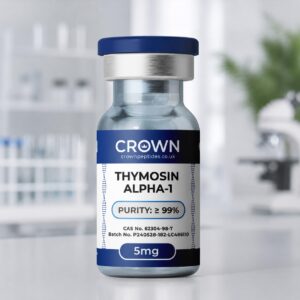
Thymosin Alpha-1 Research Peptide
HPLC and MS verified · batch certificate published · dispatched from the UK before 2pm
Summary of Published Thymosin Alpha-1 Studies
It’s worth dwelling further on the practical research implications of Thymosin Alpha-1’s documented bidirectional immune activity, since this is a genuinely unusual feature worth understanding in more depth. Most immune-active compounds researchers work with fall relatively cleanly into “stimulant” or “suppressant” categories, which makes experimental design and hypothesis-setting comparatively straightforward. Thymosin Alpha-1’s evidence base doesn’t sit neatly in either category — the same underlying mechanism (coordinated toll-like receptor activation) has been documented to enhance immune-inflammatory activity in contexts like chronic viral infection and cancer immunotherapy, while separately calming or regulating immune-inflammatory activity in other contexts. This means researchers can’t simply assume a consistent directional effect when designing a new experimental protocol; they need to consider carefully which specific immune context, cell type, and baseline immune state their model represents before predicting which direction Thymosin Alpha-1 is likely to push the system.
This table reflects a genuinely distinctive evidence position: extensive international clinical trial data spanning decades and multiple indications, supporting real regulatory approval in over 35 countries, alongside the specific absence of FDA approval in the United States — a regulatory divergence worth understanding clearly rather than assuming international approval automatically implies equivalent US regulatory standing.
Potential Thymosin Alpha-1 Benefits for Immune Research
Based on the published literature, researchers have investigated Thymosin Alpha-1 as a tool for studying:
- Toll-like receptor-mediated immune modulation across multiple receptor subtypes (TLR2, TLR3, TLR4, TLR7, TLR9)
- Th1 polarisation and coordinated innate-adaptive immune response mechanisms
- Age-related thymic involution and its relationship to declining endogenous Thymosin Alpha-1 production
- Adjunctive immune support in cancer immunotherapy and chronic viral infection contexts
- Immune response modulation in acute, severe infectious conditions including sepsis and respiratory infection
As with the other compounds in this series, this is research investigating mechanisms, and in Thymosin Alpha-1’s specific case, a genuinely extensive international clinical trial and approval history — but not a US-approved medicine. None of the above constitutes a demonstrated therapeutic benefit under US regulatory frameworks specifically.
Current Limitations of Thymosin Alpha-1 Research
- No FDA approval in the United States. Despite extensive international approval and clinical trial history, Thymosin Alpha-1 has never received FDA approval for any indication, and as of February 2026 holds FDA 503A Category 2 status, restricting US availability to prescription access through licensed compounding pharmacies.
- Regional concentration of the strongest clinical experience. The largest volume of real-world clinical use and dispensing data originates from China and other international markets where Zadaxin holds full approval, meaning the deepest clinical experience with this compound sits outside the US regulatory and clinical practice context.
- Not EMA-centrally approved. While used in clinical practice and trials in Italy and other European countries, Thymosin Alpha-1 has not received centralised European Medicines Agency approval covering the full European Union.
- Broad multi-pathway mechanism complicates precise attribution. Because Thymosin Alpha-1 acts through multiple toll-like receptor pathways simultaneously, isolating which specific downstream effect is responsible for any given clinical outcome remains a genuinely complex methodological challenge, similar in kind to other broad-mechanism compounds discussed elsewhere in this series.
- US compounding restrictions reflect an evolving regulatory landscape. The February 2026 reclassification to 503A Category 2 status represents a relatively recent regulatory development, and researchers should stay current on any further changes to its US compounding and research-chemical availability status.
Thymosin Alpha-1 Side Effects Reported in Research
Across its substantial international clinical trial history, Thymosin Alpha-1 has demonstrated exceptional safety, with less than 1% serious adverse events reported across the combined clinical trial dataset. In most clinical studies, Thymosin Alpha-1 has not been associated with significant adverse events attributable to the compound itself when administered at doses in the range of 1–16 mg via the subcutaneous route for up to 12 months, with the most commonly reported adverse reactions being local irritation, redness, or discomfort at the injection site.
The FDA has specifically noted that data are insufficient to evaluate risks when Thymosin Alpha-1 is used concurrently with certain licensed influenza vaccines, a specific gap worth being aware of for any research protocol involving concurrent vaccination. Any research protocol involving human or animal subjects should be developed with appropriate ethical and institutional review, following standard safety monitoring practices for investigational compounds.
Thymosin Alpha-1 Dosage Used in Published Research
This section is included for methodological context only and should not be interpreted as guidance for use.
Published human research has used subcutaneous administration of Thymosin Alpha-1 in the range of 1–16 mg for treatment protocols spanning up to 12 months in various clinical contexts, and a pharmacokinetic study in healthy men reported rapid absorption with a Tmax of approximately 2 hours following subcutaneous administration at a 900 microgram/m² dose. These figures describe specific, clinically supervised research and treatment protocols in specific patient populations — they are not a basis for self-directed use in any context.
Researchers designing their own experimental protocols should base dosing decisions on the primary literature relevant to their specific model and objective, in consultation with institutional ethics review as applicable, rather than on secondary summaries such as this one.
Analogues and Future Research Directions
Thymosin Alpha-1 belongs to a broader family of thymus-derived bioregulatory peptides, distinct in mechanism from the actin-regulating thymosin beta-4 family (covered separately in Crown Peptides’ TB-500 research review) despite the shared “thymosin” naming convention. Continued research clarifying the full breadth of Thymosin Alpha-1’s toll-like receptor-mediated activity remains an active area of immunology research.
- Pursuing FDA approval given the extensive existing international evidence base. Given the substantial existing international clinical trial and safety data, some researchers have discussed whether a modern FDA submission, potentially building on this extensive existing dataset, could be pursued for a specific US indication.
- Further COVID-19 and respiratory infection research. Building on pilot work in SARS, ARDS, and COPD, and dedicated COVID-19 trials, continued research in this area remains a genuinely active and clinically relevant direction.
- Clarifying vaccine co-administration safety. Given the FDA’s specifically noted data gap regarding concurrent influenza vaccine use, dedicated research addressing this specific question would close a clearly identified evidence gap.
- Precision immunomodulation research. Given Thymosin Alpha-1’s documented bidirectional effects (enhancing immune response in some contexts, calming it in others), further mechanistic research clarifying what determines which direction predominates in a given context would sharpen understanding of this genuinely complex immunomodulator.
Forty Years, Thirty Trials, Eleven Thousand Patients
It’s worth sitting with how unusual Tα1’s track record is for a compound still without U.S. approval. Pivotal randomised trials published in journals like Hepatology showed significantly higher rates of complete virological response in chronic hepatitis B patients treated with Tα1 compared to controls, with a low burden of adverse events across four decades of accumulated data. That evidence base is why regulators in more than thirty-five countries — including China, Italy, and the Philippines — have approved it for hepatitis B, hepatitis C, and immune support in cancer patients, and why physicians in those countries have had it in their prescribing toolkit for years, not months.
Eleven thousand patients and thirty-plus trials is not a fringe compound’s résumé. It’s the kind of evidence base regulators usually associate with drugs that have already found their place in mainstream medicine — which makes its absence from the U.S. market, until recently, more a story about regulatory timing than about the underlying science.
The hepatitis B data in particular is worth sitting with, because chronic hepatitis B is a disease the virus wins by hiding: it persists precisely because the immune system fails to mount a strong enough, coordinated enough T-cell response to clear it. That’s exactly the gap Tα1’s mechanism is built to close, which is why it’s most often studied alongside interferon-based antiviral treatment rather than in place of it — the antiviral drug pressures the virus directly, while Tα1’s job is making sure the immune system itself is fit enough to finish the job. Trials combining the two approaches reported significantly higher rates of complete virological response than antiviral treatment alone, which is the kind of complementary result that explains why regulators across three dozen countries found the evidence compelling enough to approve it.
The Sepsis Question: Tackling Critical Illness
Hepatitis and oncology support are where Tα1 built its reputation, but researchers have also pushed it into a far higher-stakes arena: intensive care. The ETASS trial — the Efficacy of Thymosin Alpha 1 for Severe Sepsis — was a multicentre, randomised, controlled study run across six tertiary teaching hospitals in China between 2008 and 2010, enrolling ICU patients with severe sepsis, one of the leading causes of death in hospitals worldwide. The trial’s primary endpoint wasn’t met, but subgroup analyses pointed to a reduction in 28-day mortality among patients treated with Tα1 compared with placebo — enough of a signal that it’s since been picked up in systematic reviews and meta-analyses examining thymosin alpha-1 as an immunomodulatory therapy for sepsis.
It’s worth being straightforward about what that does and doesn’t mean: a missed primary endpoint is a real result, not a footnote to skip past, and it means ETASS alone doesn’t settle the sepsis question. What it does show is that Tα1’s immune-modulating mechanism has been considered serious enough to test in one of the most difficult, highest-mortality settings in all of medicine — critically ill ICU patients — rather than being confined to lower-stakes applications. That’s a meaningfully different research profile from most compounds that never leave outpatient or preclinical settings.
Since ETASS, further systematic reviews and meta-analyses have kept pooling the accumulating sepsis data, looking for a clearer signal across a larger combined patient population than any single trial could provide on its own. That’s a normal and healthy part of how medicine handles a promising-but-not-yet-definitive result: rather than shelving the question after one trial, researchers keep building the evidence base until the picture is clear enough one way or the other. For Tα1, that process is still actively under way.
America Starts to Catch Up
That timing is now visibly shifting. On 27 February 2026, HHS Secretary Robert F. Kennedy Jr. publicly announced the intent to move thymosin alpha-1 back to Category 1 status — the FDA classification that would restore its legal compounding pathway for U.S. physicians, reversing years of restricted access despite the compound’s international track record. Formal rulemaking hadn’t been published as of that announcement, but the direction of travel is unmistakable, and it lines up with a broader FDA reassessment of research peptides moving through 2026.
It’s also worth understanding why Tα1 was restricted in the first place, because the reasoning is more bureaucratic than scientific. Compounding pharmacies in the U.S. operate under lists of permitted bulk drug substances set out in Section 503A of the Federal Food, Drug, and Cosmetic Act, and the FDA periodically reviews nominated substances for inclusion or restriction. Category 2 status — where Tα1 had been sitting — is effectively a “do not use pending further review” designation, often applied when a substance lacks the specific human-exposure documentation the FDA wants on file, regardless of how much evidence exists internationally. It’s a paperwork and jurisdiction problem as much as a safety one, which is exactly why a compound with thirty-five country approvals could still be sitting in regulatory limbo in the country that arguably has the most to gain from using it.
COVID-19 and the Ageing Immune System
Clinical interest hasn’t waited for the paperwork. An NIH-registered trial (NCT06821100) is currently testing thymalfasin as a booster for COVID-19 vaccine response specifically in older adults — a population where immune response to vaccination is often blunted, and exactly the kind of application Tα1’s immune-coordinating mechanism was built for.
The reasoning behind that trial connects directly back to the thymus itself. The thymus gland shrinks with age in a process called thymic involution, and that decline is a major reason older adults tend to mount weaker, less coordinated immune responses — both to infections and to vaccines. During the COVID-19 pandemic, mortality among patients aged 60 to 90 ran as high as 50% in some cohorts, and researchers pointed to exactly this age-related thymic decline as part of the explanation. That’s what makes Tα1 such a logical candidate to study here: it’s one of the few compounds documented to help restore coordinated T-cell activity in a system where the thymus itself is no longer doing its job properly. Research groups have specifically examined how human Tα1 performs across populations with different levels of remaining thymic function in the context of SARS-CoV-2 infection — a direct, mechanistically grounded line of inquiry rather than a speculative one.
Part of a Much Bigger Shift
None of this is happening in isolation. Peptide-based drugs now account for roughly one in ten new FDA drug approvals, and the peptide therapeutics market is projected to pass $49 billion this year. High-profile peptide drugs — the GLP-1 class in particular — have done more to normalise “peptide” as a legitimate category of medicine in the public imagination than anything else in the last decade. People who’d never heard the word “peptide” outside a chemistry class are now taking one weekly. That shift in public familiarity is part of why compounds like Tα1, with decades of international data behind them, are having a genuine U.S. moment rather than staying a niche interest confined to research circles.
Look at what else is moving through the pipeline alongside it: dual and triple-agonist peptides like retatrutide advancing through late-stage trials, oral GLP-1 formulations such as orforglipron working through review, and oral cyclic peptides like icotrokinra targeting conditions like plaque psoriasis with an FDA decision expected this year. Regulators, physicians, and patients are all being asked to get comfortable with peptide-based medicine at the same time, across multiple disease categories at once. Thymosin alpha-1 isn’t riding that wave by coincidence — it’s one of the compounds best positioned to benefit from it, precisely because its evidence base was already strong long before the wave arrived.
It’s a useful reminder that the story here isn’t a single compound catching a lucky break — it’s a regulatory and cultural landscape that’s actively re-evaluating a whole category of medicine it had, for years, treated with more caution than the evidence supported.
There’s a cultural piece to this too. Longevity medicine and preventive immune health have moved from fringe interest to mainstream conversation over the last few years, and patients are arriving at appointments already having read about peptides, already curious, already asking their physicians informed questions instead of needing the concept explained from scratch. That shift in patient literacy puts pressure on a slow-moving regulatory system from the other direction — it’s not just that the science has been sitting there for decades, it’s that the public appetite to understand and use it has caught up at the same time the FDA is re-examining its own restricted lists.
How the Trials Actually Studied It
It’s easy to talk about mechanisms and mortality figures in the abstract, so it’s worth grounding this in how the published research was actually designed. Across the hepatitis B literature, Tα1 was typically administered by subcutaneous injection, dosed in the low-milligram range, given a small number of times per week, and continued over a period of months alongside interferon-based antiviral therapy — a protocol pattern consistent enough across multiple independent trials that it became something close to a standard research design in that literature. The ETASS sepsis trial used a similar injection-based approach but over a much shorter, more intensive course appropriate to an ICU setting, reflecting how differently a chronic viral infection and an acute critical illness need to be studied.
That consistency of protocol across such a wide range of independent research groups and countries is itself a useful signal. Compounds with genuinely inconsistent or poorly reproducible effects tend to generate a scattered, inconsistent literature, with every research group trying a different dose and schedule in search of something that works. Tα1’s research base looks more like a settled field building on itself than a compound still searching for its footing — which lines up with everything else in its forty-year history.
What Researchers Are Watching Next
With the regulatory door opening and a live NIH trial underway, the next few years of Tα1 research look set to move well past its original hepatitis and oncology use cases. Three directions stand out. First, combination protocols: much of Tα1’s strongest data comes from pairing it with existing treatments — interferon in hepatitis B, standard chemotherapy regimens in oncology — rather than using it alone, and researchers are increasingly interested in which other combinations might unlock similar gains. Second, vaccine science more broadly: if Tα1 can meaningfully improve vaccine response in older adults for COVID-19, the same logic plausibly extends to influenza, shingles, and other vaccines where elderly response rates lag behind younger populations — a genuinely large, underserved research question. Third, and most speculatively, the Th1/Th2 rebalancing angle discussed earlier: whether a compound this good at correcting an under-active immune system can do something useful for the opposite problem, an over-active or misdirected one, in conditions like allergic and autoimmune disease. None of these are settled — they’re exactly the kind of open questions that keep a forty-year-old compound feeling like current research rather than old news.
Frequently Asked Questions
Is Thymosin Alpha-1 FDA approved?
No, not in the United States. It is approved as Zadaxin in more than 35 countries internationally, including China and Italy, for indications including chronic hepatitis B. As of February 2026, it holds FDA 503A Category 2 status, available in the US by prescription only through licensed compounding pharmacies.
What is Thymosin Alpha-1’s mechanism of action?
It acts as an immune modulator, binding to multiple toll-like receptors (TLR2, TLR3, TLR4, TLR7, TLR9) to activate downstream signalling pathways that coordinate both innate and adaptive immune responses, promoting Th1 polarisation and T-cell maturation.
Is Thymosin Alpha-1 the same as TB-500 or thymosin beta-4?
No, despite the shared “thymosin” naming convention. Thymosin Alpha-1 is an immune-modulating peptide acting through toll-like receptors, while thymosin beta-4 (the parent molecule of TB-500, covered in a separate Crown Peptides research review) works through actin cytoskeleton regulation — an entirely different mechanism and research application.
What is Thymosin Alpha-1 approved for internationally?
Under the brand name Zadaxin, it is approved in more than 35 countries for indications including chronic hepatitis B, chronic hepatitis C, and general immunomodulatory use, with particularly extensive use in China across hepatitis B treatment, vaccine response enhancement, oncology, and critical care settings.
How safe is Thymosin Alpha-1 based on clinical trial data?
A 2024 comprehensive review analysing over 11,000 patients across more than 30 clinical trials found consistent evidence of safety and efficacy, with less than 1% serious adverse events reported, and the most common side effect being mild injection-site irritation.
Why Peptide Sourcing Quality Matters for Research Validity
As a 28-amino-acid peptide with an N-terminal acetylation and a well-defined multi-receptor activity profile, Thymosin Alpha-1’s research validity depends on accurate synthesis of both its full sequence and its specific terminal modification.
Common failure modes relevant to Thymosin Alpha-1 specifically include:
- Truncated or deletion sequences — incomplete coupling during synthesis of this relatively long peptide can leave a proportion of the product missing residues important to its immune-modulating activity.
- Incomplete N-terminal acetylation — this specific modification is part of Thymosin Alpha-1’s defined structure, and its absence could alter stability and activity compared to the compound studied in the published clinical literature.
- Inaccurate mass or concentration labelling — without independent mass spectrometry confirmation, there’s no reliable way to verify that a vial contains the peptide and concentration stated on the label.
- Bacterial endotoxin contamination — particularly relevant for Thymosin Alpha-1 specifically, given that its own research applications directly concern immune signalling endpoints that endotoxin contamination could confound in an especially direct way.
Given how extensively Thymosin Alpha-1’s immune-modulating activity has been characterised across international clinical trials, independent verification of identity and purity is what allows a given research batch to be meaningfully compared against this substantial existing literature.
Read the certificate before you order
Every batch is published openly — identity by mass spectrometry, purity by HPLC, and the batch number printed on the vial you receive.
Open the COA libraryWhy Choose Crown Peptides
Testing is only part of the picture. Crown Peptides was built around a simple idea: a UK researcher ordering a peptide should be able to trust everything about how it reached them — not just the number on a Certificate of Analysis, but who made it, how it was handled, how it travelled, and who they can speak to if they have a question. That’s the standard we hold ourselves to on every order, and it’s worth explaining properly rather than just listing it.
Sourcing You Can Trust
Quality starts long before a product reaches our warehouse. We work directly with one of the world’s largest and most established peptide synthesis manufacturers, chosen specifically for its production standards, consistency, and track record — rather than sourcing opportunistically from whichever manufacturer happens to offer the lowest price that month. That close, ongoing partnership is what allows us to stand behind every batch we sell, because we know exactly how it was made.
Verified Through Independent Testing
We don’t expect researchers to take a manufacturer’s word for it, so we verify every batch independently before it’s listed for sale:
Endotoxin Testing
Every batch is screened for bacterial endotoxin, which matters in particular for any research involving cell culture, immune signalling, or in vivo inflammatory endpoints.
HPLC Purity Analysis
High-performance liquid chromatography is used to assess purity and screen for truncated sequences, deletion products, and synthesis by-products.
Mass Spectrometry Identity Confirmation
MS analysis confirms both the peptide sequence and the correct N-terminal acetylation of the supplied compound, verifying that it matches intact Thymosin Alpha-1 rather than an unmodified or degraded variant.
Certificate of Analysis
Every batch is supplied with a Certificate of Analysis, and a QR code linking directly to the testing report on crownpeptides.co.uk, so researchers can document exactly what was used in their own experimental records.
Careful Storage and Handling
A product that’s been correctly synthesised and tested can still be let down by poor handling afterward. Once a batch clears testing, we store it under controlled conditions designed to preserve stability and prevent degradation before it ever reaches a researcher’s bench. This matters more for peptides and sensitive research compounds than for most laboratory reagents: temperature excursions, light exposure, and poor stock rotation can all silently reduce integrity long before a vial is opened, in ways that aren’t visible on inspection and can quietly undermine an experiment’s results. We treat that storage window as part of the product, not an afterthought once testing is done.
Packaging and Delivery
Every order is packed in premium, discreet packaging designed to protect the product in transit and arrive intact. Orders placed before 2pm are dispatched the same working day for next-day UK delivery, and we ship to Northern Ireland, the Republic of Ireland, Scotland, England, and across the EU, with international shipping available beyond that. For a researcher working to a study timeline, knowing an order will arrive quickly, safely, and exactly as ordered isn’t a convenience — it’s part of keeping a research schedule on track.
Support That Goes Beyond the Sale
Peptide and research-compound work raises genuine practical questions — around reconstitution, storage, handling, and interpreting a Certificate of Analysis — and we’d rather a researcher ask us directly than guess. Our team is on hand to provide clear, straightforward guidance from product selection through to delivery and beyond, without the evasiveness or upsell pressure that can come with some suppliers in this space. We see that ongoing relationship, not just the transaction, as the actual job.
Regulatory Compliance and Transparency
Crown Peptides is a UK-based company operating in line with MHRA guidance on research chemicals. Every product is clearly labelled for laboratory research use only, sold on the basis that the purchaser is a qualified professional legally able to handle these materials, and never marketed, described, or sold as suitable for human consumption, therapeutic use, or diagnostic application. We’d rather be transparent about what we sell and who it’s for than blur that line to chase a wider customer base — that’s a deliberate choice on our part, not a legal minimum we begrudgingly meet.
Our Commitment
Put simply, our mission is to supply the UK research community with peptides and research compounds of unmatched purity and consistency, backed by a level of service, transparency, and technical support that researchers can actually rely on — from the first email enquiry to the vial arriving on the bench. That standard applies whether an order is a single vial for an independent researcher or a bulk order for a laboratory, and it holds regardless of whether a customer ever finds out how much work sits behind it.
Crown Peptides’ products are supplied strictly for laboratory research and are not sold, labelled, or intended for human consumption, diagnosis, treatment, or prevention of disease. For researchers who want their results to be reproducible and their experimental record defensible, knowing precisely what’s in the vial — and trusting that everyone who handled it got it right — is a basic, non-negotiable starting point.
Ready to order? View Thymosin Alpha-1 batch testing and pricing on crownpeptides.co.uk
References
- “Thymosin α1 and Its Role in Viral Infectious Diseases: The Mechanism and Clinical Application.” PMC. https://www.ncbi.nlm.nih.gov/pmc/articles/PMC10144173/
- Dinetz, E., Lee, E. “Comprehensive review of the safety and efficacy of thymosin alpha-1 in human clinical trials.” Alternative Therapies in Health and Medicine. 2024;30(1):6-12.
- FDA. Thymosin Alpha-1 (Ta1) Related Bulk Drug Substances Review. U.S. Food and Drug Administration. https://www.fda.gov/media/183892/download
Working with Thymosin Alpha-1 Research Peptide
Batch-tested material, published certificates, and same-day dispatch on orders placed before 2pm.
See Thymosin Alpha-1 Research Peptide