

Research guide
SS-31 Peptide UK Guide: Research, Mechanism and Study Data
SS-31 targets cardiolipin, a lipid found nowhere in the cell except the inner mitochondrial membrane. Four residues, one address, and a decade of mitochondrial research.
RESEARCH USE DISCLAIMER
Crown Peptides supplies SS-31 as a laboratory research compound only. It is not sold as, and is not equivalent to, the FDA-approved pharmaceutical product Elamipretide. Our products are not intended for human consumption and are not sold, marketed, or labelled for the diagnosis, treatment, cure or prevention of any disease. Nothing in this document should be read as medical advice or as an endorsement of human use. The discussion below summarises published scientific and regulatory literature only, and is intended for researchers and students of mitochondrial biology and bioenergetics.
SS-31 (elamipretide) represents one of the more clinically advanced mitochondria-targeted peptides in the published literature, and it recently reached a genuinely significant regulatory milestone: FDA approval in September 2025 for Barth syndrome, a rare inherited mitochondrial disorder. This article covers what the published mechanistic and clinical trial literature shows about SS-31’s cardiolipin-stabilising mechanism, its mixed but genuinely substantial human trial history, and its current, narrowly scoped approval status.
This article is direct about a key distinction that applies to SS-31 specifically: its approval covers one specific rare-disease indication, and does not extend to the considerably broader range of mitochondrial and ageing-related applications this peptide continues to be researched and discussed for.
What Is SS-31 Peptide?
SS-31 (elamipretide, also known by the development name Bendavia) is a synthetic tetrapeptide (four amino acids) featuring a characteristic motif of alternating cationic (positively charged) and aromatic side chains. This structural pattern gives SS peptides a genuinely distinctive pharmacological property: despite carrying a strong positive charge (a formal charge of +3), SS-31 is cell-permeable across a wide range of cell types and traverses the plasma membrane in an energy-independent, non-saturable manner, subsequently accumulating strongly — reportedly 1,000 to 5,000-fold — at the inner mitochondrial membrane specifically.
SS-31 received FDA approval in September 2025 under the pharmaceutical name Elamipretide, specifically for Barth syndrome, a rare inherited disorder caused by mutations in the tafazzin gene that result in abnormal cardiolipin remodelling, leading to cardiomyopathy, skeletal muscle weakness, and growth delay. This approval is narrowly scoped to that specific indication and does not extend to other proposed uses.
Why SS-31 Accumulates So Strongly in Mitochondria Specifically
It’s worth understanding the specific structural feature that gives SS-31 its remarkable mitochondrial-targeting property, since this is genuinely unusual pharmacology worth explaining in detail. The alternating cationic and aromatic amino acid motif that defines the SS peptide family allows the molecule to interact specifically with the phospholipid composition of the inner mitochondrial membrane, which is uniquely rich in cardiolipin — a phospholipid not found in comparable concentration in any other cellular membrane. This selective affinity is what drives SS-31’s dramatic accumulation specifically at the inner mitochondrial membrane rather than distributing evenly throughout the cell, giving it a genuinely targeted delivery mechanism to the exact subcellular location where its proposed therapeutic activity occurs — a considerably more elegant and specific delivery solution than simply increasing systemic dose of a non-targeted antioxidant compound.
SS-31 Mechanism: Cardiolipin Stabilisation and Mitochondrial Bioenergetics
SS-31’s core proposed mechanism centres on its interaction with cardiolipin, the phospholipid that anchors electron transport chain supercomplexes and maintains the folded cristae structure of the inner mitochondrial membrane where ATP synthesis occurs. By binding and stabilising cardiolipin, SS-31 is proposed to protect it from peroxidation (oxidative damage) and preserve its association with cytochrome c, a key electron transport chain component — helping maintain efficient electron coupling and reduce reactive oxygen species production at the source, rather than scavenging reactive oxygen species after they have already formed, which is how conventional antioxidants work.
This distinction between preventing ROS formation versus scavenging ROS afterward is mechanistically important: research using chemical cross-linking with mass spectrometry has identified that SS-31’s mitochondrial protein interactors are all known cardiolipin-binding proteins, falling into two functional groups — those involved in ATP production through oxidative phosphorylation, and those involved in 2-oxoglutarate metabolic processes — providing direct evidence that SS-31’s activity is genuinely centred on this specific cardiolipin-anchored protein network rather than a more generic, non-specific antioxidant effect.
SS-31 accumulates dramatically in the inner mitochondrial membrane, where it binds cardiolipin to stabilise electron transport chain structure and reduce reactive oxygen species production at its source.
Why SS-31 Works Best Early in Disease Progression
It’s worth highlighting a specific mechanistic insight that carries genuinely important implications for how SS-31’s clinical trial results should be interpreted. Because SS-31’s proposed mechanism is fundamentally about preserving and stabilising existing mitochondrial structure — rather than regenerating or repairing mitochondria that have already undergone extensive structural damage — research and clinical trial experience has suggested the compound appears to work best when administered relatively early in a disease course, while cardiolipin and cristae structure remain at least partially intact. This has a genuinely important practical implication for how future trials might be designed: a treatment effect might be masked or diminished in trial populations with more advanced disease, not necessarily because the underlying mechanism doesn’t work, but because there may be less intact mitochondrial structure left for the compound to actually stabilise.
- Classification
- Mitochondria-targeted tetrapeptide also known as elamipretide
- Available strengths
- 10mg and 50mg
- CAS Number
- 736992-21-5
- Molecular Weight
- 639.79 Da
- Molecular Formula
- C32H49N9O5
- Sequence
- D-Arg-Dmt-Lys-Phe-NH2
Why Researchers Are Interested in SS-31
SS-31’s research interest spans a genuinely wide range of mitochondrial dysfunction-related conditions, reflecting the fact that cardiolipin damage and cristae fragmentation are implicated across an unusually broad spectrum of disease processes — heart failure, kidney injury, neurodegenerative disease, skeletal muscle atrophy, ischemia-reperfusion injury, and the general ageing process have all been proposed to share this same underlying mitochondrial pathology, making SS-31 a genuinely versatile research tool for probing mitochondrial bioenergetics across these different disease contexts.
A Mixed But Substantial Human Trial History
It’s worth being direct about SS-31’s clinical trial history, since it’s genuinely more extensive than almost any other compound discussed in this article series, but with mixed results worth understanding honestly rather than selectively. A heart-failure-with-reduced-ejection-fraction (HFrEF) study was negative on its primary endpoint, while a separate trial in heart failure with preserved ejection fraction (HFpEF) reported peak VO2 (a measure of functional exercise capacity) improvement signals. Earlier Phase 2 data from the OPUS-HF and PROGRESS-HF trials in HFrEF patients had shown improvements in functional capacity (6-minute walk distance) and quality of life without significant adverse effects, supporting further Phase III investigation — a genuinely encouraging early signal that did not fully replicate in the specific primary endpoint of the later, larger trial.
Key Areas of SS-31 Research
Barth syndrome (the approved indication). Given that cardiolipin dysfunction is the primary molecular pathology in Barth syndrome specifically (caused by mutations in the tafazzin gene affecting cardiolipin remodelling), the mechanistic fit for SS-31 is particularly direct, and this research culminated in FDA approval in September 2025.
Heart failure (mixed results, still under investigation). The OPUS-HF and PROGRESS-HF Phase 2 trials in HFrEF patients showed improvements in functional capacity and quality of life; subsequent trial data has been mixed, with a negative primary endpoint in one HFrEF study contrasted against a positive peak VO2 signal in an HFpEF trial — illustrating genuinely real complexity in how this compound performs across different heart failure subtypes and disease stages.
Friedreich’s ataxia and other primary mitochondrial disorders. Animal and cellular models have shown SS-31 reverses mitochondrial fragmentation and disease markers in models of Friedreich’s ataxia (FRDA), mitochondrial myopathy, and Barth syndrome specifically, with clinical trials in these multiple mitochondrial disorders reporting good tolerability and preliminary evidence of benefit.
Kidney injury and ischemia-reperfusion research. SS-31 has been studied in models of acute kidney injury and ischemia-reperfusion injury, building on the same cardiolipin-stabilisation mechanism applied to a different organ system experiencing acute mitochondrial stress.
Age-related mitochondrial decline. Preclinical research in aged cardiac tissue has shown restoration of cristae structure on electron microscopy following SS-31 treatment, contributing to broader research interest in mitochondria-targeted peptides as a strategy for addressing age-related bioenergetic decline generally.
Methodology: mechanism still incompletely understood despite extensive clinical development. It’s worth being direct about a genuinely notable feature of this literature: despite abundant evidence for SS-31’s broad therapeutic potential across multiple disease models, and despite the compound reaching regulatory approval, its precise molecular mechanism of action remains, by researchers’ own published acknowledgement, incompletely understood — a somewhat unusual situation where clinical development has progressed further than complete mechanistic characterisation.
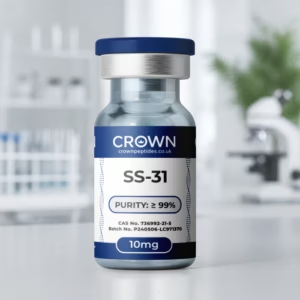
SS-31 Research Peptide
HPLC and MS verified · batch certificate published · dispatched from the UK before 2pm
Summary of Published SS-31 Studies
This table reflects a genuinely advanced clinical development position relative to most compounds in this article series: one approved indication (Barth syndrome), a substantial completed Phase 2/3 trial history in heart failure with mixed results, and extensive preclinical characterisation across multiple additional mitochondrial disease models.
Potential SS-31 Benefits for Mitochondrial Research
Based on the published literature, researchers have investigated SS-31 as a tool for studying:
- Cardiolipin stabilisation and its role in preserving mitochondrial cristae structure
- Electron transport chain function and reactive oxygen species production at the source
- Mitochondria-targeted drug delivery strategies using the alternating cationic-aromatic peptide motif
- Comparative research across heart failure subtypes (HFrEF versus HFpEF) and disease stages
- Age-related mitochondrial structural decline and its reversal in preclinical models
As with the other compounds in this series, this is research investigating a mechanism, and in SS-31’s specific case, a genuine approved indication for one narrow rare disease — not a general demonstration of therapeutic benefit across every mitochondrial condition it continues to be researched for. None of the above constitutes a demonstrated therapeutic benefit outside its specific FDA-approved indication.
Current Limitations of SS-31 Research
- Approval is narrowly scoped to Barth syndrome. SS-31’s FDA approval as Elamipretide covers this one specific rare mitochondrial disorder; it does not extend legal prescribing to ageing, general mitochondrial health, or other investigational uses, which remain off-label or purely investigational.
- Heart failure trial results have been genuinely mixed. A pivotal HFrEF trial was negative on its primary endpoint despite earlier encouraging Phase 2 signals, illustrating that promising early trial data does not guarantee later confirmatory success — a caution relevant to interpreting any single positive finding in this literature.
- The precise molecular mechanism remains incompletely understood. Despite extensive clinical development, researchers have specifically acknowledged that SS-31’s full mechanism of action is not yet completely characterised, even as the compound has progressed to regulatory approval for one indication.
- Efficacy may depend heavily on disease stage. Because the proposed mechanism involves stabilising existing mitochondrial structure rather than regenerating already-damaged tissue, treatment timing relative to disease progression appears to be a genuinely important variable that complicates simple efficacy comparisons across trials and patient populations.
- Research-grade material is separate from the approved pharmaceutical. Crown Peptides’ SS-31 is a distinct research compound, not the approved Elamipretide product, which is manufactured, dispensed, and regulated specifically for the Barth syndrome indication.
SS-31 Side Effects Reported in Research
Across its clinical trial programme, SS-31 has generally been reported as well tolerated, with a favourable safety profile described across multiple independent trials. The most commonly reported adverse effects have been mild injection-site reactions and headaches, without significant serious adverse effects reported in the completed heart failure trial programmes.
Given the compound’s narrowly approved indication and the genuinely mixed efficacy findings across its broader trial history, any research protocol involving human or animal subjects should be developed with appropriate ethical and institutional review, following standard safety monitoring practices for investigational compounds.
SS-31 Dosage Used in Published Research
This section is included for methodological context only and should not be interpreted as guidance for use.
Clinical trials have used intravenous infusion protocols in the range of 0.01–0.25 mg/kg/hour, typically administered over several hours per session, alongside subcutaneous dosing protocols reported in the range of 0.1–2 mg/kg daily in various research contexts. Clinical trials in heart failure specifically reported improvements in peak VO2 in the range of 10–15% after four weeks of IV administration in some trial data. These figures describe specific, clinically supervised trial protocols — they are not a basis for self-directed use in any context, and the approved product’s specific dosing follows its own regulatory-approved protocol distinct from research literature figures generally.
Researchers designing their own experimental protocols should base dosing decisions on the primary literature relevant to their specific model and objective, in consultation with institutional ethics review as applicable, rather than on secondary summaries such as this one.
Analogues and Future Research Directions
SS-31 belongs to the broader “SS peptide” family, sharing the characteristic alternating cationic-aromatic amino acid motif that gives this peptide class its distinctive mitochondrial-targeting property. Continued research into related SS peptide variants remains an active area of mitochondria-targeted drug delivery research.
- Resolving the precise molecular mechanism. Given researchers’ own acknowledgement that SS-31’s full mechanism remains incompletely understood despite reaching approval, continued mechanistic research (including the protein-interaction mapping work already published) remains a valuable and active research direction.
- Optimal disease-stage timing for treatment. Given the apparent importance of early intervention before extensive structural mitochondrial damage occurs, dedicated research clarifying optimal treatment timing across different disease contexts would meaningfully inform future trial design.
- Expanded indications beyond Barth syndrome. Given the substantial existing preclinical and clinical evidence across heart failure, kidney injury, and neurodegenerative disease models, continued trial programmes in these areas represent a natural extension of the compound’s already-established mechanistic rationale.
- Head-to-head comparison across heart failure subtypes. Given the divergent HFrEF versus HFpEF trial results, dedicated comparative research clarifying why these two heart failure subtypes appear to respond differently would meaningfully sharpen understanding of when this mechanism is most clinically relevant.
Frequently Asked Questions
Is SS-31 FDA approved?
Yes, as of September 2025, under the pharmaceutical name Elamipretide, specifically for Barth syndrome, a rare inherited mitochondrial disorder. This approval is narrowly scoped and does not extend to other investigational uses.
Why is SS-31 also called elamipretide or Bendavia?
Elamipretide is the pharmaceutical name for SS-31 used in its clinical development and regulatory approval; Bendavia was an earlier development-stage name used by the same research programme.
What is SS 31 Peptide Used For?
SS-31 (Elamipretide) is primarily used to support mitochondrial health, improve cellular energy production, and protect against oxidative stress and neuroinflammation. It works by targeting cardiolipin on the inner mitochondrial membrane, showing potential benefits for conditions like mitochondrial myopathy, cognitive decline, and general anti-aging.
How SS-31 Is Reconstituted in the Laboratory
In a laboratory setting, lyophilised SS-31 is reconstituted with a sterile research diluent chosen under the researcher’s own protocol. Standard practice is to let the vial reach room temperature, add the diluent slowly down the inside wall of the vial and swirl gently rather than shake, to avoid foaming and protect the peptide. The resulting stock concentration depends on the volume of diluent used and can be checked with our concentration calculator.
Why is SS 31 So Expensive?
SS-31 is expensive due to the complex, multi-step solid-phase synthesis and high-precision purification processes required to achieve over 99% purity. The high costs of sterile cleanroom manufacturing, extensive laboratory testing for bioactivity and safety, and rigorous quality control further elevate its overall market price.
Why Peptide Sourcing Quality Matters for Research Validity
As a short tetrapeptide whose activity depends on its specific alternating cationic-aromatic structure, SS-31’s research validity is particularly sensitive to synthesis errors that could affect this defining structural motif.
Common failure modes relevant to SS-31 specifically include:
- Incorrect amino acid sequence or stereochemistry — errors affecting the specific alternating cationic-aromatic pattern central to SS-31’s mitochondrial-targeting property could substantially alter its membrane-penetrating and cardiolipin-binding activity.
- Truncated or deletion sequences — incomplete coupling during synthesis of this four-residue peptide can leave a proportion of the product missing residues.
- Inaccurate mass or concentration labelling — without independent mass spectrometry confirmation, there’s no reliable way to verify that a vial contains the peptide and concentration stated on the label.
- Bacterial endotoxin contamination — relevant for any in vivo or cell-culture research, particularly given how directly mitochondrial research depends on clean experimental conditions free of confounding inflammatory signals.
For a peptide whose entire functional identity depends on a specific short structural motif, independent verification is a basic precondition for any research finding to reflect the compound as studied in the substantial published clinical trial literature.
Read the certificate before you order
Every batch is published openly — identity by mass spectrometry, purity by HPLC, and the batch number printed on the vial you receive.
Open the COA libraryWhy Choose Crown Peptides
Testing is only part of the picture. Crown Peptides was built around a simple idea: a UK researcher ordering a peptide should be able to trust everything about how it reached them — not just the number on a Certificate of Analysis, but who made it, how it was handled, how it travelled, and who they can speak to if they have a question. That’s the standard we hold ourselves to on every order, and it’s worth explaining properly rather than just listing it.
Sourcing You Can Trust
Quality starts long before a product reaches our warehouse. We work directly with one of the world’s largest and most established peptide synthesis manufacturers, chosen specifically for its production standards, consistency, and track record — rather than sourcing opportunistically from whichever manufacturer happens to offer the lowest price that month. That close, ongoing partnership is what allows us to stand behind every batch we sell, because we know exactly how it was made.
Verified Through Independent Testing
We don’t expect researchers to take a manufacturer’s word for it, so we verify every batch independently before it’s listed for sale:
Endotoxin Testing
Every batch is screened for bacterial endotoxin, which matters in particular for any research involving cell culture, immune signalling, or in vivo inflammatory endpoints.
HPLC Purity Analysis
High-performance liquid chromatography is used to assess purity and screen for truncated sequences, deletion products, and synthesis by-products.
Mass Spectrometry Identity Confirmation
MS analysis confirms the molecular weight of the supplied peptide matches intact SS-31, providing an independent check on identity beyond the label.
Certificate of Analysis
Every batch is supplied with a Certificate of Analysis, and a QR code linking directly to the testing report on crownpeptides.co.uk, so researchers can document exactly what was used in their own experimental records.
Careful Storage and Handling
A product that’s been correctly synthesised and tested can still be let down by poor handling afterward. Once a batch clears testing, we store it under controlled conditions designed to preserve stability and prevent degradation before it ever reaches a researcher’s bench. This matters more for peptides and sensitive research compounds than for most laboratory reagents: temperature excursions, light exposure, and poor stock rotation can all silently reduce integrity long before a vial is opened, in ways that aren’t visible on inspection and can quietly undermine an experiment’s results. We treat that storage window as part of the product, not an afterthought once testing is done.
Packaging and Delivery
Every order is packed in premium, discreet packaging designed to protect the product in transit and arrive intact. Orders placed before 2pm are dispatched the same working day for next-day UK delivery, and we ship to Northern Ireland, the Republic of Ireland, Scotland, England, and across the EU, with international shipping available beyond that. For a researcher working to a study timeline, knowing an order will arrive quickly, safely, and exactly as ordered isn’t a convenience — it’s part of keeping a research schedule on track.
Support That Goes Beyond the Sale
Peptide and research-compound work raises genuine practical questions — around reconstitution, storage, handling, and interpreting a Certificate of Analysis — and we’d rather a researcher ask us directly than guess. Our team is on hand to provide clear, straightforward guidance from product selection through to delivery and beyond, without the evasiveness or upsell pressure that can come with some suppliers in this space. We see that ongoing relationship, not just the transaction, as the actual job.
Regulatory Compliance and Transparency
Crown Peptides is a UK-based company operating in line with MHRA guidance on research chemicals. Every product is clearly labelled for laboratory research use only, sold on the basis that the purchaser is a qualified professional legally able to handle these materials, and never marketed, described, or sold as suitable for human consumption, therapeutic use, or diagnostic application. We’d rather be transparent about what we sell and who it’s for than blur that line to chase a wider customer base — that’s a deliberate choice on our part, not a legal minimum we begrudgingly meet.
Our Commitment
Put simply, our mission is to supply the UK research community with peptides and research compounds of unmatched purity and consistency, backed by a level of service, transparency, and technical support that researchers can actually rely on — from the first email enquiry to the vial arriving on the bench. That standard applies whether an order is a single vial for an independent researcher or a bulk order for a laboratory, and it holds regardless of whether a customer ever finds out how much work sits behind it.
Crown Peptides’ products are supplied strictly for laboratory research and are not sold, labelled, or intended for human consumption, diagnosis, treatment, or prevention of disease. For researchers who want their results to be reproducible and their experimental record defensible, knowing precisely what’s in the vial — and trusting that everyone who handled it got it right — is a basic, non-negotiable starting point.
References
- “Mitochondrial protein interaction landscape of SS-31.” PNAS. https://www.pnas.org/doi/10.1073/pnas.2002250117
- “The mitochondria-targeted peptide SS-31 binds lipid bilayers and modulates surface electrostatics as a key component of its mechanism of action.” PMC. https://www.ncbi.nlm.nih.gov/pmc/articles/PMC7247319/
- ClinicalTrials.gov. FRDA Investigator Initiated Study (IIS) With Elamipretide, Protocol Documentation. https://cdn.clinicaltrials.gov/large-docs/74/NCT05168774/Prot_SAP_000.pdf
Working with SS-31 Research Peptide
Batch-tested material, published certificates, and same-day dispatch on orders placed before 2pm.
See SS-31 Research Peptide