

Research guide
KPV Peptide and Psoriasis Research (Complete Guide)
Psoriasis research is one of the clearer lines of KPV investigation. What the published models show, which pathway is implicated, and where the evidence stops.
Why a three-amino-acid fragment of a pituitary hormone has become one of the most closely watched compounds in inflammatory skin research — the mechanism, the evidence, the 2026 regulatory shift, and why Crown Peptides is expanding its KPV range.
This article covers the peer-reviewed and regulatory research on KPV as a laboratory compound. KPV is sold by Crown Peptides for research use, has not completed human clinical trials, and is not an approved treatment — so this piece explains the science and the current regulatory picture rather than making treatment claims. Anyone dealing with psoriasis or another skin condition should still work with a dermatologist or GP on approved care.
Why KPV Keeps Turning Up in Skin-Research Conversations
Of all the short peptides circulating in research-chemical circles, few have built as substantial and as consistent a research profile as KPV (Lysine-Proline-Valine). It shows up in gut-inflammation papers, airway-inflammation papers, wound-healing papers, and — increasingly — in skin-inflammation research aimed squarely at conditions like psoriasis and dermatitis. That’s not an accident of marketing; it’s because KPV sits directly on top of one of the best-understood inflammatory pathways in the body, and because the last twelve months have brought genuine, concrete developments: fresh mechanistic studies, growing interest across the wider peptide-therapeutics market, and a meaningful 2026 regulatory shift that has changed KPV’s standing with the FDA. Crown Peptides has carried KPV for some time in 10mg and 50mg formats, and given how much research activity is building around it, we’re now adding a 30mg version to sit between them — more on that below.
This guide sets out the full picture: what KPV is, how it works, what the skin-specific research actually shows, what’s anecdotal versus what’s been measured in a lab, and what changed with the FDA in April 2026. The goal is to give researchers and the simply curious an accurate, current, and genuinely useful reference — not a sales pitch and not a wall of caveats. These informal reports are not research data, and Crown Peptides does not condone personal or human use of research compounds.
What Is KPV? The Discovery Story
KPV‘s origin traces back to alpha-melanocyte-stimulating hormone (α-MSH), a 13-amino-acid hormone produced in the pituitary gland and in peripheral tissues, long known for potent anti-inflammatory and immune-modulating activity. The problem, from a research standpoint, was that α-MSH also drives pigmentation — it’s the same hormone family behind the tanning-injection compounds like Melanotan II — which made it a clumsy tool for anyone who wanted to study inflammation in isolation without also triggering an unrelated pigmentation response that could confound results.
Researchers began trimming α-MSH down, testing progressively shorter fragments to see how much anti-inflammatory signalling could be preserved without dragging the pigmentation effect along with it. The answer turned out to be remarkably small: the C-terminal tripeptide — positions 11 through 13 of α-MSH, sequence Lysine-Proline-Valine — retained the parent hormone’s core anti-inflammatory activity almost intact, while leaving the pigmentation pathway behind. That’s a genuinely elegant result. Most peptide fragments lose potency as they’re shortened; KPV is one of the cleaner examples in the literature of a hormone’s active core being isolated down to its smallest functional unit.
There’s a practical side to this story too. A three-amino-acid peptide is far simpler and cheaper to synthesise at high purity than a 13-amino-acid hormone, and it’s more stable to work with in a lab setting. That combination — a smaller molecule, easier synthesis, and a narrower, more targeted biological effect — is a large part of why KPV became attractive as a standalone research subject rather than staying a footnote inside the broader α-MSH literature. Researchers got a tool that let them isolate and study the anti-inflammatory arm of melanocortin signalling on its own, without the pigmentation pathway muddying the picture.
That discovery is what turned KPV from a footnote in α-MSH research into a compound worth studying in its own right, and it’s the foundation for everything that followed — including the gut, airway, and skin research that has built up around it since. It’s also why KPV is often described in the literature as one of the more mechanistically “clean” short peptides available to researchers: a single, well-defined pathway, rather than a molecule with several overlapping effects that are difficult to separate out.
- Classification
- Tripeptide fragment of alpha-melanocyte-stimulating hormone
- Available strengths
- 10mg, 30mg and 50mg
- CAS Number
- 67727-97-3
- Molecular Weight
- 342.43 Da
- Molecular Formula
- C16H30N4O4
- Sequence
- Lys-Pro-Val (KPV)
The Mechanism: How KPV Talks to NF-κB
Almost everything KPV does traces back to one signalling pathway: NF-κB (nuclear factor-kappa B). NF-κB is one of the most important transcription factors in the entire inflammatory system — when it’s activated, it switches on the genes for TNF-α, IL-1β, IL-6, COX-2, adhesion molecules, and a long list of other inflammatory drivers. It’s hard to overstate how central this pathway is: dysregulated NF-κB signalling shows up in inflammatory bowel disease, asthma, rheumatoid arthritis, and — very prominently — psoriasis.
KPV’s mechanism has been mapped in real detail. In several cell-model studies, KPV has been shown to preserve IκBα, the regulatory protein that normally holds NF-κB’s p65/p50 subunits inactive in the cytoplasm. By preventing IκBα from being degraded, KPV stops those subunits moving into the nucleus and switching on inflammatory transcription. In human bronchial epithelial cell studies, researchers went further and identified an even more specific route: KPV entering the nucleus itself and competitively blocking the interaction between importin-α3 and p65, cutting off nuclear accumulation of the inflammatory signal at its source rather than just slowing it down.
There’s also a transport story worth knowing. KPV’s uptake into cells has been linked to PepT1, a transporter normally responsible for shuttling di- and tripeptides across intestinal epithelial cells, which is upregulated in immune and epithelial cells specifically during inflammation. That’s a convenient piece of biology: the transporter that gets KPV into cells becomes more active in exactly the tissue conditions where KPV’s anti-inflammatory effect is most relevant. Much of this mechanistic groundwork was first established in gut-inflammation models — colitis studies in particular — before being extended into airway and skin research, which is a large part of why KPV’s mode of action is so unusually well characterised for a peptide this small.
Understanding Psoriasis: A Quick Primer
It’s worth grounding the rest of this article in a quick refresher on what psoriasis actually is, since that’s what makes KPV’s mechanism relevant in the first place. Psoriasis is a chronic, immune-mediated skin condition affecting roughly 2–3% of people worldwide. It’s not simply dry or irritated skin — it’s driven by an overactive immune response in which T-cells and dendritic cells trigger a cascade of inflammatory signalling in the skin, which in turn drives keratinocytes (the skin cells that make up the outer layer of skin) to multiply far faster than normal. Healthy skin cells typically take around a month to move from the deepest layer of the epidermis to the surface and shed; in psoriatic skin, that process can compress to a matter of days, which is what produces the thickened, scaling plaques associated with the condition.
The inflammatory side of that cycle runs substantially through NF-κB. Pro-inflammatory cytokines associated with psoriasis — including TNF-α, IL-17, and IL-23 — sit downstream of NF-κB activation, and current biologic treatments for psoriasis are largely built around blocking one or more of these cytokines directly. That context matters for understanding KPV’s research angle: rather than blocking a single downstream cytokine, KPV’s documented mechanism intervenes further upstream, at the point where NF-κB itself is activated — which is part of why researchers see it as a mechanistically distinct compound worth studying alongside, rather than instead of, existing cytokine-targeted approaches.
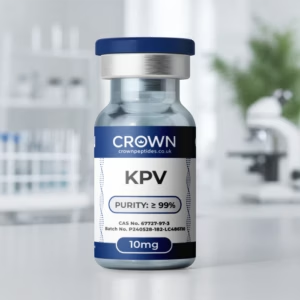
KPV Research Peptide
HPLC and MS verified · batch certificate published · dispatched from the UK before 2pm
Why Psoriasis Specifically? The Keratinocyte–NF-κB Connection
Psoriasis is, at its core, an NF-κB problem layered on top of a keratinocyte problem. Psoriatic skin shows chronic NF-κB overactivation, which drives the excess production of inflammatory cytokines that keep the disease active, alongside rapid, disorganised keratinocyte proliferation that produces the thickened, scaling plaques associated with the condition. That combination — an overactive inflammatory switch driving abnormal skin-cell turnover — is precisely the biology KPV’s mechanism addresses.
It’s a genuinely two-sided problem, which is part of why single-mechanism treatments can struggle to address it fully: calming the inflammation alone doesn’t necessarily normalise keratinocyte turnover, and vice versa. What makes the early research on KPV notable is that it’s been studied for effects on both sides of that equation — the inflammatory signalling itself, and, in some preclinical work, the proliferation side as well. Whether that dual angle holds up as more research accumulates is still an open question, but it’s precisely the kind of question that keeps a compound interesting to researchers rather than one they consider fully answered and move on from.
That’s the reason KPV appears so consistently in psoriasis-adjacent research discussions: it isn’t a loose association or a marketing narrative, it’s a direct mechanistic fit between what KPV is documented to do (inhibit NF-κB activation) and what drives the disease it’s most often discussed alongside. Researchers studying inflammatory skin conditions have a natural reason to be interested in a compound that hits this pathway cleanly and has such a well-mapped mode of action.
Why a Different Mechanism Is Interesting to Researchers
Most current approaches to psoriasis work by suppressing the immune system broadly (biologics targeting IL-17, IL-23, or TNF-α) or by reducing inflammation locally with corticosteroids. Both approaches are well established and effective for many patients, but both come with well-known trade-offs: biologics carry systemic immunosuppression risks, and topical steroids can thin skin and lose effectiveness with prolonged use, which is why dermatologists typically cycle patients on and off them.
That trade-off is part of what makes KPV interesting as a research subject. Its mechanism — a direct, localised block on NF-κB activation via IκBα stabilisation and importin-α3/p65 blockade — is more targeted than broad immunosuppression, and it doesn’t share the tissue-thinning mechanism associated with corticosteroids. That doesn’t mean it’s a substitute for either approach; it means researchers see a molecule that reaches the same inflammatory switchboard through a narrower, more specific route, which is exactly the kind of profile that makes a compound worth continued study rather than being dismissed as “just another anti-inflammatory.”
Newer approved treatments for psoriasis — including JAK inhibitors and oral cyclic peptides currently moving through FDA review — reflect the same underlying industry push: away from blunt, broad-acting immunosuppression, and toward compounds that hit inflammatory signalling with more precision and, ideally, a cleaner side-effect profile. KPV’s research trajectory sits within that same direction of travel, even though it remains at an earlier, preclinical stage than any of those approved or near-approved drugs. That context is useful for understanding why a small, mechanistically specific peptide like KPV continues to attract serious research attention rather than being crowded out by larger, already-approved options.
Research Applications Beyond Psoriasis
Psoriasis gets a lot of the attention in KPV discussions, but it’s worth remembering that the underlying research base is broader, and that breadth is itself a point in KPV’s favour: a mechanism that shows consistent effects across several different inflammatory contexts is a stronger research signal than one that only ever shows up in a single narrow model.
- Inflammatory bowel disease — the original and still the deepest body of KPV research, using DSS and TNBS colitis models in rodents, established the core NF-κB mechanism now applied to skin research.
- Airway inflammation — studies in human bronchial epithelial cells challenged with TNF-α, LPS, and respiratory syncytial virus (RSV) are where the specific importin-α3/p65 blocking mechanism was identified.
- Other inflammatory skin conditions — beyond psoriasis, the same NF-κB-driven biology is relevant to eczema and general dermatitis, which is why KPV research is often discussed across all three conditions rather than psoriasis alone.
- Wound healing — diabetic wound-healing models suggest KPV’s anti-inflammatory activity may also support tissue repair processes, a research direction distinct from, but related to, its anti-inflammatory profile.
This breadth is part of why KPV keeps showing up across so many different corners of peptide research — it isn’t a one-condition compound with a single narrow use case, it’s a mechanism with reach across several related inflammatory conditions.
What the Skin-Relevant Studies Show
KPV’s research base extends well beyond the original gut-inflammation work into models that speak directly to skin biology. Preclinical studies — cell-culture and animal-model work — have looked at KPV across several relevant angles, and the consistency across them is arguably more notable than any single result on its own: rather than one isolated finding, there’s a pattern of similar outcomes repeated across independent research groups and different experimental setups.
- Psoriatic-like lesion models — preclinical studies have consistently reported that KPV reduces psoriatic-like lesions, inflammatory infiltration, and immune-cell activity in these models, alongside measurable drops in pro-inflammatory cytokines including TNF-α and IL-1β.
- Keratinocyte proliferation — early research suggests KPV may help slow the excessive, rapid cell division that defines psoriatic skin, which — if it holds up in further study — would address the disease’s other core mechanism alongside inflammation itself.
- Contact dermatitis models — KPV has reduced inflammatory markers and visible irritation in skin exposed to allergens and irritants.
- Particulate-matter (pollution) skin-damage models — KPV has limited the inflammatory response triggered by environmental particulate exposure to skin.
- Diabetic wound-healing models — topical KPV has been associated with faster, better-quality wound closure in animals with impaired healing.
Taken together, this is a genuinely substantial and consistent research picture for a compound this size. It’s why KPV is treated as a serious subject in inflammatory skin research rather than a passing trend: the mechanism is well characterised, it maps directly onto the biology of psoriasis, and it has produced consistent, positive results across multiple independent preclinical models.
How Researchers Actually Study KPV
It’s useful to know what these studies look like in practice, rather than treating “preclinical research” as an abstract label. A common approach in psoriasis-relevant research uses the imiquimod (IMQ) mouse model, in which a topical immune-response cream is applied to induce psoriasis-like skin lesions and inflammation in a controlled, reproducible way. Researchers can then apply a test compound like KPV alongside or after the IMQ challenge and measure outcomes such as lesion severity scoring, skin thickness, immune-cell infiltration under the microscope, and cytokine levels (via techniques like ELISA) in the affected tissue.
This kind of model is valuable precisely because it’s standardised and comparable across labs — it’s not a perfect stand-in for human psoriasis, but it reproduces enough of the underlying biology (NF-κB-driven inflammation, keratinocyte changes) to give meaningful, comparable readouts. Complementary cell-culture work — exposing keratinocytes or immune cells to inflammatory triggers in a dish, with and without KPV — lets researchers isolate the molecular mechanism (IκBα levels, NF-κB nuclear translocation, cytokine output) without the added complexity of a whole animal. Together, these two approaches are what most of the published KPV literature is built on, and it’s why the mechanism described earlier in this article is considered well characterised even without human trial data yet.
It’s also worth noting what typically comes next in a research pipeline like this, since it helps explain why KPV is described as promising rather than proven. After consistent preclinical results, the usual next step is a small, controlled human pilot study, designed to establish basic safety and dosing information before any larger efficacy trial is attempted. No such pilot has yet been registered for KPV on ClinicalTrials.gov as of 2026, which is exactly why this article is careful to describe the evidence as preclinical rather than clinical — that step simply hasn’t happened yet, for KPV or for most research peptides at a similar stage.
A 2026 Regulatory Update: KPV’s Shifting Status
This is one of the more significant recent developments in KPV’s story, and it’s worth explaining precisely rather than in vague terms, because the details matter. The FDA maintains a list — Category 2 of the 503A bulk drug substances list — of compounds that compounding pharmacies are generally restricted from using, often because of a lack of identified human-exposure data. KPV had been sitting on that restricted list.
A quick primer on the framework: Section 503A of the Federal Food, Drug, and Cosmetic Act governs traditional compounding pharmacies that prepare individually customised medications, while 503B covers larger “outsourcing facilities” that compound at scale. Both operate under lists of permitted bulk drug substances, and the FDA periodically reviews nominated substances for inclusion or restriction. Category 2 is effectively a “do not use pending further review” designation, distinct from Category 1 (substances cleared for use) — so a peptide’s category matters directly to whether compounding pharmacies can legally work with it at all.
On 15 April 2026, the FDA removed KPV — along with eleven other peptides, including BPC-157, LL-37, DSIP, Epitalon, injectable GHK-Cu, PEG-MGF, Melanotan II, MOTS-c, Semax, TB-500, and DiHexa — from that Category 2 list, effective 22 April 2026. It’s important to be precise about why: the removals happened because the original nominations that placed these peptides on the restricted list were withdrawn by the people who nominated them, not because the FDA carried out a safety review and affirmatively cleared them. Removal from Category 2 does not place KPV on Category 1 (the list of substances compounding pharmacies are authorised to use) or on the 503A bulks list — for now, it sits in a transitional status, neither restricted nor formally authorised.
The next step is already on the calendar: the FDA’s Pharmacy Compounding Advisory Committee (PCAC) is scheduled to meet on 23–24 July 2026 to evaluate whether KPV and the other affected peptides should be formally added to the authorised bulk-substances list for compounding. That meeting doesn’t guarantee a particular outcome, but it’s a real, near-term regulatory milestone — and it reflects a broader shift in how research peptides are being reassessed at the federal level, alongside a wider peptide-drug pipeline that’s expanding fast (peptide-based drugs now account for roughly one in ten new FDA drug approvals, and the peptide therapeutics market is projected to pass $49 billion this year). None of this changes KPV’s current status as a research compound without completed human trials, but it is a genuinely positive and current sign of the regulatory direction of travel — worth watching over the rest of 2026.
Informal Reports Are Not Research Data
A note on informal reports. Accounts from individuals using KPV outside controlled research settings do circulate online. They are not research data, cannot be verified and are not a basis for any conclusion about the compound. Crown Peptides supplies KPV for in vitro laboratory research only and does not condone or encourage personal or human use of any research compound.
Sourcing, Purity, and Handling: What Researchers Should Look For
Because KPV is a research compound rather than a regulated pharmaceutical, the quality bar isn’t set by a drug approval process — it’s set by the supplier. That makes a few basics worth checking whenever sourcing any research peptide, KPV included: a current certificate of analysis (CoA) showing HPLC purity and mass spectrometry identity confirmation for the specific batch being purchased, clear information on how the peptide was synthesised and tested, and transparent storage guidance, since short peptides like KPV are generally supplied as a lyophilised (freeze-dried) powder that needs to be stored cold and protected from light and moisture before and after reconstitution.
A batch-specific CoA matters more than it might seem: purity and identity can vary between production runs even from the same supplier, so a CoA tied to the exact batch in hand — rather than a generic sample certificate — is the difference between knowing what’s actually in the vial and simply assuming it. This is a standard researchers should expect from any peptide supplier, not just for KPV specifically.
It’s also worth understanding why purity specifically matters so much for a peptide this small. With a sequence as short as KPV’s three amino acids, even minor synthesis impurities or degradation products can make up a proportionally larger share of a sample than they would in a longer peptide, which is part of why HPLC purity testing and mass spectrometry identity confirmation are treated as non-negotiable steps for a compound like this rather than a nice-to-have. Reputable suppliers test every batch rather than relying on periodic spot checks, and make that documentation available to the researcher purchasing the product.
KPV Across Concentrations: Why Crown Peptides Offers 10mg, 30mg, and 50mg
Crown Peptides currently stocks KPV in 10mg and 50mg vials, and — reflecting how much research interest has built around this compound — we’re adding a 30mg version to the range soon. That middle option is a genuinely useful addition: a 10mg vial suits smaller-scale or exploratory research protocols where precision at lower total mass matters, a 50mg vial suits larger or longer-running research projects where buying in bulk reduces cost-per-milligram and reconstitution frequency, and the new 30mg option sits deliberately in between — giving researchers a mid-range format without forcing a choice between a vial that runs out too fast and one that’s larger than a given protocol needs.
Offering a spread of concentrations isn’t just a product-catalogue exercise. Research protocols vary widely in scale, duration, and dilution requirements, and having three well-spaced options makes it easier for researchers to match the format to the study rather than working around whatever happens to be in stock. It’s a genuinely interesting expansion of the range, and one directly driven by how much research activity continues to build around KPV specifically.
The Bigger Picture: Peptides’ Growing Regulatory Momentum
KPV’s April 2026 status shift doesn’t sit in isolation — it’s part of a broader pattern of momentum across the peptide-therapeutics space. Roughly 130 peptide drugs are now FDA-approved in total, peptides have accounted for around one in ten new FDA drug approvals in recent years, and several high-profile peptide-based drugs have advanced through the pipeline over the last twelve months — including new approvals for conditions ranging from weight management to rare genetic disorders, and late-stage candidates such as oral GLP-1 therapies working through review. Icotrokinra, an oral cyclic peptide specifically targeting plaque psoriasis, had its FDA submission filed in July 2025 with a decision expected in 2026 — a useful reminder that peptides as a drug class are increasingly being taken seriously for exactly the kind of inflammatory skin conditions KPV research is exploring.
None of this means KPV itself is approved or that its research status has changed beyond the specific Category 2 removal described above — those are separate compounds and separate regulatory processes. But it’s a genuinely useful piece of context: peptides as a therapeutic category are moving through regulatory pipelines at a faster clip than at almost any point before, and KPV’s own status shift this April sits squarely within that wider trend.
For researchers and suppliers alike, this broader momentum matters beyond any single compound. A regulatory environment that’s actively re-evaluating restricted substances, expanding its approved-peptide roster, and reviewing submissions for peptide-based drugs targeting exactly the conditions KPV research touches on is a genuinely encouraging backdrop. It suggests a field that’s maturing quickly rather than stagnating, and it’s a large part of why Crown Peptides continues to expand its KPV offering rather than treating it as a niche, static product line.
Frequently Asked Questions
Is KPV legal to purchase?
It’s widely available as a research chemical, and its regulatory status has been shifting favourably through 2026 — though rules vary by country and can change, so check current regulations where you’re based.
What is KPV Peptide Used For?
KPV is a tripeptide primarily used for its potent anti-inflammatory and immunomodulatory effects, particularly in supporting gut health, reducing systemic inflammation, and promoting skin healing. It acts locally on intestinal and immune cells to help manage conditions like leaky gut and inflammatory bowel issues.
Choosing a Diluent Volume for KPV
The diluent volume is set by the researcher’s own protocol. More diluent gives a lower concentration and larger, easier-to-measure transfer volumes; less diluent gives a higher concentration. For example, 2 mL added to a 10 mg vial gives 5 mg/mL. Our concentration calculator works out the figures for any volume.
How KPV Is Reconstituted in the Laboratory
In a laboratory setting, lyophilised KPV is reconstituted with a sterile research diluent chosen under the researcher’s own protocol. Standard practice is to let the vial reach room temperature, add the diluent slowly down the inside wall of the vial and swirl gently rather than shake, to avoid foaming and protect the peptide. The resulting stock concentration depends on the volume of diluent used and can be checked with our concentration calculator.
Preparing KPV Peptide for Laboratory Work
Preparing KPV Peptide for laboratory work follows standard practice for lyophilised peptides: work on a clean surface, use a sterile research diluent selected under your own protocol, and let the powder dissolve fully with gentle swirling before use. Once prepared, the solution should be stored as described in the storage section of this guide.
Read the certificate before you order
Every batch is published openly — identity by mass spectrometry, purity by HPLC, and the batch number printed on the vial you receive.
Open the COA librarySummary
KPV has earned its place as one of the most closely studied short peptides in inflammation research: a clean, well-mapped mechanism through NF-κB, a research trail spanning gut, airway, and skin models, consistent positive results in psoriasis-relevant preclinical studies, a growing body of anecdotal interest from researchers and users, and — as of April 2026 — a genuinely favourable regulatory shift with a further FDA review already scheduled for July. It remains a research-stage compound rather than an approved treatment, but few peptides its size carry this much mechanistic evidence and this much current momentum behind them.
For researchers weighing which compounds are worth their time, that combination — a specific, well-documented mechanism; consistent results across independent studies; a favourable and improving regulatory picture; and a growing base of both formal research and informal interest — is about as strong a case as a preclinical-stage peptide can currently make. Crown Peptides stocks KPV in 10mg and 50mg now, with a 30mg version on the way, reflecting just how much research interest continues to build around it, and we’ll keep this guide updated as the July PCAC meeting and any further studies bring new developments.
KPV is stocked alongside the rest of our UK research peptides, each batch tested by HPLC and mass spectrometry.
References
- PepT1-mediated tripeptide KPV uptake and its relationship to intestinal inflammation — ScienceDirect / Gastroenterology research literature: sciencedirect.com/science/article/abs/pii/S0016508507018525
- Foundational α-MSH structure–activity studies establishing the anti-inflammatory activity of C-terminal tripeptide fragments (Lysine-Proline-Valine).
- Mechanistic studies of NF-κB inhibition via IκBα stabilisation and importin-α3/p65 blockade in epithelial and immune cell models.
- Preclinical models of psoriatic-like skin lesions, contact dermatitis, particulate-matter skin injury, and diabetic wound healing referenced in KPV mechanism-of-action literature.
- FDA 503A bulk drug substances Category 2 update, effective 22 April 2026, and scheduled Pharmacy Compounding Advisory Committee (PCAC) meeting, 23–24 July 2026.
Before publishing, pull the full peer-reviewed citations (author, journal, year, DOI) for the preclinical studies from PubMed, and confirm the FDA Category 2 / PCAC details directly against FDA.gov, per the site’s sourcing standard.
Working with KPV Research Peptide
Batch-tested material, published certificates, and same-day dispatch on orders placed before 2pm.
See KPV Research Peptide