
Research guide
BPC-157 Peptide UK Guide: Tissue Research, Mechanism and Study Data
A 15-residue peptide isolated from human gastric juice, stable in stomach acid, and studied across tissue repair, angiogenesis and gut models. What the evidence actually shows.
RESEARCH USE DISCLAIMER
Crown Peptides supplies BPC-157 as a laboratory research compound only. It is not approved by the FDA, MHRA, or EMA for any use, and our products are not intended for human consumption and are not sold, marketed, or labelled for the diagnosis, treatment, cure or prevention of any disease. Nothing in this document should be read as medical advice or as an endorsement of human use. The discussion below summarises published scientific and regulatory literature only, and is intended for researchers and students of pharmacology.
BPC-157 is, by search volume and commercial interest, one of the most prominent peptides discussed in wellness and recovery circles today — and it’s also one where the gap between its online reputation and its actual evidence base is unusually wide. This article aims to close that gap honestly: it summarises the substantial animal literature behind BPC-157’s proposed healing and cytoprotective effects, but is equally direct about a set of evidence-quality concerns that are specific to this peptide and worth understanding before drawing any conclusions from the preclinical data.
Two things distinguish BPC-157’s evidence base from most of the other compounds covered in this article series. First, the overwhelming majority of the animal literature originates from a single research group. Second, regulatory bodies including the FDA have taken active, publicly documented positions expressing safety concerns about this specific peptide — not merely noting an absence of approval, as with most research compounds, but flagging specific concerns. Both points are covered in detail below because they materially affect how the evidence should be weighed.
What Is BPC-157 Peptide?
BPC-157 is a synthetic pentadecapeptide (15 amino acids) representing a partial sequence of a larger “body protection compound” originally isolated from human gastric juice. It was developed to be stable and resistant to gastric acid, hydrolysis, and enzymatic digestion — a notable design feature, since most peptides are rapidly broken down in the digestive tract, whereas BPC-157 has been studied as active via oral, intraperitoneal, and other routes in animal models specifically because of this stability.
The peptide has been studied since the early 1990s, with the large majority of the published literature — spanning gastrointestinal protection, and healing research across skin, muscle, tendon, ligament, bone, and nervous tissue — originating from a research group led by Predrag Sikirić at the University of Zagreb, Croatia. This concentration of research within a single laboratory is an important and recurring theme in how this peptide’s evidence base should be interpreted, discussed further below.
BPC-157 Mechanism: How It Works
BPC-157’s proposed mechanism of action is unusually broad compared to most of the other peptides in this article series, and this breadth is itself part of what has generated both scientific interest and scientific skepticism. Proposed mechanisms in the published literature include modulation of the nitric oxide (NO) system, promotion of angiogenesis (new blood vessel formation) via pathways including VEGFR2 signalling, upregulation of growth hormone receptor expression in tendon fibroblasts, and effects on the FAK-paxillin pathway relevant to cell adhesion and migration during tissue repair.
Researchers working within the primary research group have framed BPC-157’s effects around a broader theoretical concept they describe as “cytoprotection” extended to “organoprotection” — the idea that a single mechanism protecting epithelial and endothelial cell integrity in the stomach can be generalised to explain protective and healing effects across many different tissue types. This is a genuinely appealing unifying hypothesis, but it is also a considerably broader mechanistic claim than most peptides in this research space attempt to make, and it has not been independently validated to the same degree as more narrowly scoped mechanistic claims elsewhere in this article series.
BPC-157’s proposed mechanisms span nitric oxide signalling, angiogenic pathways, and growth hormone receptor regulation across tissue-healing research contexts.
Why the concentration of research in a single laboratory matters
This is worth explaining plainly rather than glossing over. A 2025 systematic review specifically documented that the overwhelming majority of published BPC-157 animal studies originate from the Sikirić research group, and that independent replication by unaffiliated laboratories remains limited. The same review noted that the lead investigator associated with this research programme holds patents relating to BPC-157 and has documented financial interests in its commercialisation — a genuine conflict-of-interest consideration that responsible researchers should weigh when assessing the objectivity of this specific literature. This doesn’t mean the underlying findings are necessarily wrong, but single-laboratory concentration of evidence, combined with a financial stake in commercial success, is exactly the kind of situation in which independent replication becomes more important, not less, and its current scarcity is a legitimate limitation rather than an incidental detail.
It’s worth noting that a small number of studies from unaffiliated groups do exist and provide partial, if limited, corroboration of specific mechanistic claims — for instance, independent work examining VEGFR2-mediated angiogenic signalling, and separate research into the FAK-paxillin pathway in tendon healing. These studies are useful precisely because they’re independent, but they each address a narrow piece of the overall mechanistic picture rather than replicating the full breadth of claims made across the primary research programme’s own publications.
- Classification
- Synthetic pentadecapeptide composed of 15 amino acids
- Available strengths
- 5mg and 10mg
- CAS Number
- 137525-51-0
- Molecular Weight
- approximately 1419.5 g/mol
- Molecular Formula
- C62H98N16O22
BPC-157 Benefits: Why Researchers Are Interested
BPC-157’s breadth of proposed activity — gastrointestinal protection, musculoskeletal healing, wound healing, and effects reported in nervous system injury models — has made it a peptide of interest across several distinct research communities simultaneously. This breadth is a double-edged feature of the literature: it’s part of what makes BPC-157 scientifically interesting as a potential pleiotropic healing signal, and it’s also part of what makes the literature harder to critically evaluate, since a mechanism claimed to explain effects across so many different tissue types and injury models invites more scrutiny than a narrowly targeted one.
Key Areas of BPC-157 Research
Gastrointestinal protection. BPC-157’s original research context, as an anti-ulcer peptide derived from gastric juice, with animal studies examining its effects on gastric lesions, inflammatory bowel disease models, and gut healing more broadly.
Musculoskeletal healing. The largest single body of BPC-157 research, spanning tendon, ligament, muscle, and bone healing models in rats, including studies on tendon fibroblast growth hormone receptor expression and muscle-to-bone reattachment following surgical detachment.
Wound healing and vascular effects. Studies have examined BPC-157’s effects on cutaneous wound healing, angiogenesis, and counteracting bleeding disorders and thrombosis in animal models, proposed to work through NO-system and VEGFR2-related pathways.
Nervous system injury. Animal studies have examined BPC-157 in models of spinal cord injury, sciatic nerve transection, and brain injury following concussive trauma, reporting functional recovery and reduced markers of secondary injury.
Limited human trial history. BPC-157 has reportedly been used in earlier-stage human trials for ulcerative colitis and, more recently, in a small multiple sclerosis trial, according to secondary review literature, though detailed, independently verifiable trial data and outcomes from these specific trials is not well established in the peer-reviewed literature accessible for this article.
Methodology: the single-laboratory concentration problem. As discussed above, a defining methodological feature of this literature is how concentrated it is within one originating research group, with only a small number of non-affiliated studies (examining specific mechanistic questions such as VEGFR2 signalling or FAK-paxillin pathway involvement in tendon healing) providing independent, if partial, corroboration of specific mechanistic claims.
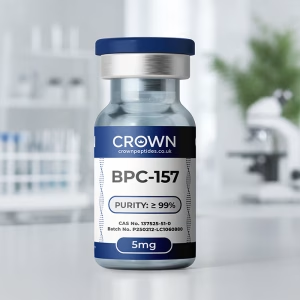
BPC-157 Research Peptide
HPLC and MS verified · batch certificate published · dispatched from the UK before 2pm
Summary of Published BPC-157 Studies
This table illustrates the central issue with BPC-157’s evidence base more starkly than for other peptides in this series: an extensive animal literature sits alongside a genuinely thin, largely single-source human evidence base, and a formal systematic review of the musculoskeletal literature specifically found only one qualifying human study out of 544 articles screened.
Potential BPC-157 Benefits for Healing Research
Based on the published preclinical literature, researchers have investigated BPC-157 as a tool for studying:
- Mechanisms of tissue repair and regeneration across multiple tissue types within a single research framework
- The role of angiogenesis and NO-system signalling in wound and musculoskeletal healing
- Growth hormone receptor regulation in connective tissue repair
- Gastrointestinal mucosal protection and healing mechanisms
- Comparative research questions around whether a single peptide mechanism can plausibly generalise across as many tissue and injury types as the existing literature proposes
Given the specific evidence-quality concerns discussed throughout this article, it is especially important to be precise here: this is preclinical research investigating proposed mechanisms, overwhelmingly from one research group, and does not constitute a demonstrated therapeutic benefit in humans under any regulatory framework.
Current Limitations of BPC-157 Research
BPC-157’s evidence base carries several limitations that are more pronounced, and more specific to this peptide, than is typical elsewhere in this article series:
- Single-laboratory concentration and conflict of interest. The large majority of published animal studies originate from one research group whose lead investigator holds commercial patents related to BPC-157, a combination that makes independent replication particularly important — and particularly lacking to date.
- Minimal, low-quality human evidence. As of recent reviews, published human efficacy data has been limited to a small number of studies from a single US-based research group, in some cases using methodology such as retrospective phone-survey outcome assessment without a comparator group — evidence that cannot support generalisable conclusions about efficacy or safety.
- No completed human trials establishing safety or efficacy. A 2025 literature and patent review confirmed there is no FDA approval and no completed efficacy trials in humans for BPC-157.
- Theoretical oncological safety concern, unresolved. Because BPC-157’s proposed mechanism includes promoting angiogenesis and cell proliferation, several reviews have specifically flagged that whether long-term use could theoretically stimulate abnormal cell growth or impair tumour immune surveillance has not been adequately studied.
- Very short plasma half-life relative to proposed effects. A 2025 systematic review documented a plasma half-life under 30 minutes in animal pharmacokinetic studies, which constrains how directly the compound could plausibly sustain the signalling effects proposed in some longer-duration healing models — human pharmacokinetic data has not been published.
BPC-157 Side Effects Reported in Research
Human safety data for BPC-157 is genuinely limited. Regulatory reviewers, rather than independent researchers, have been among the most vocal sources of documented safety concern: the FDA specifically cited insufficient evidence of safety and effectiveness, alongside potential immunogenicity risk (the possibility of triggering unwanted immune reactions), when placing BPC-157 in Category 2 of its interim list of bulk drug substances presenting significant safety risk for compounding purposes in 2023. The agency has stated it lacks sufficient information to know whether the substance would cause harm when administered to humans.
Separately, quality-control concerns specific to compounded and commercially sold BPC-157 have been raised, including potential impurities and contamination — concerns that relate to manufacturing and sourcing quality rather than to the peptide’s intrinsic pharmacology, but which are nonetheless part of the documented safety picture for this compound. BPC-157 is also listed by the World Anti-Doping Agency as a prohibited S0 substance (unapproved substances) with no therapeutic use exemption available, and appears on the US Department of Defense’s prohibited dietary supplement ingredients list.
Any research protocol involving human or animal subjects should be developed with appropriate ethical and institutional review, following standard safety monitoring practices for investigational compounds — and given the genuine regulatory attention this specific peptide has received, that guidance applies with particular weight here.
BPC-157 Dosage Used in Published Research
This section is included for methodological context only and should not be interpreted as guidance for use.
Published animal studies have used a wide range of doses and routes depending on the specific model, including oral doses as low as 10 ng/kg/day and 10 μg/kg/day in muscle-to-bone reattachment studies, and intraperitoneal doses of 2–200 μg/kg in spinal cord injury and other models. Reviewers have specifically noted that BPC-157 has been studied across a notably wide dose range with reportedly similar effects at very different doses in some models — an unusual pharmacological pattern that itself warrants further independent scrutiny rather than being taken at face value. These figures describe specific rodent experimental protocols and are not human dosing figures, have not been validated in adequately controlled human trials, and are not a basis for self-directed use in any context.
Researchers designing their own experimental protocols should base dosing decisions on the primary literature relevant to their specific model, in consultation with institutional ethics review as applicable, rather than on secondary summaries such as this one — and should independently weigh the single-laboratory concentration issue discussed above when assessing how much confidence to place in any given dosing precedent.
Analogues and Future Research Directions
BPC-157 is frequently discussed and marketed alongside other “healing peptide” candidates, particularly TB-500, despite the two having distinct sequences, origins, and proposed mechanisms. Treating them as interchangeable or automatically complementary is not supported by rigorous comparative research; each should be evaluated on its own evidence base.
- Independent replication. By a wide margin, the most consequential open task for this field is independent replication of the core Sikirić-group findings by laboratories without a financial or institutional stake in the outcome. Until this happens at scale, the existing preclinical literature should be treated with a corresponding degree of caution.
- Adequately controlled human trials. Given the near-total absence of controlled human efficacy data, properly randomised, placebo-controlled, adequately powered human trials represent the single largest evidence gap for this peptide specifically.
- Resolving the oncological safety question. Given BPC-157’s proposed pro-angiogenic mechanism, dedicated research directly examining long-term cancer-relevant safety endpoints would address a specific, repeatedly flagged concern in the existing review literature.
- Human pharmacokinetic characterisation. Basic human pharmacokinetic data — absorption, half-life, metabolism — has not been published, despite being foundational to interpreting any proposed mechanism or dosing regimen.
Frequently Asked Questions
Is BPC 157 legal in UK?
BPC-157 is an unlicensed medicine and is not approved by the MHRA for human consumption or therapeutic use in the UK. However, it is legally permitted to purchase and possess strictly for laboratory research purposes when labeled accordingly. It is also classified as a prohibited substance by the World Anti-Doping Agency (WADA) in professional sports.
What is BPC 157 used for?
BPC-157 is a synthetic peptide frequently investigated in preclinical studies for its regenerative properties, particularly in accelerating soft tissue, tendon, ligament, and muscle healing. It is also heavily studied for its potential gastroprotective effects in mitigating gut inflammation and repairing intestinal lining models. Most current data stems from animal models, as extensive human clinical trials are lacking.
Choosing a Diluent Volume for BPC 157
The diluent volume is set by the researcher’s own protocol. More diluent gives a lower concentration and larger, easier-to-measure transfer volumes; less diluent gives a higher concentration. For example, 2 mL added to a 10 mg vial gives 5 mg/mL. Our concentration calculator works out the figures for any volume.
Preparing BPC 157 for Laboratory Work
Preparing BPC 157 for laboratory work follows standard practice for lyophilised peptides: work on a clean surface, use a sterile research diluent selected under your own protocol, and let the powder dissolve fully with gentle swirling before use. Once prepared, the solution should be stored as described in the storage section of this guide.
Can BPC 157 and TB 500 be mixed?
BPC-157 and TB-500 are frequently studied together, and both are also available as a single pre-blended research vial. Whether and how they are combined is a matter for the researcher’s own laboratory protocol.
Why Peptide Sourcing Quality Matters for Research Validity
Sourcing quality is arguably more consequential for BPC-157 than for any other compound in this article series, because regulatory bodies have specifically and publicly flagged impurity and contamination risk as part of their documented safety concern for this exact peptide — this isn’t a generic quality-assurance talking point here, it’s a response to a named, specific regulatory concern.
Common failure modes relevant to BPC-157 specifically include:
- Impurities and contamination — the FDA has specifically identified impurity concerns for compounded BPC-157, making independent purity verification a direct response to a named regulatory concern rather than a generic precaution.
- Immunogenicity-relevant contaminants — given that immunogenicity (the potential to trigger unwanted immune responses) has been specifically flagged as a safety concern for this peptide, verifying the absence of process-related impurities that could contribute to immune reactivity is particularly relevant for BPC-157 research.
- Truncated or deletion sequences — as with any synthesised peptide, incomplete coupling during manufacture can leave a proportion of the product missing residues, producing a related but structurally distinct and potentially differently active molecule.
- Inaccurate mass or concentration labelling — without independent mass spectrometry confirmation, there’s no reliable way to verify that a vial contains the peptide and concentration stated on the label.
Given that impurity and immunogenicity risk are not hypothetical concerns for BPC-157 but specific points raised by regulators reviewing this exact compound, independent batch testing is a directly relevant response to a documented, named risk — not a generic reassurance copied across every product page.
Read the certificate before you order
Every batch is published openly — identity by mass spectrometry, purity by HPLC, and the batch number printed on the vial you receive.
Open the COA libraryWhy Choose Crown Peptides
Testing is only part of the picture. Crown Peptides was built around a simple idea: a UK researcher ordering a peptide should be able to trust everything about how it reached them — not just the number on a Certificate of Analysis, but who made it, how it was handled, how it travelled, and who they can speak to if they have a question. That’s the standard we hold ourselves to on every order, and it’s worth explaining properly rather than just listing it.
Sourcing You Can Trust
Quality starts long before a product reaches our warehouse. We work directly with one of the world’s largest and most established peptide synthesis manufacturers, chosen specifically for its production standards, consistency, and track record — rather than sourcing opportunistically from whichever manufacturer happens to offer the lowest price that month. That close, ongoing partnership is what allows us to stand behind every batch we sell, because we know exactly how it was made.
Verified Through Independent Testing
We don’t expect researchers to take a manufacturer’s word for it, so we verify every batch independently before it’s listed for sale:
Endotoxin Testing
Every batch is screened for bacterial endotoxin, which matters in particular for any research involving cell culture, immune signalling, or in vivo inflammatory endpoints.
HPLC Purity Analysis
High-performance liquid chromatography is used to assess purity and screen for truncated sequences, deletion products, and synthesis by-products.
Mass Spectrometry Identity Confirmation
MS analysis confirms the molecular weight of the supplied peptide matches intact BPC-157, providing an independent identity check that directly addresses the impurity concerns regulators have specifically flagged for this compound.
Certificate of Analysis
Every batch is supplied with a Certificate of Analysis, and a QR code linking directly to the testing report on crownpeptides.co.uk, so researchers can document exactly what was used in their own experimental records.
Careful Storage and Handling
A product that’s been correctly synthesised and tested can still be let down by poor handling afterward. Once a batch clears testing, we store it under controlled conditions designed to preserve stability and prevent degradation before it ever reaches a researcher’s bench. This matters more for peptides and sensitive research compounds than for most laboratory reagents: temperature excursions, light exposure, and poor stock rotation can all silently reduce integrity long before a vial is opened, in ways that aren’t visible on inspection and can quietly undermine an experiment’s results. We treat that storage window as part of the product, not an afterthought once testing is done.
Packaging and Delivery
Every order is packed in premium, discreet packaging designed to protect the product in transit and arrive intact. Orders placed before 2pm are dispatched the same working day for next-day UK delivery, and we ship to Northern Ireland, the Republic of Ireland, Scotland, England, and across the EU, with international shipping available beyond that. For a researcher working to a study timeline, knowing an order will arrive quickly, safely, and exactly as ordered isn’t a convenience — it’s part of keeping a research schedule on track.
Support That Goes Beyond the Sale
Peptide and research-compound work raises genuine practical questions — around reconstitution, storage, handling, and interpreting a Certificate of Analysis — and we’d rather a researcher ask us directly than guess. Our team is on hand to provide clear, straightforward guidance from product selection through to delivery and beyond, without the evasiveness or upsell pressure that can come with some suppliers in this space. We see that ongoing relationship, not just the transaction, as the actual job.
Regulatory Compliance and Transparency
Crown Peptides is a UK-based company operating in line with MHRA guidance on research chemicals. Every product is clearly labelled for laboratory research use only, sold on the basis that the purchaser is a qualified professional legally able to handle these materials, and never marketed, described, or sold as suitable for human consumption, therapeutic use, or diagnostic application. We’d rather be transparent about what we sell and who it’s for than blur that line to chase a wider customer base — that’s a deliberate choice on our part, not a legal minimum we begrudgingly meet.
Our Commitment
Put simply, our mission is to supply the UK research community with peptides and research compounds of unmatched purity and consistency, backed by a level of service, transparency, and technical support that researchers can actually rely on — from the first email enquiry to the vial arriving on the bench. That standard applies whether an order is a single vial for an independent researcher or a bulk order for a laboratory, and it holds regardless of whether a customer ever finds out how much work sits behind it.
Crown Peptides’ products are supplied strictly for laboratory research and are not sold, labelled, or intended for human consumption, diagnosis, treatment, or prevention of disease. For researchers who want their results to be reproducible and their experimental record defensible, knowing precisely what’s in the vial — and trusting that everyone who handled it got it right — is a basic, non-negotiable starting point.
BPC-157 is part of our research peptide range, with HPLC purity and mass spectrometry identity published for every batch.
References
- “Pentadecapeptide BPC 157 Enhances the Growth Hormone Receptor Expression in Tendon Fibroblasts.” PMC. https://www.ncbi.nlm.nih.gov/pmc/articles/PMC6271067/
- “Stable Gastric Pentadecapeptide BPC 157 and Wound Healing.” Frontiers in Pharmacology. https://www.frontiersin.org/journals/pharmacology/articles/10.3389/fphar.2021.627533/full
- “Stable gastric pentadecapeptide BPC 157 can improve the healing course of spinal cord injury and lead to functional recovery in rats.” PMC. https://www.ncbi.nlm.nih.gov/pmc/articles/PMC6604284/
- “Stable Gastric Pentadecapeptide BPC 157 as Therapy After Surgical Detachment of the Quadriceps Muscle from Its Attachments for Muscle-to-Bone Reattachment in Rats.” PMC. https://www.ncbi.nlm.nih.gov/pmc/articles/PMC11768438/
- “BPC-157: The peptide with big claims and scant evidence.” STAT News. https://www.statnews.com/2026/02/03/bpc-157-peptide-science-safety-regulatory-questions/
- “BPC-157: A Prohibited Peptide and an Unapproved Drug Found in Health and Wellness Products.” Operation Supplement Safety (OPSS), U.S. Department of Defense. https://www.opss.org/article/bpc-157-prohibited-peptide-and-unapproved-drug-found-health-and-wellness-products
- July 23–24, 2026 Meeting of the Pharmacy Compounding Advisory Committee. U.S. Food and Drug Administration. https://www.fda.gov/advisory-committees/advisory-committee-calendar/july-23-24-2026-meeting-pharmacy-compounding-advisory-committee-07232026
Working with BPC-157 Research Peptide
Batch-tested material, published certificates, and same-day dispatch on orders placed before 2pm.
See BPC-157 Research Peptide