Register today and get 10% off your first orderRegister for 10% off your first orderRegister now
Crown Peptides
SAVE30%

Research Peptide Bundles

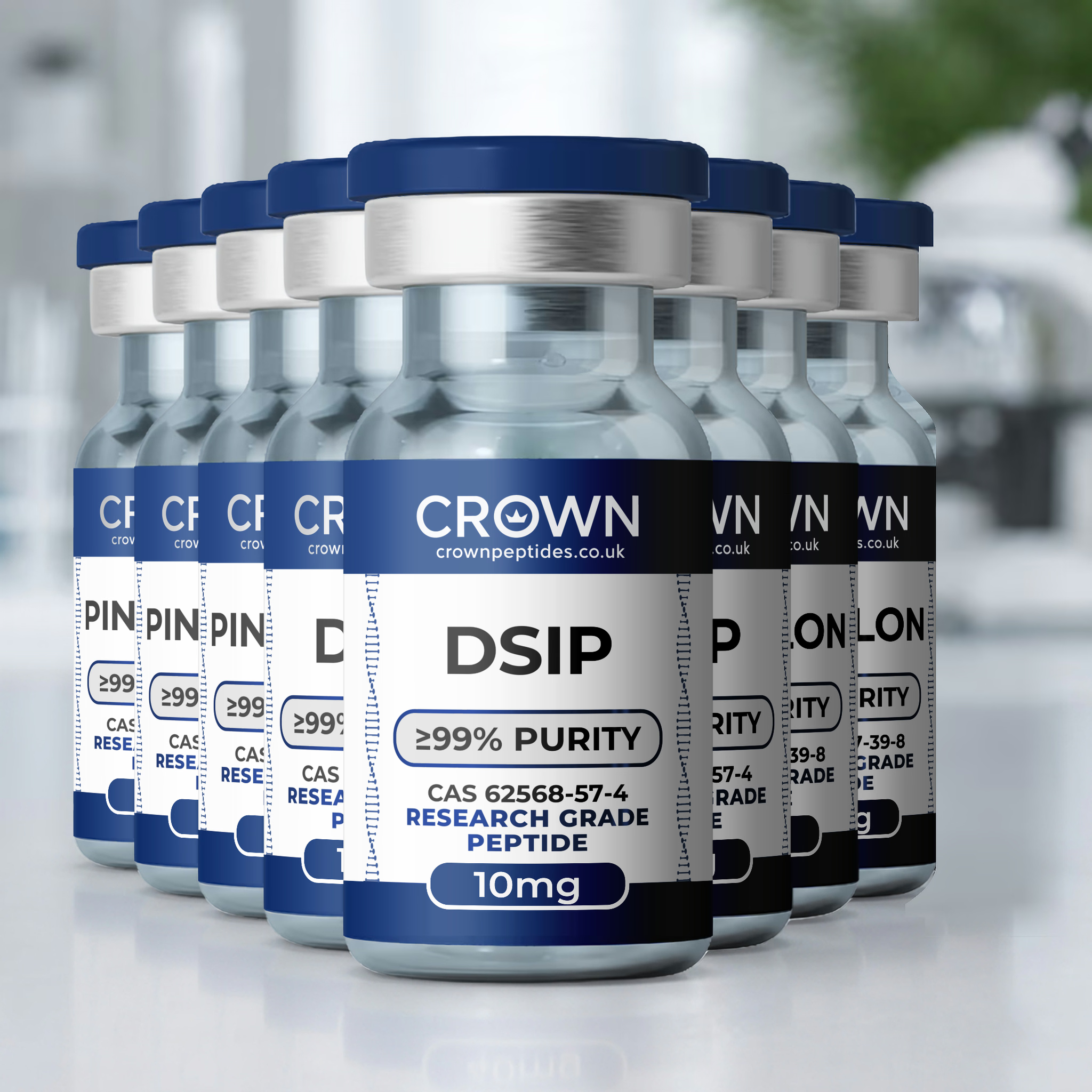
Sleep & Circadian Research Bundle x 8 Vials (Epitalon 50mg / Pinealon 10mg / DSIP 10mg)

Three complementary research peptides studied in sleep, circadian and pineal research. Save 30% compared with buying the eight vials individually, with every batch independently tested and dispatched from the UK.

Original price was: £424.92.£297.45Current price is: £297.45.
Order within
for dispatch tomorrow
15Hrs:34Min:17Sec
In stockEstimated deliveryEst. delivery Saturday 17 OctoberSaturday 17 Oct
All Batches TestedEvery batch, no exceptions
HPLC & MS VerifiedFull certificate published
Same Day PostageOrder before 2pm
UK Based CompanyDispatched from the UK
Product Overview

Three complementary research peptides studied in sleep, circadian and pineal research. Save 30% compared with buying the eight vials individually, with every batch independently tested and dispatched from the UK.

Full Product Specification
Overview

Product Overview

Sleep & Circadian Research Bundle UK is Crown Peptides' 8-vial research bundle combining Epitalon, Pinealon and DSIP, supplied as 2 × Epitalon 50mg, 3 × Pinealon 10mg and 3 × DSIP 10mg for laboratory research into sleep architecture, circadian timing and pineal-associated signalling.

8 vials2 × Epitalon, 3 × Pinealon, 3 × DSIPHPLC testedChromatographic purityMS verifiedIdentity confirmedBatch CoADocumentation supplied

Supplied for laboratory research purposes only — not for human consumption or for medical, veterinary or diagnostic use.

Key features

Key Features

  • Studied in research involving sleep architecture and EEG delta activity
  • Studied in research involving pineal biology and melatonin rhythms
  • Studied in research involving neuronal oxidative-stress models
  • Studied in research involving stress-response and neuroendocrine signalling
  • Batch-specific quality documentation available for each vial
Background

About the Sleep & Circadian Research Bundle UK

Sleep and daily rhythm sit at the meeting point of three systems: the pineal gland that times the night, the neurons that have to stay healthy through it, and the brain-wave patterns that define deep sleep itself. This bundle groups one peptide studied at each of those points. Epitalon is a synthetic four-amino-acid peptide (Ala-Glu-Asp-Gly) modelled on epithalamin, a pineal extract, and studied in melatonin-rhythm and ageing research. Pinealon is a three-amino-acid bioregulator (Glu-Asp-Arg) from the same St Petersburg research programme, studied mainly in neuronal stress models. DSIP, delta sleep-inducing peptide, is a nine-amino-acid peptide first isolated from rabbits and named after the slow delta waves of deep sleep.

Supplied together, they let researchers compare a pineal-timing approach, a neuronal-resilience approach and a sleep-EEG approach within the same circadian and sleep models.

Research

Sleep & Circadian Bundle Research

Epitalon: the timing member of the three. In female rhesus monkeys it was reported to stimulate evening melatonin production in older animals and to normalise the daily cortisol rhythm (Learn more). Its telomerase and ageing research is covered on the Epitalon page.

Pinealon: in this set it represents the neurons themselves. In cerebellar granule neurons, neutrophils and PC12 cells it limited the build-up of reactive oxygen species in a dose-dependent way (Learn more). Its structure and wider research are explained on the Pinealon page.

DSIP: the sleep-EEG member, identified by its ability to raise delta activity in rabbits, with its sequence published in 1977 (Learn more). Its discovery and stress research are covered on the DSIP page.

  • Sleep architecture and EEG research
  • Circadian and melatonin-rhythm models
  • Pineal and brain-ageing research
  • Neuronal oxidative-stress and stress-response pathways
Clock, neuron and sleep wave: who covers what

A circadian or sleep study can be read on three levels, and each peptide in this set enters at a different one. Epitalon sits at the level of the clock signal, through its links to the pineal gland and the evening rise in melatonin. Pinealon sits at the level of the cell, with its research centred on how neurons cope with oxidative stress, hypoxia and amyloid damage. DSIP sits at the level of the brain-wave output, where its classic read-out is delta power on the EEG. That gives a combined model three separate entry points and lets hypotheses be framed precisely: does a shift in melatonin timing change delta activity on its own, and does protecting neurons from oxidative stress change how either of those measures responds?

A shared origin for two, a different story for the third

Epitalon and Pinealon both come from Professor Vladimir Khavinson's short-peptide “bioregulator” programme, which proposes that peptides of two to seven amino acids can act inside the cell nucleus rather than at a surface receptor. DSIP has a completely separate history: it was found by a Swiss team led by Marcel Monnier and Guido Schoenenberger, and decades later still has no identified gene or confirmed receptor, a puzzle one review described as an unresolved riddle (Learn more). We are not aware of any published study testing two or all three of these peptides together, so each needs its own response curve in your chosen model before a combination arm means anything. Early animal work on DSIP also reported a U-shaped response, fading at both low and high concentrations (Learn more), which makes a proper concentration range especially important for that arm.

Readouts that separate timing, cell health and sleep

In rodent work, EEG and EMG recordings give delta power, non-REM and REM time and sleep latency, the measures on which DSIP was first defined. Melatonin and cortisol sampled at fixed points across the light–dark cycle give the circadian read-out most associated with Epitalon. In culture, neuronal or PC12 cells under oxidative challenge give reactive oxygen species, necrotic cell counts and ERK 1/2 activation, the measures used in the original Pinealon cell paper. Stress researchers can add c-Fos counts in the paraventricular nucleus of the hypothalamus, a marker DSIP reduced after immobilisation stress in rats (Learn more). Reading every arm on every measure is what turns three single-peptide experiments into a genuine comparison.

Vial maths across a ten-fold molar spread

Equal milligrams do not mean equal numbers of molecules here. A 50mg Epitalon vial (about 390.35 g/mol) holds roughly 128 micromoles, a 10mg Pinealon vial (about 418.40 g/mol) about 24 micromoles, and a 10mg DSIP vial (about 848.81 g/mol) around 11.8 micromoles, so one Epitalon vial carries about five times the molecules of a Pinealon vial and roughly eleven times those of a DSIP vial, even though the Pinealon and DSIP vials hold the same 10mg. Comparisons between arms are therefore best set on a molar basis. DSIP is also the most delicate of the three, with a light- and oxidation-sensitive tryptophan at the start of its chain and a short life in biological fluids, so the three DSIP vials suit a one-vial-per-run pattern: each experimental series starts from freshly opened material.

Specifications

Specifications

Product
Sleep & Circadian Research Bundle
Contents
2 × Epitalon 50mg, 3 × Pinealon 10mg and 3 × DSIP 10mg (8 vials in total)
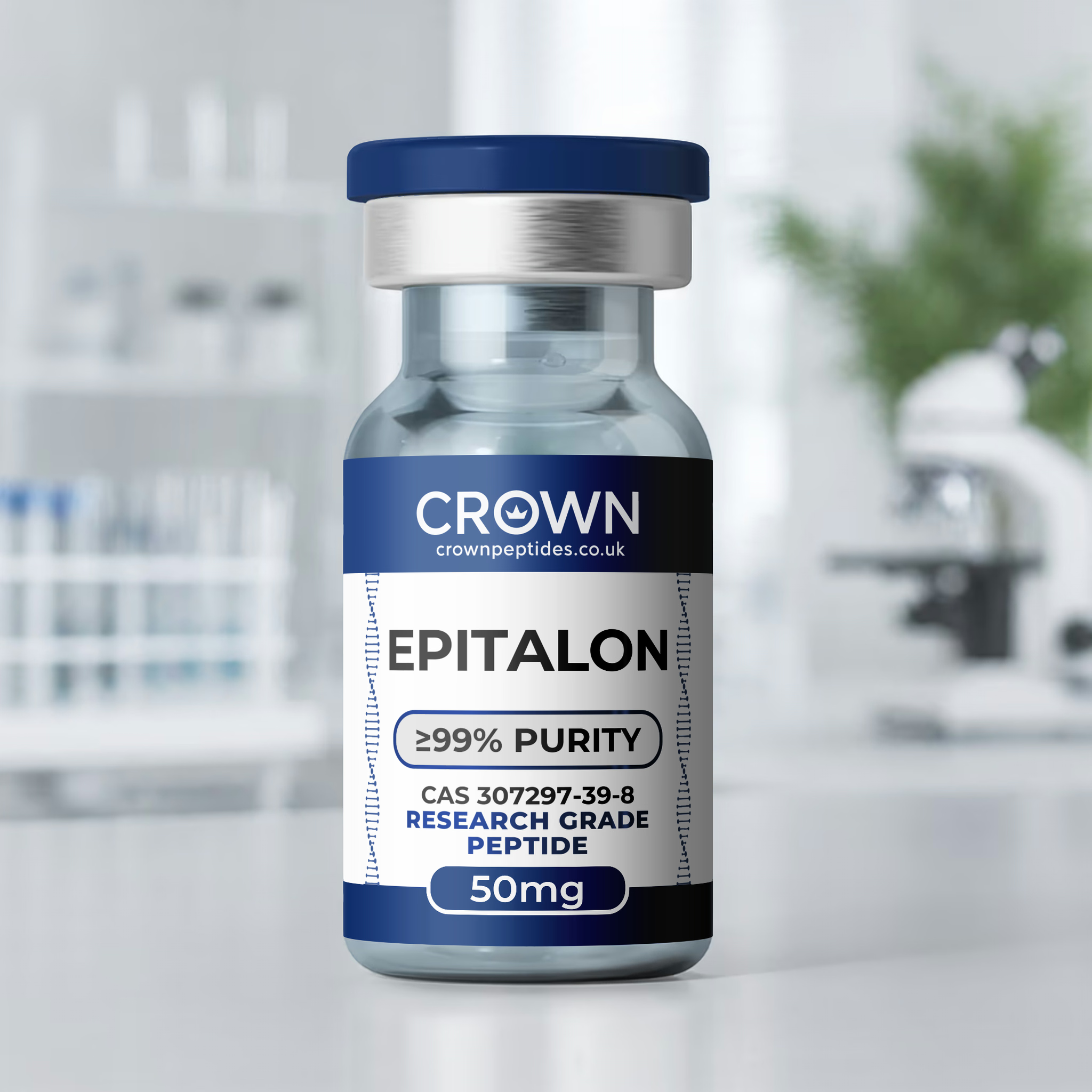
Epitalon
Synthetic tetrapeptide (Ala-Glu-Asp-Gly), also known as Epithalon
CAS 307297-39-8
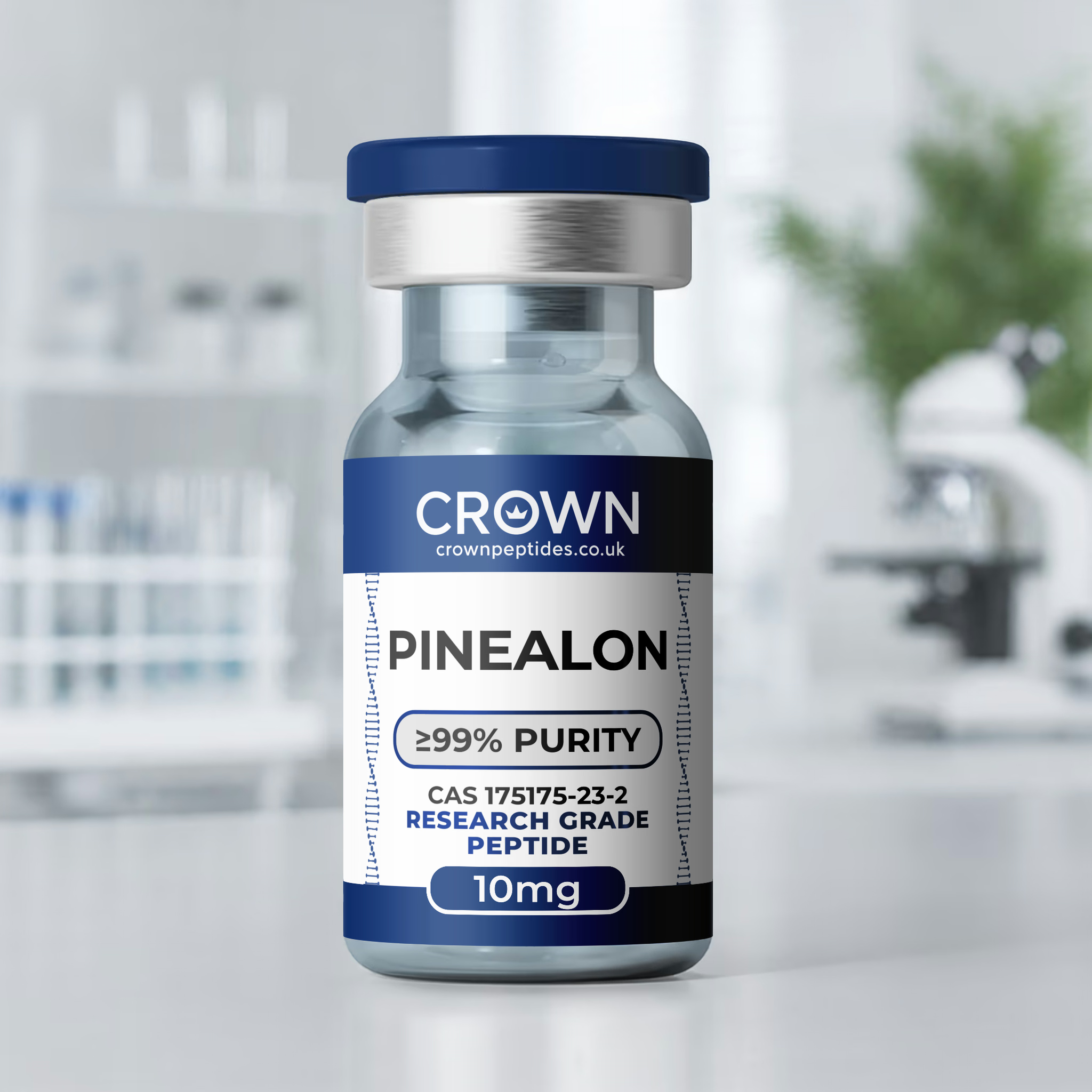
Pinealon
Synthetic tripeptide bioregulator (Glu-Asp-Arg), also known as EDR peptide
CAS 175175-23-2
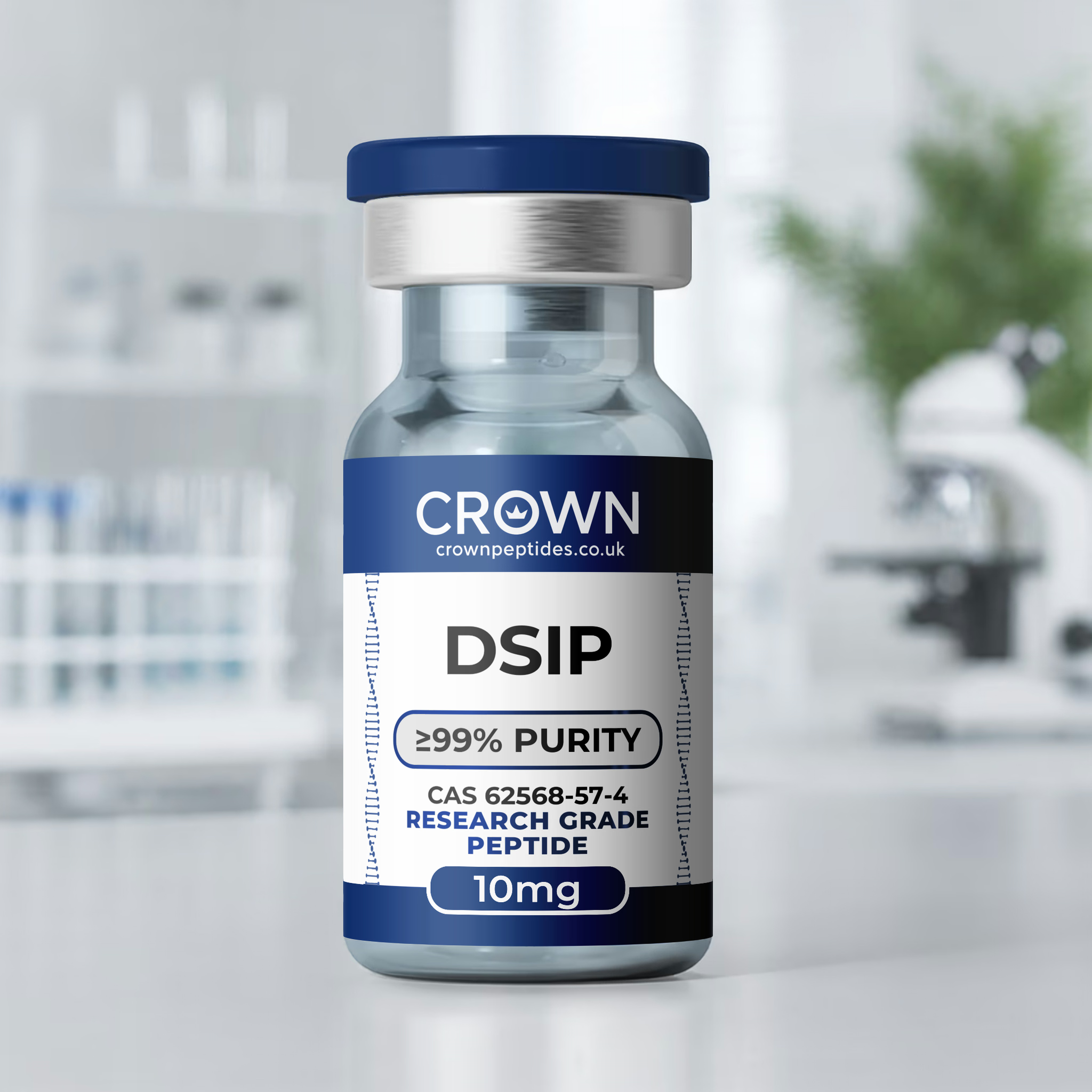
DSIP
Delta sleep-inducing peptide, a 9-amino-acid peptide (WAGGDASGE)
CAS 62568-57-4
Classification
Multi-peptide research bundle of three sleep and circadian research peptides
Bundle size
8 vials (2 × Epitalon, 3 × Pinealon, 3 × DSIP)
Form
Research material supplied according to product label
Purity and assay
Batch-specific — refer to the Certificate of Analysis for each compound
Verification
HPLC and Mass Spectrometry where analytically appropriate

Compound-level reference data. Batch-specific results appear on the Certificate of Analysis.

Work out concentration with the peptide calculator
Testing

Purity and Testing

Each compound in the Sleep & Circadian Research Bundle is supplied for controlled laboratory research with its own batch-specific analytical documentation. High-Performance Liquid Chromatography (HPLC) can assess chromatographic purity, while Mass Spectrometry provides molecular information used to support identity verification. With peptides ranging from 3 amino acids (Pinealon) to 9 (DSIP), and two of the three built from very similar acidic residues, batch-specific identity confirmation for each compound is what keeps comparisons between them reliable.

The batch-specific Certificate of Analysis is the definitive source for the exact purity result, identity data and analytical specification of each material supplied.

Storage

Storage Conditions

  • Store each unreconstituted compound according to its product label and batch-specific documentation
  • Prepared research solutions should use validated storage conditions appropriate to the compound and study design
  • Protect from unnecessary heat, direct light and repeated temperature fluctuations
Full storage guide
Related

Related Compounds

Researchers working with this bundle may also be interested in Epitalon, Pinealon, DSIP, Selank and SS-31 — the individual peptides in this bundle, plus Selank, studied in stress-related neuropeptide research, and SS-31, studied in mitochondrial and ageing research.

Compliance

Research Use Only

  • Laboratory research only
  • Not for human or clinical use
  • Not for human or veterinary consumption
  • Qualified personnel only
Questions

Sleep & Circadian Research Bundle Frequently Asked Questions

About the Sleep & Circadian Research Bundle5 questions
What comes in the Sleep & Circadian Research Bundle?

Two 50mg Epitalon vials, three 10mg Pinealon vials and three 10mg DSIP vials, eight in all. The peptides range from three residues (Pinealon) through four (Epitalon) to nine (DSIP), and each vial has its own batch documentation.

Why two Epitalon vials at 50mg rather than three at 10mg?

The 50mg vial is the largest Epitalon size we supply, so two of them give 100mg from a single batch, more than three 10mg vials would. That suits longer circadian and ageing models, where the whole project can draw on the same material from start to finish.

How do Epitalon, Pinealon and DSIP split the work in a study?

Think of them as three levels: Epitalon at the pineal and melatonin-timing level, Pinealon at the level of neuronal resilience to oxidative stress, and DSIP at the level of sleep brain waves and the stress axis. A design that uses all three can ask which level drives the outcome being measured.

Is there evidence for these peptides working together?

Not yet in the published literature, as far as we know. Epitalon and Pinealon share a research group and are often compared, but DSIP comes from an entirely separate line of work, so any interaction seen in your study would be new. That is a strong reason to include each peptide alone alongside the combinations.

What saving does the bundle offer over separate orders?

Buying the eight vials as this set costs £297.45, against £424.92 for the same vials bought individually, a saving of 30%, and every vial ships together.

Planning sleep and circadian experiments3 questions
Can the bundle be used in cell culture as well as animal models?

Partly. Pinealon's core work was done in neuronal and PC12 cell cultures, so it suits oxidative-stress plates well, and Epitalon has its own cell-culture literature in fibroblasts and stem cells. DSIP was defined by EEG changes in living animals, so its classic sleep read-outs need an in vivo model, although its stress-protein effects have been studied in cultured cells.

Why does time of day matter so much in these studies?

Melatonin, cortisol and sleep stages all follow the light–dark cycle, so the same measurement taken at different times can give very different results. Fixing sampling and treatment times relative to lights-off, and keeping animals on a stable light schedule, keeps the Epitalon and DSIP arms comparable.

Should the three peptides enter the model at the same time?

It depends on the question. Starting all three together tests a combined effect on the measures you have chosen; staggering them, for example Epitalon early in the light–dark cycle and DSIP closer to recording, lets each be tested against the part of the system it is linked to.

DSIP handling and vial sizes2 questions
How much DSIP does the bundle contain?

Three 10mg vials, 30mg in all. Because DSIP is a much larger molecule than Pinealon, each 10mg vial holds about 11.8 micromoles, roughly half the molecules of a 10mg Pinealon vial. Its early animal work also showed effects fading at higher concentrations, so the three separate vials suit a wide concentration range with each series starting fresh.

How should DSIP be looked after between experiments?

Keep vials frozen, dry and dark, prepare small single-use aliquots, and avoid repeated freezing and thawing. Its tryptophan sits at the very start of the chain, which is both the residue most sensitive to light and oxidation and the end that breakdown enzymes attack first.

Read the batch certificate before you order

Every batch is published openly — identity, purity and batch number, with no account needed.

View lab reports

Supplied for laboratory research purposes only — not for human consumption or for medical, veterinary or diagnostic use.

All Batches TestedEvery batch, no exceptions

Each batch undergoes internal analytical verification using chromatographic and spectrometric methods prior to lyophilisation.

• HPLC Analysis
• Mass Spectrometry Confirmation
• Batch Traceability

For Research Use Only

By purchasing this product you confirm that you are a qualified researcher and that this compound will be used exclusively for laboratory research purposes.

Not for Human Consumption

This product is not intended for diagnostic or therapeutic use.

Any human or medical use is strictly prohibited.

Store Safely at All Times

Store in a cool, dry, secure and sterile environment away from any unauthorised persons or children.

Other Research Peptides

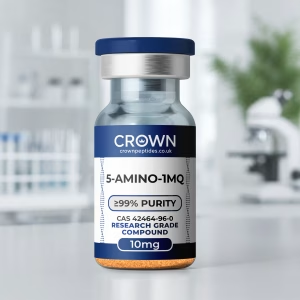
2 strengths5-Amino-1MQ 10mg research compound vial, Crown Peptides UKAgeing research

5-Amino-1MQ Research Compound


From£24.99Strength10mg
Add to basket
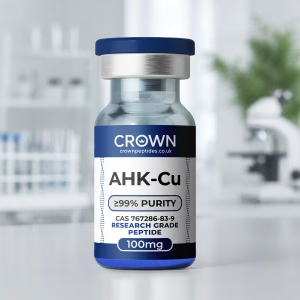
AHK-Cu 100mg copper peptide vial, Crown Peptides UKAgeing research

AHK-Cu Research Peptide


From£29.99Strength100mg
Add to basket
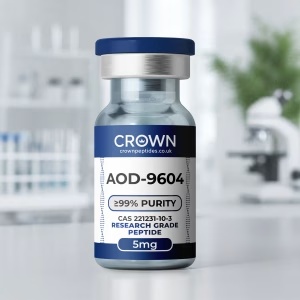
AOD-9604 5mg research peptide vial, Crown Peptides UKMetabolic research

AOD-9604 Research Peptide


From£34.99Strength5mg
Add to basket
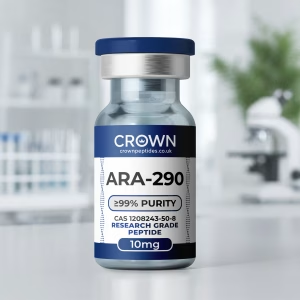
ARA-290 (Cibinetide) 10mg research peptide vial, Crown Peptides UKImmunology research

ARA-290 Research Peptide


From£39.99Strength10mg
Add to basket
SUPPORT Mon to Fri, 9am to 5pmDISPATCH Cut-off 2pmEMAIL info@crownpeptides.co.ukWHATSAPP +44 7301 802654

Disclaimer: All products are sold strictly for laboratory research purposes only. Not for human or veterinary use, consumption, therapeutic, or diagnostic application. None of our products are medicines, and none are presented as such. By purchasing, you confirm you are a qualified professional and legally permitted to handle these materials in compliance with all applicable laws and regulations. Misuse, resale for unauthorised purposes, or unlawful application is strictly prohibited. Crown Peptides UK disclaims all liability for improper use, handling, or regulatory non-compliance.

© 2026 Crown Peptides UK, a trading name of Crown Peptides Ltd (company no. 17068950), Suite Ra01, 195-197 Wood Street, London E17 3NU . All Rights Reserved.