

Every erectile dysfunction medication that came before it worked on the same basic principle: improve blood flow to peripheral tissue, and arousal follows. PT-141 broke that pattern entirely. It doesn't touch blood vessels directly at all — it works in the brain, on the neural circuitry that generates sexual desire in the first place, making it the first drug of its kind to reach approval through an entirely different mechanistic route.
That distinction — central, brain-based arousal signalling instead of peripheral vascular effects — is the single most important thing to understand about PT-141's research profile, and it's the mechanism that carried its approved form, bremelanotide, all the way through FDA review in 2019.
The PT-141 sold by Crown Peptides is a research-grade compound supplied for laboratory research use only, distinct from the FDA-approved branded pharmaceutical referenced in this article's regulatory history.
The short version
- A cyclic heptapeptide with a bridge between Asp2 and Lys7 — not linear, as often listed.
- Derived from Melanotan-2 but acts primarily at MC3R and MC4R.
- FDA approved as Vyleesi in 2019, giving it a full trial record.
- One of very few peptides in this field with regulatory-grade human data.
A Refined Descendant of Melanotan-2
PT-141 is a synthetic cyclic peptide, structurally derived from alpha-melanocyte-stimulating hormone (alpha-MSH), and more directly, a refined structural descendant of Melanotan-2. Research describes PT-141 as engineered specifically to retain Melanotan-2's central sexual arousal effects while shedding much of its broader receptor promiscuity — the two molecules differ by a single functional group substitution, yet that small chemical change meaningfully shifted the resulting compound's receptor preference toward the arousal pathway specifically.
That engineering goal reflects a broader pattern in peptide drug development: taking a compound with genuine, validated biological activity but excessive off-target effects, and refining its structure to isolate the specific therapeutic mechanism researchers actually want to study or treat, while minimising the side effects associated with unwanted receptor engagement elsewhere in the body.
The Single Chemical Change That Reshaped Receptor Selectivity
It's worth examining that structural distinction between PT-141 and Melanotan-2 more closely, since such a small chemical modification producing such a meaningful pharmacological shift is genuinely instructive. Melanotan-2 carries an amide group at a specific position in its cyclic structure; PT-141 carries a hydroxyl group at that same position instead. That single functional group swap alters the local charge distribution and hydrogen-bonding capacity at that specific site on the molecule, which in turn changes how the peptide fits within different melanocortin receptor binding pockets.
The practical consequence, documented across the comparative research literature, is a meaningfully different receptor engagement profile: PT-141 retains strong MC3R/MC4R activity, the receptors responsible for the central arousal effects both compounds share, while showing reduced activity at MC1R (pigmentation) and MC5R (exocrine function) relative to Melanotan-2. That outcome illustrates a broader principle in peptide drug design worth appreciating: receptor selectivity often hinges on remarkably small, precisely targeted structural details rather than wholesale redesign of a molecule's overall architecture.
- Classification
- Synthetic cyclic melanocortin peptide also known as bremelanotide
- CAS Number
- 189691-06-3
- Molecular Weight
- 1025.2 Da
- Molecular Formula
- C50H68N14O10
- Sequence
- Ac-Nle-Asp-His-D-Phe-Arg-Trp-Lys-OH (cyclic, Asp2-Lys7 bridge)
The Central Mechanism: MC3R and MC4R in the Brain
PT-141 acts as an agonist at melanocortin-3 and melanocortin-4 receptors (MC3R/MC4R), expressed primarily within the central nervous system — specifically within the hypothalamus and limbic regions, brain areas central to processing motivation, emotion, and sexual behaviour. That receptor distribution is the direct explanation for why PT-141's mechanism is fundamentally different from every prior generation of erectile dysfunction medication: it targets brain circuitry, not peripheral vascular tissue.
Research has traced the specific neural pathway involved in considerable detail: MC4 receptor activation is thought to increase dopamine release specifically within the medial preoptic area of the hypothalamus, a region well-established in the neuroscience literature as governing sexual desire and arousal. Beyond dopamine, research indicates PT-141 also increases norepinephrine and oxytocin — three distinct neurotransmitters and hormones, all independently implicated in sexual desire, motivation, and arousal, engaged together as part of PT-141's downstream signalling cascade.
The Medial Preoptic Area: Why This Brain Region Matters
The medial preoptic area, the specific hypothalamic region implicated in PT-141's dopamine-mediated mechanism, deserves its own explanation given how central it is to the compound's research story. This brain region has been extensively studied in animal models as a key integration site for sexual motivation and behaviour, receiving input from multiple sensory and hormonal signalling pathways and translating that input into motivated sexual behaviour output.
Research identifying this specific region as a site of PT-141-induced dopamine release gives the compound's mechanism a level of anatomical precision that purely peripheral-acting medications simply cannot offer, since those medications don't engage brain tissue at all. That anatomical specificity is part of why PT-141's research profile is discussed not just in pharmacology and endocrinology literature, but within behavioural neuroscience research more broadly, where the medial preoptic area's role in motivated behaviour extends well beyond sexual behaviour into broader questions about how the brain converts hormonal and sensory signals into goal-directed action.
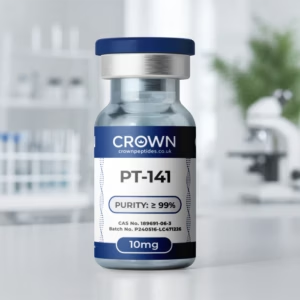
PT-141 Research Peptide
HPLC and MS verified · batch certificate published · dispatched from the UK before 2pm
Why Central Action Matters Clinically
The clinical significance of PT-141's central mechanism becomes clearest when compared directly with conventional erectile dysfunction medications, which work by inhibiting PDE5, an enzyme that breaks down a signalling molecule responsible for relaxing blood vessels in penile tissue — a peripheral, vascular mechanism entirely disconnected from the brain's arousal and desire circuitry. That mechanism works well for many patients, but it does nothing to address cases where the underlying problem is reduced desire or centrally mediated arousal difficulty rather than a peripheral vascular limitation.
PT-141's research literature specifically highlights this population as where the compound may offer distinctive value: research suggests it may be particularly useful for patients whose symptoms involve reduced desire, stress-related dysfunction, or incomplete response to traditional PDE5-inhibitor medications — precisely the population a purely vascular mechanism wouldn't be expected to help, given that their underlying difficulty isn't primarily a blood flow limitation in the first place.
Oxytocin's Role: Bonding Chemistry in the Mechanism
PT-141's engagement of oxytocin signalling, alongside dopamine and norepinephrine, deserves its own closer look, since oxytocin's involvement gives the compound's mechanism a psychological dimension that a purely dopaminergic or noradrenergic mechanism alone wouldn't capture. Oxytocin is classically associated with social bonding, trust, and attachment, released during intimate physical contact and increasingly studied for its broader role in social and emotional processing well beyond its original characterisation in reproductive physiology.
That oxytocinergic component helps explain why PT-141's research literature frequently describes its effects in terms that extend beyond a narrow, purely physiological arousal response — touching on connection and intimacy-related psychological dimensions as well. This shared oxytocin mechanism is one of the clearer through-lines connecting PT-141's research back to its structural predecessor Melanotan-2, whose own sexual arousal research documented the same oxytocinergic pathway engagement, even as PT-141's refined receptor selectivity distinguishes the two compounds in other respects.
Early Research in Men: Dose-Dependent Erectile Response
PT-141's research history includes considerable early work in male sexual function specifically. Administration to both healthy men and men with diagnosed erectile dysfunction produced a rapid, dose-dependent increase in erectile activity in early research, with subsequent studies documenting improvements in erectile function scores and broader sexual response measures, including specifically in men with diabetes-related erectile dysfunction — a population that often responds less consistently to conventional vascular-mechanism medications, given how diabetes itself can independently damage the vascular and neural tissue those medications depend on.
That research thread in men predates and runs parallel to the eventual approval pathway that carried bremelanotide to market specifically for female HSDD — illustrating that PT-141's central melanocortin mechanism was studied across both sexes from relatively early in its research history, even though its ultimate approved indication ended up scoped to one specific population.
Why Diabetes-Related ED Research Is Particularly Instructive
The research finding involving men with diabetes-related erectile dysfunction deserves closer attention, since it offers a particularly clear illustration of why a centrally acting mechanism can matter clinically. Diabetes-related erectile dysfunction often involves both vascular damage — reduced blood vessel function from chronically elevated blood glucose — and neural damage, given diabetes's well-documented tendency to damage peripheral nerves over time, including those involved in the vascular signalling pathway that conventional PDE5-inhibitor medications depend on.
A patient population with damage to the very peripheral vascular and neural signalling pathway that conventional ED medications rely on represents exactly the kind of population where a centrally acting alternative, bypassing that damaged peripheral machinery entirely by working further upstream in the brain, would be expected to offer genuine mechanistic advantage. That's precisely the population where PT-141's early research documented meaningful improvement, offering a coherent, mechanistically grounded explanation for why the finding specifically emerged in this patient group.
The Path to FDA Approval: RECONNECT and Vyleesi
Bremelanotide received FDA approval in June 2019 under the brand name Vyleesi, representing the first FDA-approved melanocortin receptor agonist for any indication — a genuinely significant regulatory milestone for this entire receptor class, not just for the specific compound itself. The approved indication is specific: treatment of acquired, generalised hypoactive sexual desire disorder (HSDD) in premenopausal women, a condition defined by persistently low sexual desire that causes clinically significant distress.
That approval rested on the Phase 3 RECONNECT trial programme, enrolling over 1,200 women across two large clinical trials, which demonstrated statistically significant improvement in both satisfying sexual events and measured sexual desire compared with placebo. The most commonly reported adverse events across the trial programme were nausea, flushing, and headache, with transient blood pressure elevations observed in some study participants — a documented safety profile that reflects both the compound's central mechanism and its structural relationship to broader melanocortin receptor activity.
Understanding HSDD as a Clinical Diagnosis
It's worth explaining hypoactive sexual desire disorder itself, since precise understanding of the approved indication helps clarify exactly what bremelanotide's trial data demonstrated. HSDD is clinically defined as a persistent or recurrent deficiency in sexual desire that causes clinically significant personal distress — critically, the diagnosis requires both the reduced desire itself and the associated distress, distinguishing it from simple variation in baseline desire levels that doesn't cause the individual meaningful distress or impairment.
The "acquired, generalised" qualifier in bremelanotide's approved indication carries specific clinical meaning as well: "acquired" means the reduced desire represents a change from a previously higher baseline, rather than a lifelong pattern, and "generalised" means it occurs across situations and partners rather than being specific to one particular relationship or context. That precision in the approved indication reflects the specific patient population studied and represented within the RECONNECT trial programme, rather than a broader, less clinically defined population.
A Genuinely Different Kind of Approval
It's worth appreciating what made this specific approval significant within the broader history of sexual dysfunction pharmaceuticals. HSDD had, for years, been a clinically recognised but pharmacologically underserved condition — existing treatments largely addressed physical or vascular aspects of sexual function without directly targeting the neurological basis of desire itself. Bremelanotide's approval represented the first drug specifically targeting that central desire mechanism to clear the FDA's rigorous efficacy and safety review process.
That regulatory milestone carries broader significance for melanocortin receptor research generally: it demonstrated that MC4R-mediated central arousal signalling, first characterised through research on compounds like Melanotan-2, could be successfully isolated, refined, and developed into a safe, effective, approved pharmaceutical — a genuine proof of concept for the entire research approach underlying PT-141's development.
The Blood Pressure Signal: Understanding Its Mechanistic Basis
The transient blood pressure elevations documented in PT-141's trial programme are worth explaining mechanistically rather than simply listing as a side effect, since understanding why they occur clarifies an important aspect of melanocortin receptor pharmacology more broadly. MC4R signalling isn't confined purely to the sexual arousal circuitry discussed throughout this piece — the same receptor is also involved in broader autonomic nervous system regulation, including cardiovascular control pathways, given melanocortin signalling's evolutionary role spanning multiple, interconnected physiological systems.
That shared receptor involvement across sexual arousal and cardiovascular regulation pathways is precisely why the trial programme monitored blood pressure carefully as a safety parameter, and why this side effect profile is mechanistically explicable rather than an unexpected, off-target finding. It's a useful reminder that even a compound engineered for improved receptor selectivity, as PT-141 was relative to Melanotan-2, still engages a receptor system with genuinely broad physiological reach beyond its primary research application.
Sex-Specific Research Findings Worth Distinguishing
Because PT-141's research spans both male and female sexual function, it's worth being precise about where the strongest evidence lies for each population. The formal, rigorous Phase 3 RECONNECT trial programme was specifically designed around and validated in premenopausal women with HSDD — that's the population with the strongest, most regulatory-grade evidence base behind it. The male-focused research discussed earlier, while genuinely informative and mechanistically coherent, generally reflects earlier-phase and smaller-scale studies rather than a comparably large, dedicated Phase 3 programme.
That distinction matters for accurately characterising PT-141's overall evidence base: the mechanism itself — central MC3R/MC4R-mediated arousal signalling — appears to operate similarly across both sexes based on the available research, but the depth and regulatory rigor of the supporting clinical evidence differs meaningfully between the female-focused approved indication and the broader, less formally validated male research literature.
Dosage in the Trial Record
The FDA-approved label for the branded product lists 1.75 mg administered subcutaneously at least 45 minutes before anticipated sexual activity, with a maximum of one dose per 24-hour period and no more than eight doses per month. That dosing figure comes directly from the RECONNECT Phase 3 programme, which enrolled roughly 1,200-1,247 premenopausal women with hypoactive sexual desire disorder using an on-demand autoinjector protocol over 24 weeks, and describes the specific regimen studied for its approved indication rather than general research guidance.
Reported Benefits in the Research Data
Both RECONNECT trials met their co-primary endpoints: statistically significant increases in sexual desire and statistically significant reductions in distress related to low desire, compared with placebo. A companion 52-week open-label extension study specifically evaluated long-term safety and efficacy in women who completed the initial 24-week trials, adding longer-duration data to the core placebo-controlled findings.
Side Effects Reported in Studies
The RECONNECT trials documented a specific, well-quantified side-effect profile: nausea in around 40% of participants, particularly with the first injection; flushing in around 20%; injection-site reactions in around 13%; and headache in around 11%. That nausea rate specifically is the most clinically notable figure in PT-141's safety data, and it's exactly the kind of detail a research protocol should account for directly rather than treating as a minor footnote.
Manufactured to Research Standard
PT-141's cyclic peptide structure requires the same rigorous purity verification as any other research compound, particularly given how sensitive melanocortin receptor research is to compound identity and purity.
Crown Peptides tests every batch of PT-141 for HPLC purity and mass spectrometry identity confirmation, with a batch-specific certificate of analysis provided for every order.
Storage follows the standard protocol used across the peptide range: supplied as a lyophilised powder, stable when kept cold and shielded from light and moisture, with reconstituted solution requiring refrigeration and use within the recommended window.
Nasal Spray Delivery: A Notable Formulation Detail
Bremelanotide's approved formulation is worth noting for a specific reason: while it's administered via subcutaneous injection as Vyleesi, PT-141 has also been extensively studied and used in intranasal formulations across earlier phases of its research history, a delivery route offering faster absorption through the nasal mucosa and avoiding the need for injection altogether. Earlier clinical development work explored this intranasal route before the eventual approved formulation settled on subcutaneous injection specifically.
That formulation history reflects a genuinely important area of peptide drug development research more broadly: delivery route selection carries real pharmacokinetic consequences, affecting onset speed, bioavailability, and patient convenience, and the specific route ultimately selected for formal approval doesn't necessarily represent the only viable delivery approach studied throughout a compound's broader research and development history.
PT-141 Compared With Melanotan-2 and Traditional ED Medications
PT-141's research value is best understood in comparative context. Against Melanotan-2, its structural predecessor, PT-141 offers researchers a more receptor-selective tool for isolating central arousal effects specifically, without the broader pigmentation and appetite-suppression effects Melanotan-2's less selective receptor engagement produces. Against conventional PDE5-inhibitor medications, PT-141 offers a mechanistically distinct, centrally acting alternative, engaging brain-based desire circuitry rather than peripheral vascular tissue — complementary rather than redundant research territory, given how different the two mechanisms are.
- Structure: cyclic peptide, structural descendant of Melanotan-2 with a single functional group substitution.
- Receptor targets: MC3R and MC4R, expressed centrally in the hypothalamus and limbic regions.
- Neurotransmitters engaged: dopamine, norepinephrine, and oxytocin, downstream of MC4R activation.
- Approved form: bremelanotide (Vyleesi), FDA-approved June 2019 for HSDD in premenopausal women.
- Pivotal trials: RECONNECT Phase 3 programme, over 1,200 participants, significant improvement vs placebo.
On-Demand Versus Sustained Dosing Research
Bremelanotide's approved dosing pattern — administered on an as-needed basis prior to anticipated sexual activity, rather than as a continuous daily treatment — reflects specific pharmacokinetic and clinical trial design choices worth understanding. That on-demand dosing pattern aligns with how the compound's central arousal mechanism was studied and validated within the RECONNECT trial programme, and it stands in useful contrast to the continuous or scheduled dosing patterns used for some other melanocortin research compounds discussed elsewhere in Crown Peptides' catalogue, including the sustained-release implant approach used for Melanotan-1's approved form.
That dosing pattern distinction across different melanocortin-targeted pharmaceuticals — on-demand for PT-141's approved indication, sustained-release for Melanotan-1's approved indication — reflects how differently the same broader receptor family can be clinically deployed depending on the specific therapeutic goal: an acute, situational arousal effect calls for a different dosing strategy than maintaining continuous photoprotective pigmentation over a multi-week period.
Frequently Asked Questions:
How to Reconstitute PT-141
To reconstitute PT-141, allow the sealed vial to reach room temperature, wipe the rubber stoppers with alcohol swabs, and draw your chosen volume of bacteriostatic water into a sterile syringe. Slowly inject the water down the inner glass wall of the peptide vial and gently swirl until the powder is fully dissolved without shaking.
Is PT-141 Better Than Viagra?
PT-141 and Viagra work through completely different mechanisms, so neither is objectively better than the other; Viagra increases blood flow through vascular pathways, whereas PT-141 acts on the central nervous system to stimulate sexual arousal in the brain. This makes PT-141 particularly useful for individuals whose sexual dysfunction stems from psychological or neurological factors rather than purely physical blood flow issues.
What is PT-141 Used For?
PT-141 (Bremelanotide) is primarily used to treat hypoactive sexual desire disorder (HSDD) in premenopausal women and general sexual dysfunction in men by activating melanocortin receptors in the brain to increase sexual motivation and arousal. It is also researched for its tanning side effects, as it stimulates melanin production similarly to other melanocortin analogs.
Is PT-141 FDA Approved?
Yes, a specific brand-name version of PT-141 known as Bremelanotide (trademarked as Vyleesi) has received FDA approval for the treatment of generalized hypoactive sexual desire disorder in premenopausal women. However, generic research peptide forms sold online are not approved by the FDA for human consumption and are restricted to laboratory use.
How to Reconstitute PT-141 10mg?
A common method for a 10 mg vial is adding 2 mL of bacteriostatic water, which creates a concentration where each 0.1 mL on an insulin syringe equals 500 mcg of the peptide. Wipe the vial tops with alcohol, slowly introduce the water down the inside glass wall of the vial, and gently swirl until completely clear.
Is PT-141 a Prescription?
What This Means for Melanocortin Research Beyond PT-141
PT-141's approval carries significance that extends well beyond its own specific research and clinical profile. It demonstrated, for the first time, that a melanocortin receptor agonist could be successfully carried through the entire FDA review process — establishing regulatory precedent for an entire receptor class that, until 2019, had never produced an approved pharmaceutical for any indication. That precedent matters considerably for how subsequent melanocortin research programmes, including ongoing work on Melanotan-1's approved form and next-generation receptor-selective analogues, have been designed and pursued.
For researchers working with PT-141 specifically, that approval history provides a genuinely useful reference point: a considerable body of pharmacological, mechanistic, and clinical trial data exists for this exact receptor-ligand interaction, offering a well-characterised foundation that relatively few other research peptides in this space can claim to the same degree.
Read the certificate before you order
Every batch is published openly — identity by mass spectrometry, purity by HPLC, and the batch number printed on the vial you receive.
Open the COA libraryThe Bottom Line
PT-141's research significance lies in what it proved was possible: that a compound targeting the brain's own desire and arousal circuitry, rather than peripheral vascular tissue, could be refined from a broader, less selective predecessor into a genuinely effective, FDA-approved pharmaceutical. That achievement makes PT-141 a benchmark reference point for central melanocortin receptor research, and its distinctive mechanism continues to make it a valuable comparative tool alongside both its structural predecessor and the peripherally acting medications that came before it.
Crown Peptides stocks pharmaceutical-grade PT-141, shipped with its own batch-specific certificate of analysis.
References
- Kingsberg SA, Clayton AH, Portman D, et al. Bremelanotide for the Treatment of Hypoactive Sexual Desire Disorder: Two Randomized Phase 3 Trials. Obstet Gynecol. 2019;134(5):899-908. https://pubmed.ncbi.nlm.nih.gov/31599840/
Working with PT-141 Research Peptide
Batch-tested material, published certificates, and same-day dispatch on orders placed before 2pm.
See PT-141 Research Peptide