

RESEARCH USE DISCLAIMER
Crown Peptides supplies DSIP as a laboratory research compound only. It is not approved by the FDA, MHRA, or EMA for any use, and our products are not intended for human consumption and are not sold, marketed, or labelled for the diagnosis, treatment, cure or prevention of any disease. Nothing in this document should be read as medical advice or as an endorsement of human use. The discussion below summarises published scientific literature only, and is intended for researchers and students of neuroscience and sleep physiology.
DSIP was isolated in the 1970s from the cerebral blood of sleeping rabbits, during an active scientific hunt for the body’s own sleep factor. Decades later it remains genuinely unresolved: nine amino acids, real if limited human trial data, no confirmed receptor, and no modern adequately powered trial to settle the question. Few peptides have been studied for so long while remaining so unexplained.
This article covers DSIP's origin, its proposed mechanisms (which remain more open questions than settled science even after nearly fifty years of study), the small human sleep trials that gave the peptide its name and reputation, and the honest limitations of a research base that, while genuinely interesting, has not progressed as far as its long history might suggest.
The short version
- Nine residues, isolated in the 1970s from the cerebral blood of sleeping rabbits.
- No confirmed receptor has ever been identified.
- Human trial data exists but is small, old and rarely replicated.
- One of the longest-studied and least-explained peptides in the field.
What Is DSIP Peptide?
DSIP is a nonapeptide (nine amino acids, sequence Trp-Ala-Gly-Gly-Asp-Ala-Ser-Gly-Glu, molecular weight approximately 849 Da) first isolated in 1977 by Swiss researchers Schoenenberger and Monnier from the cerebral venous blood of rabbits during electrical stimulation experiments aimed at identifying humoral (blood-borne) sleep-regulating substances. Its name derives from its originally observed effect: inducing delta-wave activity on EEG in animals, corresponding to deep, slow-wave sleep.
DSIP has since been detected in human blood, cerebrospinal fluid, and other tissues, including the hypothalamus, limbic system, and pituitary, and has even been reported in breast milk, at generally very low endogenous concentrations. It co-localises with a range of other hormones and neurotransmitter systems, which has fed into a broader hypothesis that DSIP functions as part of a wider neuroendocrine regulatory network rather than as a single-purpose "sleep hormone" in the way its name suggests.
The Discovery Story: An Unusual Isolation Method
DSIP's discovery history is genuinely distinctive among the peptides among research peptides. It was first isolated in 1977 by Swiss researchers Schoenenberger and Monnier, who identified it in the cerebral venous blood of rabbits that had been induced into an electrically-stimulated sleep-like state — the peptide was named for the specific delta-wave EEG pattern researchers observed accompanying its presence. This unusual origin story (isolating a substance specifically because it appeared in blood during induced sleep, rather than through a targeted synthesis programme) is part of why DSIP's research history is so tightly bound up with sleep physiology from the very beginning, even as subsequent decades of research have found its biological role to be considerably broader and less settled than its name suggests.
Despite the specificity implied by its name, DSIP's actual research findings across the following decades have been notably inconsistent regarding its sleep-promoting effects specifically, which is an important piece of context for understanding why this peptide's evidence base looks the way it does today.
DSIP Mechanism: How It Works
Despite nearly fifty years of research, DSIP's precise mechanism of action has not been definitively established — a notable and honest point that a formal 1984 scientific review acknowledged directly, stating that DSIP's various physiological functions and a possible mechanism of action involving modulation of adrenergic transmission "remain to be established." Subsequent research has proposed additional mechanisms, including activation of the GABAergic system and inhibition of serotonin, noradrenaline, and histamine signalling in some contexts, alongside effects on the hypothalamic-pituitary-adrenal (HPA) axis relevant to its studied effects on stress and ACTH regulation.
One of the more genuinely puzzling findings in the literature is that DSIP appears to follow a U-shaped dose-response curve — meaning its effects do not simply increase in proportion to dose, but instead follow a more complex pattern where both very low and very high doses may produce different, or diminished, effects compared to an intermediate range. This kind of non-monotonic dose-response relationship makes DSIP considerably harder to characterise pharmacologically than compounds with straightforward dose-dependent effects, and is part of why, even after decades of study, basic questions about optimal dosing remain unresolved.
DSIP has been studied across three overlapping research directions: sleep architecture, HPA axis and stress hormone modulation, and circadian rhythm signalling.
A genuine scientific puzzle: does administering DSIP contradict its own natural pattern?
A specific finding worth highlighting because it illustrates how much about this peptide remains poorly understood: research has found that endogenous human plasma DSIP levels actually decrease at the onset of natural sleep, which appears to sit in tension with the fact that administering exogenous DSIP has been reported to promote sleep onset and quality in several small trials. This apparent contradiction has not been fully resolved in the literature, and is a good illustration of why DSIP's proposed role as a straightforward "sleep-inducing hormone" is more complicated, and more contested, than the name suggests. Some review literature has been candid that early enthusiasm for DSIP as the identified endogenous sleep factor has given way to a more measured, still-unsettled scientific picture.
The historical search for a humoral sleep factor
DSIP's discovery makes more sense in the context of the broader scientific project it emerged from. From the early twentieth century onward, researchers had hypothesised that sleep might be regulated by a specific, transferable substance circulating in the blood — the idea being that if you could identify and isolate this substance, you could explain (and potentially manipulate) sleep directly. This hypothesis motivated decades of experiments, including techniques like cross-circulation between sleep-deprived and rested animals, aimed at identifying a blood-borne "sleep factor." Only two peptides emerging from this broader research programme were ever purified to homogeneity and fully characterised: DSIP and, separately, a peptide known as sleep-promoting substance identified through related methods. That DSIP was one of only two candidates to survive this decades-long search and reach full characterisation is part of why it attracted such sustained scientific interest despite the small scale of the human trials that followed — though, as detailed throughout this article, being one of the few characterised candidates is not the same as having its role definitively confirmed.
Why Research Interest Shifted Toward the HPA Axis
It's worth understanding why DSIP research broadened beyond its original sleep-specific framing. As replication attempts of the delta-wave sleep effect produced inconsistent results across different laboratories and species, researchers began examining other properties reported alongside the peptide's initial characterisation — particularly its documented interactions with the hypothalamic-pituitary-adrenal (HPA) axis, the body's central stress-response signalling system. DSIP has been reported to influence release of several pituitary hormones and to modulate corticotropin-releasing factor signalling, giving it a research profile that extends well beyond sleep specifically into broader neuroendocrine and stress-response research. This broadening is a genuinely common pattern in peptide research more generally (MOTS-c's evolution from a metabolic curiosity into an exercise-physiology and ageing research tool follows a similar trajectory), and it reflects legitimate scientific process rather than a retreat from an unsuccessful original hypothesis.
- Classification
- Synthetic nonapeptide known as Delta Sleep-Inducing Peptide
- Available strengths
- 5mg and 10mg
- CAS Number
- 62568-57-4
- Molecular Weight
- 848.81 g/mol
- Molecular Formula
- C35H48N10O15
- Sequence
- Trp-Ala-Gly-Gly-Asp-Ala-Ser-Gly-Glu (WAGGDASGE)
DSIP Benefits: Why Researchers Are Interested
DSIP's research interest spans sleep regulation (its original and best-known application), stress and HPA axis modulation, pain research, and a smaller body of work on withdrawal syndromes, oxidative stress, and seizure activity. Much of this research is genuinely old — concentrated in the 1970s through 1990s — with comparatively little modern replication using contemporary trial design and reporting standards, which is an important part of the context for interpreting everything that follows.
Key Areas of DSIP Research
Human sleep trials. A small 1981 trial gave synthetic DSIP (25 nmol/kg body weight) intravenously to six middle-aged chronic insomniacs and found longer sleep duration and improved sleep quality with fewer interruptions, slightly increased REM sleep, and no daytime sedation or other reported side effects — though the sleep-promoting effect was notably delayed, appearing only in the second hour after injection, with a slight arousing effect observed in the first hour. Separate small trials in the 1980s, across roughly ten insomnia patients total, reported statistically significant improvements in sleep arousals, sleep efficiency, and slow-wave sleep.
Stress and HPA axis modulation. Animal research has examined DSIP's effects on stress hormone regulation, including studies proposing effects on ACTH and broader neuroendocrine stress responses, forming part of the basis for research interest in DSIP beyond sleep specifically.
Pain and withdrawal research. Small studies have examined DSIP's potential analgesic properties and its effects in models of substance withdrawal, though this research area is characterised by very small sample sizes even by the standards of the broader DSIP literature.
Oxidative stress and anticonvulsant research (animal only). A 2011 rodent study reported a "strong antioxidant effect" attributed to activation of the body's natural antioxidant mechanisms, and separate 1990s rodent studies examined DSIP's potential anticonvulsant properties. None of this work has been extended into human trials.
Methodology: consistently small sample sizes across five decades. A defining feature of the entire DSIP literature, from the original 1978 studies through to more recent animal work, is very small sample sizes — the foundational human sleep trials involved six to ten participants in total. This is a genuine, structural limitation running through the whole evidence base, not an issue confined to any one study.
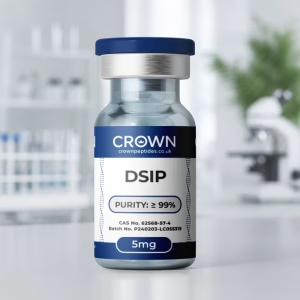
DSIP Research Peptide
HPLC and MS verified · batch certificate published · dispatched from the UK before 2pm
Summary of Published DSIP Studies
The pattern across this table is consistent and worth stating plainly: DSIP has a real, decades-old human trial history, but every human trial identified in current reviews involves single-digit-to-low-double-digit participant numbers. This is a genuinely different evidentiary situation from a compound with no human data at all, but it falls well short of what would be needed to draw confident conclusions by contemporary clinical trial standards.
Potential DSIP Benefits for Sleep Research
Based on the published literature, researchers have investigated DSIP as a tool for studying:
- Endogenous sleep-regulatory mechanisms and the broader search for humoral sleep factors
- HPA axis regulation and neuroendocrine stress response modulation
- The relationship between peptide-based signalling and adrenergic, GABAergic, and monoamine neurotransmitter systems
- Non-monotonic (U-shaped) dose-response relationships in neuropeptide pharmacology
- Comparative research into pain and withdrawal-related neuropeptide signalling
As with the other compounds in this series, this is research investigating a mechanism, not evidence of an established treatment effect in humans. None of the above constitutes a demonstrated therapeutic benefit under contemporary regulatory frameworks.
Current Limitations of DSIP Research
Several honest caveats apply to the DSIP literature, some more fundamental than is typical elsewhere in this series:
- The core mechanism remains genuinely unresolved. Even foundational review literature from the 1980s explicitly stated that DSIP's mechanism of action remained to be established, and subsequent decades of research have proposed multiple candidate mechanisms without settling on a definitive one.
- Every human trial involves very small sample sizes. The foundational sleep studies involved six to ten participants in total across multiple trials — numbers too small to rule out chance findings, subgroup effects, or publication bias with any confidence.
- No modern, registered human clinical trials exist. Despite DSIP's long history, there are currently no registered clinical trials specifically focused on this peptide, and the existing human data predates modern trial design, reporting, and statistical standards by several decades.
- The peptide's basic physiological role remains genuinely debated. The apparent contradiction between declining endogenous plasma DSIP at natural sleep onset and sleep-promoting effects of administered DSIP has not been resolved, and some reviewers have noted that early confidence in DSIP as "the" endogenous sleep factor has given way to considerably more measured uncertainty.
- A U-shaped dose-response curve complicates straightforward interpretation. Because DSIP's effects don't appear to scale simply with dose, comparing findings across studies that used different doses is more complicated than for compounds with conventional dose-response relationships.
DSIP Side Effects Reported in Research
Within the small human trials conducted, DSIP has generally been reported as well tolerated, with the 1981 insomnia trial specifically noting no daytime sedation or other side effects despite improved night-time sleep quality — an interesting finding given that DSIP has been characterised in review literature as a sleep-promoting substance rather than a classical sedative. However, given the very small number of human participants studied across the entire literature (a few dozen at most, across all trials combined), and the absence of any modern, standardized long-term safety study, this should be read as a limited, encouraging early signal rather than a comprehensive safety profile.
Any research protocol involving human or animal subjects should be developed with appropriate ethical and institutional review, following standard safety monitoring practices for investigational peptides — particularly relevant here given how dated and limited in scale the existing human safety data is.
DSIP Dosage Used in Published Research
This section is included for methodological context only and should not be interpreted as guidance for use.
The best-documented human trial used intravenous synthetic DSIP at 25 nmol/kg body weight (equivalent to roughly 21 micrograms/kg given DSIP's molecular weight of approximately 849 Da) as a single acute dose in chronic insomniacs. Given the U-shaped dose-response relationship discussed above, this figure should not be assumed to represent an "optimal" dose in any generalisable sense — it describes what one specific small trial used, under direct clinical supervision with continuous monitoring, and is not validated human dosing guidance.
Researchers designing their own experimental protocols should base dosing decisions on the primary literature relevant to their specific model, in consultation with institutional ethics review as applicable, rather than on secondary summaries such as this one — and should be aware that the non-linear dose-response relationship makes simple dose extrapolation particularly unreliable for this specific peptide.
Analogues and Future Research Directions
Given how little DSIP research has been modernised since its most active study period in the 1970s–90s, the most consequential "future direction" for this compound is arguably not a new analogue but a fundamental re-examination using contemporary standards.
- Modern, adequately powered human trials. Given that the entire human evidence base rests on a handful of trials involving single-digit-to-low-double-digit participants conducted decades ago, a properly powered, contemporary randomised controlled trial would meaningfully advance this field beyond where it has sat for nearly fifty years.
- Resolving the basic mechanism question. Given that foundational reviews openly acknowledged DSIP's mechanism remained unestablished, and that multiple, only partially reconciled mechanisms have since been proposed, clarifying the actual primary mode of action remains a foundational open question.
- Explaining the endogenous-decline-versus-exogenous-benefit paradox. Directly investigating why natural plasma DSIP falls at sleep onset while administered DSIP appears to promote sleep would meaningfully clarify what role, if any, this peptide plays in normal human sleep physiology.
- Characterising the U-shaped dose-response relationship properly. A systematic, modern dose-ranging study would help resolve one of the more persistently confusing aspects of this peptide's pharmacology.
Frequently Asked Questions
What is DSIP peptide?
Delta Sleep-Inducing Peptide (DSIP) is a naturally occurring neuropeptide first discovered in 1974. It is found in the brain and various organs, playing a key role in regulating sleep patterns and biological rhythms.
What does DSIP peptide do?
It interacts with the central nervous system to promote restorative, slow-wave (deep) sleep without acting as a traditional sedative. It also helps regulate the release of certain hormones, reduces physiological stress, and normalizes circadian rhythms.
What is DSIP peptide used for?
In research and off-label settings, it is primarily used to treat insomnia, improve overall sleep quality, and reset disrupted sleep cycles. It is also sometimes utilized to manage chronic pain, reduce anxiety, and ease substance withdrawal symptoms.
How to mix and reconstitute DSIP peptide?
Reconstitution involves using a sterile syringe to inject a precise amount of bacteriostatic water into the vial containing the freeze-dried DSIP powder. You must push the water slowly down the side of the glass and gently swirl the vial in circles to dissolve the powder—never shake it, as this can destroy the fragile peptide bonds.
Does DSIP peptide work?
Clinical evidence is mixed; while early studies and animal research show a strong ability to induce sleep and lower stress, large-scale modern human trials are lacking. Anecdotally, many users report significant improvements in deep sleep, but its effectiveness can vary greatly from person to person.
Why Peptide Sourcing Quality Matters for Research Validity
As a relatively short, unmodified nonapeptide, DSIP shares the general sourcing vulnerabilities common to peptides of this size: the reliability of any experimental finding depends on the reliability of the material used to generate it, and a molecule this size is not inherently protected against synthesis errors that a less rigorous testing process could miss.
Common failure modes relevant to DSIP specifically include:
- Truncated or deletion sequences — incomplete coupling during synthesis of a nine-residue peptide can leave a proportion of the product missing one or more amino acids, producing a related but structurally distinct molecule.
- Inaccurate mass or concentration labelling — without independent mass spectrometry confirmation, there's no reliable way to verify that a vial contains the peptide and concentration stated on the label, which matters particularly given DSIP's reported non-linear dose-response relationship.
- Bacterial endotoxin contamination — relevant for any in vivo research, particularly given that DSIP research has touched on stress and neuroendocrine signalling pathways that could plausibly be confounded by endotoxin-driven inflammatory responses.
- Degradation during storage — as with other unmodified short peptides, improper storage conditions can degrade a sample over time in ways that aren't visible on inspection, silently reducing the concentration of intact, active peptide available for a given experiment.
Given how sensitive DSIP's reported effects appear to be to precise dosing, independent verification of both identity and concentration matters more than usual for this compound — an inaccurately concentrated batch could plausibly shift an experiment along DSIP's reportedly non-monotonic dose-response curve in ways that would be difficult to detect without knowing the true delivered dose.
Read the certificate before you order
Every batch is published openly — identity by mass spectrometry, purity by HPLC, and the batch number printed on the vial you receive.
Open the COA libraryWhy Choose Crown Peptides
Testing is only part of the picture. Crown Peptides was built around a simple idea: a UK researcher ordering a peptide should be able to trust everything about how it reached them — not just the number on a Certificate of Analysis, but who made it, how it was handled, how it travelled, and who they can speak to if they have a question. That's the standard we hold ourselves to on every order, and it's worth explaining properly rather than just listing it.
Sourcing You Can Trust
Quality starts long before a product reaches our warehouse. We work directly with one of the world's largest and most established peptide synthesis manufacturers, chosen specifically for its production standards, consistency, and track record — rather than sourcing opportunistically from whichever manufacturer happens to offer the lowest price that month. That close, ongoing partnership is what allows us to stand behind every batch we sell, because we know exactly how it was made.
Verified Through Independent Testing
We don't expect researchers to take a manufacturer's word for it, so we verify every batch independently before it's listed for sale:
Endotoxin Testing
Every batch is screened for bacterial endotoxin, which matters in particular for any research involving cell culture, immune signalling, or in vivo inflammatory endpoints.
HPLC Purity Analysis
High-performance liquid chromatography is used to assess purity and screen for truncated sequences, deletion products, and synthesis by-products.
Mass Spectrometry Identity Confirmation
MS analysis confirms the molecular weight of the supplied peptide matches intact DSIP, providing an independent check on identity beyond the label.
Certificate of Analysis
Every batch is supplied with a Certificate of Analysis, and a QR code linking directly to the testing report on crownpeptides.co.uk, so researchers can document exactly what was used in their own experimental records.
Careful Storage and Handling
A product that's been correctly synthesised and tested can still be let down by poor handling afterward. Once a batch clears testing, we store it under controlled conditions designed to preserve stability and prevent degradation before it ever reaches a researcher's bench. This matters more for peptides and sensitive research compounds than for most laboratory reagents: temperature excursions, light exposure, and poor stock rotation can all silently reduce integrity long before a vial is opened, in ways that aren't visible on inspection and can quietly undermine an experiment's results. We treat that storage window as part of the product, not an afterthought once testing is done.
Packaging and Delivery
Every order is packed in premium, discreet packaging designed to protect the product in transit and arrive intact. Orders placed before 2pm are dispatched the same working day for next-day UK delivery, and we ship to Northern Ireland, the Republic of Ireland, Scotland, England, and across the EU, with international shipping available beyond that. For a researcher working to a study timeline, knowing an order will arrive quickly, safely, and exactly as ordered isn't a convenience — it's part of keeping a research schedule on track.
Support That Goes Beyond the Sale
Peptide and research-compound work raises genuine practical questions — around reconstitution, storage, handling, and interpreting a Certificate of Analysis — and we'd rather a researcher ask us directly than guess. Our team is on hand to provide clear, straightforward guidance from product selection through to delivery and beyond, without the evasiveness or upsell pressure that can come with some suppliers in this space. We see that ongoing relationship, not just the transaction, as the actual job.
Regulatory Compliance and Transparency
Crown Peptides is a UK-based company operating in line with MHRA guidance on research chemicals. Every batch is released against its own certificate of analysis, with HPLC purity and mass-spectrometry identity recorded and the lot number printed on the vial you receive. We'd rather be transparent about what we sell and who it's for than blur that line to chase a wider customer base — that's a deliberate choice on our part, not a legal minimum we begrudgingly meet.
Our Commitment
Put simply, our mission is to supply the UK research community with peptides and research compounds of unmatched purity and consistency, backed by a level of service, transparency, and technical support that researchers can actually rely on — from the first email enquiry to the vial arriving on the bench. That standard applies whether an order is a single vial for an independent researcher or a bulk order for a laboratory, and it holds regardless of whether a customer ever finds out how much work sits behind it.
For researchers who want their results to be reproducible and their experimental record defensible, knowing precisely what's in the vial — and trusting that everyone who handled it got it right — is a basic, non-negotiable starting point.
References
- "The influence of synthetic DSIP (delta-sleep-inducing-peptide) on disturbed human sleep." PubMed. https://pubmed.ncbi.nlm.nih.gov/7028502/
- "Delta-sleep-inducing peptide (DSIP): A review." ScienceDirect. https://www.sciencedirect.com/science/article/abs/pii/0149763484900228
- "Delta sleep-inducing peptide." European Journal of Anaesthesiology. https://journals.lww.com/ejanaesthesiology/fulltext/2001/07000/delta_sleep_inducing_peptide.1.aspx
Working with DSIP Research Peptide
Batch-tested material, published certificates, and same-day dispatch on orders placed before 2pm.
See DSIP Research Peptide