

Human growth hormone does a lot of things at once — it builds muscle, drives growth during childhood, raises blood sugar, and, almost as a side note, tells fat cells to release their stored energy. That last function is genuinely useful on its own, but it's bundled with a hormone that also carries diabetogenic risk and growth-promoting effects nobody wants switched on for fat-loss research alone. AOD-9604 is what happens when researchers isolate just the fat-mobilising fragment and leave the rest of HGH's activity behind entirely.
It's a sixteen-amino-acid peptide built from the C-terminal end of the growth hormone molecule — specifically the region researchers had already identified as responsible for HGH's lipolytic activity, separate from the receptor-binding region responsible for growth. That distinction is the whole reason AOD-9604 exists, and it's backed by a research history that's more extensive, and more honestly mixed, than most peptides get credit for.
AOD-9604 is sold by Crown Peptides for laboratory research use only and has not been evaluated or approved by the FDA for human treatment.
That combination of mechanistic elegance and a genuinely large safety dataset is why AOD-9604 continues to draw research interest even years after its original commercial development programme wound down — it's a rare case of a peptide whose scientific story is more interesting than its headline outcome alone would suggest.
The short version
- The 176-191 fragment of human growth hormone, 16 residues.
- Engineered to isolate the lipolytic activity from the rest of the hormone.
- Does not raise IGF-1, which is the point of the design.
- Human trials were run and reported; the results were more modest than the early work suggested.
Isolating One Function From a Multi-Tasking Hormone
AOD-9604 was developed in the 1990s by researchers at Monash University in Australia, building on earlier work that had mapped growth hormone's various functions to different regions of the molecule. The C-terminal fragment — roughly the last sixteen amino acids of the sequence — had been identified as carrying HGH's fat-metabolising activity, distinct from the N-terminal region responsible for binding the growth hormone receptor and driving IGF-1 production, cell growth, and the diabetogenic effects that come with elevated growth hormone activity.
The research question was direct: if that fragment alone carries the lipolytic signal, could it be synthesised and used on its own, without dragging along the rest of HGH's activity? AOD-9604 — sometimes referred to in the literature by its positional name, HGH fragment 176-191 — was engineered to answer exactly that question, with a tyrosine addition included specifically to improve the fragment's stability during synthesis and storage.
The broader context matters here too. HGH itself had already been used clinically for decades by the time AOD-9604 was developed, mostly for paediatric growth disorders and adult growth hormone deficiency, which meant researchers had an unusually detailed map of exactly which effects the full hormone produced and roughly where in the molecule each one originated. That existing map is what made AOD-9604 possible in the first place — without decades of prior HGH research pinpointing which regions did what, there would have been no rational basis for isolating this specific sixteen-amino-acid fragment rather than any other section of the molecule.
How It's Studied to Trigger Fat Breakdown
AOD-9604's proposed mechanism runs through beta-3 adrenergic receptors, a receptor subtype found predominantly on fat cells and involved in regulating lipolysis — the breakdown of stored triglyceride into free fatty acids that can then be used for energy. Activating this pathway is studied to switch on hormone-sensitive lipase, the enzyme directly responsible for breaking down stored fat within the adipocyte, while simultaneously inhibiting lipogenesis, the process by which fat cells build new triglyceride stores.
The critical research finding behind AOD-9604 is that this lipolytic activity doesn't require engagement of the standard growth hormone receptor at all. A study testing the fragment in beta-3-adrenergic-receptor knockout mice alongside standard obese mice found the fat-mobilising effect persisted through the beta-3 pathway independent of the classic HGH receptor route — direct evidence that AOD-9604 works through a genuinely separate cellular mechanism from the one responsible for HGH's growth-promoting and blood-sugar effects.
That beta-3 receptor pathway is worth understanding a little further, since it's shared with a much wider body of metabolic research beyond AOD-9604 specifically. Beta-3 adrenergic receptors are concentrated in adipose tissue, particularly visceral fat, and are activated naturally by catecholamines like noradrenaline as part of the body's normal fasting and cold-exposure fat-mobilisation response. Rather than inventing a new signalling pathway from scratch, AOD-9604's mechanism plugs into one the body already uses for lipolysis under specific physiological conditions — which is part of why the mechanism was considered biologically plausible even before extensive testing confirmed it.
- Classification
- Synthetic 16-amino-acid peptide fragment derived from the C-terminal region of human growth hormone
- Available strength
- 5mg
- CAS Number
- 221231-10-3
- Molecular Weight
- approximately 1815.1 g/mol
- Molecular Formula
- C78H123N23O23S2
What the Animal and Human Research Actually Found
AOD-9604's research base is unusually extensive for a peptide in this category, spanning both animal and human studies. Preclinical work published by Ng and colleagues in Hormone Research tested the tyrosine-stabilised fragment in obese Zucker rats — a standard genetic model for studying obesity — and found it reduced weight gain without adversely affecting insulin sensitivity, an important safety signal given that elevated growth hormone activity itself is associated with insulin resistance.
That preclinical work was followed by six Phase I and Phase II human clinical trials enrolling approximately 900 participants combined, which confirmed a genuinely strong safety profile with no serious adverse events attributed to the compound across that substantial combined patient population. That's a meaningful amount of human safety data for a research peptide to have accumulated.
It's equally important to report the next chapter honestly. A Phase IIb efficacy trial — the stage specifically designed to test whether the compound produced a meaningful weight-loss effect at scale — failed to meet its primary endpoint, and the original drug-development programme was discontinued afterward. That's a real result worth stating plainly rather than glossing over: extensive safety data and a coherent mechanism didn't translate into a clear efficacy win in that particular trial design. Compounds fail Phase IIb trials for many reasons — dosing, trial design, and endpoint selection all play a role alongside a compound's actual biological activity — but the honest bottom line is that the large-scale human efficacy case for AOD-9604 remains unresolved rather than confirmed.
It's also worth putting that 900-participant safety dataset in perspective against the rest of the research-peptide field. Most compounds discussed in peptide research circles have never been tested in a single registered human trial, let alone six of them. AOD-9604's Phase I and Phase II programme included dose-ranging studies establishing how the compound behaves at different concentrations, alongside longer-duration studies tracking tolerability over extended use — the kind of methodical, staged testing that pharmaceutical development requires regardless of how the eventual efficacy trial turns out.
Why a Failed Drug Programme Isn't the End of the Research Story
It's worth separating two different questions that often get collapsed together: did AOD-9604 fail as a commercial weight-loss drug, and is the underlying mechanism still worth studying? The answer to the first is yes. The answer to the second is considerably more open. The beta-3 adrenergic, receptor-independent lipolysis pathway AOD-9604 was built to isolate remains a genuinely interesting target for metabolic research, and a compound with six completed human safety trials behind it is, in some respects, a more thoroughly characterised research tool than most peptides ever become — even one whose original efficacy trial came up short.
Plenty of compounds that fail a specific efficacy trial design continue to be used productively in narrower research contexts, at different doses, in different combinations, or answering more targeted mechanistic questions than the original large-scale weight-loss claim required. AOD-9604's research trajectory is a useful reminder that a discontinued commercial programme and a discontinued area of scientific inquiry aren't automatically the same thing.
There's also a naming detail worth clearing up, since it trips people up in research discussions: AOD-9604 is sometimes labelled HGH fragment 176-191 and sometimes 177-191 depending on the source, a minor discrepancy in how different research groups numbered the parent hormone's amino acid sequence rather than a difference in the compound itself. Both labels refer to the same tyrosine-stabilised C-terminal fragment.
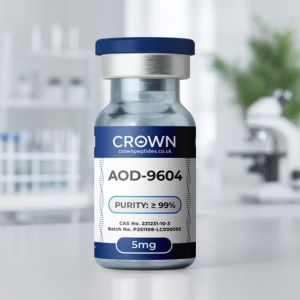
AOD-9604 Research Peptide
HPLC and MS verified · batch certificate published · dispatched from the UK before 2pm
Reading the Zucker Rat Model Correctly
It's worth explaining why researchers reach for Zucker rats specifically when studying obesity and metabolic compounds, since the model choice affects how much weight to give the results. Zucker rats carry a genetic mutation affecting the leptin receptor, causing them to overeat and develop obesity and insulin resistance reliably and predictably — a well-established, widely used model precisely because its metabolic dysfunction closely mirrors patterns seen in human obesity, rather than requiring researchers to induce obesity through diet alone, which introduces more variability between animals.
Testing AOD-9604 in this specific model meant researchers were evaluating the compound against a genuinely challenging metabolic background — animals already predisposed to insulin resistance and excess fat storage — rather than a healthier baseline where a positive result might be easier to produce but less informative about real-world relevance. The insulin-sensitivity preservation finding carries more weight specifically because it emerged from this more demanding model rather than a simpler one.
How Researchers Actually Test This
The beta-3 receptor knockout studies that established AOD-9604's receptor-independence are worth understanding in more detail, since they're a particularly elegant piece of experimental design. Knockout mice are genetically engineered to lack a specific gene — in this case, the gene coding for the beta-3 adrenergic receptor — allowing researchers to test whether a compound's effect disappears when that specific receptor is absent. When AOD-9604's lipolytic activity persisted in standard mice but the comparison against beta-3 knockout models supported the beta-3 pathway specifically, it gave researchers much stronger confidence in the proposed mechanism than a correlational study alone could provide.
Human trials measured standard body-composition and metabolic endpoints — weight change, fat mass, and insulin sensitivity markers — tracked against placebo over defined dosing periods, the same basic trial architecture used across most metabolic drug development programmes.
What Set AOD-9604 Apart From Growth Hormone Secretagogues
It's worth distinguishing AOD-9604 clearly from an entirely different category of research compound it sometimes gets lumped in with: growth hormone secretagogues and releasing hormones, which work by stimulating the pituitary gland to release more of the body's own growth hormone. Those compounds increase total HGH output, including all of its downstream effects — IGF-1 elevation, tissue growth, and the full metabolic profile that comes with it. AOD-9604 does the opposite in a sense: rather than increasing HGH output, it bypasses HGH entirely and delivers only the isolated fat-metabolising signal directly.
That's a meaningful distinction for research design. A secretagogue-based protocol is studying the effects of more endogenous growth hormone activity across all of its pathways at once. An AOD-9604-based protocol is studying one specific, isolated signalling pathway in complete separation from the rest of the growth hormone axis. Neither approach is inherently superior — they're suited to different research questions, and conflating the two risks misunderstanding what each compound is actually capable of demonstrating in a given study design.
The Question Still Worth Researching
If there's an open research question AOD-9604's history points to most directly, it's whether the original Phase IIb trial's dosing and duration were actually optimal for detecting the fragment's true effect, or whether a different protocol design might tell a different story. Efficacy trials are built around specific assumptions — how much of the compound to give, how often, and for how long — and getting any one of those assumptions wrong can mask a genuine, smaller effect behind a null result on the primary endpoint. That's not a claim that a different trial would necessarily have succeeded; it's an honest acknowledgement that the current data doesn't fully close the book on the question.
That open question, combined with the compound's well-characterised receptor-independent mechanism and unusually thorough safety record, is exactly why AOD-9604 continues to appear in current metabolic peptide research discussions rather than fading into obsolescence alongside its discontinued commercial programme.
Where AOD-9604 Sits Alongside Other Metabolic Research Peptides
AOD-9604 occupies a specific and somewhat unusual position in the metabolic research space: a compound built directly from a fragment of a major endogenous hormone, with an unusually large human safety dataset, but without a confirmed large-scale efficacy result to match. That combination sets it apart from newer small-molecule metabolic compounds like enzyme inhibitors, which typically arrive with extensive preclinical mechanism data but little to no human trial history at all.
That trade-off is worth naming directly for anyone comparing research options: AOD-9604 offers researchers a peptide with genuine human pharmacokinetic and safety characterisation already done, at the cost of an unresolved efficacy question. Earlier-stage compounds offer a cleaner, more recently characterised mechanism, at the cost of no human data at all. Neither position is strictly better — they represent different stages and different types of research value.
Insulin Sensitivity: The Detail That Sets AOD-9604 Apart
It's worth returning to the Zucker rat finding in more depth, because the insulin-sensitivity result is arguably the single most important detail in AOD-9604's entire research record, and it's easy to skim past. Native growth hormone is well documented to reduce insulin sensitivity when administered at meaningful doses — it's a recognised diabetogenic effect that limits how HGH itself can be used therapeutically and requires careful monitoring wherever it's administered clinically. Any fat-loss compound derived from HGH carries an implicit question: does it bring that same metabolic downside along with it?
The Zucker rat data directly addressed that question and came back with a reassuring answer: weight gain was reduced without an adverse effect on insulin sensitivity. That's precisely the result AOD-9604's design was supposed to produce if the fragment truly isolated fat-mobilising activity from the rest of HGH's metabolic footprint, and it's a meaningfully different safety profile from what researchers would expect if the fragment retained any meaningful growth-hormone-receptor activity. It's one of the clearest pieces of evidence that the engineering behind AOD-9604 achieved what it set out to do.
The Broader Lesson in AOD-9604's Development Story
There's a pattern in AOD-9604's history that shows up across pharmaceutical research more broadly, and it's worth naming directly: a compound can be mechanistically well-understood, safety-tested extensively in humans, and still not clear the specific bar a Phase IIb efficacy trial sets. That's not a comfortable story for marketing purposes, but it's a genuinely instructive one for research purposes — it's a reminder that mechanism, safety, and population-level efficacy are three separate hurdles, and clearing the first two doesn't guarantee the third.
That's also exactly why AOD-9604 remains a name worth knowing in metabolic peptide research rather than a cautionary tale to avoid. Its receptor-independent lipolytic mechanism, confirmed through genetic knockout studies rather than correlation alone, and its extensive human safety record are both durable scientific contributions that don't disappear because one specific efficacy trial, at one specific dose and duration, didn't clear its statistical bar. Research interest in the beta-3 adrenergic pathway more broadly has continued well beyond AOD-9604's own commercial story, and the fragment remains one of the best-characterised tools available for studying that pathway specifically.
Dosage in Research Studies
Published trial dosing for AOD-9604 has generally sat in the 0.5-1 mg per day range in the human programme, with the 12-week Phase II study using a low daily oral dose around 1 mg and the animal work using roughly 500 micrograms per kilogram of bodyweight daily in Zucker rats. These figures describe how the compound has been dosed in a research setting across published trials, not a recommendation, and they varied across the six-trial programme as researchers tested different concentrations and durations.
That range is worth noting because it's unusually well-documented compared with most research peptides — the product of a genuine multi-trial development programme rather than an inference from animal data alone. Even so, dosing in any of these trials was set and monitored by the research teams running each study, and none of the figures above translate into self-directed guidance outside a research context.
Side Effects and Safety Data From Human Trials
Across the roughly 900 participants enrolled in AOD-9604's six Phase I and Phase II trials, no serious adverse events were attributed to the compound, and — unlike native growth hormone — treatment was not associated with reduced insulin sensitivity, addressing the specific diabetogenic concern that comes with HGH-derived compounds. That safety profile is one of the most substantial in the research-peptide space simply because so few compounds in this category have accumulated multi-trial human safety data at all.
Manufactured to Research Standard
AOD-9604's sixteen-amino-acid sequence, including its stabilising tyrosine addition, requires the same synthesis precision as any other research peptide of comparable length.
Crown Peptides tests every batch of AOD-9604 for HPLC purity and mass spectrometry identity confirmation, with a batch-specific certificate of analysis provided for every order.
Storage guidance follows the standard used across the peptide range: supplied as a lyophilised powder, stable when kept cold and protected from light and moisture, with reconstituted solution requiring refrigeration and use within the recommended window.
Why Six Trials and Zero Approvals Is Still a Meaningful Research Legacy
It's worth sitting with the scale of AOD-9604's clinical programme one more time, because six completed Phase I and Phase II trials represent a substantial pharmaceutical development investment — the kind typically reserved for compounds a company has real confidence in after strong preclinical results. That level of investment doesn't happen by accident, and it left behind a body of dosing, tolerability, and pharmacokinetic data that very few research peptides can match, regardless of how the final efficacy chapter played out.
For researchers today, that means AOD-9604 arrives with an unusually well-mapped safety and dosing profile already established in the published literature — a genuine head start compared with newer compounds that haven't yet been tested in a single human trial. That's a distinct kind of research value from a compound with a confirmed efficacy result, but it's real value nonetheless, and it's precisely the kind of groundwork that makes follow-on research — different doses, different combinations, different endpoints — considerably more tractable than starting from zero.
It's also worth understanding why a compound with strong safety data can still fail an efficacy trial — the two questions are genuinely separate. A Phase IIb trial is specifically designed to detect whether a treatment effect is large enough, and consistent enough, to clear a statistical bar against placebo at a population level. A compound can have a real, mechanistically grounded biological effect that's simply too modest, too variable between individuals, or too dependent on dosing and duration to clear that particular bar in that particular trial design — which is a different outcome from a compound having no real effect at all. AOD-9604's continued presence in research conversations, well after its commercial development ended, reflects exactly that distinction.
Storage guidance follows the same standard used across the peptide range: kept cold and protected from light and moisture prior to reconstitution, with reconstituted solution requiring refrigeration and use within the recommended window — standard handling for a peptide of this size and stability profile.
Frequently Asked Questions:
How to Reconstitute AOD 9604
To reconstitute AOD 9604, let the sealed vial reach room temperature, wipe the rubber stoppers with alcohol swabs, and draw your chosen volume of bacteriostatic water into a sterile syringe. Slowly introduce the water down the inner glass wall of the peptide vial, then gently swirl the solution until the lyophilized powder is completely dissolved without shaking.
Does AOD 9604 Actually Work?
While animal studies and early human trials showed promising results for fat metabolism and lipolysis, conclusive large-scale clinical data confirming significant weight loss in humans remains limited. User experiences and anecdotal reports vary widely, with many treating it as an adjunctive research tool rather than a standalone fat-loss solution.
What is AOD 9604 Used For?
AOD 9604 is primarily used in research to stimulate lipolysis (the breakdown of fat) and inhibit lipogenesis (the formation of fatty tissue) without negatively affecting blood sugar or insulin levels. It is a modified fragment of the human growth hormone (HGH) specifically engineered to target fat metabolism while avoiding the growth-promoting side effects of full-molecule HGH.
How to Reconstitute AOD 9604 5mg?
A common approach for a 5 mg vial is adding 1 mL or 2 mL of bacteriostatic water. Using 2 mL makes math simple, as each 0.1 mL graduation on a standard insulin syringe will equal 250 mcg of the peptide. Slowly inject the water down the inside glass wall and swirl gently until clear.
Is AOD 9604 FDA Approved?
No, AOD 9604 is not approved by the FDA for human consumption or medical treatment. It is classified strictly as a research chemical and peptide, meaning it is legally sold only for laboratory and scientific research purposes.
Do You Need a Prescription for AOD 9604?
Because it is not an FDA-approved medication for consumer use, you cannot obtain a standard medical prescription for generic AOD 9604. It is typically acquired through specialized peptide vendors and research chemical suppliers rather than traditional retail pharmacies.
Does AOD 9604 Have to Be Refrigerated?
Yes, once reconstituted with bacteriostatic water, AOD 9604 must be stored in the refrigerator between 36°F and 46°F to maintain its stability and prevent degradation. Unopened, freeze-dried powder can also be kept cold for long-term storage, but it should always be protected from direct light and heat.
Read the certificate before you order
Every batch is published openly — identity by mass spectrometry, purity by HPLC, and the batch number printed on the vial you receive.
Open the COA libraryThe Bottom Line
AOD-9604 is a genuine case study in precision peptide engineering — successfully isolating one specific function from a multi-tasking hormone, and backing that isolation with real receptor-knockout evidence and an unusually large human safety dataset. Its efficacy trial outcome is worth reporting honestly rather than glossed over, and that honesty is exactly what makes the rest of its research record worth taking seriously: a well-characterised mechanism and a substantial safety record remain valuable regardless of how one specific commercial trial turned out.
References
- Ng FM, Sun J, Sharma L, Libinaka R, Jiang WJ, Gianello R. Metabolic studies of a synthetic lipolytic domain (AOD9604) of human growth hormone. Horm Res. 2000;53(6):274-8. https://pubmed.ncbi.nlm.nih.gov/11146367/
Working with AOD-9604 Research Peptide
Batch-tested material, published certificates, and same-day dispatch on orders placed before 2pm.
See AOD-9604 Research Peptide