

RESEARCH USE DISCLAIMER
Crown Peptides supplies tesamorelin as a laboratory research compound only. It is not sold as, and is not equivalent to, the FDA-approved pharmaceutical product Egrifta. Our products are not intended for human consumption and are not sold, marketed, or labelled for the diagnosis, treatment, cure or prevention of any disease. Nothing in this document should be read as medical advice or as an endorsement of human use. The discussion below summarises published scientific and regulatory literature only, and is intended for researchers and students of endocrinology and pharmacology.
Tesamorelin is a synthetic analogue of human growth hormone-releasing hormone (GHRH), stabilised against rapid enzymatic breakdown by a single trans-3-hexenoyl modification at the N-terminus. That one change is what separates it from native GHRH, which is cleaved within minutes. Unlike most research peptides, tesamorelin has already been through full clinical development â large placebo-controlled Phase III trials, and approval as a prescription medicine (marketed as Egrifta) for one specific indication. That gives this article an unusually solid evidence base to work from — but it also means the honest caveats are different in kind: less "we don't yet know if this works in humans" and more "we know quite precisely what it does and doesn't do, and where the open questions remain."
This article summarises what the peer-reviewed and regulatory literature shows about tesamorelin's mechanism, its studied effects on visceral fat and cognitive function, and its documented safety profile — while being clear that Crown Peptides supplies tesamorelin strictly as a laboratory research compound, not as the approved pharmaceutical product, and makes no claims about suitability for human use.
The short version
- Native GHRH is cleaved within minutes. A single trans-3-hexenoyl group is the whole of what changes that.
- Five randomised controlled trials, pooled in January, agree on visceral fat, trunk fat and lean mass.
- The liver work is the newer frontier, including paired biopsies taken a year apart.
- Not every endpoint landed: the cognition trial missed its between-group difference.
What Is Tesamorelin Peptide?
Tesamorelin is a synthetic analogue of human growth hormone-releasing hormone, specifically a stabilised version of the GHRH(1–44) sequence with a trans-3-hexenoic acid modification added to the N-terminus. This modification protects the peptide from rapid enzymatic degradation by dipeptidyl peptidase IV (DPP-IV), the enzyme primarily responsible for breaking down native GHRH within minutes of release, extending tesamorelin's functional half-life enough to make once-daily dosing pharmacologically effective in the studies that supported its approval.
Tesamorelin was developed by Theratechnologies and approved by the FDA in November 2010, marketed under the brand name Egrifta, as the first — and to date only — treatment approved in the United States specifically for the reduction of excess visceral abdominal fat in HIV-infected adults with lipodystrophy. It has since been reformulated (as Egrifta SV, and more recently the longer-acting Egrifta WR/F8 formulation) but the active peptide and its core mechanism remain the same across formulations.
Pooled trial evidence
A meta-analysis of five randomised controlled trials reported consistent changes in body composition, with no significant perturbation of glucose handling.
Badran et al., Obesity Research & Clinical Practice — five RCTs pooled.
Tesamorelin Mechanism: GHRH Receptor Agonism Explained
Tesamorelin acts as an agonist at the GHRH receptor on pituitary somatotroph cells, stimulating the synthesis and pulsatile release of endogenous growth hormone (GH). This is a mechanistically important distinction from directly administering recombinant human growth hormone: because tesamorelin works upstream, stimulating the pituitary's own GH-releasing machinery rather than replacing GH itself, the resulting GH release retains a more physiological pulsatile pattern, and the pituitary's own negative feedback loop (via somatostatin and circulating IGF-1) remains intact, which researchers have proposed as one reason GHRH analogues tend to produce fewer of the side effects associated with direct GH administration.
The downstream effects flow through the growth hormone/IGF-1 axis: elevated GH stimulates hepatic and peripheral IGF-1 production, and GH itself has direct lipolytic (fat-breaking) activity that appears to act preferentially on visceral adipose tissue rather than subcutaneous fat — which is the basis for tesamorelin's approved indication and much of the metabolic research built around it.
Tesamorelin works upstream at the GHRH receptor, stimulating the pituitary's own pulsatile GH release — mechanistically distinct from direct growth hormone administration, which bypasses this natural regulatory pattern entirely.
Why the GHRH mechanism matters for comparison with other GH secretagogues
Tesamorelin is frequently discussed alongside other growth-hormone-axis peptides sold in the research compound space, such as CJC-1295 and various growth hormone-releasing peptides (GHRPs, e.g. ipamorelin, GHRP-6). It's worth being precise about the distinction: tesamorelin and CJC-1295 are both GHRH receptor agonists and work through the same receptor, whereas GHRPs act through a separate receptor (the ghrelin/growth hormone secretagogue receptor) and stimulate GH release through a mechanistically distinct pathway. Tesamorelin's specific DPP-IV-resistance modification also differs from CJC-1295's stabilisation strategy (which, in its DAC-conjugated form, relies on binding to circulating albumin to extend half-life rather than resisting enzymatic cleavage directly). These are not interchangeable molecules mechanistically, even though they're often grouped together under a "GH axis peptides" umbrella in casual discussion.
The growth hormone/IGF-1 axis, briefly
To understand why a GHRH analogue was pursued as a drug candidate at all, it helps to understand the axis it acts on. The hypothalamus releases GHRH in pulses, which signals the pituitary gland to release growth hormone, which in turn stimulates the liver and peripheral tissues to produce insulin-like growth factor 1 (IGF-1) — the molecule that mediates most of GH's downstream effects on tissue growth and metabolism. This axis is subject to negative feedback: rising IGF-1 and GH levels signal back to the hypothalamus and pituitary to reduce further GHRH and GH release, keeping the system in a regulated pulsatile pattern rather than a constant, unregulated output.
Direct administration of recombinant human growth hormone bypasses this feedback system entirely, supplying GH regardless of what the body's own regulatory signals would otherwise dictate — which researchers have proposed as a contributor to the side effects historically associated with GH therapy, including fluid retention, joint pain, and insulin resistance. A GHRH analogue like tesamorelin, by contrast, works by amplifying the hypothalamic signal rather than replacing the hormone itself, meaning the pituitary's own feedback regulation remains partially intact even while GH output is increased. This distinction is the pharmacological rationale for developing tesamorelin in the first place, and is central to interpreting its comparatively favourable tolerability profile relative to direct GH administration in the trials discussed below.
- Classification
- Synthetic growth-hormone-releasing hormone analogue
- Available strengths
- 10mg and 20mg
- CAS Number
- 218949-48-5
- Molecular Weight
- 5135.86 g/mol
- Molecular Formula
- C221H366N72O67S
- Sequence
- trans-3-hexenoyl-Tyr-Ala-Asp-Ala-Ile-Phe-Thr-Asn-Ser-Tyr-Arg-Lys-Val-Leu-Gly-Gln-Leu-Ser-Ala-Arg-Lys-Leu-Leu-Gln-Asp-Ile-Met-Ser-Arg-Gln-Gln-Gly-Glu-Ser-Asn-Gln-Glu-Arg-Gly-Ala-Arg-Ala-Arg-Leu-NH2
Tesamorelin Benefits: Why Researchers Are Interested
Tesamorelin's research interest spans two largely separate literatures that happen to share the same molecule. The first, and by far the most clinically mature, concerns visceral fat metabolism — tesamorelin's approved indication rests on large, well-controlled Phase III trial data. The second, considerably earlier-stage, concerns cognitive function in ageing and mild cognitive impairment, stemming from research interest in the somatotrophic axis's broader role in brain function.
The existence of real regulatory-grade efficacy and safety data for one indication is part of what makes tesamorelin a useful reference compound for GHRH-axis research more broadly: unlike many research peptides, its pharmacokinetics, receptor pharmacology and human safety profile are unusually well characterised, even though that characterisation was built around a specific patient population (HIV-associated lipodystrophy) that researchers should be cautious about generalising from.
Key Areas of Tesamorelin Research
Visceral adipose tissue reduction. Tesamorelin's best-established effect. Pooled analysis of two multicentre, double-blind, Phase III placebo-controlled trials in 816 HIV-positive adults with lipodystrophy demonstrated significant reductions in visceral adipose tissue, which formed the basis of FDA approval.
Skeletal muscle quality and composition. A secondary exploratory analysis of the same Phase III trial data found that tesamorelin was associated with improvements in muscle density and muscle area, using CT-based segmentation analysis, with some effects appearing independent of both IGF-1 change and visceral fat reduction — suggesting a possible direct musculoskeletal research angle distinct from the fat-reduction mechanism.
Cognitive function in ageing and MCI. A randomised, double-blind, placebo-controlled trial of 152 adults (66 with mild cognitive impairment) found that 20 weeks of nightly subcutaneous tesamorelin (1 mg/day) improved executive function in both healthy older adults and adults with MCI, and improved verbal memory specifically in the MCI group — a population at elevated risk of progression to Alzheimer's dementia.
Insulin sensitivity and type 2 diabetes. Because growth hormone use is independently associated with insulin resistance, a 12-week randomised, placebo-controlled trial specifically examined tesamorelin's effects on insulin sensitivity in patients with type 2 diabetes, comparing 1 mg and 2 mg doses against placebo, to characterise whether a GHRH-analogue approach avoids the metabolic downsides seen with direct GH administration.
Off-label metabolic and hepatic research interest. Because tesamorelin's fat-reduction effect is not limited to visceral abdominal fat alone, its effects on liver fat specifically have driven substantial research and off-label clinical interest in non-alcoholic fatty liver disease (NAFLD/MASLD) contexts, though this remains outside its approved indication and has a separate, less mature evidence base.
Methodology: pulsatility preservation as a research variable. A recurring methodological theme in this literature is measuring GH pulsatility (the pattern, not just the total amount, of GH release) as an outcome in its own right, since preserving physiological pulsatility is hypothesised to be part of why GHRH analogues produce a different side-effect profile than direct GH replacement. Researchers studying tesamorelin alongside other secretagogues often specifically track this pulsatility signature rather than only total GH or IGF-1 output.
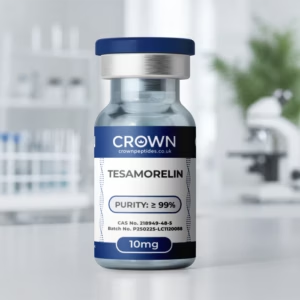
Tesamorelin Research Peptide
HPLC and MS verified · batch certificate published · dispatched from the UK before 2pm
Summary of Published Tesamorelin Studies
This table looks different from the mechanism-heavy tables in our other guides, because tesamorelin's evidence base is genuinely different: this is real, regulatory-grade human trial data rather than early-stage rodent mechanistic work. That said, the same discipline about scope applies — the VAT and muscle findings come from a specific patient population (HIV-associated lipodystrophy) and shouldn't be assumed to generalise automatically to other populations, and the cognition finding rests on a single trial that, while well-designed, has not been extensively replicated.
Potential Tesamorelin Benefits for Visceral Fat
Based on the published literature, researchers have investigated tesamorelin as a tool for studying:
- GHRH receptor agonism as a research model for physiological, pulsatile GH stimulation, distinct from direct GH administration
- Visceral-specific fat metabolism and lipolysis mechanisms
- The relationship between the somatotrophic axis (GH/IGF-1) and cognitive function in ageing and MCI
- Skeletal muscle composition and quality as an outcome measure distinct from fat mass
- Comparative pharmacology between GHRH analogues and ghrelin-receptor-acting GH secretagogues
Even with a genuinely approved indication behind it, the same discipline about language applies: research uses of tesamorelin outside its approved population and indication remain investigational, and Crown Peptides' product is supplied for laboratory research only — not as the approved pharmaceutical, and not for human administration of any kind.
Current Limitations of Tesamorelin Research
Even tesamorelin's comparatively mature evidence base has clearly documented gaps, several of which are acknowledged directly in its own FDA labelling and payer policy review documents:
- No established long-term cardiovascular safety data. The FDA has explicitly noted that long-term cardiovascular safety has not been established, and that the short-term trial results did not address cardiovascular disease risk. Regulators concluded a dedicated cardiovascular outcomes trial was not feasible given the relatively low prevalence of HIV-associated lipodystrophy.
- Effects are not sustained after discontinuation. Visceral fat reductions achieved during treatment have not been shown to be maintained beyond the treatment period in the trials submitted for approval, meaning the studied effect is treatment-dependent rather than a lasting change.
- Long-term IGF-1 elevation risk is unknown. Payer and regulatory review documents specifically flag that the long-term risks of sustained IGF-1 elevation from tesamorelin use remain unknown, which is a relevant consideration for any extended research protocol.
- The cognitive-function finding rests on one trial. The Baker et al. RCT is a well-designed, adequately sized study, but a single trial — however well conducted — is not the same as a replicated evidence base, and broader GHRH-analogue research for cognitive impairment has been described in review literature as non-conclusive and at times conflicting.
- No demonstrated benefit on antiretroviral adherence or quality of life. Regulatory review specifically notes there are no data to support improved compliance with antiretroviral therapies, and that patient-reported outcomes related to body image were inconsistent across trials.
Tesamorelin Side Effects Reported in Research
Because tesamorelin has been through full clinical trial and post-marketing safety review as an approved medicine, its side-effect profile is unusually well documented compared to most research peptides generally. Common adverse reactions identified in prescribing information and clinical trials include arthralgia (joint pain), injection site reactions, pain in extremities, peripheral edema, and myalgia (muscle pain).
Contraindications specifically identified in regulatory labelling include disruption of the hypothalamic-pituitary axis (e.g. from hypophysectomy, pituitary tumour or surgery, head trauma), active malignancy, known hypersensitivity to tesamorelin or its excipients, and pregnancy. Long-term cardiovascular safety and the long-term consequences of sustained IGF-1 elevation both remain areas of documented uncertainty rather than resolved questions, despite the compound's approval status.
Any research protocol involving human or animal subjects should be developed with appropriate ethical and institutional review, following standard safety monitoring practices for investigational compounds — tesamorelin's approval for one specific indication in one specific patient population does not extend safety assurances to other research contexts or populations.
Tesamorelin Dosage Used in Published Research
This section is included for methodological context only and should not be interpreted as guidance for use.
Published human trials have used doses in the 1–2 mg/day range via daily subcutaneous injection, including 1 mg and 2 mg arms in the type 2 diabetes safety trial, 1 mg/day in the cognitive function RCT, and 2 mg/day in the approved product labelling for HIV-associated lipodystrophy. These figures reflect specific, clinically supervised trial protocols in specific patient populations — they describe what was studied, under what monitoring conditions, and in whom, and are not a basis for self-directed use in any context, research or otherwise.
Researchers designing their own experimental protocols should base dosing decisions on the primary literature relevant to their specific model and objective, in consultation with institutional ethics review as applicable, rather than on secondary summaries such as this one.
Analogues and Future Research Directions
Tesamorelin's clinical maturity means "future directions" in this literature look somewhat different from earlier-stage peptides — much of the open territory concerns extending or refining an already-approved mechanism rather than establishing basic proof of concept.
- Long-acting reformulation. Theratechnologies has continued to develop longer-acting formulations (marketed as Egrifta WR, using an "F8" formulation) intended to reduce reconstitution burden from daily to weekly while maintaining bioequivalence — a pharmaceutical formulation research question distinct from the underlying peptide biology.
- Replication of the cognitive-function finding. Given how consequential a replicated finding in MCI populations would be, independent replication of the Baker et al. results — ideally in larger, more diverse cohorts — remains a meaningful open research question.
- NAFLD/MASLD-specific trial data. Given growing off-label interest in tesamorelin's hepatic fat effects, dedicated, adequately powered trials in NAFLD/MASLD populations (as opposed to extrapolating from the HIV-lipodystrophy dataset) would considerably strengthen this area.
- Cardiovascular outcome data. Given that regulators have explicitly flagged this as an unresolved question, any future large-scale or registry-based research capable of speaking to long-term cardiovascular safety would address one of the most significant remaining gaps.
Frequently Asked Questions
How long does tesamorelin last after reconstitution?
When reconstituted with bacteriostatic water and kept refrigerated (2°C–8°C), Tesamorelin typically lasts between 14 and 28 days. If reconstituted using plain sterile water, it contains no preservatives and must be used immediately.
How much bac water for 10mg of tesamorelin?
Commonly, 2 mL to 3 mL of bacteriostatic water is added to a 10 mg vial to ensure proper dissolution. Adding 2 mL creates a convenient concentration of 5 mg/mL, making precise dosing easy on a standard insulin syringe.
How to reconstitute tesamorelin?
Wipe both vial stoppers with alcohol, draw the BAC water into your syringe, and slowly trickle it down the inside wall of the powder vial. Gently swirl the vial until the liquid turns completely clear—never shake it, as shaking can damage the peptide chains.
Is ipamorelin the same as tesamorelin?
No, they are distinct compounds; Tesamorelin is a GHRH analog primarily prescribed to target visceral abdominal fat, whereas Ipamorelin is a selective ghrelin/GHS agonist. While both encourage growth hormone release, they operate through different pathways and receptor sites.
Is tesamorelin a peptide?
Yes, Tesamorelin is a synthetic 44-amino-acid peptide designed to mirror naturally occurring Growth Hormone-Releasing Hormone (GHRH). It binds to receptors in the pituitary gland to stimulate the body's own natural production of growth hormone.
Why Peptide Sourcing Quality Matters for Research Validity
Tesamorelin's entire functional advantage over native GHRH rests on a specific, deliberate chemical modification — the N-terminal trans-3-hexenoic acid group that confers DPP-IV resistance. This makes sourcing quality especially consequential for this particular peptide: a batch with even a modest proportion of unmodified, truncated, or otherwise incorrectly synthesised peptide would not simply be "slightly less pure" tesamorelin, it could functionally behave more like unprotected native GHRH, with a substantially shorter effective half-life and a different pharmacological profile entirely.
Common failure modes relevant to a modified peptide like tesamorelin include:
- Incomplete N-terminal modification — if the stabilising modification is incompletely or incorrectly attached during synthesis, the resulting peptide may lack the DPP-IV resistance that defines tesamorelin's functional profile, regardless of the amino acid sequence otherwise being correct.
- Truncated or deletion sequences — as with any 44-residue peptide, incomplete coupling during synthesis can leave a proportion of the product missing residues, which is more likely with longer sequences than with short peptides.
- Bacterial endotoxin contamination — relevant for any in vivo or cell-culture research, particularly given that tesamorelin research often involves metabolic and inflammatory endpoints where endotoxin contamination could confound results.
- Inaccurate mass or concentration labelling — without independent mass spectrometry confirmation, there's no reliable way to verify that a vial contains correctly modified tesamorelin at the labelled concentration rather than a mixture including unmodified or degraded peptide.
For a molecule whose entire pharmacological identity depends on one specific chemical modification holding up through synthesis, storage, and delivery, independent verification isn't a generic quality reassurance — it's the only way to know whether a given batch is actually tesamorelin as studied in the literature, or something subtly different that happens to share most of its sequence.
Read the certificate before you order
Every batch is published openly — identity by mass spectrometry, purity by HPLC, and the batch number printed on the vial you receive.
Open the COA libraryWhy Choose Crown Peptides
Testing is only part of the picture. Crown Peptides was built around a simple idea: a UK researcher ordering a peptide should be able to trust everything about how it reached them — not just the number on a Certificate of Analysis, but who made it, how it was handled, how it travelled, and who they can speak to if they have a question. That's the standard we hold ourselves to on every order, and it's worth explaining properly rather than just listing it.
Sourcing You Can Trust
Quality starts long before a product reaches our warehouse. We work directly with one of the world's largest and most established peptide synthesis manufacturers, chosen specifically for its production standards, consistency, and track record — rather than sourcing opportunistically from whichever manufacturer happens to offer the lowest price that month. That close, ongoing partnership is what allows us to stand behind every batch we sell, because we know exactly how it was made.
Verified Through Independent Testing
We don't expect researchers to take a manufacturer's word for it, so we verify every batch independently before it's listed for sale:
Endotoxin Testing
Every batch is screened for bacterial endotoxin, which matters in particular for any research involving cell culture, immune signalling, or in vivo inflammatory endpoints.
HPLC Purity Analysis
High-performance liquid chromatography is used to assess purity and screen for truncated sequences, deletion products, and synthesis by-products.
Mass Spectrometry Identity Confirmation
MS analysis confirms both the amino acid sequence and the presence of tesamorelin's specific N-terminal modification, verifying that the supplied peptide matches the stabilised structure studied in the published literature rather than an unmodified or degraded variant.
Certificate of Analysis
Every batch is supplied with a Certificate of Analysis, and a QR code linking directly to the testing report on crownpeptides.co.uk, so researchers can document exactly what was used in their own experimental records.
Careful Storage and Handling
A product that's been correctly synthesised and tested can still be let down by poor handling afterward. Once a batch clears testing, we store it under controlled conditions designed to preserve stability and prevent degradation before it ever reaches a researcher's bench. This matters more for peptides and sensitive research compounds than for most laboratory reagents: temperature excursions, light exposure, and poor stock rotation can all silently reduce integrity long before a vial is opened, in ways that aren't visible on inspection and can quietly undermine an experiment's results. We treat that storage window as part of the product, not an afterthought once testing is done.
Packaging and Delivery
Every order is packed in premium, discreet packaging designed to protect the product in transit and arrive intact. Orders placed before 2pm are dispatched the same working day for next-day UK delivery, and we ship to Northern Ireland, the Republic of Ireland, Scotland, England, and across the EU, with international shipping available beyond that. For a researcher working to a study timeline, knowing an order will arrive quickly, safely, and exactly as ordered isn't a convenience — it's part of keeping a research schedule on track.
Support That Goes Beyond the Sale
Peptide and research-compound work raises genuine practical questions — around reconstitution, storage, handling, and interpreting a Certificate of Analysis — and we'd rather a researcher ask us directly than guess. Our team is on hand to provide clear, straightforward guidance from product selection through to delivery and beyond, without the evasiveness or upsell pressure that can come with some suppliers in this space. We see that ongoing relationship, not just the transaction, as the actual job.
Regulatory Compliance and Transparency
Crown Peptides is a UK-based company operating in line with MHRA guidance on research chemicals. Every batch is released against its own certificate of analysis, with HPLC purity and mass-spectrometry identity recorded and the lot number printed on the vial you receive. We'd rather be transparent about what we sell and who it's for than blur that line to chase a wider customer base — that's a deliberate choice on our part, not a legal minimum we begrudgingly meet.
Our Commitment
Put simply, our mission is to supply the UK research community with peptides and research compounds of unmatched purity and consistency, backed by a level of service, transparency, and technical support that researchers can actually rely on — from the first email enquiry to the vial arriving on the bench. That standard applies whether an order is a single vial for an independent researcher or a bulk order for a laboratory, and it holds regardless of whether a customer ever finds out how much work sits behind it.
For researchers who want their results to be reproducible and their experimental record defensible, knowing precisely what's in the vial — and trusting that everyone who handled it got it right — is a basic, non-negotiable starting point.
References
- "The Growth Hormone Releasing Hormone Analogue, Tesamorelin, Decreases Muscle Fat and Increases Muscle Area in Adults with HIV." PMC. https://pmc.ncbi.nlm.nih.gov/articles/PMC6766405/
- "Safety and metabolic effects of tesamorelin, a growth hormone-releasing factor analogue, in patients with type 2 diabetes: A randomized, placebo-controlled trial." PMC. https://pmc.ncbi.nlm.nih.gov/articles/PMC5472315/
- "Tesamorelin, a human growth hormone releasing factor analogue." PubMed. https://pubmed.ncbi.nlm.nih.gov/19243281/
- Baker, L.D. et al. "Tesamorelin, a growth hormone-releasing hormone analogue, improves cognitive function in MCI and healthy aging: Results of a randomized controlled trial." Alzheimer's & Dementia. https://alz-journals.onlinelibrary.wiley.com/doi/10.1016/j.jalz.2011.05.1439
- "FDA approves tesamorelin for reduction of central fat accumulation." HIV i-Base. https://i-base.info/htb/14188
- EGRIFTA SV Prescribing Information. U.S. Food and Drug Administration. https://www.accessdata.fda.gov/drugsatfda_docs/label/2019/022505s012s013lbl.pdf
Working with Tesamorelin Research Peptide
Batch-tested material, published certificates, and same-day dispatch on orders placed before 2pm.
See Tesamorelin Research Peptide