
RESEARCH USE DISCLAIMER
Crown Peptides supplies NAD+ and other research compounds strictly for laboratory research purposes. Our products are not intended for human consumption and are not sold, marketed, or labelled for the diagnosis, treatment, cure or prevention of any disease. Nothing in this document should be read as medical advice or as an endorsement of human use. The discussion below summarises published scientific literature only, and is intended for researchers and students of biochemistry and pharmacology.
NAD+ (nicotinamide adenine dinucleotide) is one of the most heavily studied molecules in modern cell biology, and in the last decade it has also become one of the most heavily marketed. It sits at an unusual crossing point: a coenzyme so fundamental to metabolism that every living cell depends on it, and simultaneously the subject of a fast-growing commercial wellness industry offering infusions, injections and supplements promising to "restore youthful NAD+ levels."
This article separates those two things. It looks at what NAD+ actually is and does at a biochemical level, what the peer-reviewed research on ageing, mitochondrial function and disease actually shows, and — importantly — how far that evidence extends into direct clinical benefit in humans. As with any actively marketed compound, the gap between mechanistic plausibility and demonstrated clinical outcome matters, and recent major reviews in this field have been notably candid about how wide that gap still is.
The short version
- NAD+ is a redox cofactor, not a peptide, and sits at the centre of cellular energy metabolism.
- Levels decline with age, which is what drew ageing research to it.
- Research focuses on sirtuin activity, DNA repair and mitochondrial function.
- Raising cellular levels is chemically straightforward; proving downstream benefit is not.
What Is NAD+?
NAD+ is a dinucleotide — two nucleotides joined through their phosphate groups — built from an adenine nucleotide and a nicotinamide nucleotide. It exists in a redox pair with its reduced form, NADH, and this oxidised/reduced cycling is what allows it to function as an electron carrier in metabolism. NAD+ is found in every cell in the human body and is considered essential for maintaining energy and redox homeostasis, regulating a vast network of systems across diverse cellular compartments and tissues.
Unlike a synthetic research peptide, NAD+ is an endogenous molecule — the body already produces it continuously through several overlapping biosynthetic routes. It can be synthesised de novo from the amino acid L-tryptophan via the kynurenine pathway, from dietary vitamin B3 forms (nicotinic acid and nicotinamide) via the Preiss-Handler and salvage pathways, or from the related compounds nicotinamide riboside (NR) and nicotinamide mononucleotide (NMN), which are themselves converted into NAD+ inside the cell.
NAD+ Mechanism: How the Coenzyme Works
NAD+'s biological importance rests on two distinct functions that are easy to conflate but mechanistically separate. The first is its role as a coenzyme in redox reactions — shuttling electrons during glycolysis, the citric acid cycle and oxidative phosphorylation, which is how cells convert nutrients into usable energy. The second, and the one driving most of the current research interest, is its role as a cosubstrate that is consumed — not just recycled — by a distinct family of signalling enzymes.
NAD+ is a necessary cosubstrate in several signalling pathways in which it is cleaved during post-translational modification of proteins and the production of second messengers. Three enzyme families account for most of this consumption: sirtuins (SIRT1–7), a family of deacylase enzymes that regulate metabolism and gene expression; poly(ADP-ribose) polymerases (PARPs), which orchestrate DNA repair; and CD38 and CD157, ectoenzymes that cleave NAD+ to produce nicotinamide plus signalling compounds such as ADP-ribose and cyclic ADP-ribose, which act as triggers for intracellular calcium signalling.
NAD+ is consumed, not just recycled, by three major enzyme families — sirtuins, PARPs and CD38 — which is why cellular NAD+ availability declines under metabolic, DNA-repair and immune demand.
This distinction matters for interpreting the research: because sirtuins, PARPs and CD38 all consume NAD+ as a substrate rather than simply using and releasing it, cellular NAD+ levels are constantly being drawn down by ordinary cell maintenance, DNA repair and immune signalling activity — which is part of why researchers have focused so heavily on what happens when consumption outpaces synthesis.
Why NAD+ levels are reported to decline with age
A substantial research literature has documented age-related decline in NAD+ levels across various tissues, generally attributed to a combination of reduced biosynthetic enzyme activity (particularly NAMPT, the rate-limiting enzyme in the salvage pathway), and increased consumption — chronic low-grade inflammation increases CD38 ectoenzyme activity on immune cells, driving greater extracellular NAD+ breakdown, while accumulating DNA damage increases PARP-driven consumption. The resulting NAD+ deficit is reported to impair sirtuin and PARP function, which researchers have proposed contributes to genomic instability, metabolic disruption, and cellular senescence.
It's worth flagging an important nuance here that often gets lost in consumer-facing coverage: a recent major review in Nature Metabolism specifically noted that although NAD+ decline with ageing is a widely repeated claim, evidence for an age-related decline in NAD+ levels in humans specifically has been consistently observed only in a limited number of studies, even though preclinical animal data is considerably more extensive. This is a meaningfully different evidence picture than the confident "NAD+ declines with age" framing common in marketing material.
How researchers measure NAD+ levels
A methodological point that's easy to overlook: much of the debate about whether NAD+ "truly" declines with age, and by how much, traces back to differences in how it's measured. Common approaches include liquid chromatography coupled to mass spectrometry (LC-MS/MS) on blood or tissue samples, enzymatic cycling assays, and bioluminescent assays, each with different sensitivity, specificity, and susceptibility to sample-handling artefacts. NAD+ is unstable during sample collection and storage if not handled carefully, and inconsistent pre-analytical handling across studies (time to freezing, anticoagulant choice, tissue versus plasma sampling) is a plausible contributor to the inconsistency researchers have found between studies on age-related decline. This is one reason recent reviews have called for more standardised measurement protocols before drawing firm conclusions about the human ageing trajectory of NAD+.
- Classification
- Nicotinamide adenine dinucleotide research compound
- CAS Number
- 53-84-9
- Molecular Weight
- approximately 663.43 g/mol
- Molecular Formula
- C21H27N7O14P2
NAD+ Benefits: Why Researchers Are Interested
NAD+ sits upstream of processes implicated in a very wide range of research areas — which is precisely why interest in it spans so many separate fields rather than one narrow disease area. Because sirtuins, PARPs and CD38 collectively touch metabolism, DNA repair, inflammation, calcium signalling and mitochondrial maintenance, a single molecule's availability has knock-on relevance to ageing biology, neurodegeneration, cardiovascular health, kidney function and metabolic disease research programmes that would otherwise have little in common.
This breadth is also a source of caution: a molecule implicated in this many pathways is difficult to study cleanly, because an intervention that raises NAD+ levels can plausibly affect many downstream systems simultaneously, which complicates attributing any single observed outcome to any one mechanism.
Key Areas of NAD+ Research
Ageing and longevity biology. The bulk of the public interest in NAD+ stems from research in model organisms (yeast, worms, flies, mice) showing that boosting NAD+ availability, or manipulating the enzymes that consume it, can extend lifespan or healthspan in those organisms. Translating this to human ageing is the central open question in the field.
Mitochondrial function. Because NAD+/NADH cycling is central to oxidative phosphorylation, researchers have studied NAD+ depletion as a driver of mitochondrial dysfunction across several disease contexts, and NAD+ repletion as a strategy to restore mitochondrial and organismal homeostasis.
Neurodegeneration. NAD+ metabolism has been studied in the context of neurodegenerative disease, partly through SARM1, an enzyme that rapidly depletes local NAD+ following axonal injury and has become a specific target of interest in axon degeneration research.
Cardiovascular research. NAD+ pools tend to decline with normal ageing, obesity, and hypertension — all major cardiovascular risk factors — and preclinical research has explored NAD+ replenishment for extending healthspan and reducing blood pressure in animal models of heart failure and vascular ageing.
Kidney research. NAD+ is reduced in acute kidney injury and chronic kidney disease models, and NAD+ augmentation strategies have shown benefit in acute kidney injury research specifically, though results in chronic kidney disease models have been more mixed.
Methodology: precursors versus direct NAD+ administration. A methodologically important distinction runs through this literature: NAD+ itself cannot cross the intestinal wall or enter cells directly, so oral NAD+ supplementation is not a viable route — research instead uses either oral precursors (NR, NMN, nicotinamide) that are converted to NAD+ inside cells, or intravenous administration of NAD+ itself, which bypasses digestion entirely. These are pharmacologically distinct interventions and should not be treated as interchangeable when reading study results, since they differ in bioavailability, metabolism, and reported tolerability.
Immune function and inflammaging. Because CD38 activity rises with chronic low-grade inflammation and is a major route of NAD+ consumption, researchers have studied the relationship between NAD+ decline, immune cell ageing, and the low-grade systemic inflammation increasingly referred to in the literature as "inflammaging." This has made NAD+ metabolism a point of interest in immunology research beyond its original framing as a purely metabolic or longevity-focused molecule.
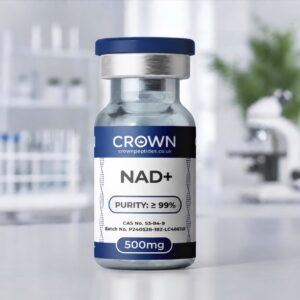
NAD+ Research Compound
HPLC and MS verified · batch certificate published · dispatched from the UK before 2pm
Summary of Published NAD+ Studies
As with Semax, it's worth being explicit about what this table does and doesn't show. The mechanistic case for NAD+'s centrality to cellular ageing biology is very strong and well replicated across model organisms. The human clinical evidence for boosting NAD+ (whether via precursors or direct IV administration) producing a measurable, clinically meaningful health benefit is considerably thinner and, per recent reviews, has been consistently limited in efficacy despite promising preclinical signals.
Potential NAD+ Benefits for Cellular Ageing
Based on the published literature, researchers have investigated NAD+ and its precursors as tools for studying:
- The relationship between cellular NAD+ availability and sirtuin/PARP-dependent processes such as DNA repair and metabolic regulation
- Mitochondrial function and bioenergetics in ageing and disease models
- CD38-mediated NAD+ consumption in chronic inflammation and immune ageing ("inflammaging")
- Comparative pharmacokinetics and tolerability of different NAD+-boosting strategies (oral precursors versus intravenous administration)
- Tissue-specific NAD+ decline and its contribution to organ-specific disease processes (cardiac, renal, neurological)
As with the Semax literature, it's important to be precise about language: this is research investigating a mechanism and a biomarker, not evidence of an established treatment effect in humans. None of the above constitutes a demonstrated therapeutic benefit under contemporary regulatory frameworks.
Current Limitations of NAD+ Research
Several honest caveats apply to the NAD+ literature as it currently stands:
- Human ageing-decline evidence is thinner than commonly assumed. Despite widespread repetition of the claim that NAD+ declines with age, a recent major review found this has been consistently observed only in a limited number of human studies, even though the animal literature is considerably more extensive.
- Clinical efficacy in humans remains limited. Although preclinical studies support NAD+ precursor supplementation as a promising strategy for healthy ageing, human clinical trials to date have shown limited efficacy, according to a comprehensive Nature Metabolism review of the clinical evidence.
- Direct NAD+ IV administration is understudied relative to its commercial popularity. Despite the wide availability and broad range of anecdotally reported benefits of NAD+ IV in commercial wellness settings, there is a genuine paucity of rigorous human data evaluating its use, and most available studies are small, retrospective, or short-duration pilot work rather than adequately powered randomised trials.
- Precursor versus direct NAD+ comparisons are still emerging. Very few studies have directly compared NAD+ IV against precursor IV (such as NR) in the same protocol, meaning claims about relative superiority of one approach over another are not yet well substantiated.
- Tissue-specific effects complicate generalisation. NAD+ decline and response to supplementation is not uniform across organs, so findings in one tissue (e.g. liver, muscle) cannot automatically be assumed to generalise to another (e.g. brain, kidney).
NAD+ Side Effects Reported in Research
Reporting on adverse effects differs meaningfully depending on the route of administration studied. For oral NAD+ precursors (NR, NMN) at studied doses, human trials have generally reported good tolerability, with oral Niagen (NR) supplementation shown to consistently demonstrate safety in human intervention studies at doses up to 3,000 mg/day, and intravenous NMN shown not to affect vital signs or standard liver, heart, pancreas or kidney metabolic markers in a small human safety study.
Direct intravenous NAD+ administration has a distinct and more clearly documented side-effect profile. Commonly reported clinician- and patient-reported side effects with NAD+ IV include nausea, malaise, diaphoresis (sweating), stomach cramping, and headache, which researchers have suggested may relate to the proinflammatory environment created by raising extracellular NAD+ to supraphysiologic concentrations. These effects are generally reported to necessitate slow, prolonged infusion rates to remain tolerable. Comparative research has found that IV nicotinamide riboside produced fewer and less severe adverse experiences than IV NAD+ during infusion, alongside meaningfully shorter infusion times, in the same study populations.
Any research protocol involving human or animal subjects should be developed with appropriate ethical and institutional review, following standard safety monitoring practices for investigational compounds.
NAD+ Dosing Used in Published Research
This section is included for methodological context only and should not be interpreted as guidance for use.
Published human studies of intravenous NAD+ have used protocols such as 500 mg NAD+ IV administered over multiple consecutive days in a real-world retrospective comparison, and various acute single-infusion doses in smaller randomised pilot studies, with tolerability closely tied to infusion rate rather than total dose alone. Oral precursor studies have used doses up to 1,000–3,000 mg/day for NR and varying gram-range doses for NMN across different trial designs. These figures describe what specific studies did under clinical or research supervision — they are not comparable across studies with different populations, monitoring protocols, and endpoints, and are not a basis for self-directed use.
Researchers designing their own experimental protocols should base dosing decisions on the primary literature relevant to their specific model and administration route, in consultation with institutional ethics review as applicable, rather than on secondary summaries such as this one.
Precursors, Analogues and Future Research Directions
Because NAD+ itself cannot be taken up directly by cells when administered orally, much of the applied research in this field has shifted toward its precursor molecules — nicotinamide riboside (NR) and nicotinamide mononucleotide (NMN) — which are absorbed and converted into NAD+ intracellularly via the salvage pathway. Both have their own, partially overlapping, evidence bases, and neither should be assumed to behave identically to direct NAD+ administration.
Several open questions are likely to shape where this research goes next:
- Head-to-head precursor comparisons. Rigorous trials directly comparing NAD+ IV, NR IV, NMN IV, and their oral equivalents within the same study design remain rare, despite this being the most practically useful question for researchers designing supplementation protocols.
- CD38 inhibition as an alternative strategy. Rather than boosting NAD+ synthesis, an emerging research direction targets NAD+ consumption directly — CD38 inhibitors have restored NAD+ levels and improved metabolic parameters in aged animal models, representing a mechanistically distinct approach worth further study.
- Tissue-specific delivery and targeting. Given that NAD+ decline and response to supplementation varies by organ, research into tissue-targeted delivery methods could clarify which interventions are most relevant to which disease contexts.
- Adequately powered, longer-duration human trials. The single largest gap identified by recent reviews is the shortage of long-duration, adequately powered human trials capable of detecting genuine clinical benefit rather than short-term biomarker change.
Frequently Asked Questions
Is NAD+ a peptide?
No. NAD+ is a dinucleotide — a coenzyme built from two linked nucleotides — rather than a chain of amino acids. It's included in Crown Peptides' research compound range because it's frequently studied alongside peptides in metabolic and longevity research, but it is chemically distinct from a peptide.
What is NAD+ good for?
NAD+ is essential for cellular energy production (ATP synthesis), DNA repair, and maintaining mitochondrial health. It helps improve mental clarity, boosts metabolic function, and supports healthy anti-aging processes.
How long does reconstituted NAD+ last?
When properly stored in a refrigerator, reconstituted NAD+ typically maintains its potency for 2 to 4 weeks. Exposure to heat, light, or room temperature storage will accelerate its degradation.
How much BAC water to reconstitute NAD+ 500mg?
Adding 5 mL of BAC water to a 500 mg vial creates a convenient concentration of 100 mg per mL. You can also use 10 mL of BAC water if you prefer a less concentrated solution of 50 mg per mL.
Does NAD+ have to be refrigerated?
Yes, once reconstituted, NAD+ must be refrigerated at 2°C–8°C (36°F–46°F) to keep the liquid stable. Unreconstituted powder can tolerate short-term room temperature during shipping, but cold storage is best long-term.
Why Compound Sourcing Quality Matters for Research Validity
The reliability of any experimental result involving NAD+ depends entirely on the reliability and stability of the material used to generate it — and NAD+ presents some sourcing considerations that differ from a synthetic peptide.
Because NAD+ is a redox-active dinucleotide rather than a stable peptide chain, it is chemically more sensitive to degradation over time and under poor storage conditions. Common failure modes relevant to NAD+ specifically include:
- Hydrolytic degradation — NAD+ can break down into nicotinamide and ADP-ribose over time, particularly if exposed to heat, moisture, or repeated freeze-thaw cycling, reducing the effective concentration of intact NAD+ in a sample without any visible change.
- Light and oxidative sensitivity — improper storage can accelerate breakdown, which is why controlled, consistent storage conditions from manufacture through to delivery are particularly important for this compound.
- Inaccurate concentration labelling — without independent mass spectrometry confirmation, there's no reliable way to verify that a vial contains the labelled concentration of intact NAD+ rather than a partially degraded mixture.
- Bacterial endotoxin contamination — as with any research compound intended for cell culture or in vivo work, endotoxin contamination can independently confound inflammatory and immune-signalling readouts, which are directly relevant given NAD+'s role in CD38-mediated immune signalling research.
For a molecule this central to metabolic and immune signalling research, a degraded or contaminated batch doesn't just under-deliver — it can produce results that look mechanistically plausible but don't reflect the compound the researcher believes they're studying. This is precisely why reputable analytical practice for NAD+ involves independent testing and verified storage conditions rather than relying on a supplier's synthesis claims alone.
Read the certificate before you order
Every batch is published openly — identity by mass spectrometry, purity by HPLC, and the batch number printed on the vial you receive.
Open the COA libraryWhy Choose Crown Peptides
Testing is only part of the picture. Crown Peptides was built around a simple idea: a UK researcher ordering a peptide should be able to trust everything about how it reached them — not just the number on a Certificate of Analysis, but who made it, how it was handled, how it travelled, and who they can speak to if they have a question. That's the standard we hold ourselves to on every order, and it's worth explaining properly rather than just listing it.
Sourcing You Can Trust
Quality starts long before a product reaches our warehouse. We work directly with one of the world's largest and most established peptide synthesis manufacturers, chosen specifically for its production standards, consistency, and track record — rather than sourcing opportunistically from whichever manufacturer happens to offer the lowest price that month. That close, ongoing partnership is what allows us to stand behind every batch we sell, because we know exactly how it was made.
Verified Through Independent Testing
We don't expect researchers to take a manufacturer's word for it, so we verify every batch independently before it's listed for sale:
Endotoxin Testing
Every batch is screened for bacterial endotoxin, which matters in particular for any research involving cell culture, immune signalling, or in vivo inflammatory endpoints.
HPLC Purity Analysis
High-performance liquid chromatography is used to assess purity and screen for truncated sequences, deletion products, and synthesis by-products.
Mass Spectrometry Identity Confirmation
MS analysis confirms the molecular weight of the supplied compound matches intact NAD+ rather than a partially degraded breakdown product, providing an independent check on both identity and integrity beyond the label.
Certificate of Analysis
Every batch is supplied with a Certificate of Analysis, and a QR code linking directly to the testing report on crownpeptides.co.uk, so researchers can document exactly what was used in their own experimental records.
Careful Storage and Handling
A product that's been correctly synthesised and tested can still be let down by poor handling afterward. Once a batch clears testing, we store it under controlled conditions designed to preserve stability and prevent degradation before it ever reaches a researcher's bench. This matters more for peptides and sensitive research compounds than for most laboratory reagents: temperature excursions, light exposure, and poor stock rotation can all silently reduce integrity long before a vial is opened, in ways that aren't visible on inspection and can quietly undermine an experiment's results. We treat that storage window as part of the product, not an afterthought once testing is done.
Packaging and Delivery
Every order is packed in premium, discreet packaging designed to protect the product in transit and arrive intact. Orders placed before 2pm are dispatched the same working day for next-day UK delivery, and we ship to Northern Ireland, the Republic of Ireland, Scotland, England, and across the EU, with international shipping available beyond that. For a researcher working to a study timeline, knowing an order will arrive quickly, safely, and exactly as ordered isn't a convenience — it's part of keeping a research schedule on track.
Support That Goes Beyond the Sale
Peptide and research-compound work raises genuine practical questions — around reconstitution, storage, handling, and interpreting a Certificate of Analysis — and we'd rather a researcher ask us directly than guess. Our team is on hand to provide clear, straightforward guidance from product selection through to delivery and beyond, without the evasiveness or upsell pressure that can come with some suppliers in this space. We see that ongoing relationship, not just the transaction, as the actual job.
Regulatory Compliance and Transparency
Crown Peptides is a UK-based company operating in line with MHRA guidance on research chemicals. Every batch is released against its own certificate of analysis, with HPLC purity and mass-spectrometry identity recorded and the lot number printed on the vial you receive. We'd rather be transparent about what we sell and who it's for than blur that line to chase a wider customer base — that's a deliberate choice on our part, not a legal minimum we begrudgingly meet.
Our Commitment
Put simply, our mission is to supply the UK research community with peptides and research compounds of unmatched purity and consistency, backed by a level of service, transparency, and technical support that researchers can actually rely on — from the first email enquiry to the vial arriving on the bench. That standard applies whether an order is a single vial for an independent researcher or a bulk order for a laboratory, and it holds regardless of whether a customer ever finds out how much work sits behind it.
For researchers who want their results to be reproducible and their experimental record defensible, knowing precisely what's in the vial — and trusting that everyone who handled it got it right — is a basic, non-negotiable starting point.
References
- "NAD+ precursor supplementation in human ageing: clinical evidence and challenges." Nature Metabolism. https://www.nature.com/articles/s42255-025-01387-7
- "The role of NAD+ metabolism and its modulation of mitochondria in aging and disease." npj Metabolic Health and Disease. https://www.nature.com/articles/s44324-025-00067-0
- "Intravenous infusion of nicotinamide adenine dinucleotide (NAD+) versus nicotinamide riboside (NR): a retrospective tolerability pilot study in a real-world setting." PMC. https://pmc.ncbi.nlm.nih.gov/articles/PMC12907335/
- "Randomized, placebo-controlled, pilot clinical study evaluating acute Niagen+ IV and NAD+ IV in healthy adults." medRxiv. https://www.medrxiv.org/content/10.1101/2024.06.06.24308565v1.full
- "Nicotinamide Mononucleotide Is Safely Metabolized and Significantly Reduces Blood Triglyceride Levels in Healthy Individuals." PMC. https://www.ncbi.nlm.nih.gov/pmc/articles/PMC9534732/
- "The Plasma NAD+ Metabolome Is Dysregulated in 'Normal' Aging." PMC. https://www.ncbi.nlm.nih.gov/pmc/articles/PMC6482912/
- "The CD38 glycohydrolase and the NAD sink: implications for pathological conditions." American Journal of Physiology-Cell Physiology. https://journals.physiology.org/doi/full/10.1152/ajpcell.00451.2021
- "NAD+ metabolism: pathophysiologic mechanisms and therapeutic potential." Signal Transduction and Targeted Therapy. https://www.nature.com/articles/s41392-020-00311-7
Working with NAD+ Research Compound
Batch-tested material, published certificates, and same-day dispatch on orders placed before 2pm.
See NAD+ Research Compound