

RESEARCH USE DISCLAIMER
Crown Peptides supplies Selank and other research compounds strictly for laboratory research purposes. Our products are not intended for human consumption and are not sold, marketed, or labelled for the diagnosis, treatment, cure or prevention of any disease. Nothing in this document should be read as medical advice or as an endorsement of human use. The discussion below summarises published scientific literature only, and is intended for researchers and students of pharmacology and neuroscience.
Selank is a seven-residue analogue of tuftsin, an immunoregulatory fragment the body produces naturally, extended at the C-terminus with Pro-Gly-Pro to keep it from being broken down within minutes. Developed at the Institute of Molecular Genetics of the Russian Academy of Sciences, it has been studied primarily in anxiety and stress-response models, with a body of published work that rarely reaches Western journals despite running for decades.
This article covers what the published literature actually shows about Selank's mechanism, the human and animal research behind its anxiolytic and immunomodulatory reputation, and where that evidence is strong versus where it remains regional, small-scale, or difficult to independently verify. As with Semax, separating the peer-reviewed research from the considerably larger body of online enthusiast claims is the point of this article.
The short version
- Seven residues: a tuftsin analogue extended with Pro-Gly-Pro for stability.
- Studied as an anxiolytic that does not carry the sedation of benzodiazepines.
- Research points to GABAergic and BDNF-related pathways.
- As with Semax, the evidence base is largely Russian and thinly replicated.
What Is Selank Peptide?
Selank is a synthetic heptapeptide with the sequence Thr-Lys-Pro-Arg-Pro-Gly-Pro. It is built by taking tuftsin (Thr-Lys-Pro-Arg), a naturally occurring tetrapeptide fragment of the Fc region of human immunoglobulin G with known immunostimulatory properties, and extending it with the same Pro-Gly-Pro tripeptide stabilising sequence used in Semax's design. This is a deliberate and recognisable design pattern from this research group: take a naturally occurring bioactive fragment that degrades too quickly to be useful experimentally, and extend it with Pro-Gly-Pro to improve metabolic stability and prolong its window of activity.
Native tuftsin has a very short half-life in circulation due to rapid exopeptidase degradation, which limited its usefulness as a research tool. Selank was developed specifically to address this, and has been studied since the 1990s, receiving regulatory registration in the Russian Federation as a prescription anxiolytic for generalised anxiety disorder and neurasthenia.
Selank Peptide Mechanism: How It Works
Selank's proposed mechanism of action centres on inhibition of enkephalin-degrading enzymes. Enkephalins are endogenous opioid peptides involved in pain modulation and emotional regulation, and researchers investigating anxiety biology found that patients with generalised anxiety disorder showed a shortened enkephalin half-life and reduced enkephalinase inhibitory activity in blood, compared to patients with panic disorder or agoraphobia. Selank was found to dose-dependently inhibit enzymatic hydrolysis of plasma enkephalin, and was reported to be more potent in this respect than the reference peptidase inhibitors bacitracin and puromycin in the same experimental system.
This gives Selank a mechanism that is notably different from classical anxiolytics: rather than acting as a direct receptor agonist or allosteric modulator, its proposed primary mechanism is protecting an endogenous signalling peptide (enkephalin) from being broken down, thereby prolonging its natural activity. Beyond this enkephalinase-inhibition mechanism, Selank has also been studied for effects on GABAergic signalling, and on monoamine systems (dopaminergic and serotonergic), along with effects on brain-derived neurotrophic factor (BDNF) expression in specific brain regions — though the relative contribution of each of these pathways to its overall behavioural effects has not been definitively resolved.
Selank's proposed enkephalinase-inhibition mechanism: a pathway mechanistically distinct from classical GABAergic anxiolytics such as benzodiazepines.
Why enkephalin biology matters for interpreting Selank's anxiolytic research
The enkephalinase-inhibition mechanism is worth dwelling on because it offers a specific, testable rationale for why Selank might behave differently from benzodiazepines in research models — rather than broadly suppressing central nervous system activity (the mechanism underlying benzodiazepine sedation and dependence potential), a mechanism built around preserving an endogenous peptide's natural signalling is mechanistically more targeted, at least in principle. This is the basis for research claims that Selank produces anxiolytic-like effects in animal models without the sedation, motor impairment, or dependence liability associated with classical GABAergic anxiolytics. It's an appealing hypothesis, but it is still a hypothesis resting on a specific proposed mechanism rather than a fully closed mechanistic loop — the enkephalinase-inhibition data comes from a relatively small, older body of Russian research that has not been extensively replicated by independent Western laboratories.
Tuftsin, immunity, and why an anxiolytic candidate has an immune-system origin
It's worth explaining why a peptide studied mainly for anxiety research traces back to an immune-system molecule at all. Tuftsin is a naturally occurring tetrapeptide fragment released from the Fc region of immunoglobulin G, first characterised for its ability to stimulate phagocytic activity in white blood cells — a genuinely immune-system function with no obvious connection to mood or anxiety. The connection to CNS research emerged because tuftsin and tuftsin-related fragments were subsequently found to have measurable behavioural and central effects in animal models, consistent with a broader pattern in peptide neuroscience where molecules originally characterised in one physiological system (immune signalling, in this case) turn out to have receptors or downstream effects in the central nervous system as well.
This dual heritage is part of why Selank's research base includes both CNS-focused anxiolytic studies and a smaller, separate thread of immunological research examining phagocytic activity, natural killer cell function, and cytokine modulation. Researchers should treat these as two distinct research programmes that happen to share a molecule, rather than assuming findings from one domain automatically inform the other — an anxiolytic effect in a rodent behavioural model doesn't validate an immunomodulatory claim, and vice versa.
- Classification
- Synthetic heptapeptide derived from a tuftsin-related sequence
- CAS Number
- 129954-34-3
- Molecular Weight
- 751.89 g/mol
- Molecular Formula
- C33H57N11O9
- Sequence
- Thr-Lys-Pro-Arg-Pro-Gly-Pro (TKPRPGP)
Selank Benefits: Why Researchers Are Interested
Selank's research interest spans three overlapping areas: anxiety and stress-response biology (its primary studied application), substance withdrawal research, and its origin as a tuftsin analogue giving it a secondary immunomodulatory research angle. This combination — a centrally-acting anxiolytic candidate with an immunopeptide origin — is somewhat unusual and is part of why it continues to attract cross-disciplinary research interest.
Key Areas of Selank Research
Anxiolytic activity and generalised anxiety disorder. Selank's best-known clinical dataset is a Russian randomised comparative trial of 62 patients with generalised anxiety disorder and neurasthenia, comparing Selank against the benzodiazepine medazepam, using the Hamilton, Zung, and Clinical Global Impression rating scales alongside serum enkephalin activity measurements.
Comparative tolerability versus benzodiazepines. A separate Russian comparative study examined Selank against the benzodiazepine phenazepam specifically for anxiolytic effect and tolerability, part of a broader research effort to characterise whether Selank's proposed mechanism translates into a meaningfully different side-effect profile in practice.
Substance withdrawal research. In a naloxone-precipitated morphine withdrawal model in rats, a single injection of Selank at an anxiolytic dose reduced the total withdrawal syndrome index and significantly attenuated specific withdrawal signs, performing somewhat less potently than diazepam in the same model but producing a comparable qualitative pattern of effect.
Neurotrophic and memory research. In a rat model of chronic ethanol exposure, Selank was found to prevent ethanol-induced disturbances in memory and attention during withdrawal, an effect the researchers linked to Selank's modulation of BDNF content in the hippocampus and prefrontal cortex — tying Selank's anxiolytic research to the same neurotrophic-factor themes that appear throughout this research group's work on Semax.
Immunomodulatory research. Reflecting its origin as a tuftsin analogue, Selank has also been studied for effects on immune parameters, including phagocytic activity and cytokine modulation — a research direction that is comparatively less developed than the anxiolytic literature but is mechanistically consistent with tuftsin's known immunostimulatory role.
Methodology: transcriptomic profiling. As with Semax, researchers from the same group have used cDNA microarray analysis to examine how Selank affects gene transcription profiles in rat hippocampal tissue following single and repeated dosing, aiming to identify a broader molecular signature beyond the enkephalinase-inhibition mechanism specifically.
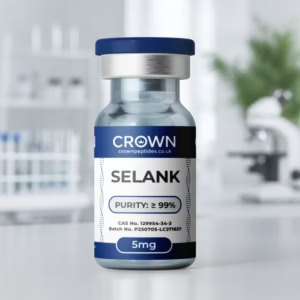
Selank Research Peptide
HPLC and MS verified · batch certificate published · dispatched from the UK before 2pm
Summary of Published Selank Studies
It's worth being explicit about what this table does and doesn't show. The human clinical data comes from a small number of Russian-language trials, several of which are difficult for non-Russian-speaking researchers to independently assess in full methodological detail, and none of which meet the scale or design standards of a modern Western Phase III trial. The animal and in vitro mechanistic work is more accessible to international scrutiny but remains concentrated within a relatively small number of affiliated research groups rather than being broadly replicated internationally.
Potential Selank Benefits for Anxiety Research
Based on the published literature, researchers have investigated Selank as a tool for studying:
- Enkephalin metabolism and the role of enkephalin-degrading enzymes in anxiety-related biology
- Comparative pharmacology between peptide-based and classical GABAergic anxiolytic mechanisms
- The relationship between chronic substance exposure, withdrawal, and neurotrophic factor regulation
- Tuftsin-derived peptide effects on immune parameters, distinct from its CNS-focused research applications
- Structure-stability relationships in peptide design, using the Pro-Gly-Pro stabilisation approach shared with Semax as a case study
As with the other peptides in this series: this is research investigating a mechanism, not evidence of an established treatment effect meeting the standards of Western regulatory frameworks. None of the above constitutes a demonstrated therapeutic benefit in humans under contemporary international trial standards.
Current Limitations of Selank Research
Several honest caveats apply to the Selank literature as it currently stands:
- Human data is regionally concentrated and hard to independently verify. The principal human trials are published in Russian-language journals, and while the abstracts and summary data are accessible, full independent methodological scrutiny by non-Russian-speaking researchers is genuinely more difficult, which is a real limitation on how confidently this evidence can be assessed by an international research audience.
- No modern Western randomised controlled trial exists. Selank has not been evaluated in a large, adequately powered, placebo-controlled trial meeting current international reporting standards (such as CONSORT), and no Western regulatory body has evaluated it for any indication.
- Small sample sizes throughout. The foundational GAD/neurasthenia trial involved 62 patients total; comparative tolerability studies are similarly modest in scale. These are not sample sizes capable of ruling out smaller or subgroup-specific effects, or of detecting rarer adverse events.
- Mechanistic attribution remains incomplete. While the enkephalinase-inhibition mechanism is reasonably well characterised, Selank's additional proposed effects on GABAergic, dopaminergic, and serotonergic systems are less mechanistically resolved, and the relative contribution of each pathway to any observed behavioural effect is not fully established.
- Regulatory status reflects this evidence gap. Selank holds no FDA-approved indication for any use in the United States, and its regulatory approval is specific to the Russian Federation. This is a meaningfully different evidence and regulatory position from a peptide with Western Phase III data behind it.
Selank Side Effects Reported in Research
Human studies have generally described Selank as well tolerated, with the enkephalinase-inhibition study specifically noting that Selank attenuates anxiety-related behaviour without causing the side effects typically associated with most anxiolytics. Comparative trials against benzodiazepines have reported that Selank does not appear to produce the sedation, motor impairment, or cognitive dulling associated with classical GABAergic anxiolytics in the same studies, though these comparative tolerability claims come from the same small, regionally concentrated evidence base discussed above and have not been independently replicated at scale.
Because Selank has not been through the kind of large-scale, long-duration post-marketing safety surveillance that an internationally approved medicine typically undergoes, less common or longer-term adverse effects may not yet have been well characterised in the published literature. Any research protocol involving human or animal subjects should be developed with appropriate ethical and institutional review, following standard safety monitoring practices for investigational peptides.
Selank Dosage Used in Published Research
This section is included for methodological context only and should not be interpreted as guidance for use.
Animal studies of Selank have commonly used intraperitoneal doses in the range of 0.15–0.3 mg/kg for anxiolytic-effect models, and 200 μg/kg in transcriptomic profiling work — figures that describe specific rodent study designs and are not directly transferable to humans without proper allometric scaling and independent safety evaluation. Human trials in the Russian clinical literature have reportedly used intranasal administration in a microgram-per-day range over short treatment courses (on the order of one to two weeks in the comparative trials described above), under direct clinical supervision with structured psychiatric outcome monitoring.
Researchers designing their own experimental protocols should base dosing decisions on the primary literature relevant to their specific model, in consultation with institutional animal care and use guidelines or human research ethics boards as applicable, rather than on secondary summaries such as this one.
Analogues and Future Research Directions
As with Semax, Selank's rapid metabolism has prompted interest in structurally modified variants intended to further extend its activity window, including N-acetylated forms discussed in some of the more recent literature. The same caution applies here as elsewhere in this series: modified analogues have a substantially thinner independent evidence base than the parent compound, and findings from Selank studies should not be assumed to transfer directly to structurally altered variants.
Several open questions define where Selank research would most usefully go next:
- Independent Western replication. The single most consequential gap is the absence of an adequately powered, independently conducted trial outside the original Russian research lineage, which would meaningfully strengthen (or challenge) the existing findings.
- Direct receptor and pathway characterisation. Further work clarifying the relative contributions of enkephalinase inhibition versus proposed GABAergic and monoaminergic effects would sharpen the mechanistic picture considerably.
- Comparative studies against modern anxiolytic standards of care. Existing comparative data is against medazepam and phenazepam, both benzodiazepines; comparison against contemporary first-line pharmacological and non-pharmacological anxiety treatments would be more directly informative for current research questions.
- Dissecting the anxiolytic and immunomodulatory research threads. Given Selank's dual origin story, research clarifying whether its CNS and immune effects are mechanistically linked, or essentially independent consequences of the same molecule acting in different tissues, remains an open and interesting question.
Frequently Asked Questions
Is Selank legal?
Selank is not a controlled substance under UK law and is legally available for laboratory research use from compliant suppliers. Researchers must follow their institution’s procurement and ethics policies.
what is selank peptide used for?
No, Selank is not FDA-approved for any use in the United States. It holds regulatory registration only in the Russian Federation for generalised anxiety disorder and neurasthenia.
Does Selank need to be refrigerated?
Yes, like most research peptides, Selank should be refrigerated (typically 2–8°C) after reconstitution and stored properly to maintain stability. Follow manufacturer guidance and Certificate of Analysis instructions for long-term storage.
Can you mix Selank and Semax?
Mixing Selank and Semax has not been studied in published research. While they share a similar research lineage, any combination use should be approached with caution as no safety or interaction data exists.
Is Selank a peptide?
Yes, Selank is a synthetic heptapeptide derived from the naturally occurring immunoregulatory tetrapeptide tuftsin, extended with a Pro-Gly-Pro stabilising sequence.
Why Peptide Sourcing Quality Matters for Research Validity
Selank shares the same core sourcing vulnerabilities as other short, stabilised research peptides: the reliability of any experimental finding depends entirely on the reliability of the material used to generate it, and a molecule this short is particularly sensitive to synthesis errors that a less rigorous testing process could miss.
Common failure modes relevant to Selank specifically include:
- Truncated or deletion sequences — incomplete coupling during synthesis of a seven-residue peptide can leave a meaningful proportion of the product missing one or more residues, particularly affecting the C-terminal Pro-Gly-Pro sequence that gives Selank its improved stability over native tuftsin.
- Residual tuftsin versus intact Selank — because Selank is structurally an extended version of tuftsin, incomplete synthesis could in principle yield a mixture containing unextended tuftsin fragments, which would be expected to behave quite differently given tuftsin's much shorter half-life and distinct primary research applications.
- Bacterial endotoxin contamination — relevant for any in vivo or cell-culture work, and particularly worth noting given Selank's immunomodulatory research applications, where endotoxin contamination could directly confound the very immune parameters under study.
- Inaccurate mass or concentration labelling — without independent mass spectrometry confirmation, there's no reliable way to verify that a vial contains the peptide and concentration stated on the label.
For a peptide whose entire research rationale rests on a specific stabilising modification extending a naturally short-lived precursor, verifying that the intact, correctly extended molecule is actually present — rather than a mixture including under-synthesised fragments — is not a generic quality reassurance. It's the difference between studying Selank as characterised in the literature and studying something related but pharmacologically distinct.
Read the certificate before you order
Every batch is published openly — identity by mass spectrometry, purity by HPLC, and the batch number printed on the vial you receive.
Open the COA libraryWhy Choose Crown Peptides
Testing is only part of the picture. Crown Peptides was built around a simple idea: a UK researcher ordering a peptide should be able to trust everything about how it reached them — not just the number on a Certificate of Analysis, but who made it, how it was handled, how it travelled, and who they can speak to if they have a question. That's the standard we hold ourselves to on every order, and it's worth explaining properly rather than just listing it.
Sourcing You Can Trust
Quality starts long before a product reaches our warehouse. We work directly with one of the world's largest and most established peptide synthesis manufacturers, chosen specifically for its production standards, consistency, and track record — rather than sourcing opportunistically from whichever manufacturer happens to offer the lowest price that month. That close, ongoing partnership is what allows us to stand behind every batch we sell, because we know exactly how it was made.
Verified Through Independent Testing
We don't expect researchers to take a manufacturer's word for it, so we verify every batch independently before it's listed for sale:
Endotoxin Testing
Every batch is screened for bacterial endotoxin, which matters in particular for any research involving cell culture, immune signalling, or in vivo inflammatory endpoints.
HPLC Purity Analysis
High-performance liquid chromatography is used to assess purity and screen for truncated sequences, deletion products, and synthesis by-products.
Mass Spectrometry Identity Confirmation
MS analysis confirms the molecular weight of the supplied peptide matches intact, fully-extended Selank rather than a truncated fragment or residual unextended tuftsin, providing an independent check on identity beyond the label.
Certificate of Analysis
Every batch is supplied with a Certificate of Analysis, and a QR code linking directly to the testing report on crownpeptides.co.uk, so researchers can document exactly what was used in their own experimental records.
Careful Storage and Handling
A product that's been correctly synthesised and tested can still be let down by poor handling afterward. Once a batch clears testing, we store it under controlled conditions designed to preserve stability and prevent degradation before it ever reaches a researcher's bench. This matters more for peptides and sensitive research compounds than for most laboratory reagents: temperature excursions, light exposure, and poor stock rotation can all silently reduce integrity long before a vial is opened, in ways that aren't visible on inspection and can quietly undermine an experiment's results. We treat that storage window as part of the product, not an afterthought once testing is done.
Packaging and Delivery
Every order is packed in premium, discreet packaging designed to protect the product in transit and arrive intact. Orders placed before 2pm are dispatched the same working day for next-day UK delivery, and we ship to Northern Ireland, the Republic of Ireland, Scotland, England, and across the EU, with international shipping available beyond that. For a researcher working to a study timeline, knowing an order will arrive quickly, safely, and exactly as ordered isn't a convenience — it's part of keeping a research schedule on track.
Support That Goes Beyond the Sale
Peptide and research-compound work raises genuine practical questions — around reconstitution, storage, handling, and interpreting a Certificate of Analysis — and we'd rather a researcher ask us directly than guess. Our team is on hand to provide clear, straightforward guidance from product selection through to delivery and beyond, without the evasiveness or upsell pressure that can come with some suppliers in this space. We see that ongoing relationship, not just the transaction, as the actual job.
Regulatory Compliance and Transparency
Crown Peptides is a UK-based company operating in line with MHRA guidance on research chemicals. Every batch is released against its own certificate of analysis, with HPLC purity and mass-spectrometry identity recorded and the lot number printed on the vial you receive. We'd rather be transparent about what we sell and who it's for than blur that line to chase a wider customer base — that's a deliberate choice on our part, not a legal minimum we begrudgingly meet.
Our Commitment
Put simply, our mission is to supply the UK research community with peptides and research compounds of unmatched purity and consistency, backed by a level of service, transparency, and technical support that researchers can actually rely on — from the first email enquiry to the vial arriving on the bench. That standard applies whether an order is a single vial for an independent researcher or a bulk order for a laboratory, and it holds regardless of whether a customer ever finds out how much work sits behind it.
For researchers who want their results to be reproducible and their experimental record defensible, knowing precisely what's in the vial — and trusting that everyone who handled it got it right — is a basic, non-negotiable starting point.
References
- Zozulya, A.A. et al. "The inhibitory effect of Selank on enkephalin-degrading enzymes as a possible mechanism of its anxiolytic activity." PubMed. https://pubmed.ncbi.nlm.nih.gov/11550013/
- Zozulya, A.A. et al. "Efficacy and possible mechanisms of action of a new peptide anxiolytic Selank in the therapy of generalized anxiety disorders and neurasthenia." PubMed. https://pubmed.ncbi.nlm.nih.gov/18454096/
- Medvedev, V.E. et al. "A comparison of the anxiolytic effect and tolerability of Selank and phenazepam in the treatment of anxiety disorders." PubMed. https://pubmed.ncbi.nlm.nih.gov/25176261/
- "Selank, a Peptide Analog of Tuftsin, Attenuates Aversive Signs of Morphine Withdrawal in Rats." Bulletin of Experimental Biology and Medicine. https://link.springer.com/article/10.1007/s10517-022-05624-x
- "Selank, Peptide Analogue of Tuftsin, Protects Against Ethanol-Induced Memory Impairment by Regulating of BDNF Content in the Hippocampus and Prefrontal Cortex in Rats." Bulletin of Experimental Biology and Medicine. https://link.springer.com/article/10.1007/s10517-019-04588-9
- "FDA removes certain peptide bulk drug substances from Category 2 of interim 503A bulks list." Lexology. https://www.lexology.com/library/detail.aspx?g=2e55b76a-3173-4e04-beda-bf021202f18d
Working with Selank Research Peptide
Batch-tested material, published certificates, and same-day dispatch on orders placed before 2pm.
See Selank Research Peptide