

RESEARCH USE DISCLAIMER
Crown Peptides supplies Semax and other research compounds strictly for laboratory research purposes. Our products are not intended for human consumption and are not sold, marketed, or labelled for the diagnosis, treatment, cure or prevention of any disease. Nothing in this document should be read as medical advice or as an endorsement of human use. The discussion below summarises published scientific literature only, and is intended for researchers and students of pharmacology and neuroscience.
Few synthetic neuropeptides have generated as much scientific interest, and as much online confusion, as Semax. Originally developed in Russia in the 1980s as a modified fragment of adrenocorticotropic hormone (ACTH), it has since become one of the most widely studied heptapeptides in the neuroprotection literature — and, more recently, one of the most widely marketed nootropics on the internet.
This article looks at what the published, peer-reviewed research actually shows: how Semax is structured, what mechanisms researchers believe underlie its effects, which experimental models have been used to study it, and where the evidence is genuinely strong versus where it is thin, anecdotal, or extrapolated well beyond what the data supports.
It's worth saying at the outset why this distinction matters. Semax sits at an unusual intersection: it has a genuinely substantial peer-reviewed mechanistic literature behind it, largely from Russian and international laboratories studying stroke and neurotrophic signalling, and at the same time it has become a fixture of online nootropic communities where claims about its effects often run well ahead of what any published study has actually demonstrated. Separating the two is the whole point of a research-oriented overview like this one. Where a claim traces back to a specific peer-reviewed study using a defined experimental model, we say so and describe that model. Where a claim is common in online discussion but doesn't trace back to a citable primary source, we either flag that gap explicitly or leave the claim out.
The short version
- A seven-residue analogue of ACTH (4-10), with no corticotropic activity of its own.
- Developed in Russia and on the national register of essential medicines there.
- Research centres on BDNF expression, cognition and neuroprotection.
- Most trials are Russian-published and rarely replicated in Western journals.
What Is Semax Peptide?
Semax is a synthetic heptapeptide with the sequence Met-Glu-His-Phe-Pro-Gly-Pro. It was designed by Ivan Ashmarin and colleagues by taking the 4–7 fragment of ACTH (which retains behavioural and neurotrophic activity but lacks the hormonal, steroidogenic effects of the full ACTH molecule) and extending it with a Pro-Gly-Pro tripeptide sequence to improve metabolic stability. The initial work by Ashmarin and colleagues focused on identifying ACTH-derived peptides with nootropic activity but lacking hormonal effects; the addition of the Pro-Gly-Pro C-terminal sequence, inspired by endogenous regulatory peptides, resulted in enhanced metabolic stability and prolonged duration of action while preserving beneficial cognitive effects. This nootropic profile — cognitive and neuroprotective activity without the hormonal baggage of the parent molecule — is the throughline connecting most of the research areas covered in this article.
The peptide is frequently described in the literature by its parent designation, ACTH(4–7)PGP, reflecting this design lineage. Studies of the molecular mechanisms underlying the actions of Semax using models of cerebral ischemia in rats showed that the peptide enhanced the transcription of neurotrophins and their receptors and modulated the expression of genes involved in the immune response. Because it lacks the melanocortin core responsible for cortisol release, researchers have used it as a tool to separate the neurological effects of ACTH-related peptides from their endocrine effects.
Semax Nootropic Mechanism: Structure and How It Works
Semax undergoes rapid enzymatic breakdown once administered, which has itself become an area of research interest — and it's a key reason the peptide is almost always studied via intranasal administration (a Semax nasal spray) rather than orally or by injection, since the nasal route allows it to reach the brain quickly before much of it is degraded elsewhere in the body. Semax undergoes rapid enzymatic degradation resulting in a mixture of different derivative peptides, and Pro-Gly-Pro (PGP) was predominant in the brain tissues one hour after intranasal administration. This has led some researchers to suggest that part of Semax's biological activity may actually be mediated by its PGP breakdown product, since the Semax and PGP effects on the transcription of growth factors and their receptor genes only partially overlapped in comparative studies — implying the two peptides share some, but not all, of their downstream effects.
At the molecular level, Semax has been studied largely through gene-expression profiling rather than classical receptor-binding assays. As an ACTH-derived molecule, it may retain some affinity for melanocortin receptors expressed in the central nervous system, though this has not been as rigorously mapped as its downstream transcriptional effects, and the field does not yet have a single confirmed molecular target that explains its full range of reported activity.
The ACTH and melanocortin system, briefly
To understand why Semax was designed the way it was, it helps to understand the system it's derived from. ACTH is best known as the pituitary hormone that stimulates cortisol release from the adrenal cortex — the classic stress-hormone axis. But the ACTH molecule is longer than the fragment needed for that endocrine effect, and researchers in the mid-20th century noticed that shorter fragments of ACTH, particularly ACTH(4–10), retained behavioural effects in animals (altered attention and avoidance learning) without triggering the steroidogenic cascade at all. This observation effectively split ACTH's biology into two separable functions: an endocrine one, tied to the full-length hormone acting on adrenal melanocortin receptors, and a neurobehavioural one, tied to a shorter internal fragment acting somewhere in the central nervous system.
Semax was built directly on this observation. By using the 4–7 fragment (a subset even of the already-truncated 4–10 fragment) and adding a stabilising Pro-Gly-Pro tail, the Ashmarin group aimed to isolate and prolong the neurobehavioural activity while further reducing any residual hormonal signalling. This is why the literature consistently frames Semax as a tool for studying ACTH-related neurobiology in isolation from the hypothalamic-pituitary-adrenal axis, rather than as a modified hormone in its own right.
- Classification
- Synthetic peptide derived from an ACTH fragment
- CAS Number
- 80714-61-0
Semax Benefits: Why Researchers Are Interested
Two overlapping research threads explain most of the scientific attention Semax receives: neuroprotection in ischaemia models, and cognitive/behavioural effects in rodent learning paradigms.
On the neuroprotection side, in experimental models of cerebral ischaemia, Semax administration led to the recovery of animals' ability to learn in a Morris water maze and passive-avoidance task, and separate transcriptomic work has shown the peptide modulates hundreds of genes involved in immune and inflammatory signalling following induced stroke in rats. The peptide predominantly enhanced the expression of genes related to the immune system; three hours after permanent middle cerebral artery occlusion, Semax influenced the expression of genes affecting immune cell activity, and by 24 hours its action on the immune response had increased considerably.
Key Areas of Semax Peptide Research
Ischaemic stroke models. The bulk of the mechanistic literature on Semax comes from rodent middle cerebral artery occlusion (MCAO) studies, used because this model is considered a reasonably close analogue of human ischaemic stroke pathology.
Neurotrophic factor signalling. A recurring theme across multiple independent studies is that Semax upregulates brain-derived neurotrophic factor (BDNF) and nerve growth factor (NGF) pathways. Research using models of cerebral ischemia in rats showed that the peptide acts on the brain transcriptome, enhancing the transcription of neurotrophins and their receptors, significantly affecting the expression of genes associated with the immune response, suppressing the activation of inflammatory genes, and preventing the decrease in expression of genes associated with neurotransmission.
Protein-level confirmation studies. Beyond gene transcription, researchers have gone on to examine whether these transcriptional changes are reflected at the protein level. One study specifically evaluated brain expression profiling of key proteins involved in inflammation and cell death processes (MMP-9, c-Fos, and JNK), as well as neuroprotection and recovery (CREB), in a rat model of transient middle cerebral artery occlusion, aiming to confirm whether the earlier genomic findings translated into measurable changes in protein expression.
Cognitive and behavioural research in healthy models. Separate from the stroke literature, a smaller body of work has examined Semax's effects on learning and attention in non-injured animals and in healthy human volunteers, discussed further below.
Peptide metabolism and structure-activity relationships. Because Semax degrades quickly into smaller fragments once administered, a distinct strand of research has focused on tracking exactly what happens to the molecule after dosing — which enzymes cleave it, what fragments result, how long they persist in brain tissue, and which of those fragments retain biological activity. This work matters more than it might first appear: if a meaningful share of Semax's effects turn out to be attributable to PGP rather than to intact Semax, that reshapes how researchers should interpret dose-response relationships and design future analogues.
Methodology and study design in the transcriptomic literature. Most of the gene-expression work on Semax uses a similar experimental logic: induce focal or transient ischaemia in rats, administer Semax at defined timepoints relative to the injury, then harvest brain tissue at set intervals afterward for microarray or RNA-sequencing analysis. Researchers then compare gene expression profiles between Semax-treated and untreated ischaemic animals, looking for genes or gene clusters that shift significantly. This approach is powerful for hypothesis generation, but it is inherently correlational — a gene being upregulated alongside a beneficial outcome does not, on its own, establish that the gene's upregulation caused that outcome, which is why follow-up studies using protein-level confirmation and functional behavioural testing are an important complement to the transcriptomic data.
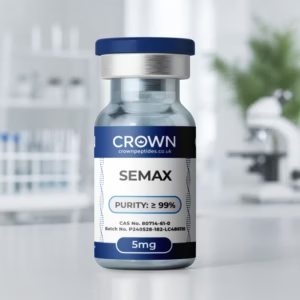
Semax Research Peptide
HPLC and MS verified · batch certificate published · dispatched from the UK before 2pm
Summary of Published Semax Studies
| Study Focus | Model | Key Reported Finding |
|---|---|---|
| Genome-wide transcriptional analysis | Rat, focal cerebral ischaemia (pMCAO) | Broad upregulation of immune-related gene expression, increasing over 3–24 hours post-occlusion |
| Protein expression profiling | Rat, transient MCAO | Changes in inflammation/cell-death markers (MMP-9, c-Fos, JNK) and recovery marker CREB |
| Neurotrophin transcription | Rat, cerebral ischaemia | Increased transcription of neurotrophins and their receptor genes; partial overlap with PGP-only effects |
| Behavioural recovery | Rat, cerebral ischaemia | Improved performance on Morris water maze and passive-avoidance learning tasks after treatment |
| Resting-state neuroimaging | Healthy human volunteers (pilot, n=24) | Increased default mode network signal on fMRI following intranasal administration relative to placebo |
It's worth being explicit about what this table does and doesn't show. Nearly all of the mechanistic detail comes from rodent ischaemia models. The human data that exists is limited to a small pilot neuroimaging study and older Russian clinical experience in stroke patients that predates the rigorous randomised-controlled-trial standards expected in Western regulatory literature today.
Potential Semax Benefits for Cognitive Function
Based on the published preclinical literature, researchers have investigated Semax as a tool for studying:
- Mechanisms of neuroprotection during and after ischaemic injury
- The relationship between neurotrophic factor expression and post-stroke functional recovery
- How immune and inflammatory gene programmes respond to injury and pharmacological modulation
- Structure-activity relationships between ACTH-derived fragments and behavioural/cognitive effects, using Semax as a reference compound
- The physiological role of proline-glycine-proline (PGP) as a bioactive breakdown product
It is important to be precise about the language here: this is research investigating a mechanism, not evidence of a treatment effect that has been established to modern trial standards. None of the above constitutes a demonstrated therapeutic benefit in humans under contemporary regulatory frameworks.
Current Limitations of Semax Research
Several honest caveats apply to the Semax literature as it currently stands:
- Species gap. The strongest and most detailed mechanistic data — the transcriptomic and protein-expression studies — are exclusively in rodents. Translating rodent MCAO findings to human stroke pathology is not straightforward, and many promising rodent neuroprotectants have failed to replicate in human trials historically.
- Absence of modern Western RCTs. There is no large randomised, double-blind, placebo-controlled trial of Semax published in the mainstream Western clinical literature. The historical human clinical experience originates primarily from Russia, using trial designs and reporting standards that predate current international norms (e.g., CONSORT reporting).
- Mechanistic uncertainty. While transcriptomic effects are well documented, researchers have not yet fully characterised Semax's direct molecular target(s), and it remains unclear how much of its reported activity depends on the intact peptide versus its PGP breakdown product.
- Small, heterogeneous human data. The human pilot data that does exist (such as neuroimaging studies) tends to involve small sample sizes and endpoints that are several steps removed from clinically meaningful outcomes.
The broader problem of translating stroke neuroprotectants
Semax's evidence gap is not unique to Semax — it reflects a well-documented, field-wide problem in stroke neuroprotection research. Reviewing the history of the field, one commonly cited assessment noted that over the past several decades, more than 1,000 candidate neuroprotective drug targets have been identified in preclinical research, roughly 100 have progressed to human clinical trials, and none has yet proven efficacious in that setting. Multiple independent reviews of the field have converged on the same pattern: agents that appear robustly protective in rodent ischaemia models have gone on to show no benefit in Phase III human trials.
Researchers have proposed a range of explanations for this gap, including differences in how animal models measure success (commonly infarct volume) versus how human trials measure it (commonly long-term functional outcome), differences in the timing and route of drug administration relative to the injury, and basic physiological differences between rodent and human brains. Even candidate drugs that were designed to meet rigorous preclinical reporting standards — such as the Stroke Academic Industry Roundtable (STAIR) criteria — have still failed to translate, with examples including NXY-059 and haematopoietic growth factors. One recent methodological review summarised the field's own assessment of itself bluntly: decades of acute stroke research have arrived at the conclusion that treatments which appear to work reliably in animal studies consistently fail to show benefit in human patients — a phenomenon often referred to as the translational roadblock.
None of this means Semax specifically will fail to translate — it means that a strong rodent ischaemia dataset, on its own, has historically been a poor predictor of human clinical benefit in this particular disease area, more so than in many other fields of pharmacology. This context is directly relevant to how the preclinical Semax literature should be weighted by anyone designing follow-on research.
Putting the evidence together
Taken as a whole, the Semax literature has a fairly clear shape: a deep, methodologically varied body of rodent transcriptomic and behavioural work, converging fairly consistently on neurotrophic and anti-inflammatory gene modulation following ischaemic injury; a much thinner layer of human data, dominated by older Russian clinical experience and a small number of modern pilot studies; and very little in the way of direct receptor pharmacology or dose-ranging human safety data by current international standards. None of that makes Semax an uninteresting research subject — if anything, the gap between its mechanistic preclinical depth and its human evidence base is itself a reasonable justification for further study. But it does mean the peptide is best understood, at this stage, as a preclinical research tool with an open translational question, rather than as a compound with an established human evidence base to draw on.
Semax Side Effects Reported in Research
Reporting on adverse effects in the Semax literature is limited compared to the mechanistic literature, which is itself a limitation worth noting. Intranasal administration is the route used in the majority of published animal and human research, and local nasal irritation is the effect most consistently reported in connection with this delivery route across peptide research generally, rather than something specific to Semax's pharmacology. No robust, peer-reviewed data exists characterising the effects of chronic or long-term administration in humans, and the peptide has not been evaluated in populations with hepatic or renal impairment, in pregnancy, or in paediatric research settings within the Western literature. Any research protocol involving human or animal subjects should be developed with appropriate ethical and institutional review, following standard safety monitoring practices for investigational peptides.
Semax Dosage and Nasal Spray Administration in Published Research
This section is included for methodological context only and should not be interpreted as guidance for use.
In the rodent literature, dosing is reported in mg/kg body weight, calculated for the specific animal model and route of administration used — figures that are not directly transferable to humans without proper allometric scaling, pharmacokinetic modelling, and independent safety evaluation, none of which has been rigorously established for this peptide. Published preclinical studies vary considerably in dose, timing, and duration depending on the specific model, which is one reason single figures are rarely comparable across studies.
Historical clinical use of Semax in Russia, including its approval for certain indications there, is a matter of regulatory record rather than something this article can meaningfully summarise as a dosing protocol — regulatory approval in one jurisdiction does not equate to an established, safe human dose, and Semax does not hold marketing authorisation from the FDA or the EMA. Researchers designing their own experimental protocols should base dosing decisions on the primary literature relevant to their specific model, in consultation with institutional animal care and use guidelines or human research ethics boards as applicable, rather than on secondary summaries such as this one.
Semax Analogues and Future Research Directions
Because unmodified Semax degrades rapidly once administered, a natural line of pharmaceutical chemistry research has been to develop modified versions designed to resist that breakdown. The best-known example is N-acetylated, C-terminally amidated variants of the Semax sequence, sometimes discussed in the literature as next-generation ACTH(4–7)PGP analogues. The logic behind these modifications is straightforward peptide chemistry: acetylation of the N-terminus and amidation of the C-terminus are both well-established strategies for reducing a peptide's susceptibility to exopeptidase degradation, which in principle should extend its half-life and biological window of activity.
It's worth being clear-eyed about the state of evidence for these analogues specifically. The bulk of the mechanistic and behavioural literature discussed throughout this article concerns unmodified Semax. Acetylated or amidated variants have a much thinner independent evidence base in peer-reviewed literature, and findings from unmodified Semax studies should not be assumed to transfer directly to structurally modified analogues, even when the modifications are relatively conservative.
More broadly, several open questions define where Semax research is likely to head next:
- Direct receptor characterisation. Work aimed at definitively establishing (or ruling out) melanocortin receptor involvement, and identifying any additional binding targets, would meaningfully sharpen the field's mechanistic understanding.
- Dissecting Semax versus PGP contributions. Carefully designed studies comparing intact Semax, PGP alone, and Semax administered alongside a peptidase inhibitor could help clarify how much of Semax's reported activity is attributable to each component.
- Modern, adequately powered human trials. The single largest gap in the literature is the absence of a contemporary, adequately powered, placebo-controlled human trial meeting current international reporting standards.
- Standardised preclinical reporting. Frameworks such as PRIMED2, designed to formally score the totality of preclinical evidence for a candidate stroke therapy, have not yet been applied systematically to the Semax literature.
Semax vs Selank: how the two compare
Semax is frequently discussed alongside Selank, a related peptide from the same Russian research lineage and built on the same Pro-Gly-Pro stabilisation logic (covered in detail in Crown Peptides' separate Selank research review). The distinction is straightforward: Semax is derived from ACTH and its research base centres on neuroprotection, neurotrophic factor signalling, and cognitive/behavioural effects, while Selank is derived from tuftsin and its research base centres on anxiolytic and immunomodulatory effects. They share a design philosophy, not a research application, and findings from one should not be assumed to apply to the other despite their structural similarity.
Frequently Asked Questions
Is Semax legal in UK?
What does Semax peptide do?
Semax is researched for neuroprotective, cognitive-enhancing, and neurotrophic effects. It is studied for improving focus, memory, and recovery from brain injury or stress.
How much is Semax peptide?
Prices for research-grade Semax typically range from £25–£60 per 5–10mg vial in the UK, depending on quantity and supplier. Bulk bundles are usually cheaper per mg.
How to reconstitute Semax peptide with bacteriostatic water?
Add 1–2ml of bacteriostatic water slowly to the vial, gently swirl (do not shake) until fully dissolved. Store reconstituted Semax in the refrigerator and use within recommended days.
Why Peptide Sourcing Quality Matters for Research Validity
A point that's easy to overlook in discussions of Semax's mechanism and evidence base is that the reliability of any experimental result depends entirely on the reliability of the material used to generate it. This is not a minor technical footnote — it's a recurring, documented problem in peptide research specifically.
Synthetic peptides are manufactured through multi-step chemical processes, and each step introduces opportunities for the final product to differ from what the label claims. Common failure modes in poorly controlled peptide synthesis include:
- Truncated or deletion sequences — incomplete coupling during synthesis can leave a proportion of the product missing one or more amino acids, producing a peptide that is structurally similar but not identical to the intended molecule.
- Incorrect or racemised residues — synthesis conditions can occasionally cause an amino acid to be incorporated in the wrong stereochemical configuration, altering how the peptide folds and behaves biologically.
- Residual solvents and coupling reagents — trace chemicals from the synthesis process can remain in the final product if purification is inadequate.
- Bacterial endotoxin contamination — peptides synthesised or handled without appropriate controls can carry endotoxin (lipopolysaccharide) contamination, capable of triggering inflammatory and immune responses in cell culture and animal models entirely independent of the peptide's own biological activity. In immune-signalling research specifically — one of the central themes in the Semax literature — undetected endotoxin is a well-known confound.
- Inaccurate mass or concentration labelling — without independent mass spectrometry confirmation, there's no reliable way to verify that a vial actually contains the peptide and concentration stated on the label.
For a molecule like Semax, where a substantial part of the published research concerns subtle transcriptional and immune-signalling effects, contamination or identity errors of this kind are not a cosmetic issue. A batch with unexpected endotoxin load, or one containing a meaningful proportion of truncated peptide, can produce experimental results that look mechanistically plausible but don't actually reflect the compound under investigation. This is precisely why reputable analytical chemistry practice for research peptides involves independent testing rather than relying on a supplier's synthesis claims alone.
Read the certificate before you order
Every batch is published openly — identity by mass spectrometry, purity by HPLC, and the batch number printed on the vial you receive.
Open the COA libraryWhy Choose Crown Peptides
Testing is only part of the picture. Crown Peptides was built around a simple idea: a UK researcher ordering a peptide should be able to trust everything about how it reached them — not just the number on a Certificate of Analysis, but who made it, how it was handled, how it travelled, and who they can speak to if they have a question. That's the standard we hold ourselves to on every order, and it's worth explaining properly rather than just listing it.
Sourcing You Can Trust
Quality starts long before a peptide reaches our warehouse. We work directly with one of the world's largest and most established peptide synthesis manufacturers, chosen specifically for its production standards, consistency, and track record — rather than sourcing opportunistically from whichever manufacturer happens to offer the lowest price that month. That close, ongoing partnership is what allows us to stand behind every batch we sell, because we know exactly how it was made.
Verified Through Independent Testing
We don't expect researchers to take a manufacturer's word for it, so we verify every batch independently before it's listed for sale:
Endotoxin Testing
Every batch is screened for bacterial endotoxin, which matters in particular for any research involving cell culture, immune signalling, or in vivo inflammatory endpoints.
HPLC Purity Analysis
High-performance liquid chromatography is used to assess purity and screen for truncated sequences, deletion products, and synthesis by-products.
Mass Spectrometry Identity Confirmation
MS analysis confirms that the molecular weight of the supplied peptide matches the expected mass for Semax, providing an independent check on identity beyond the label.
Certificate of Analysis
Every batch is supplied with a Certificate of Analysis, and a QR code linking directly to the testing report on crownpeptides.co.uk, so researchers can document exactly what was used in their own experimental records.
Careful Storage and Handling
A peptide that's been correctly synthesised and tested can still be let down by poor handling afterward. Once a batch clears testing, we store it under controlled conditions designed to preserve stability and prevent degradation before it ever reaches a researcher's bench. This matters more for peptides than for most laboratory reagents: temperature excursions, light exposure, and poor stock rotation can all silently reduce a peptide's integrity long before a vial is opened, in ways that aren't visible on inspection and can quietly undermine an experiment's results. We treat that storage window as part of the product, not an afterthought once testing is done.
Packaging and Delivery
Every order is packed in premium, discreet packaging designed to protect the product in transit and arrive intact. Orders placed before 2pm are dispatched the same working day for next-day UK delivery, and we ship to Northern Ireland, the Republic of Ireland, Scotland, England, and across the EU, with international shipping available beyond that. For a researcher working to a study timeline, knowing an order will arrive quickly, safely, and exactly as ordered isn't a convenience — it's part of keeping a research schedule on track.
Support That Goes Beyond the Sale
Peptide research raises genuine practical questions — around reconstitution, storage, handling, and interpreting a Certificate of Analysis — and we'd rather a researcher ask us directly than guess. Our team is on hand to provide clear, straightforward guidance from product selection through to delivery and beyond, without the evasiveness or upsell pressure that can come with some suppliers in this space. We see that ongoing relationship, not just the transaction, as the actual job.
Regulatory Compliance and Transparency
Crown Peptides is a UK-based company operating in line with MHRA guidance on research chemicals. Every batch is released against its own certificate of analysis, with HPLC purity and mass-spectrometry identity recorded and the lot number printed on the vial you receive. We'd rather be transparent about what we sell and who it's for than blur that line to chase a wider customer base — that's a deliberate choice on our part, not a legal minimum we begrudgingly meet.
Our Commitment
Put simply, our mission is to supply the UK research community with peptides of unmatched purity and consistency, backed by a level of service, transparency, and technical support that researchers can actually rely on — from the first email enquiry to the vial arriving on the bench. That standard applies whether an order is a single vial for an independent researcher or a bulk order for a laboratory, and it holds regardless of whether a customer ever finds out how much work sits behind it.
For researchers who want their results to be reproducible and their experimental record defensible, knowing precisely what's in the vial — and trusting that everyone who handled it got it right — is a basic, non-negotiable starting point.
References
- Dmitrieva, V.G. et al. "Semax and Pro-Gly-Pro Activate the Transcription of Neurotrophins and Their Receptor Genes after Cerebral Ischemia." PMC. https://pmc.ncbi.nlm.nih.gov/articles/PMC11498467/
- "The peptide Semax affects the expression of genes related to the immune and vascular systems in rat brain focal ischemia: genome-wide transcriptional analysis." PMC3987924. https://www.ncbi.nlm.nih.gov/pmc/articles/PMC3987924/
- "Brain Protein Expression Profile Confirms the Protective Effect of the ACTH(4–7)PGP Peptide (Semax) in a Rat Model of Cerebral Ischemia–Reperfusion." PMC8226508. https://www.ncbi.nlm.nih.gov/pmc/articles/PMC8226508/
- "Novel Insights into the Protective Properties of ACTH(4-7)PGP (Semax) Peptide at the Transcriptome Level Following Cerebral Ischaemia–Reperfusion in Rats." PMC7350263. https://www.ncbi.nlm.nih.gov/pmc/articles/PMC7350263/
- "A failure of forward translation? The case of neuroprotection." Neuroimmunology and Neuroinflammation. https://www.oaepublish.com/articles/2574-1209.2020.72
- "The failure of animal models of neuroprotection in acute ischemic stroke to translate to clinical efficacy." Medical Science Monitor. https://basic.medscimonit.com/abstract/full/idArt/883750
- "Neuroprotection for Stroke: Current Status and Future Perspectives." PMC3472773. https://www.ncbi.nlm.nih.gov/pmc/articles/PMC3472773/
- "The dilemma of neuroprotection trials in times of successful endovascular recanalization." PMC11035835. https://www.ncbi.nlm.nih.gov/pmc/articles/PMC11035835/
Working with Semax Research Peptide
Batch-tested material, published certificates, and same-day dispatch on orders placed before 2pm.
See Semax Research Peptide